(7% discount is applied at checkout)
Cart is empty
Your go-to destination for cutting-edge server products
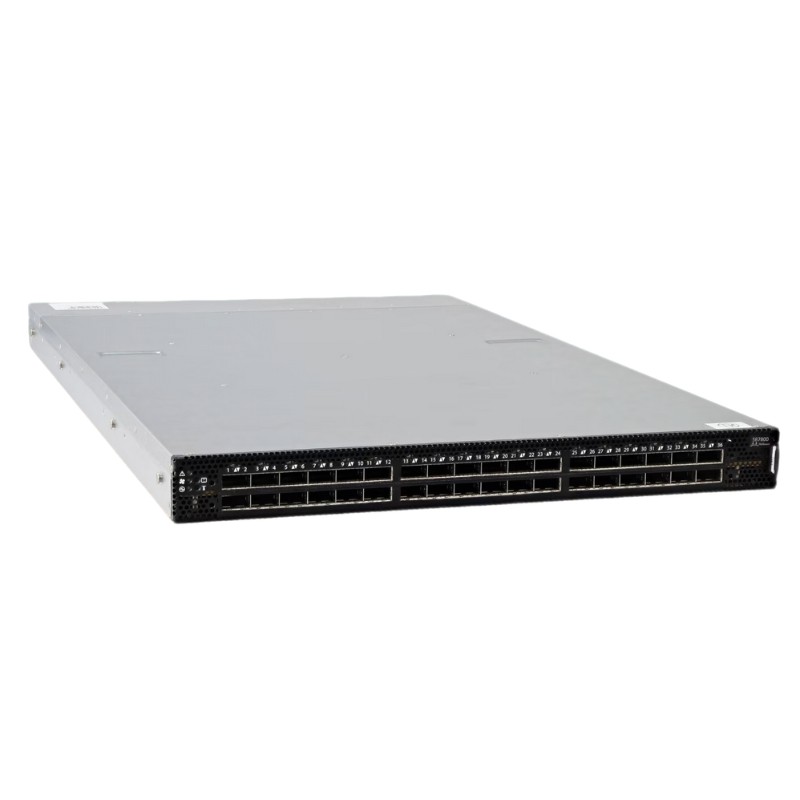


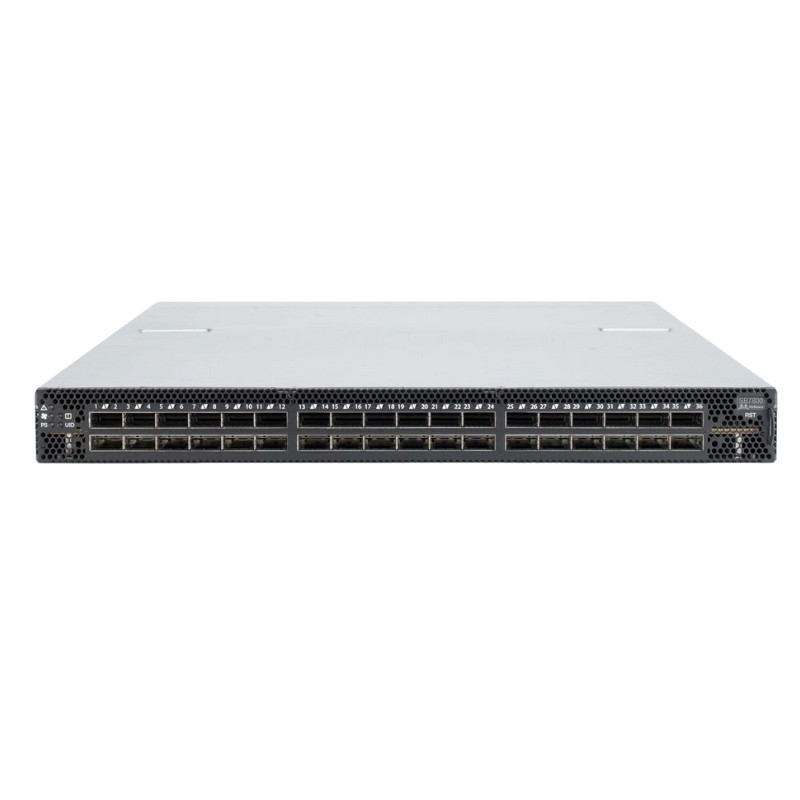
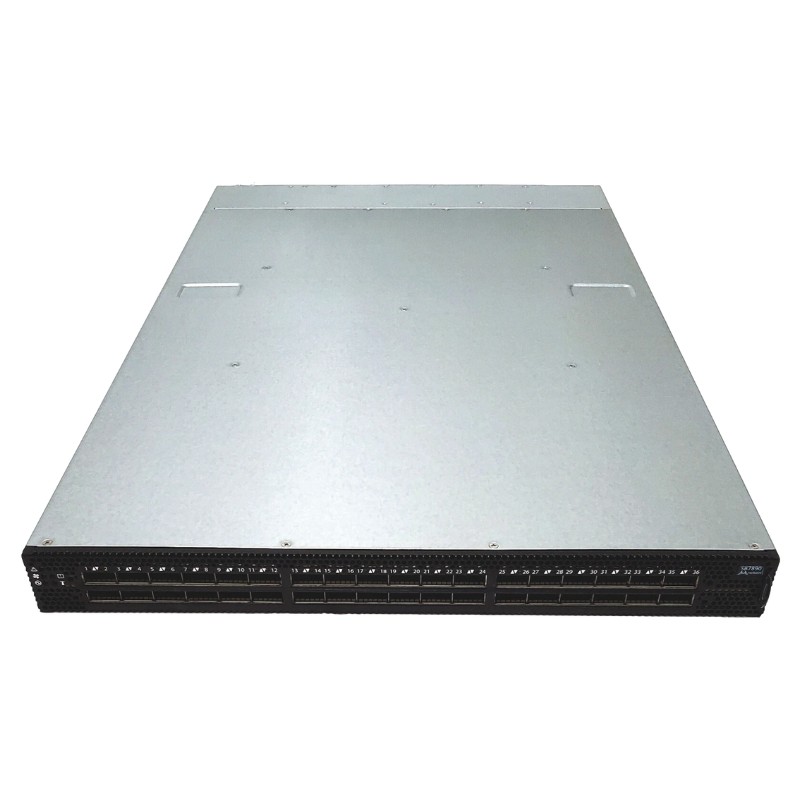
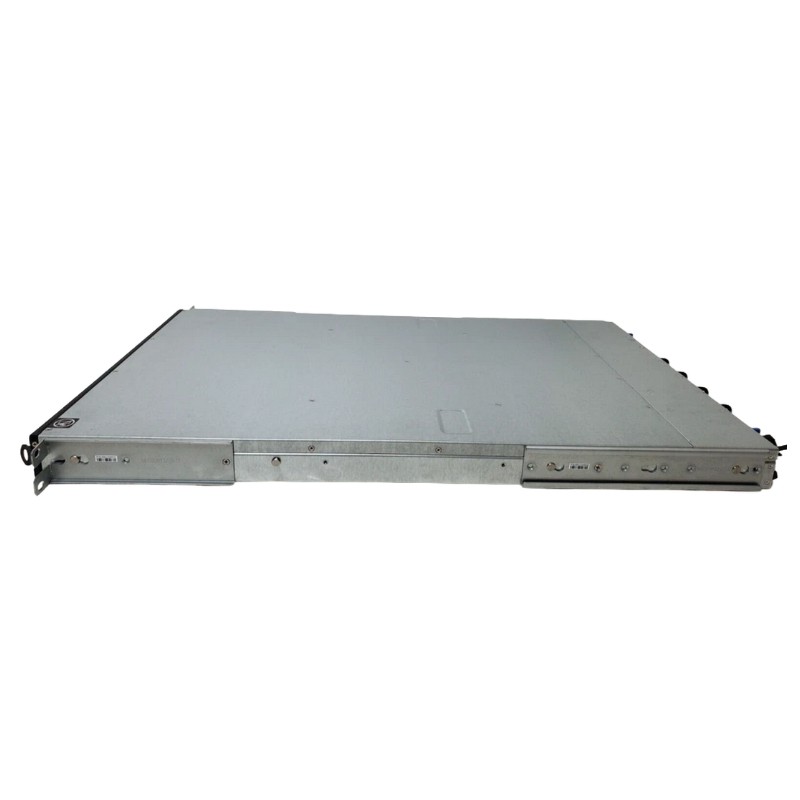
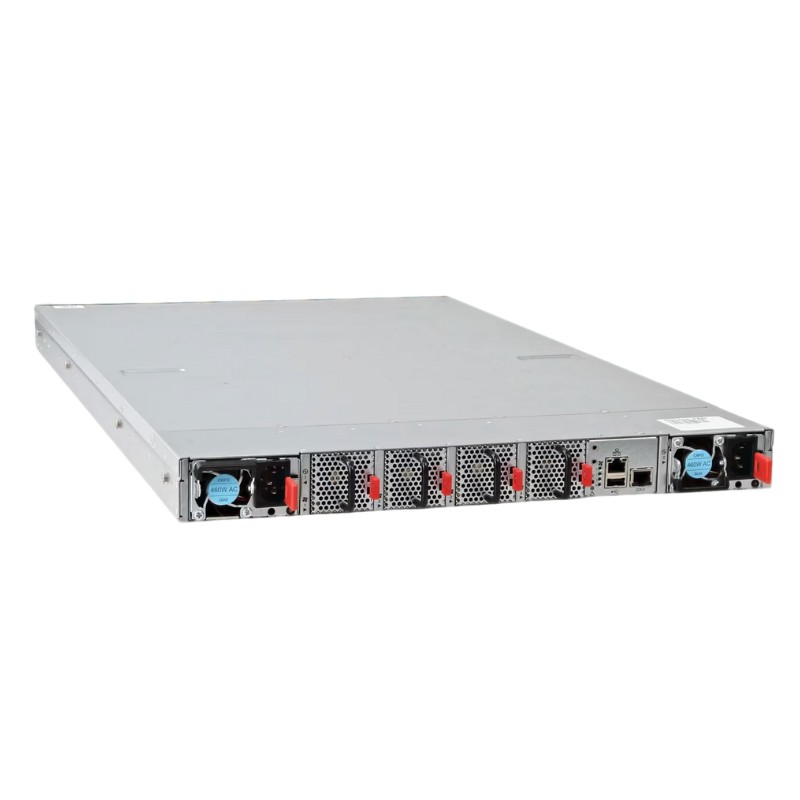
HPE 869485-001 Mellanox InfiniBand Enhanced Data Rate V2 36 Ports Airflow Unmanaged 1U Switch. Factory-Sealed New in Original Box (FSB) with 3 Years Warranty
The HPE 869485-001 unmanaged switch is a reliable and performance-focused network device designed to handle demanding data center and enterprise networking environments. It delivers seamless connectivity across 36 high-speed ports, making it an excellent choice for organizations that require scalable and efficient networking infrastructure.
The HPE 869485-001 unmanaged switch brings multiple advantages to business networks:
The 869485-001 model is part of a family of Mellanox InfiniBand switches optimized for Enhanced Data Rate operation, offering line-rate performance across 36 physical ports. Each port supports InfiniBand EDR signaling, enabling up to the full theoretical throughput per port required by next-generation compute and storage nodes. Engineered as a 1U rack-mountable platform, the unit conserves rack space while providing a dense port count for leaf/topology design. The unmanaged nature of this switch emphasizes plug-and-play simplicity: latency optimizations are baked into the hardware forwarding plane, and the device is intended to be integrated into fabrics where centralized management is handled at the host or fabric-management layer rather than by the switch itself.
Performance is central to this product category. The EDR signaling capability reduces per-hop latency significantly when compared to older generations, and the forwarding ASIC is optimized for cut-through switching to minimize transmission delay. These characteristics make the 869485-001 well suited for distributed applications that require deterministic communications between nodes, such as MPI-based HPC workloads, distributed parameter updates in deep learning training, and real-time data analytics. End-to-end latency benefits are compounded when paired with RDMA-capable host adapters and optimized drivers, enabling zero-copy transfers and CPU offload for maximum application efficiency.
In dense deployment scenarios, aggregate fabric bandwidth becomes a defining metric. The 36-port EDR topology provides significant bisection bandwidth when used as leaf switches in larger Clos or Fat-Tree fabrics. Capacity planning for such fabrics should account not only for raw per-port bandwidth but also for expected oversubscription ratios. When used as part of a non-oversubscribed design, this switch enables near line-rate replication, checkpointing, and inter-node communications at scale, which is crucial for I/O-bound workloads and parallel data movement operations.
Rack and thermal planning are essential when deploying high-density InfiniBand switching equipment. The 1U form factor of the 869485-001 makes it attractive for dense rack deployments, but administrators must consider the specified airflow orientation and cooling profile. This model is specified for a particular airflow direction — typically front-to-back or back-to-front depending on SKU — and careful attention to rack airflow policies will ensure reliable operation and prevent thermal throttling. Proper placement within a cold-aisle/hot-aisle layout and attention to perforated tile locations or containment strategies will preserve efficiency and help maintain predictable operating temperatures for both switches and adjacent servers.
While designing data center layouts, the acoustic profile and power draw of each 1U switch should be accounted for. The unmanaged nature of this switch reduces software overhead but does not eliminate the need for reliable power distribution and, where necessary, redundant power feed options. In configurations where power redundancy is required, pairing this switch with dual power feeds or UPS-backed cabinets ensures continued fabric availability during planned maintenance or power anomalies. Network architects may also evaluate fan and component redundancy at the rack level to maintain service continuity in mission-critical environments.
The 869485-001 excels both as a top-of-rack aggregation device in moderate-scale clusters and as a leaf element within larger multi-tier fabrics. For small- to medium-sized HPC clusters, a single or few 36-port switches can provide direct connections to compute nodes, storage servers, and gateway nodes that bridge InfiniBand fabrics to Ethernet or management networks. For large-scale deployments, these switches can be combined into Clos/Fat-Tree topologies, with spine switches aggregating traffic to preserve low-latency paths and uniform bisection bandwidth across the fabric.
In heterogeneous data centers where InfiniBand coexists with Ethernet-based services, gateway nodes and protocol translation appliances can bridge fabrics. While the 869485-001 itself is focused on pure InfiniBand operation, network architects will often deploy protocol translation at the edge or use dual-homed nodes to allow data-plane interactions between fabrics without compromising InfiniBand performance for compute-heavy traffic. Considering connectivity to storage arrays, metadata services, and orchestration systems is critical when planning how the EDR switch integrates into the broader data center network fabric.
Scalability remains a core design imperative. The 36-port density allows for substantial initial capacity while leaving room for incremental growth. For organizations planning to expand compute or storage footprints, fabric design should include spare ports, aggregation planning, and an upgrade path that contemplates transitioning to HDR (High Data Rate) or beyond without causing disruptive re-cabling or topology rework. Selecting switches with consistent airflow and power characteristics across generations simplifies rack-level engineering and future upgrades.
Latency-sensitive applications benefit from deterministic packet forwarding and microsecond-level latency characteristics inherent to InfiniBand fabrics. The Enhanced Data Rate V2 capability ensures that single and multi-threaded applications experience minimal contention while maintaining high per-port bandwidth, enabling researchers and engineers to maximize compute efficiency.
Thermal management is essential in dense data center racks. The airflow-optimized 1U design of the 869485-001 minimizes hot spots and promotes efficient cooling in front-to-back or back-to-front configurations, depending on data center requirements. This design contributes to sustained performance under continuous, heavy loads while facilitating straightforward integration into existing rack cooling strategies.
With thirty-six ports concentrated in a single rack unit, This switch provides an appealing balance between density and manageability. The high port count reduces top-of-rack complexity and simplifies cabling plans for medium to large clusters. Each port supports InfiniBand EDR V2 signaling, allowing administrators to create fabrics that scale horizontally without sacrificing throughput or latency.
Choosing the right transceivers and passive or active copper/optical cabling is essential to achieve maximum performance. The 869485-001 is commonly deployed with compatible Mellanox QSFP+ or QSFP28 modules and breakout options to connect 4x smaller form-factor endpoints when necessary. Compatibility with industry standard InfiniBand host channel adapters (HCAs) and switches facilitates straightforward upgrades and incremental fabric expansion.
The switch is particularly well suited to High Performance Computing clusters running scientific simulations, large-scale machine learning training clusters, storage backends requiring high I/O throughput, and financial trading platforms that rely on deterministic latency. Enterprises and research institutions can also employ this device in virtualization backbones where RDMA over Converged Ethernet-like capabilities are desired for offloading and accelerating data plane traffic.
In HPC environments, Every microsecond counts. The InfiniBand EDR V2 fabric reduces inter-process communication delays and enables efficient scaling across hundreds or thousands of nodes. The high port density reduces the number of spine switches required for a given cluster size, which in turn minimizes cost per node and simplifies management.
Distributed machine learning training frameworks, including popular GPU-accelerated solutions, rely on rapid parameter synchronization across nodes. The 869485-001’s bandwidth and low-latency characteristics reduce synchronization bottlenecks and increase training throughput, allowing larger models and bigger batch sizes to be trained in less time.
Compared To managed InfiniBand switches or Ethernet top-of-rack devices, The 869485-001 targets a specific niche: organizations requiring uncompromising low latency and high throughput without the overhead of full management stacks. For environments that require active monitoring, QoS configuration, or advanced telemetry, a managed Mellanox or HPE switch might be more appropriate. However, for straightforward, high-performance fabric deployment, this unmanaged 36-port model offers a compelling price-to-performance ratio.
Unmanaged switches are best when simplicity, determinism, and minimal configuration are priorities. Cluster deployments that employ fabric management at the host or orchestration level rather than at the switch are natural fits. Conversely, If policy-driven segmentation, detailed flow analytics, or dynamic provisioning are core needs, exploring managed alternatives is recommended.


 Contact Us
 Information
 Catalog
 Solid State Drives (SSD)
 Network Switches
 Hard Disk Drives
 HBA & Controllers
 PC & Servers
 PC & Server Memory
 CPU & Processors
 Network Routers
 Power Supplies
 Tape Drives & Libraries
 Network Devices
 Computer & Network Cables