(7% discount is applied at checkout)
Cart is empty
Your go-to destination for cutting-edge server products
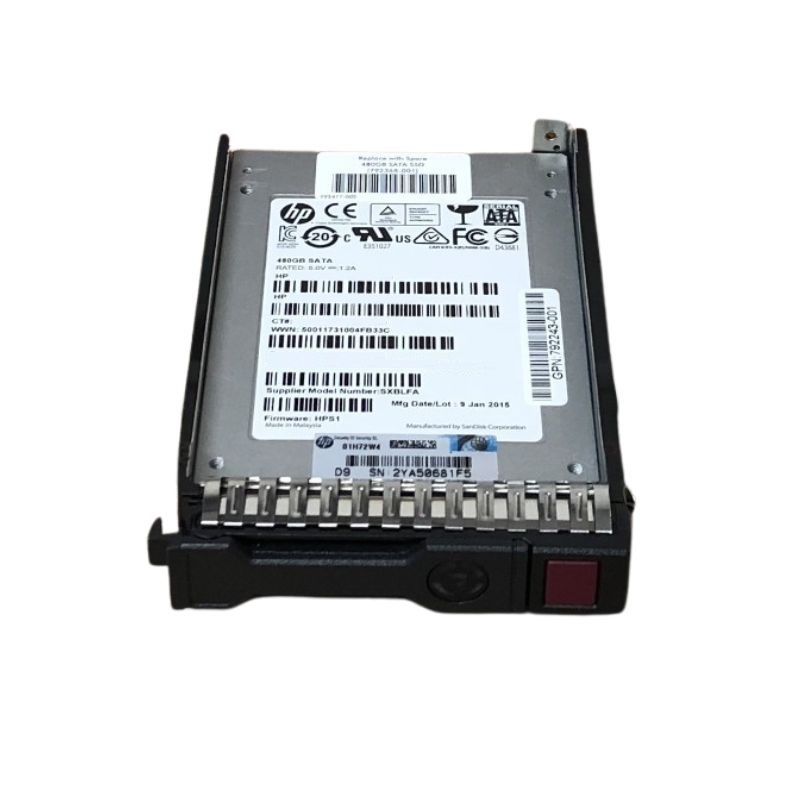


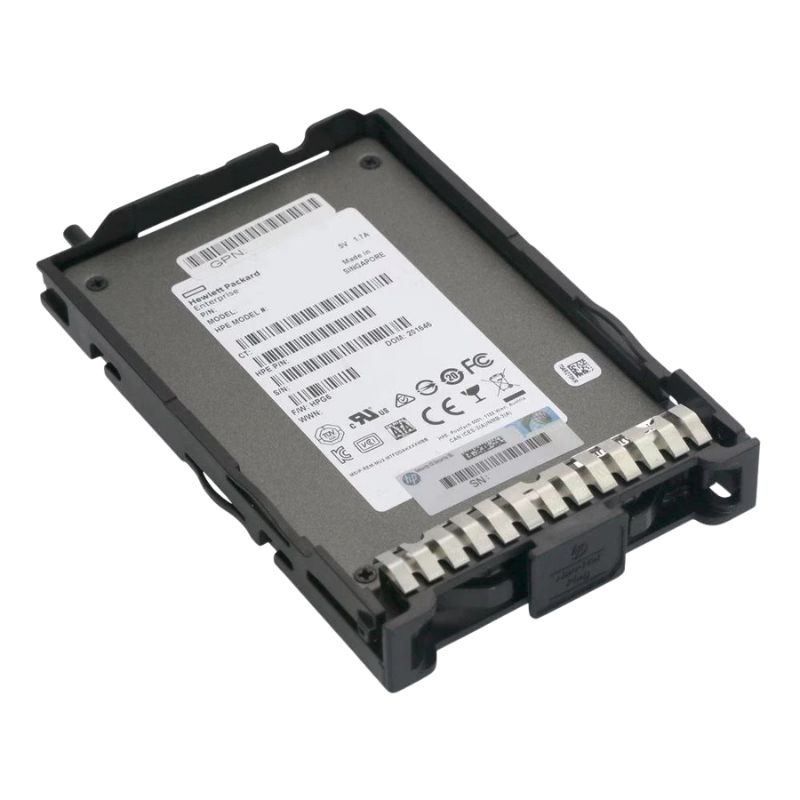
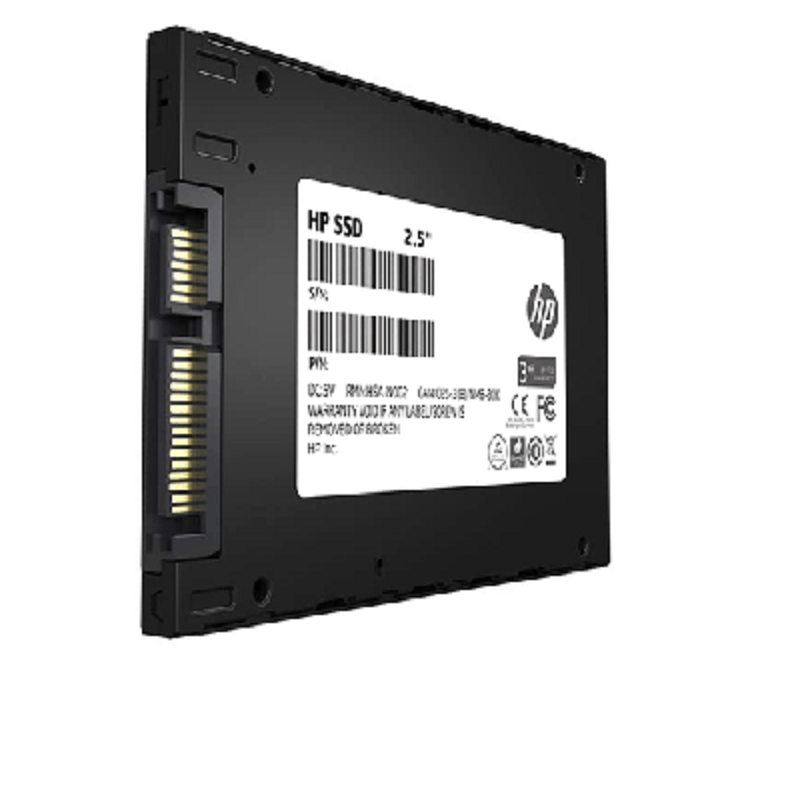
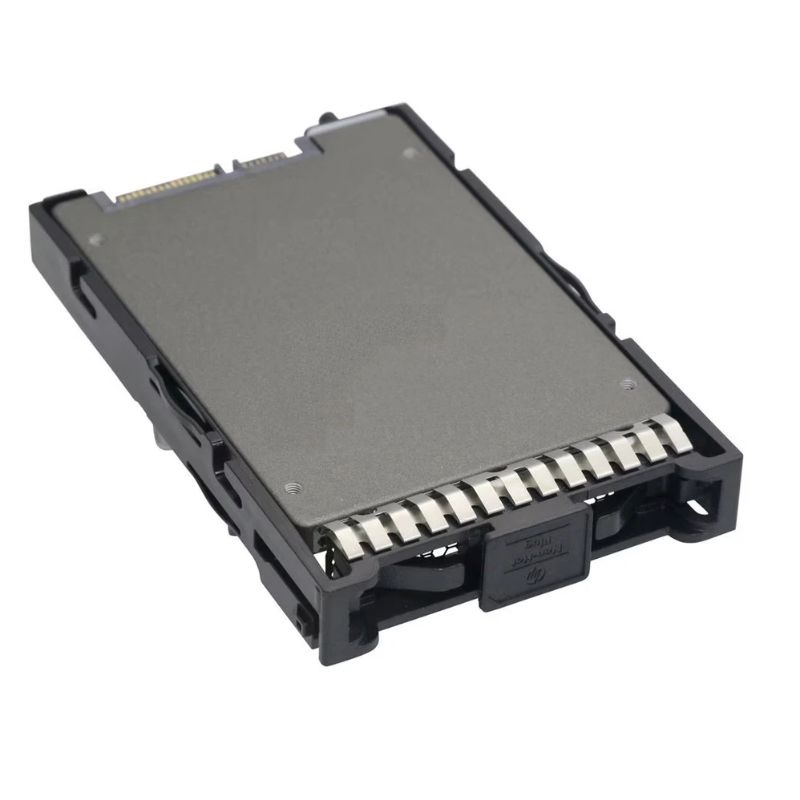
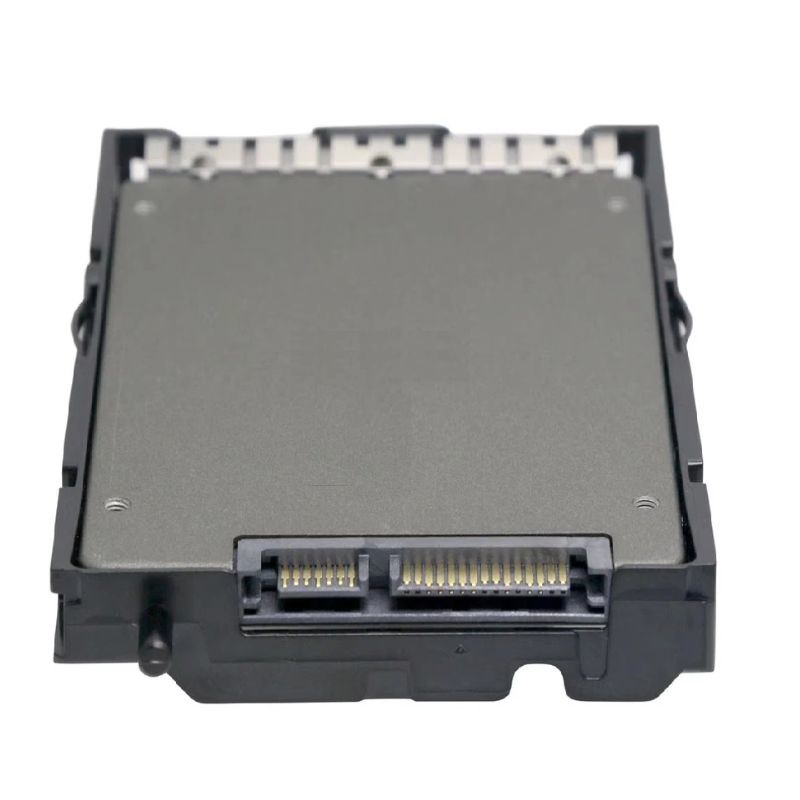
HPE 878678-001 480GB MLC SATA 6GBPS Mixed Use 2.5-inch DS Internal Solid State Drive. Excellent Refurbished with 1 year replacement warranty
The HPE 878678-001 480GB MLC SATA 6Gbps MU SFF DS SPL SSD is a reliable enterprise-class storage solution designed to balance durability, speed, and efficiency. Built with HPE’s Smart Drive technology, this 2.5-inch internal drive enhances system performance while maintaining dependable mixed-use workloads. Its hot-plug compatibility and secure digitally signed firmware make it a trusted option for businesses aiming to strengthen data integrity and scalability across critical applications.
This SSD is engineered to deliver a powerful balance between read and write workloads, making it ideal for environments where both performance and endurance are essential. With SATA 6Gbps connectivity and MLC NAND flash, it ensures seamless data throughput, fast boot times, and reduced latency for mission-critical operations.
This mixed-use SSD is suitable for organizations requiring a blend of durability, performance, and cost-efficiency. It supports a wide range of applications such as:
The HPE 878678-001 incorporates advanced NAND management and error correction mechanisms that extend the SSD’s life span while preserving consistent performance. Its mixed-use endurance profile makes it capable of handling simultaneous read and write processes without compromising on efficiency.
Lower operational costs and reduced energy consumption are vital for data centers. This SSD is designed with power efficiency in mind, cutting down on heat output and overall electricity requirements while delivering superior performance.
Equipped with a SATA 6Gbps interface and multi-level cell flash technology, this drive balances cost, endurance, and speed. With its 480GB storage size, it offers sufficient capacity for medium to large enterprise workloads.
The HPE 878678-001 480GB MLC SATA 6Gbps Mixed Use 2.5-inch DS Internal Solid State Drive represents a focused category of enterprise-grade internal SSDs tailored for data center servers, SAN/NAS appliances, and mission-critical storage arrays. This category description explores the technical characteristics, deployment scenarios, performance expectations, compatibility considerations, and procurement guidance for purchasers, system administrators, and integrators evaluating mixed-use MLC SATA drives in the 2.5-inch form factor rated for 6Gb/s SATA interfaces.
Drives in this category typically combine multi-level cell (MLC) NAND flash memory with an enterprise-level controller and firmware optimized for mixed-use workloads. The HPE 878678-001 SKU in particular is specified at 480GB capacity, with SATA III (6Gbps) interface support and a 2.5-inch drive form factor compatible with most enterprise front-access drive bays and sleds.
Performance in a mixed-use SSD is measured across many dimensions: sequential throughput, random IOPS, latency under queue depth, and steady-state behavior following sustained write cycles. The HPE 878678-001 class drives are intended to offer predictable low-latency responses with robust small-block random IOPS—attributes critical to virtualization hosts, tiered caching, and transactional database workloads.
Sequential read/write throughput is adequate for streaming large datasets or bulk migrations, while the controller and firmware prioritize small-block random I/O performance to maintain responsiveness in multi-tenant or multi-application environments. This makes these drives a practical middle ground between high-end SLC/enterprise NVMe and consumer SATA SSDs.
Expect low and consistent latency for both reads and writes under mixed workloads. Drives in this category emphasize queuing efficiency and predictable tail-latency behavior—attributes that protect application-level performance at scale and reduce latency spikes during garbage collection or wear-leveling cycles.
Endurance is a key differentiator among SSD types. MLC-based mixed-use drives typically report TBW (terabytes written) or DWPD (drive writes per day) metrics that reflect their ability to sustain writes over the warranty period. For the HPE 878678-001 480GB Mixed Use SSD, expect endurance designed for moderate to heavy enterprise workloads rather than the most extreme write-intensive scenarios (which would call for SLC or high-endurance TLC/enterprise NVMe alternatives).
The SATA 6Gbps interface ensures broad compatibility with server platforms, RAID controllers, and legacy storage enclosures. HPE-labeled SKUs such as 878678-001 are also often packaged or validated with HPE ProLiant servers, HPE storage enclosures, and firmware stacks — which can provide additional benefits like drive health reporting via vendor tools.
Designed specifically for HPE Gen8 and Gen9 server platforms, the 878678-001 SSD provides a hassle-free installation process with its SmartDrive carrier. Businesses can integrate this drive directly into their existing infrastructure to expand storage capabilities, improve performance, and secure long-term reliability.
Standard 2.5-inch mounting and SATA pinout ensures the drive can be integrated into 2.5-inch bays, hot-swap sleds, and adapter cages (2.5" to 3.5" if required). Check drive height (e.g., 7mm, 9.5mm, 15mm) for tray fitment. Power and signal are provided via SATA power and data connectors; in enterprise sleds, backplane pin compatibility is the key factor.
Purchasing drives carrying an HPE part number may provide advantages such as access to HPE’s management utilities and integration with HPE firmware update channels. For critical environments, verify firmware revisions and whether HPE endorses the drive for your specific chassis/RAID controller combination to avoid interoperability issues such as firmware regression or degraded drive visibility.
The mixed-use 480GB MLC SATA SSD is versatile and can be deployed in multiple tiers within modern storage architectures. Below are common, practical deployment patterns that highlight where value is maximized.
Use the drive as a tier for VM boot images, swap, and snapshot staging where read/write balance is required. The compact 480GB capacity is suitable for smaller clusters or for hosts where many small VMs benefit from low-latency local storage.
Databases frequently use a fast storage tier for indices and hot partitions. Mixed-use MLC delivers endurance sufficient for index updates and the quick read latency needed for low query response times.
When combined with larger HDD tiers, these SSDs act as an intermediate tier to accelerate random I/O while offloading cold, sequential data to high-capacity drives—striking a balance between performance and total cost of ownership.
Small form factor servers and edge appliances that need enterprise-grade endurance but have limited physical space benefit from 2.5-inch mixed-use SATA drives.
Choosing between SATA MLC mixed-use drives, TLC/QLC consumer SSDs, or enterprise NVMe depends on workload characteristics and budget constraints. This section summarizes pros and cons to help procurement decisions.
Advanced users should explore vendor tools for firmware updating, feature toles (such as toggling power-loss protection or security features), and telemetry aggregation. In many enterprises, centralized firmware management reduces risk by standardizing versions and ensuring known-good configuration across racks.
Many vendors expose telemetry through SNMP, IPMI, or vendor-specific APIs. Integrate drive health metrics into your existing monitoring stack (Prometheus, Nagios, Zabbix, etc.) to automate alerts and lifecycle actions when thresholds are exceeded.
If your infrastructure evolves, you may evaluate NVMe/U.2 or M.2 NVMe models for higher throughput or newer sled designs. However, migrating to NVMe often requires investment in platform compatibility and driver/tooling changes.


 Contact Us
 Information
 Catalog
 Solid State Drives (SSD)
 Network Switches
 Hard Disk Drives
 HBA & Controllers
 PC & Servers
 PC & Server Memory
 CPU & Processors
 Network Routers
 Power Supplies
 Tape Drives & Libraries
 Network Devices
 Computer & Network Cables