(7% discount is applied at checkout)
Cart is empty
Your go-to destination for cutting-edge server products
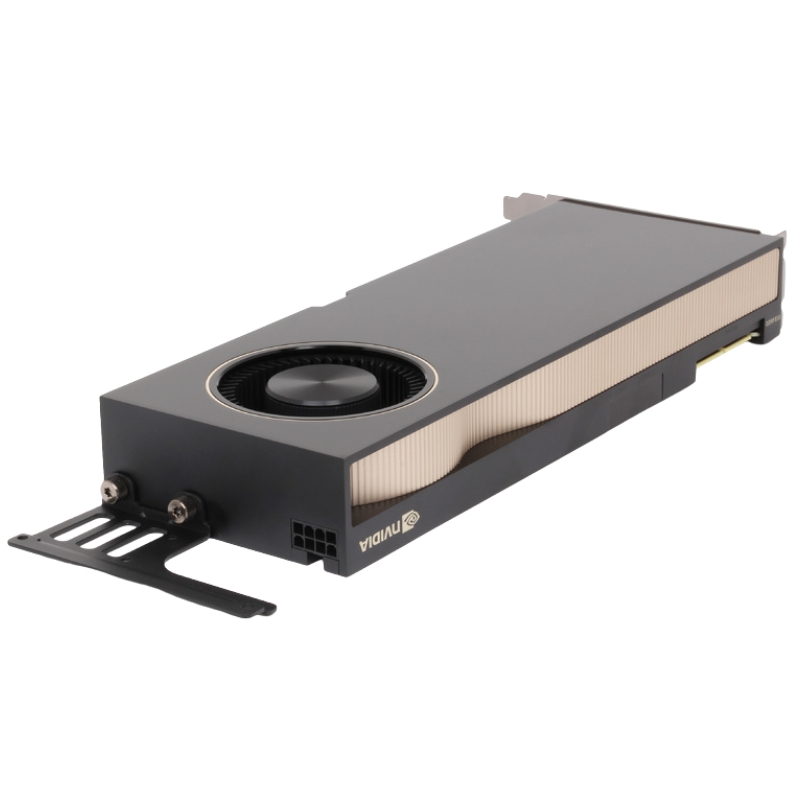


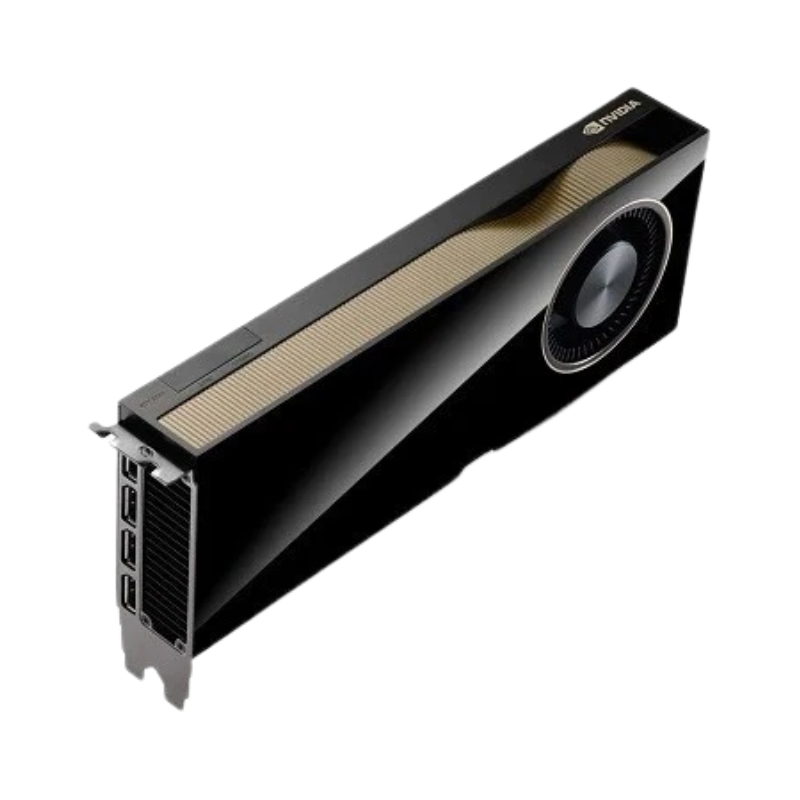
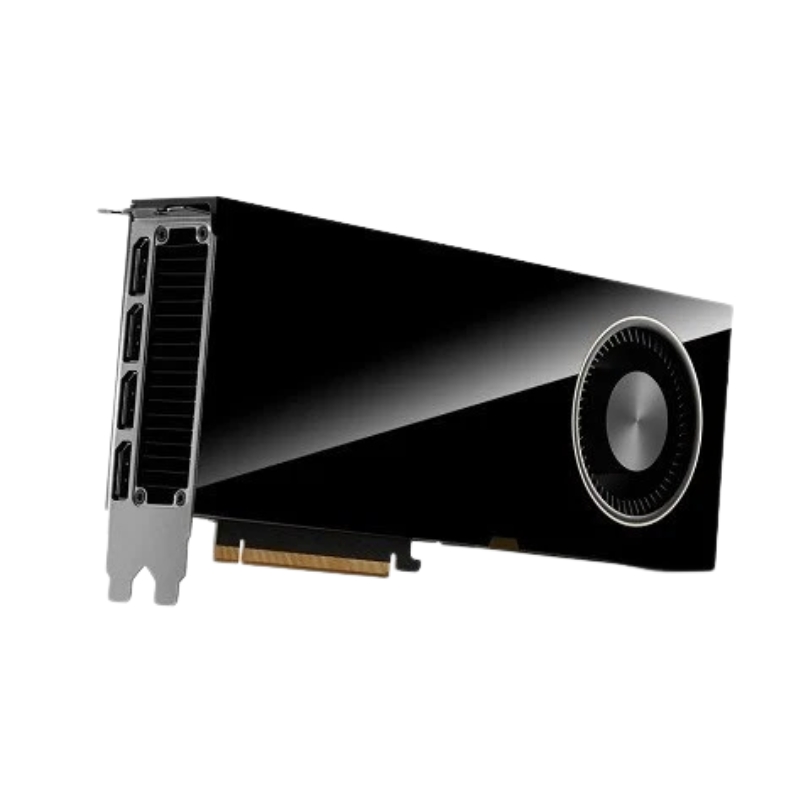
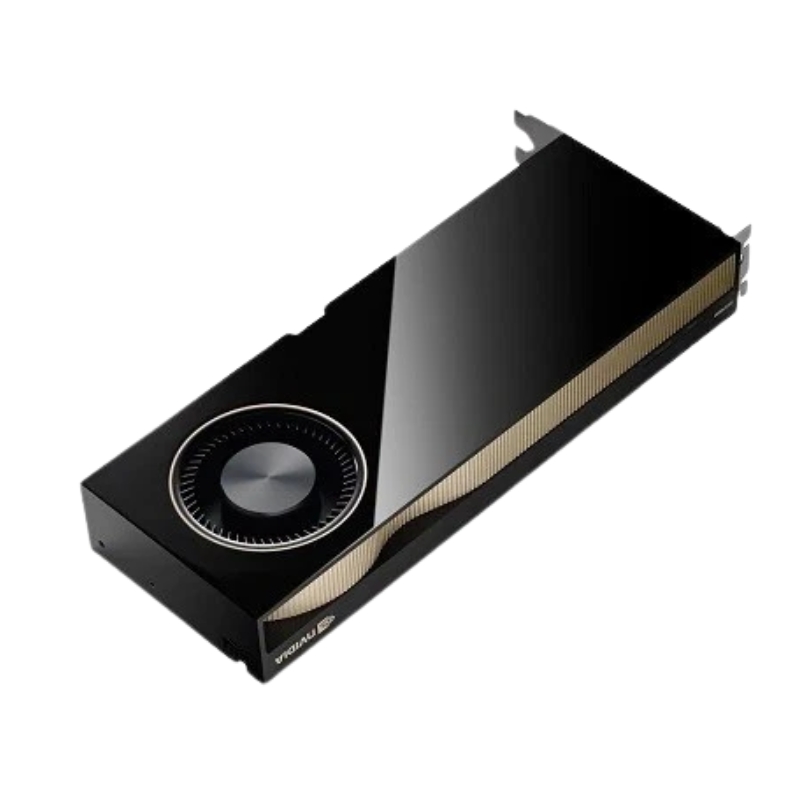
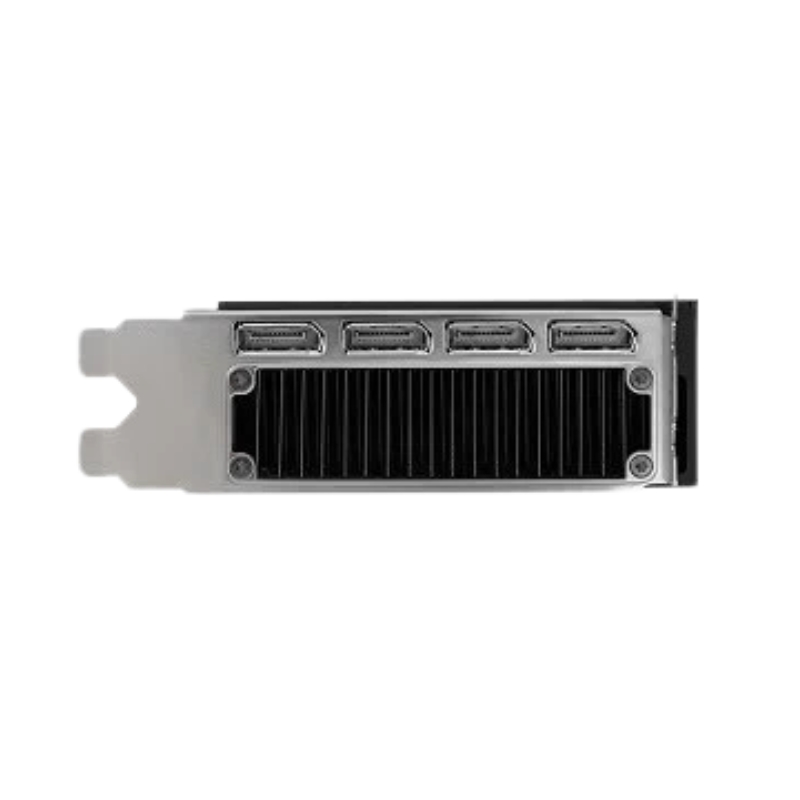
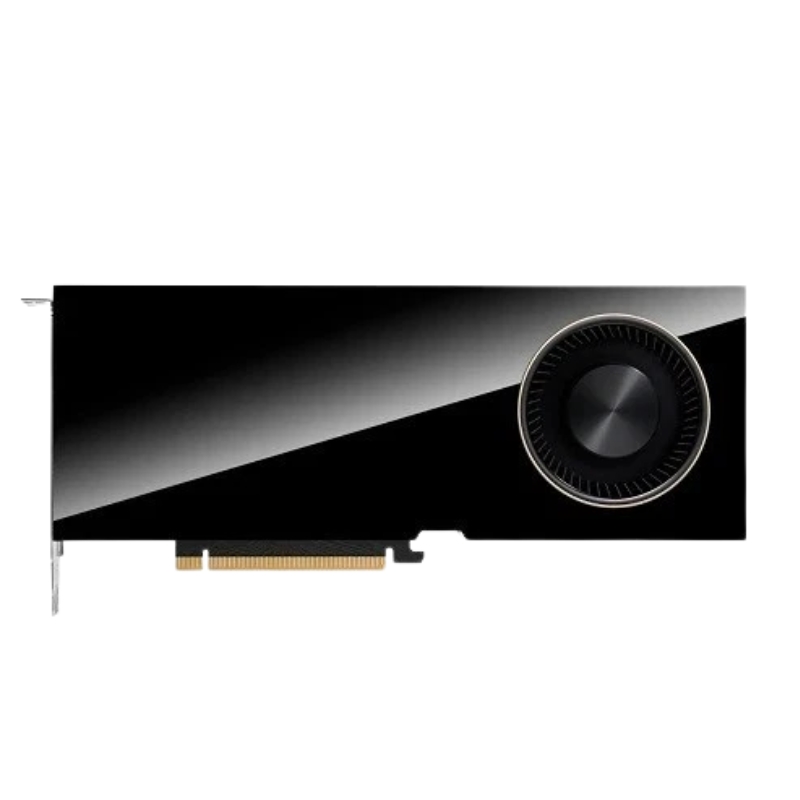
Nvidia 900-5G133-0150-001 RTX 6000 Ada 48GB GDDR6 384-Bit PCI-E 4.0 x16 Dual Slot Graphics Video Card. Excellent Refurbished with 1-Year Replacement Warranty
The Nvidia 900-5G133-0150-001 RTX 6000 Ada Gen 4 is a high-performance PCIe graphics accelerator designed for demanding professional workloads. Featuring cutting-edge architecture and massive memory bandwidth, this video card delivers exceptional rendering capabilities for enterprise environments.
Nvidia RTX 6000 Ada 48GB represents a pinnacle in workstation graphics, engineered for professionals who demand uncompromising performance across visualization, simulation, and compute workloads. Built on the Ada Lovelace architecture, the 900-5G133-0150-001 RTX 6000 Ada model combines an expansive 48 gigabytes of GDDR6 memory on a 384-bit memory bus with PCI Express 4.0 x16 connectivity in a dual-slot form factor, delivering the memory capacity and bandwidth necessary for the most complex datasets, highest-resolution renderings, and largest AI models. This category description explores the technical attributes, real-world applications, architectural advantages, compatibility considerations, and optimization strategies that make this GPU the natural choice for creative studios, scientific research labs, engineering firms, and enterprise-grade visualization teams.
Ada Lovelace architecture marks a generational leap in GPU design, and the RTX 6000 Ada leverages that evolution to accelerate both graphics and compute tasks. The architecture introduces refined CUDA core layouts, enhanced Ray Tracing (RT) cores, and next-generation Tensor cores that together elevate throughput for rasterization, real-time ray tracing, and mixed precision AI inference and training. These hardware improvements translate to lower frame times in interactive 3D viewports, faster denoising and path-tracing convergence in offline renders, and dramatically improved throughput for FP16 and BFLOAT16 workloads commonly used in deep learning pipelines. Professionals will notice improvements in viewport responsiveness, render iteration speed, and the ability to handle far larger working sets in memory without swapping or fragmentation.
Memory is frequently the limiting factor in professional workflows: architectural visualizations, volumetric simulations, large texture sets, and scientific datasets can quickly exhaust smaller GPUs. The 900-5G133-0150-001 RTX 6000 Ada’s 48GB of GDDR6 memory addresses this by providing a large contiguous address space for textures, geometry caches, and model checkpoints. Paired with a 384-bit memory interface and tightly tuned memory controllers, the card sustains high effective bandwidth to keep shader pipelines fed and reduce stalls. This combination is particularly beneficial for multi-pass rendering, large-scale point cloud visualization, complex CAD assemblies, and GPU-accelerated simulations that require maintaining extensive state on the device.
PCI Express 4.0 x16 remains a relevant and robust interconnect for high-performance workstations. The 900-5G133-0150-001 RTX 6000 Ada’s PCIe 4.0 x16 interface ensures low-latency communication and ample data transfer capacity between CPU and GPU, crucial for streaming large assets and model parameters during multi-GPU setups or when datasets are hosted on system memory. While some workloads benefit from NVLink or custom interconnects in server environments, PCIe 4.0 x16 provides a broad compatibility advantage for workstation form factors and remains sufficient for the majority of professional tasks when paired with modern CPUs and storage subsystems.
Across industries, the 900-5G133-0150-001 RTX 6000 Ada is engineered to solve challenging compute and rendering problems. Creative professionals can exploit its capacity to craft scenes with massive texture fidelity, complex shading networks, and physically accurate lighting. Visual effects studios gain the ability to iterate faster on photorealistic renders and compositing tasks. In design and engineering, the card enables smooth interaction with enormous CAD assemblies and accelerates simulations for finite element analysis (FEA) and computational fluid dynamics (CFD). Additionally, researchers in machine learning and AI can leverage the high memory footprint and Tensor core enhancements to train and fine-tune large models, perform multi-batch inference, and experiment with larger sequences or higher-resolution inputs than previously possible on single-GPU setups.
For architectural visualization and product designers, the ability to render lifelike materials, manage vast vegetation and furniture libraries, and move through immersive scenes with realtime fidelity is transformative. The RTX 6000 Ada provides the memory and GPU compute necessary to render high-polygon models and extremely detailed textures without resorting to level-of-detail compromises that can obscure design intent. Photorealistic walkthroughs, VR-ready visualizations, and interactive configurators all benefit from the card’s balance of large memory and sustained performance.
The 900-5G133-0150-001 RTX 6000 Ada is a balance of raw core counts, memory architecture, and specialized accelerators. Its combination of numerous CUDA cores, enhanced RT cores for ray tracing operations, and versatile Tensor cores for AI workloads yields impressive multi-domain performance. The card is tuned to maintain thermal and power efficiency while delivering predictable, sustained performance during extended renders and simulations. This predictability is important in production environments where render queues and simulation timelines must be respected.
CUDA cores remain the workhorse for general-purpose GPU compute and rasterization tasks, while RT cores accelerate bounding volume traversal and ray/triangle intersection workloads that underpin modern ray-traced illumination models. Tensor cores, with optimized matrix-multiply pipelines, accelerate linear algebra operations fundamental to neural networks and denoising algorithms. The synergy between these subsystems allows mixed workflows — for example, a visualization pipeline that uses ray tracing for global illumination while simultaneously running AI-based denoisers or super-resolution filters — to execute efficiently on a single device.
With a dual-slot form factor, the 900-5G133-0150-001 RTX 6000 Ada fits a wide range of professional workstations while offering robust cooling solutions that sustain performance under heavy loads. Thermal engineering ensures that the GPU can operate at high frequencies without immediate thermal throttling, provided the host chassis supplies adequate airflow. Power delivery is designed to meet the demands of the Ada architecture while maintaining compatibility with typical workstation power supplies and connector configurations. For integrators and system builders, this translates to straightforward installation in both tower and rack-mount workstation platforms.
One of the defining advantages of professional-grade GPUs like the 900-5G133-0150-001 RTX 6000 Ada is their integration with a mature software stack. Nvidia’s drivers and software libraries — including CUDA, cuDNN, OptiX, and RTX-accelerated SDKs — provide deep acceleration hooks for both commercial and open-source applications. Many ISV applications offer certifications specifically for Nvidia RTX professional cards to ensure stability, optimized features, and predictable performance in production pipelines. These certifications matter for studios and enterprises that require validated hardware/software combinations for mission-critical workloads.
Independent Software Vendor (ISV) certification ensures that applications such as major 3D content creation suites, CAD systems, and simulation packages run reliably and leverage RTX features. The RTX 6000 Ada’s driver model and validation process reduce the risk of unexpected behavior in production environments. Additionally, enterprise-level support and long-term driver maintenance provide organizations with stability and the ability to plan deployment lifecycles around predictable software updates.
Developers and technical artists will find an expansive toolkit for optimizing workloads on the RTX 6000 Ada. Tools like Nsight suite, CUDA profiler, and TensorRT help identify bottlenecks and accelerate critical kernels. RTX-accelerated libraries reduce the engineering effort required to implement ray-traced effects and AI-driven enhancements, enabling teams to focus on domain-specific problems rather than low-level optimization. These tools are especially valuable when migrating existing CPU-based pipelines to GPU-accelerated implementations or when squeezing additional performance from complex shader and compute workloads.
Successful deployment of a high-end workstation GPU requires careful attention to system balance. The RTX 6000 Ada is compatible with a broad range of contemporary workstations, but integrators should confirm that the host system provides adequate PCIe slots, power connectors, cooling capacity, and physical clearance for the dual-slot card. Memory bandwidth and CPU capabilities also influence real-world performance; pairing the card with high-throughput storage (NVMe SSDs), ample system RAM, and a multi-core CPU prevents the GPU from being starved by other system bottlenecks.
In scenarios where workloads exceed the capacity of a single GPU, multi-GPU strategies can be effective. While the RTX 6000 Ada excels as a single-GPU solution for many tasks, enterprises may opt for multi-GPU nodes for distributed rendering, large-scale model training, or parallel simulations. Architects should weigh the complexity of inter-GPU communication, the benefits of host memory pooling, and the availability of software frameworks that efficiently exploit multiple devices. For many users, the 48GB memory per GPU reduces the need to distribute workloads across devices, simplifying software development and resource management.
Virtualized GPU workflows are increasingly common in studio and enterprise environments. The RTX 6000 Ada supports virtualization scenarios where GPU resources are allocated to virtual machines or remote desktops for distributed rendering, remote design review, and collaborative visualization. Integration with virtualization platforms and virtual GPU (vGPU) software allows organizations to centralize GPU resources, enhance security, and deliver consistent performance to dispersed teams. Careful licensing and resource planning ensure that virtualized deployments meet performance and cost objectives.
Large assets and datasets require thoughtful management. Techniques such as texture streaming, on-demand geometry loading, and tiled data structures minimize memory pressure while preserving visual fidelity. When streaming from storage, fast NVMe drives combined with PCIe 4.0 bandwidth help maintain steady throughput to the GPU. Additionally, compression-aware pipelines that offload decompression to the GPU or use GPU-friendly formats reduce CPU-GPU transfer overhead and improve overall responsiveness.
Automating repetitive tasks and integrating the GPU into CI/CD pipelines for rendering or model testing speeds production cycles. Batch render farms, automated regression tests for graphics output, and scripted data preprocessing harness the card’s compute capacity reproducibly. Enterprises benefit from orchestration that maps workloads to appropriate GPU resources, tracks utilization, and simplifies scaling when demand surges.
Choosing the 900-5G133-0150-001 Nvidia RTX 6000 Ada 48GB is a strategic investment for teams that require a balance of enormous memory capacity, Ada architecture performance features, and broad software support. The card enables higher-fidelity work, accelerates time-to-insight for research applications, and reduces iteration time for creative projects. Its dual-slot form factor and PCIe 4.0 compatibility make it straightforward to integrate into modern workstations, while ISV certifications and a robust developer ecosystem ensure that applications can leverage its full capabilities.


 Contact Us
 Information
 Catalog
 Solid State Drives (SSD)
 Network Switches
 Hard Disk Drives
 HBA & Controllers
 PC & Servers
 PC & Server Memory
 CPU & Processors
 Network Routers
 Power Supplies
 Tape Drives & Libraries
 Network Devices
 Computer & Network Cables