(7% discount is applied at checkout)
Cart is empty
Your go-to destination for cutting-edge server products
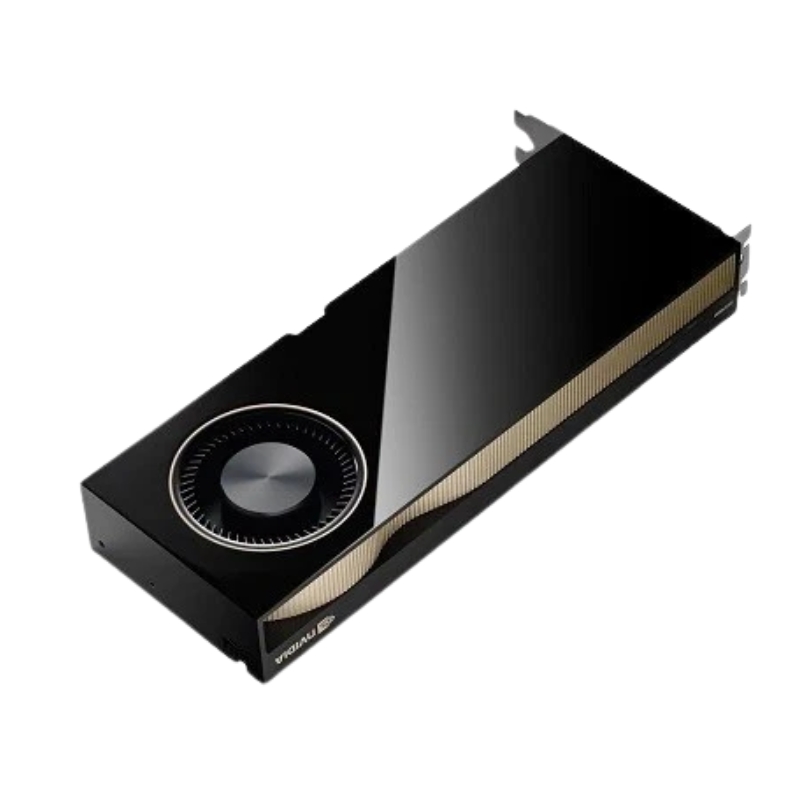


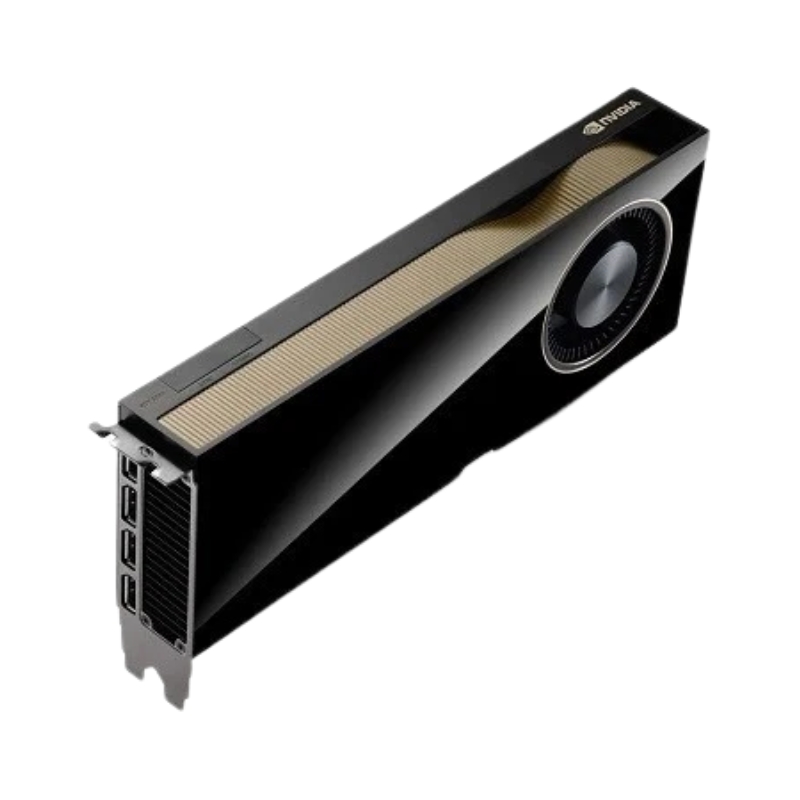
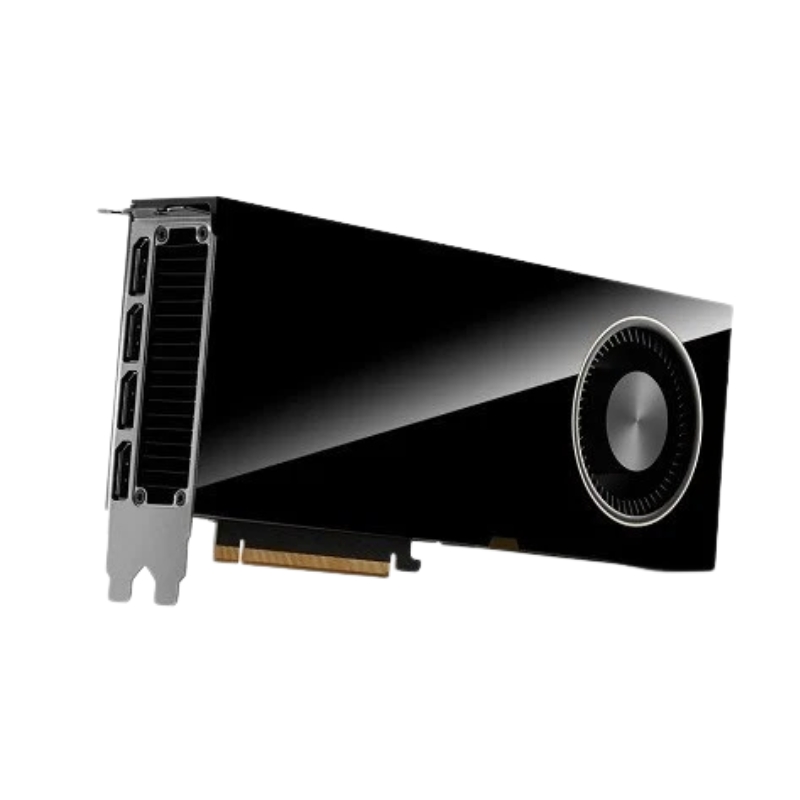
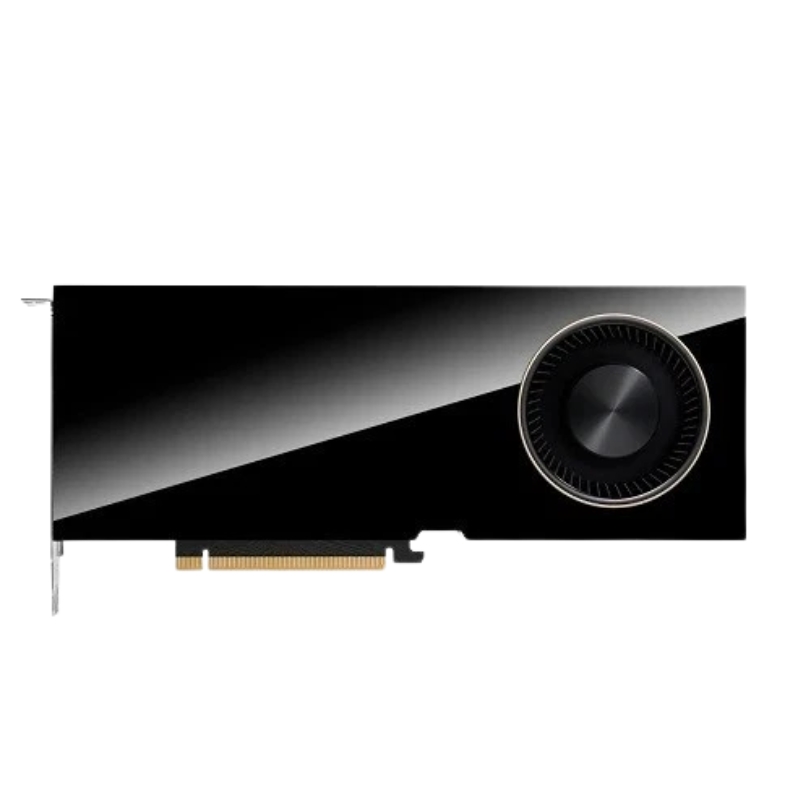
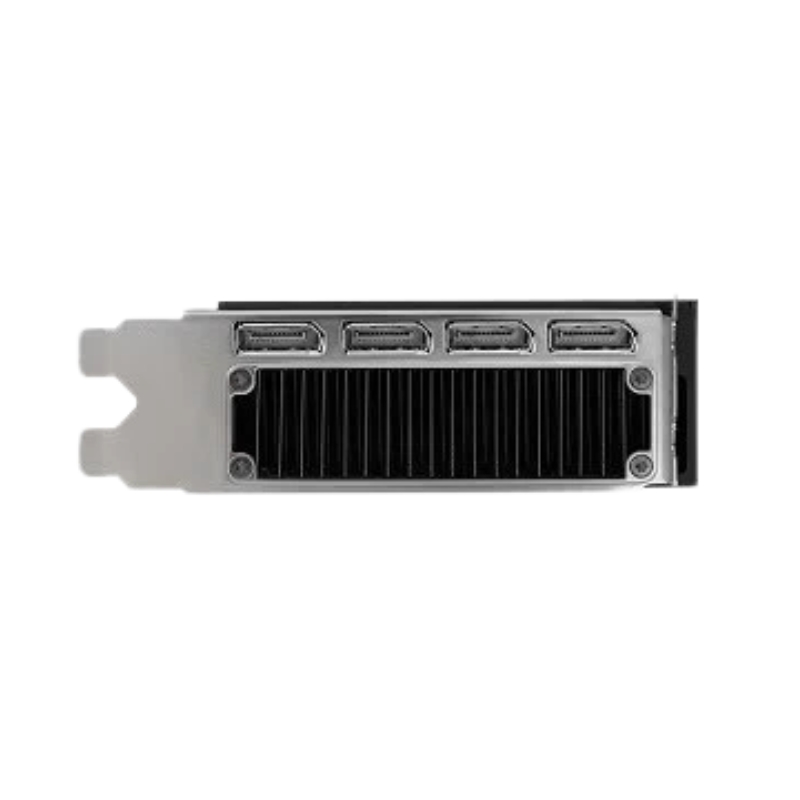
Nvidia 900-5G133-1700-000 Quadro RTX A6000 48GB GDDR6 ECC PCI-E x16 4xDP Graphic Card. New Sealed in Box (NIB) with 3 Years Warranty. Call (Eta 2-3 Weeks)
The Nvidia 900-5G133-1700-000 Quadro RTX A6000 is a high-performance professional graphics accelerator designed for intensive computing tasks, advanced rendering, and enterprise-grade visualization.
The 900-5G133-1700-000 Nvidia Quadro RTX A6000 48GB GDDR6 ECC is a flagship professional graphics solution engineered for the most demanding visualization, simulation, and AI workloads. Designed to operate in PCI-E x16 slots and equipped with four DisplayPort outputs, this graphics card combines massive memory capacity, hardware-accelerated ray tracing, and error-correcting memory to deliver deterministic, high-fidelity results for studios, research labs, and enterprise data centers. Whether rendering complex VFX scenes, running large neural networks, or performing multi-gigabyte simulation datasets, this GPU is built to sustain heavy throughput while maintaining stability and precision.
Nvidia built the 900-5G133-1700-000 Quadro RTX A6000 on an advanced Ampere or compatible architecture that unites compute throughput and specialized accelerators. The graphics card boasts thousands of CUDA cores for parallel compute, dedicated RT cores for real-time ray tracing, and Tensor cores optimized for mixed-precision matrix math commonly used in deep learning. These hardware blocks work together to accelerate both graphics and compute workflows, allowing professionals to move from concept to final render or model training faster than with consumer-grade GPUs. ECC-protected GDDR6 memory further enhances reliability during prolonged, memory-intensive jobs by detecting and correcting bit errors that could otherwise corrupt datasets or subtly alter results.
With 48 gigabytes of GDDR6 ECC memory, the 900-5G133-1700-000 Nvidia Quadro RTX A6000 excels at handling oversized assets and extensive datasets that would overwhelm smaller-memory cards. Large 3D scenes, high-resolution textures, complex volumetric datasets, and deep learning models with billions of parameters are far more tractable when there is ample onboard RAM. ECC safeguards the integrity of frames and tensors over long runs, which is essential for professional visualization workflows where a single silent memory error can mean hours of wasted compute. High memory bandwidth ensures that data moves rapidly between memory and processing units, reducing stalling and increasing sustained compute performance for real-world tasks.
Artists and visualization specialists will find the Quadro RTX A6000 particularly suited to photorealistic rendering, interactive scene assembly, and live preview workflows. Hardware-accelerated ray tracing lets users iterate on lighting, reflections, and shadows with near-final quality in interactive viewports, while path-tracing and hybrid renderers take advantage of RT cores to accelerate production renders. The GPU’s large frame buffer removes typical constraints around texture streaming and cache thrashing, so designers can work with ultra-detailed assets without constant proxying. In animation pipelines, the card improves playback fidelity and reduces the need for time-consuming scene simplifications during layout and lighting passes.
Real-time ray tracing transforms how artists preview scenes, enabling realistic global illumination, accurate soft shadows, and complex reflections in interactive applications. The 900-5G133-1700-000 Quadro RTX A6000’s RT cores are optimized to accelerate bounding-volume traversal and ray-triangle intersection operations, delivering orders-of-magnitude improvements over pure shader-based approaches. Visual effects studios benefit from this by compressing iteration cycles: changes to lighting or materials can be reviewed immediately in artist viewports or virtual production stages, helping creative teams converge faster on final looks.
Beyond training, the 900-5G133-1700-000 Quadro RTX A6000 is also powerful for GPU-accelerated inference workloads. Optimized runtimes and frameworks such as NVIDIA TensorRT, cuDNN, and CUDA enable performant deployment of trained models for tasks like image segmentation, point-cloud classification, and real-time video analytics. The GPU’s combination of high compute, memory, and ECC reliability makes it suitable for on-premise inference servers, workstation-based edge inference, and compact data center appliances where consistent, repeatable results are required.
Engineers and scientists using finite element analysis, computational fluid dynamics, molecular dynamics, or large-scale simulations benefit from the card’s parallel compute architecture. CUDA-enabled solvers and GPU-accelerated libraries exploit the large number of compute cores and memory to compress solution times significantly compared to CPU-only runs. The card’s ECC memory is critical in simulation workloads where numerical fidelity and reproducibility are non-negotiable, ensuring simulation states remain valid over long compute cycles.
While the 900-5G133-1700-000 Quadro RTX A6000 is designed primarily for single-precision and mixed-precision workloads, it also supports double-precision compute operations at varying performance levels depending on architecture-specific configurations. For applications that require intensive double-precision arithmetic, it’s important to review solver compatibility and test for acceptable performance. In many cases, mixed-precision algorithms and compensated summation techniques can restore numerical accuracy while retaining substantial speedups on the GPU.
The Nvidia 900-5G133-1700-000 Quadro RTX A6000 is a full-length, dual-slot card that requires a PCI-E x16 interface and a capable power supply. With four DisplayPort outputs, the card supports multiple high-resolution displays and immersive multi-monitor configurations for visualization walls or virtual production rigging. Power delivery and cooling are engineered for continuous professional use: high-efficiency fans, vapor chamber or blower-style coolers on certain models, and carefully tuned thermal throttling policies ensure that the GPU maintains peak performance while protecting components. System integrators must plan for adequate chassis airflow and reliable power connectors to ensure stable operation under long rendering or compute sessions.
System builders should consider the Quadro RTX A6000’s physical dimensions and slot usage when integrating it into workstations or servers. The dual-slot profile necessitates adjacent slot clearance, and the card’s cooling profile benefits from front-to-back airflow in tower and rack-mounted enclosures. Many OEM workstations include validated configurations for Quadro-class GPUs, providing drivers and firmware compatibility that make deployment smoother. Additionally, ISV certifications from major application vendors help ensure that popular DCC and CAD programs perform reliably out of the box.
Many creative, CAD, and engineering tools maintain ISV certification lists indicating which GPUs and driver versions provide validated performance and feature support. The Quadro RTX A6000 frequently appears on these lists due to its professional orientation, providing teams with predictable behavior for mission-critical projects. ISV validation reduces risk in production environments and helps IT administrators choose supported driver versions that minimize compatibility regressions during software updates.
For organizations requiring extreme compute density or large-scale visualization, the Quadro RTX A6000 supports NVLink or multi-GPU configurations in supported platforms—allowing memory pooling, high-bandwidth interconnects, and synchronized rendering across multiple cards. Virtualization features such as NVIDIA GRID and vGPU facilitate sharing of GPU resources among multiple virtual machines, enabling GPU-accelerated virtual workstations for remote artists and analysts. Administrators should evaluate licensing models and platform compatibility to ensure that vGPU deployment meets user performance and security requirements.
Clusters of Quadro RTX A6000 GPUs can be orchestrated for distributed rendering, model parallel training, or large-scale similarity searches. Frameworks like NVIDIA NCCL accelerate multi-GPU collectives, and cluster schedulers can be configured to dispatch GPU jobs across nodes. In production research environments, cards are often integrated with high-speed networking and shared storage to maximize data throughput and reduce job queuing latency. Proper orchestration and monitoring are essential for achieving consistent cluster performance.
Reliability is central to the Quadro family. The A6000 lineup typically includes enterprise-grade warranties and extended service options that differ from consumer product warranties. Organizations can purchase onsite support agreements, replacement services, and extended coverage to match their uptime requirements. The card’s robust build quality and ECC memory further contribute to a lower risk profile for long-term deployments, minimizing interruptions for production deadlines and critical simulations.
Compared to lower-memory or consumer-oriented GPUs, the Quadro RTX A6000 stands out for its 48GB ECC memory, enterprise driver support, and ISV certifications. While some workstation users may opt for multiple smaller GPUs for parallel workloads, the A6000’s single-card capacity simplifies many workflows that otherwise require complex distributed memory management. When evaluating alternatives, teams should weigh raw compute throughput, memory footprint, driver stability, and price-to-performance for their primary applications. In many professional settings, the value of reduced iteration time and higher reliability offsets the initial investment in a higher-tier Quadro card.
Decision-makers should consider whether increased onboard memory or additional GPUs is the better path for their workloads. Single-card solutions like the A6000 reduce software complexity and avoid inter-GPU synchronization overhead, which is crucial for datasets that must fit in a single address space. Conversely, problems that are easily sharded or parallelized may scale more cost-effectively with multiple smaller GPUs. Profiling representative workloads will reveal whether memory bottlenecks or compute limits dominate, guiding a budget-conscious infrastructure strategy.
Studios producing feature films use the card for final-frame rendering, composer workflows, and virtual production stages. Architectural firms leverage the large framebuffer for complex BIM models and urban visualization at high fidelity. Scientific teams employ the GPU for molecular dynamics, seismic imaging, and real-time data visualization, where both memory capacity and numerical stability are essential. AI research groups use the Quadro RTX A6000 to iterate on large models, prototype novel architectures, and run inference tasks that require high throughput and reliability.
Before integrating the 900-5G133-1700-000 Quadro RTX A6000 into production, verify PCI-E lane availability, power supply capacity, and chassis clearance. Confirm that the chosen OS and application stack are supported by Nvidia’s enterprise driver releases and that ISV-recommended driver versions match critical software. Plan for driver rollback strategies, maintain system images that include validated drivers, and stage firmware updates in a test environment. These steps reduce the risk of unexpected incompatibilities and help maintain uninterrupted creative and scientific workflows.


 Contact Us
 Information
 Catalog
 Solid State Drives (SSD)
 Network Switches
 Hard Disk Drives
 HBA & Controllers
 PC & Servers
 PC & Server Memory
 CPU & Processors
 Network Routers
 Power Supplies
 Tape Drives & Libraries
 Network Devices
 Computer & Network Cables