(7% discount is applied at checkout)
Cart is empty
Your go-to destination for cutting-edge server products
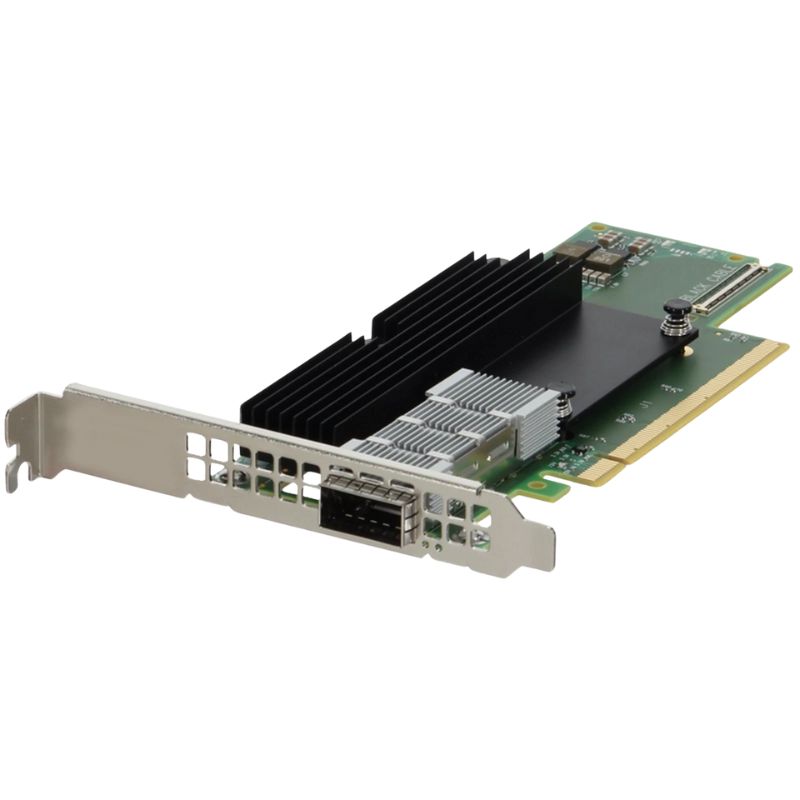


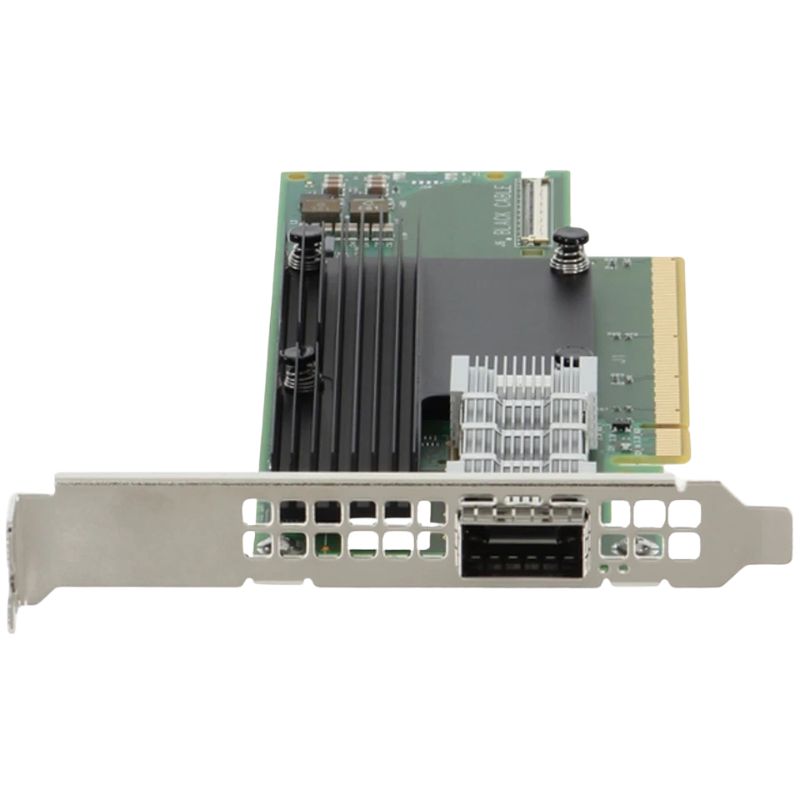
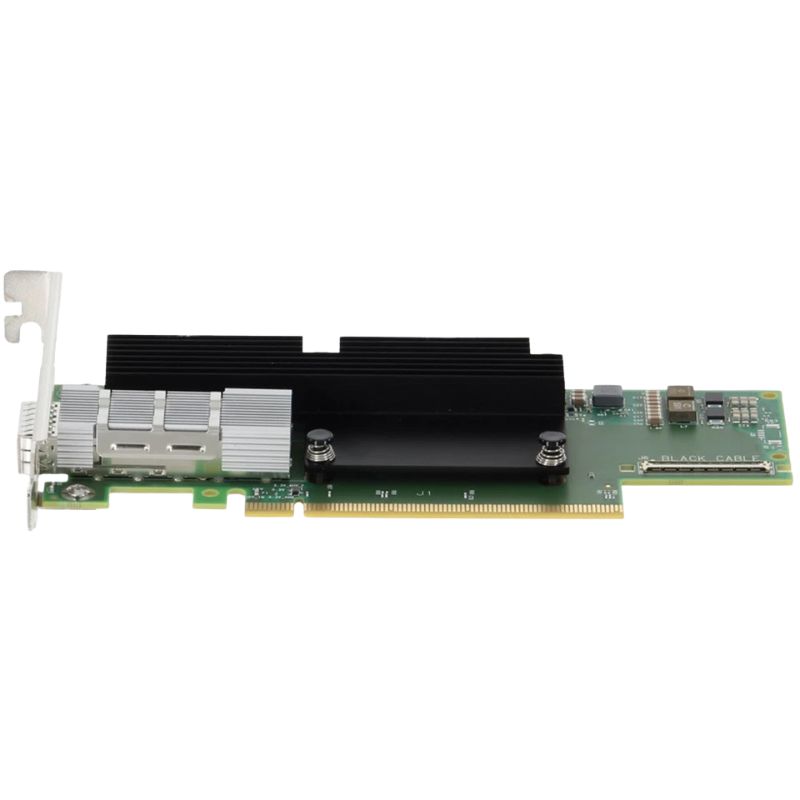
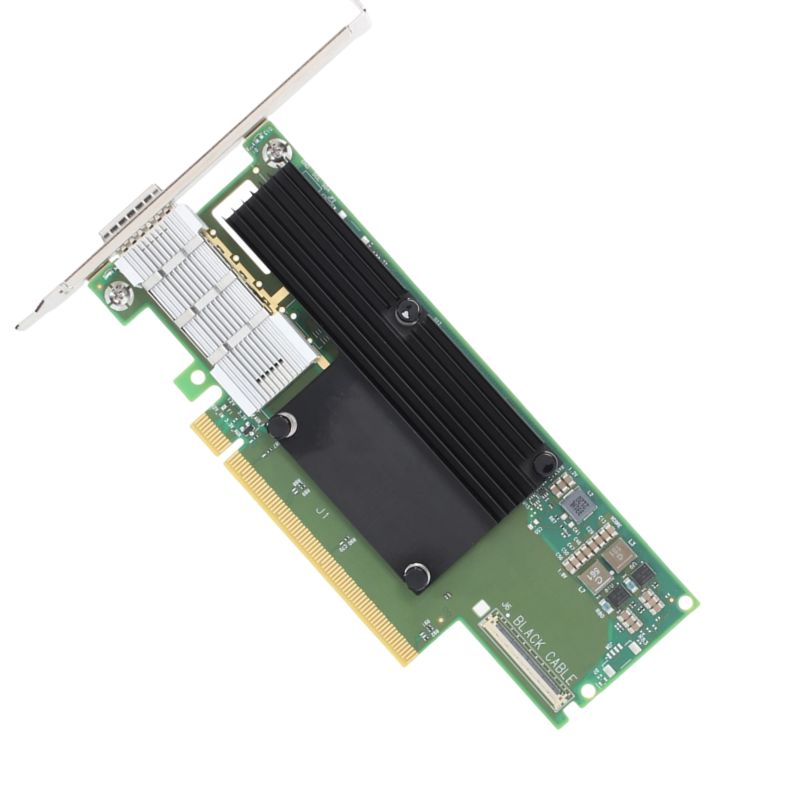
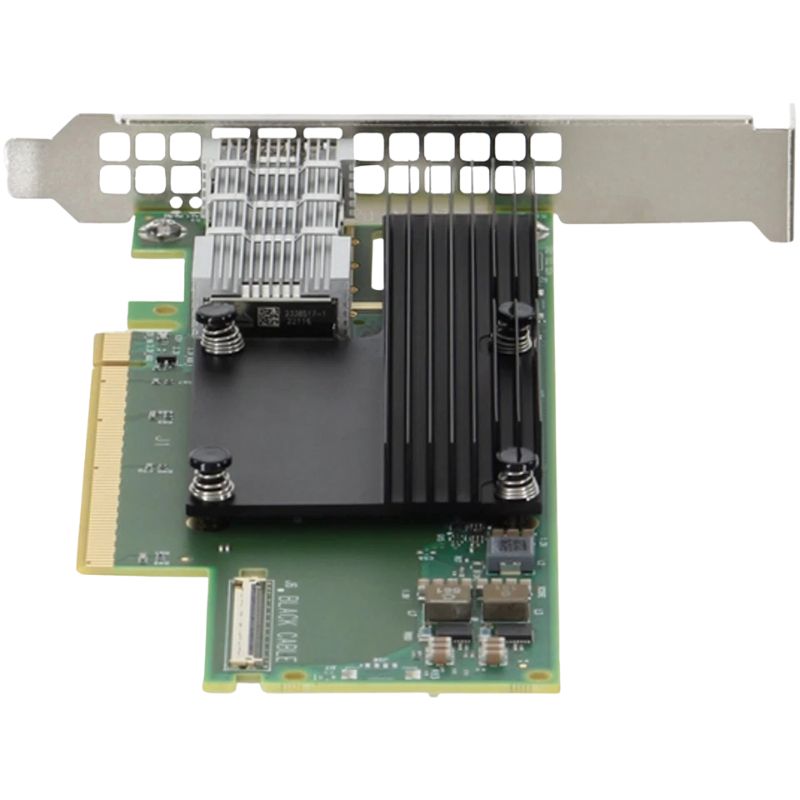
Nvidia 900-9X6AF-0016-ST1 ConnectX-6 InfiniBand Card 100GBPS 1Port QSFP56 PCIe3.0/4.0 x16 Ethernet Adapter. New Sealed with 1-Year Replacement Warranty
The Nvidia 900-9X6AF-0016-ST1 ConnectX-6 Adapter Card is a high-performance network interface solution that enables both InfiniBand and Ethernet connectivity at speeds up to 100Gb/s. Designed with PCI Express 3.0/4.0 x16 support and a single QSFP56 port, this card delivers ultra-low latency, exceptional bandwidth, and efficiency for demanding data centers, cloud infrastructures, and high-performance computing clusters.
The 900-9X6AF-0016-ST1 is an OEM ordering part number for an NVIDIA ConnectX-6 family adapter — a high-performance, single-port QSFP56 InfiniBand and 100GbE network card designed for demanding data center workloads. Built to deliver ultra-low latency, advanced offloads and robust protocol support, this PCIe x16 form factor card targets HPC clusters, AI training/inference farms, storage arrays and hyperscale cloud deployments that require deterministic latency, high throughput and flexible deployment options.
One port of QSFP56 on the ConnectX-6 hardware supports up to 100Gb/s (HDR100/EDR IB or 100GbE) per the card’s specification; when installed in a PCIe Gen4 x16 slot some ConnectX-6 variants can be used to drive higher aggregated host throughput, depending on firmware and SKU. The card’s SerDes and link layer support both PAM4 and NRZ signaling modes to interoperate with modern switches and transceivers. The result is a predictable, high-bandwidth fabric for large data sets and dense inter-node communications.
For applications such as distributed training, MPI, in-memory databases and high-performance storage, sub-microsecond latencies are critical. ConnectX-6 devices are engineered with RDMA and transport optimizations to deliver consistent low latency; vendor datasheets and product pages report typical messaging latencies below 0.6 μs under optimal conditions. This determinism is a key advantage over traditional kernel-based TCP stacks in latency-sensitive clusters.
The 900-9X6AF-0016-ST1 ConnectX-6 card follows NVIDIA’s half-height, half-length PCIe adapter profile. The compact footprint (approximately 167.65mm × 68.90mm) allows dense server populations while still providing full x16 electrical connectivity. Some vendor variants ship with tall brackets for compatibility with larger chassis. Always verify the bracket type and server slot clearance before installing.
The single QSFP56 port supports both optical transceivers and direct-attach copper breakouts, giving architects choices between long-reach fiber, short-reach DAC and active optical cables. QSFP56 modules and cables are widely available for 100GbE and InfiniBand HDR100/EDR interconnects — choose the right transceiver to match your switch/router optics and the length of links in your rack or between racks.
ConnectX-6 adapters are often VPI (Virtual Protocol Interconnect) capable, meaning a single hardware SKU can operate either as InfiniBand or as RoCE/100GbE Ethernet depending on firmware and configuration. The 900-9X6AF-0016-ST1 OPN is listed among NVIDIA’s InfiniBand/Ethernet adapter ordering part numbers and firmware compatibility matrices, so customers can plan hardware inventories that cover multiple protocol needs. Firmware versions and specific OPNs determine exact supported protocols and speeds — check NVIDIA’s firmware compatibility documentation when building mixed environments.
NVIDIA provides user manuals, firmware bundles and the Mellanox OFED drivers for ConnectX-6 adapters. Production deployments require matching firmware and driver versions to ensure features like SR-IOV, RoCEv2, NVMe-oF offloads and vSwitch acceleration operate correctly. NVIDIA’s documentation and release notes list compatible firmware packages for specific OPNs (including the 900-9X6AF family), and the vendor maintains long-term support cycles for data center customers.
ConnectX-6 supports full RDMA semantics for both InfiniBand and RoCE, enabling direct zero-copy transfers between remote memory spaces. When paired with NVIDIA GPUs and GPU Direct RDMA, the adapter can move data between GPU memory and remote nodes without staging buffers in host memory — a significant performance advantage for multi-GPU training and tightly coupled MPI jobs. Additionally, ConnectX-6 offloads NVMe-over-Fabric (NVMe-oF) functions to reduce CPU overhead and accelerate storage access for disaggregated storage architectures.
Hardware-accelerated crypto engines and block-level encryption offloads allow the adapter to perform inline encryption without major host CPU impact. ConnectX-6 also includes checksum offloads and storage acceleration features that benefit block and object storage systems, including inline integrity checks and low-latency replication streams. These features are especially useful in compliance-sensitive environments or multi-tenant clouds where secure data movement matters.
Support for SR-IOV, hardware vSwitch/vRouter acceleration and programmable pipelines make the ConnectX-6 well suited to NFV, containerized networking and multi-tenant workloads. Offloading virtual switching improves throughput for East-West traffic inside hypervisor hosts and reduces noisy-neighbor effects by keeping packet processing in hardware. This yields better overall host consolidation ratios and more predictable performance for tenant workloads.
HPC clusters—running MPI, distributed scientific simulations or weather modeling—benefit from InfiniBand’s low latency and efficient collective operations. The 900-9X6AF-0016-ST1’s HDR100/EDR support and RDMA acceleration reduce synchronization overhead for tightly coupled jobs and deliver measurable speedups in time-to-solution. Architects commonly select ConnectX-6 adapters for interconnect fabrics in compute nodes and for accelerator-dense servers.
Large model training demands fast all-reduce operations and GPU-GPU communication across nodes. ConnectX-6 with GPU Direct RDMA enables efficient inter-GPU transfers across racks, lowering host CPU involvement and preserving memory bandwidth for model compute. These advantages translate to higher parallel efficiency and reduced epoch times in distributed training pipelines.
When used as a target or initiator for NVMe-oF, adapters in the ConnectX family accelerate storage traffic and provide features such as inline encryption and data integrity checks. Storage arrays and software-defined storage systems that need low latency and high IOPS commonly adopt InfiniBand or RoCE fabrics based on ConnectX hardware to meet SLAs.
Service providers and private clouds deploy ConnectX-6 adapters for their combination of throughput, virtualization offloads and programmable pipelines. This allows carrier-grade VNFs and tenant networks to run with closer to bare-metal performance and predictable networking behavior.
A mismatch between a card’s firmware and the data center’s management software can limit features or cause link negotiation issues. Always test firmware updates in staging and track the vendor’s compatibility notes for specific OPNs such as 900-9X6AF-0016-ST1.
For optimal RDMA and RoCEv2 performance, you may need to tune host kernel parameters (e.g., increasing shared memory, adjusting IRQ affinity), queue pair counts and buffer sizes. NVIDIA documentation and community tuning guides provide recommended starting points for clusters running MPI or NVMe-oF.
The 900-9X6AF-0016-ST1 is a single-port QSFP56 variant aimed at 100Gb/s InfiniBand/Ethernet workloads. Other ConnectX-6 family SKUs may offer dual QSFP56 ports, 200Gb/s support per port (for HDR/200GbE variants), or EN vs VPI flavored firmware that changes protocol behavior. When selecting between SKUs, weigh the need for dual ports, whether you require 200GbE, and whether your fabric is InfiniBand or Ethernet/RoCE based. Firmware compatibility matrices from NVIDIA list exact OPN mappings and should be consulted for precise SKU features.
Many ConnectX-6 variants are VPI-capable and can operate in either InfiniBand or Ethernet modes depending on firmware. The 900-9X6AF family includes entries in NVIDIA’s firmware compatibility lists showing InfiniBand/EN assignments — confirm the exact OPN and firmware build for your SKU.
If you need hands-on assistance for firmware upgrades, driver installs or performance tuning, contact your hardware vendor’s enterprise support line or the NVIDIA networking support channels. They can provide compatibility checks for your specific server model, recommended firmware bundles and best-practice configuration scripts for Linux distributions and orchestration systems.
The 900-9X6AF-0016-ST1 represents a turnkey, high-performance adapter option for teams building low-latency fabrics or accelerating storage and AI workflows. Its combination of hardware offloads, QSFP56 flexibility and PCIe x16 compatibility makes it a practical choice when predictable latency, high throughput and flexible protocol support are required. For exact feature availability and firmware-level capabilities, always consult NVIDIA’s ConnectX-6 documentation and the firmware compatibility tables referenced above.


 Contact Us
 Information
 Catalog
 Solid State Drives (SSD)
 Network Switches
 Hard Disk Drives
 HBA & Controllers
 PC & Servers
 PC & Server Memory
 CPU & Processors
 Network Routers
 Power Supplies
 Tape Drives & Libraries
 Network Devices
 Computer & Network Cables