(7% discount is applied at checkout)
Cart is empty
Your go-to destination for cutting-edge server products
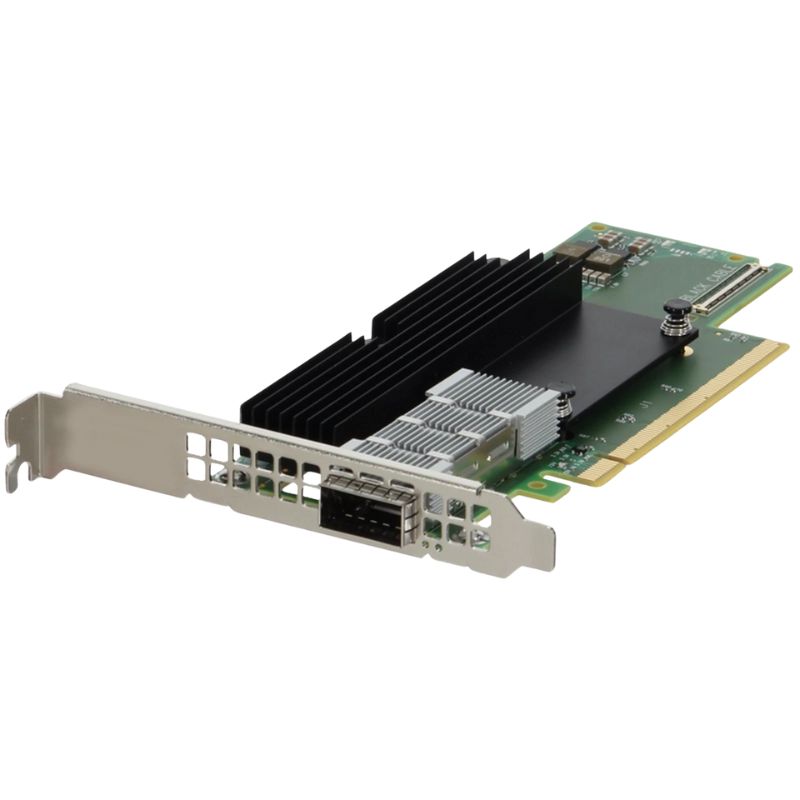


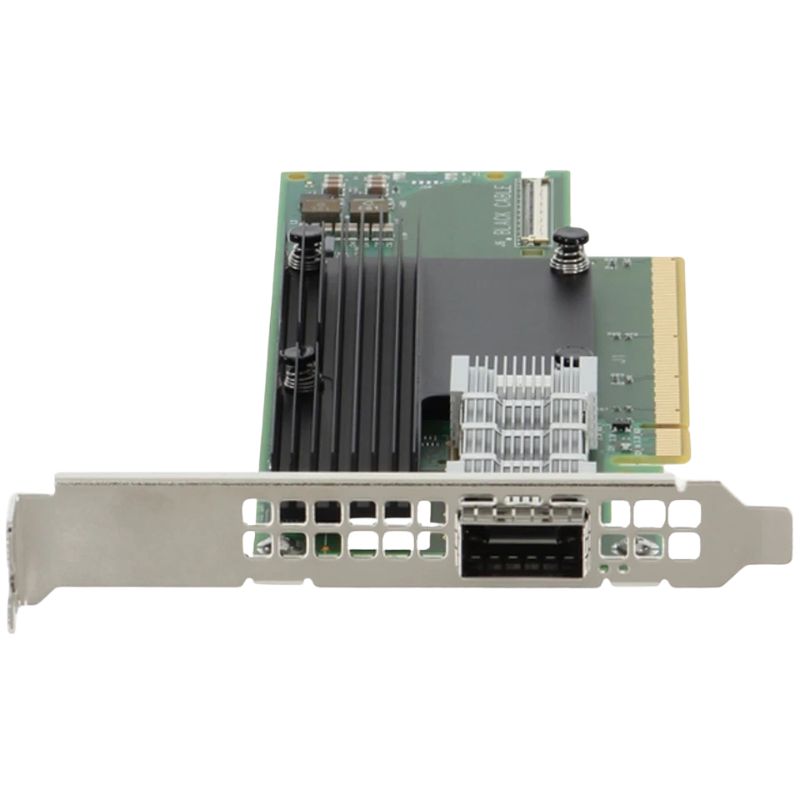
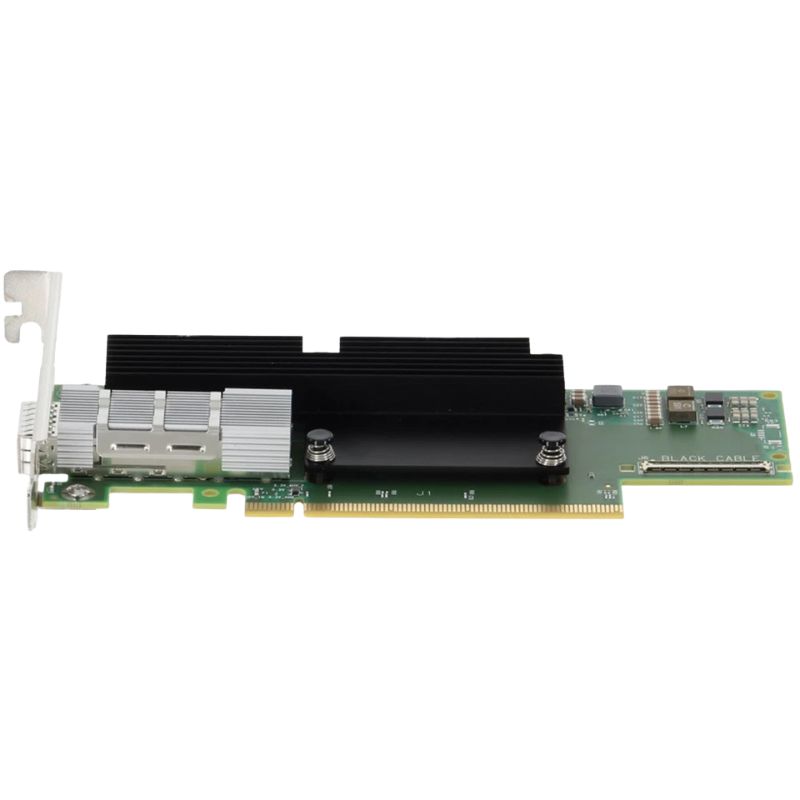
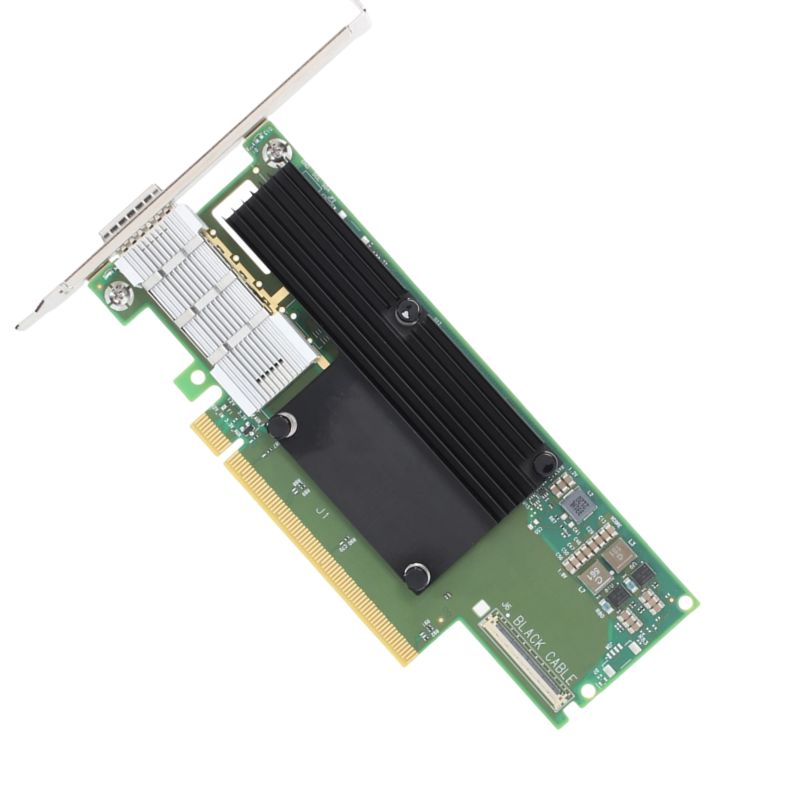
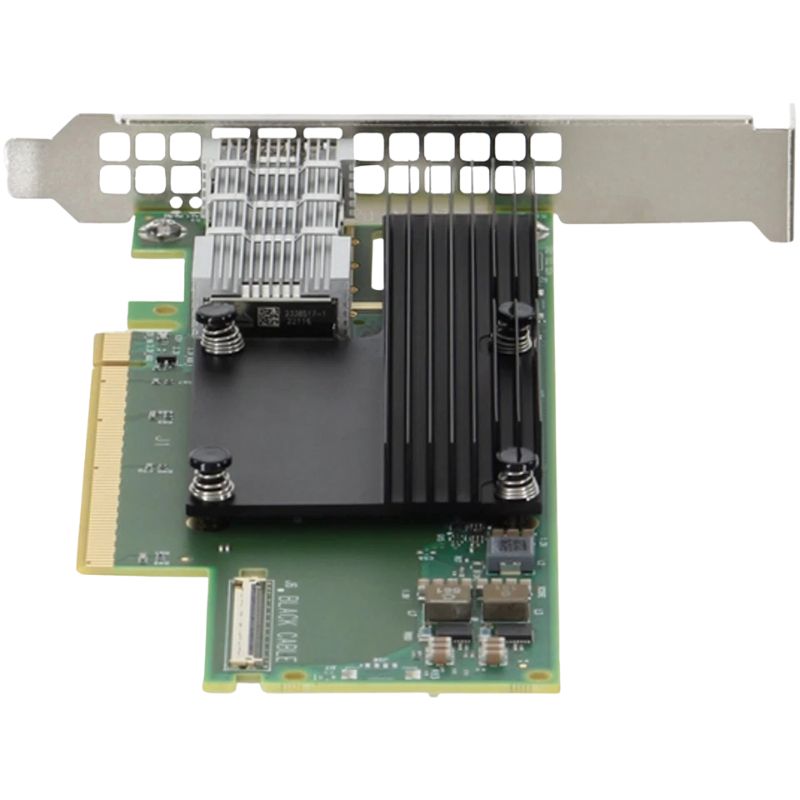
Nvidia 900-9X6AF-0016-ST1 ConnectX-6 InfiniBand Card 100GBPS 1Port QSFP56 PCIe3.0/4.0 x16 Ethernet Adapter. New Sealed in Box (NIB) with 3 Years Warranty
The NVIDIA 900-9X6AF-0016-ST1 ConnectX-6 VPI adapter is engineered for broad cross-platform deployment, making it an excellent fit for enterprise servers, AI clusters, HPC environments, NVMe-over-Fabrics storage, virtualization hosts, and hyperscale networking. This single-port QSFP56 PCIe Gen3/Gen4 x16 NIC supports both InfiniBand HDR100 and 100Gb Ethernet, allowing flexible integration across modern and legacy infrastructures. Official NVIDIA documentation confirms this SKU maps to the MCX653105A-ECAT platform with PCIe 3.0/4.0 x16 and single-port QSFP56 support.
The Nvidia 900-9X6AF-0016-ST1 ConnectX-6 InfiniBand card category is built for organizations that require ultra-fast data movement, low-latency communication, and enterprise-grade interconnect performance across servers, storage nodes, GPU clusters, and high-performance computing environments. This category focuses on 100GBPS single-port QSFP56 PCIe 3.0 and PCIe 4.0 x16 network adapters designed for modern data centers where bandwidth consistency, scalable fabric architecture, and reliable packet delivery are essential. Whether deployed in AI training clusters, virtualization farms, cloud platforms, research labs, financial modeling systems, or enterprise storage backbones, this class of adapter enables dependable throughput and optimized workload distribution.
As workloads continue to scale across machine learning, parallel computing, distributed databases, and software-defined infrastructure, demand for high-bandwidth network adapters has increased significantly. The ConnectX-6 family answers this requirement with advanced InfiniBand and Ethernet capabilities, efficient PCIe lane utilization, and hardware acceleration features that reduce CPU overhead. The single-port 100GBPS QSFP56 design makes this subcategory especially valuable for businesses that need powerful node-to-switch communication without sacrificing compatibility, expansion flexibility, or rack density.
Large enterprises often run workloads where terabytes of information move between compute nodes, NVMe storage arrays, and distributed memory resources. This category supports these scenarios by enabling rapid packet transport with reduced latency variation. It is highly suitable for deep learning frameworks, GPU data streaming, genomics, seismic processing, video transcoding farms, and large-scale virtualization platforms.
The 1-port QSFP56 architecture also simplifies cabling for top-of-rack integration. In dense rack environments, a streamlined single-port high-throughput adapter often provides better cable management, reduced airflow obstruction, and easier switch fabric planning compared with multiple lower-bandwidth ports.
This category is especially valuable in environments that rely on InfiniBand for deterministic low-latency communication. InfiniBand remains a preferred interconnect standard for HPC clusters, AI supercomputing nodes, and large-scale distributed training systems because it minimizes latency while maximizing throughput consistency. The Nvidia ConnectX-6 platform supports highly optimized transport behavior that benefits MPI workloads, GPU-direct communication, and latency-sensitive distributed applications.
In research computing, weather simulation, computational fluid dynamics, and financial risk modeling, node-to-node communication speed often determines job completion times. A 100GBPS InfiniBand adapter in this category helps maintain synchronized parallel processing, allowing clusters to scale more effectively with less communication overhead.
Remote Direct Memory Access support is a major reason professionals choose this subcategory. RDMA enables direct memory-to-memory transfers between systems without excessive CPU intervention. This improves application performance while freeing processor resources for actual workload execution. Database replication, clustered storage access, distributed caching, and machine learning parameter synchronization all benefit from RDMA acceleration.
Lower CPU overhead is particularly useful in virtualized infrastructures where processor cycles are shared among many workloads. By offloading networking tasks to hardware, the ConnectX-6 category helps improve VM density and host responsiveness.
The PCIe 3.0/4.0 x16 interface broadens deployment flexibility across multiple generations of server platforms. This category is suitable for both infrastructure refresh projects and mixed-generation environments where older compute nodes coexist with modern high-core-count systems. Backward and forward compatibility across supported PCIe generations helps organizations extend infrastructure lifespan while still gaining high-performance networking benefits.
PCIe x16 bandwidth availability is critical for sustaining full 100GBPS line-rate performance, especially when used in GPU servers, NVMe-over-Fabrics nodes, and software-defined storage appliances. The wide lane allocation ensures sufficient host-bus bandwidth for heavy bidirectional traffic.
This subcategory is frequently selected for rack servers, blade systems, edge compute appliances, GPU workstations, and enterprise storage controllers. Compatibility with common PCIe x16 slots allows easier integration into Dell, HPE, Lenovo, Supermicro, and custom-built server platforms where performance expansion is a priority.
Because this adapter class is often deployed in mission-critical environments, the ability to move between PCIe 3.0 and 4.0 systems supports phased upgrades without forcing immediate full-platform replacement.
The 1-port QSFP56 form factor in this category offers an ideal balance between high throughput and deployment simplicity. A single 100GBPS port is often sufficient for dedicated compute nodes, storage targets, GPU servers, and clustered hypervisors. It supports clean topology planning, especially in leaf-spine architectures and HPC switch fabrics where predictable port allocation matters.
QSFP56 connectivity is widely used in modern data center switching infrastructure, making this category a strong fit for scalable deployments. The connector standard supports high-quality copper DACs, active optical cables, and transceiver-based optical links, enabling short-range rack deployment as well as longer cross-row or inter-room connectivity.
From a category planning perspective, the single-port design helps simplify switch budgeting and port density calculations. It is often preferred for dedicated compute nodes that require one high-speed uplink into an InfiniBand or Ethernet fabric. This design can reduce switch complexity while maintaining outstanding bandwidth per node.
For storage clusters, a single-port 100GBPS adapter can efficiently connect each storage server to a high-speed aggregation layer, ensuring fast replication, erasure coding traffic, and backup synchronization.
As AI models become larger, infrastructure architects increasingly prioritize network cards that support low-latency collectives and efficient distributed memory movement. This category is engineered for these demands, making it suitable for TensorFlow, PyTorch, CUDA-aware MPI, and distributed inference frameworks.
The adapter class also supports modern GPU server designs where PCIe lane efficiency and airflow optimization are critical. Its enterprise-ready build quality makes it dependable for long-duration training cycles that may run for days or weeks.
This category is also highly relevant for software-defined storage, hyperconverged platforms, and NVMe-over-Fabrics environments. High-speed storage access depends heavily on low-latency network transport, especially when remote NVMe resources are shared across compute clusters. A 100GBPS ConnectX-6 adapter enables faster remote block access, better replication speed, and more responsive distributed storage services.
Organizations building Ceph, BeeGFS, Lustre, Gluster, or custom storage fabrics can use this category to improve east-west traffic flow and reduce recovery time during node rebuild operations. The ability to sustain heavy sequential and random traffic makes it ideal for backup repositories, media asset stores, and scientific data archives.


 Contact Us
 Information
 Catalog
 Solid State Drives (SSD)
 Network Switches
 Hard Disk Drives
 HBA & Controllers
 PC & Servers
 PC & Server Memory
 CPU & Processors
 Network Routers
 Power Supplies
 Tape Drives & Libraries
 Network Devices
 Computer & Network Cables