(7% discount is applied at checkout)
Cart is empty
Your go-to destination for cutting-edge server products
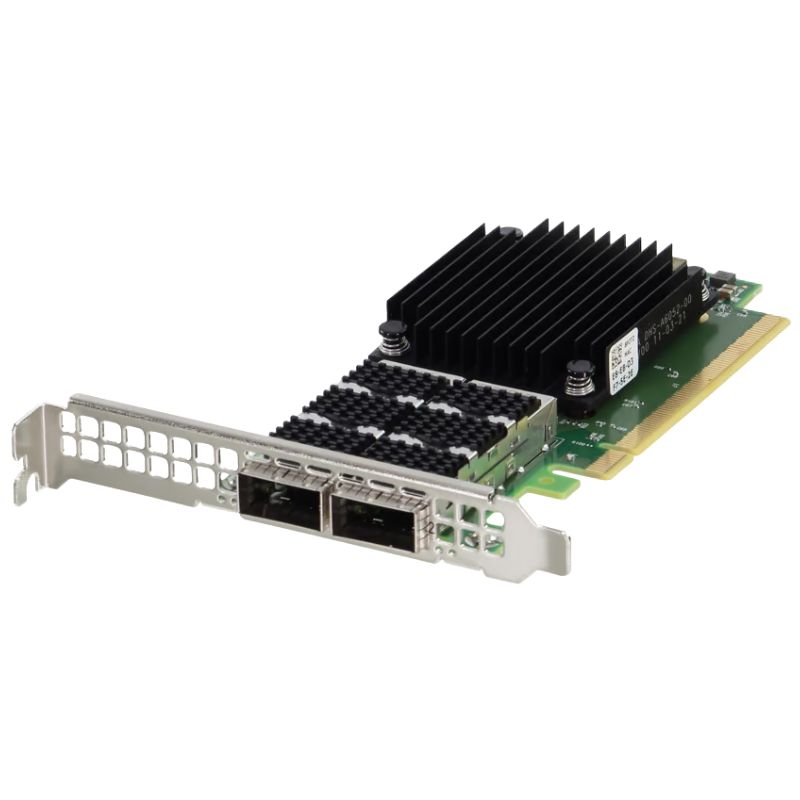


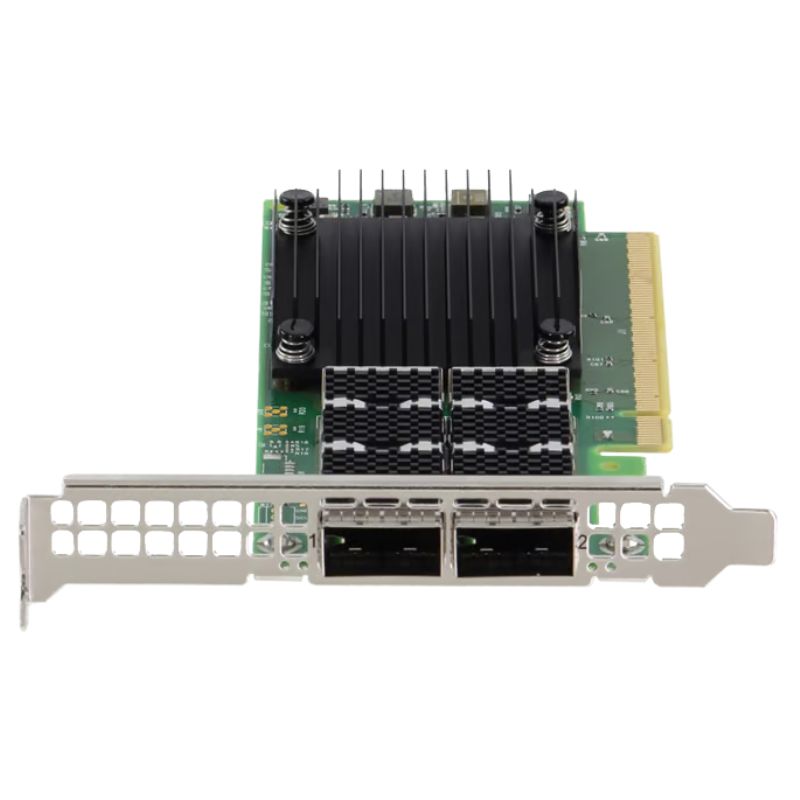
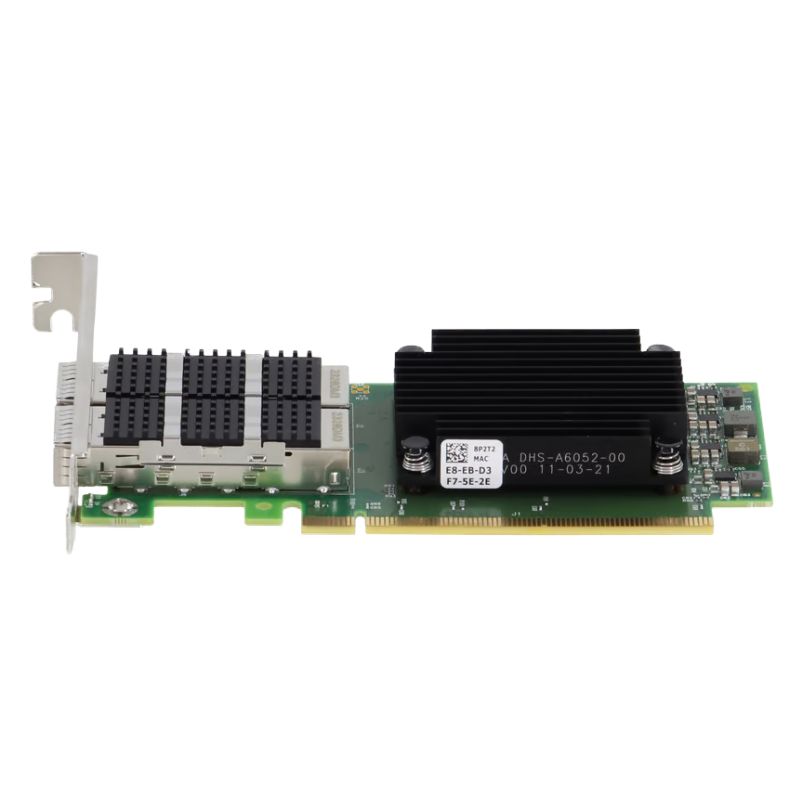
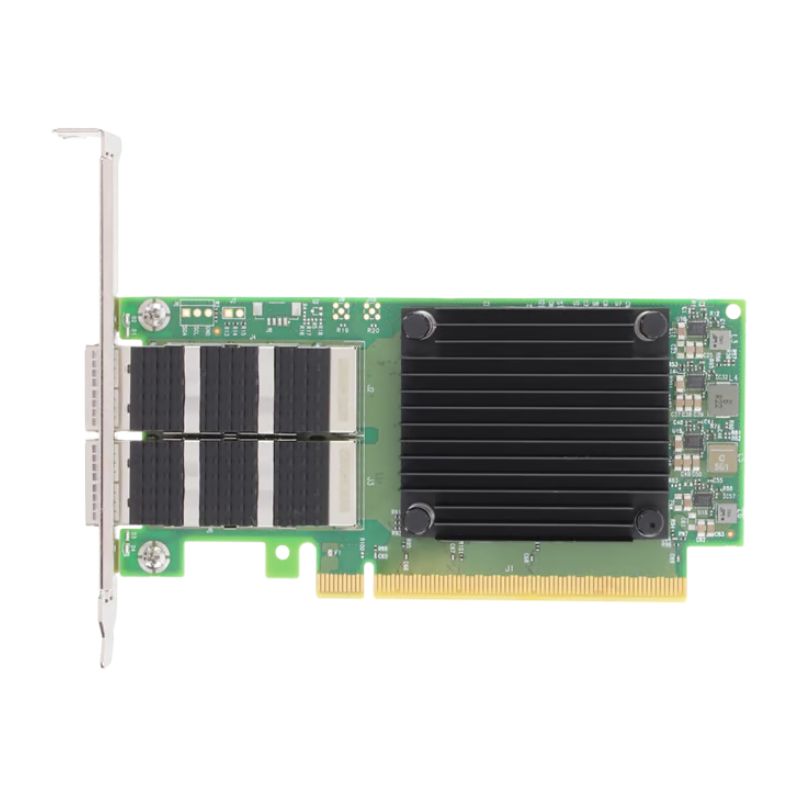
Nvidia 900-9X6AG-0056-ST1 ConnectX-6 Dx Card 2Port QSFP56 100GBE PCIe 4.0 x16 Ethernet Adapter. New Sealed in Box (NIB) with 3 Years Warranty
| SKU/MPN | Warranty | Price | Condition | You save |
|---|---|---|---|---|
| 900-9X6AG-0056-ST1 | 1 Year Warranty | $820.00 | Excellent Refurbished | You save: $287.00 (26%) |
| 900-9X6AG-0056-ST1 | 1 Year Warranty | $1,306.00 | New Sealed in Box (NIB) | You save: $457.10 (26%) |
The Nvidia 900-9X6AG-0056-ST1 ConnectX-6 Dx Ethernet Adapter is a high-performance dual-port QSFP56 PCIe 4.0 x16 card, designed to meet the demands of modern data centers and enterprise environments. Engineered with efficiency, scalability, and reliability in mind, it 100GbE network speeds across copper and optical connections, offering advanced flexibility for varied networking infrastructures.
The 900-9X6AG-0056-ST1 Nvidia ConnectX-6 Dx family of adapters is a high-performance line of 100 Gigabit Ethernet (100GbE) network interface cards (NICs) engineered for modern data centers, cloud infrastructure, high-performance computing (HPC), and latency-sensitive AI/ML clusters. This category centers on the 2-port QSFP56 form factor with PCIe 4.0 x16 connectivity, delivering accelerated networking through advanced offloads, hardware-based telemetry, and multi-protocol support (Ethernet, RoCE, and more). Buyers looking for a robust, production-ready NIC will find the ConnectX-6 Dx adapters provide the reliability, feature set, and ecosystem compatibility required for large-scale deployments.
Key search phrases for this category include: 900-9X6AG-0056-ST1, Nvidia ConnectX-6 Dx 2Port QSFP56, 100GBE PCIe 4.0 x16 Ethernet adapter, QSFP56 NIC, 100Gb NIC for servers, and RDMA NIC RoCE. These terms map to the product’s unique SKU, interface standards, and the primary benefits—extreme throughput, low latency, and offload capabilities. Using these phrases naturally in product descriptions ensures search engines index the page for both SKU-driven and capability-driven queries.
The ConnectX-6 Dx cards in the 900-9X6AG-0056-ST1 category use a PCI Express Gen4 x16 host interface, enabling full line-rate performance across both QSFP56 ports while maintaining efficient CPU utilization. The QSFP56 port type supports native 100GbE using QSFP56 optics or breakout configurations (e.g., 4x25Gb lanes using breakout cables). Internally, the adapter integrates advanced packet processing engines and memory buffers designed to handle sustained, high-throughput workloads without introducing jitter.
Expect the ConnectX-6 Dx 2-port QSFP56 adapters to sustain near line-rate throughput across standard packet sizes and mixed workloads. For bulk data transfers—like backup-to-disk or distributed storage replication—this card keeps CPU impact low while allowing the host to handle application-level processing. When configured correctly with proper link aggregation or RDMA verbs, the adapter handles multi-gigabit flows with predictable scaling.
The hardware offloads and flow steering features reduce software interrupt pressure and context switching, yielding microsecond-class latencies for small messages and consistent tail latency for latency-sensitive services (e.g., key-value stores, distributed databases, and real-time analytics). For environments demanding deterministic latency, enabling RDMA and leveraging hardware timestamping optimizes performance further by removing TCP/IP stack overhead.
Offload 900-9X6AG-0056-ST1 capabilities—such as TCP Offload Engine (TOE), Large Segment Offload (LSO), and Receive Side Scaling (RSS)—are implemented to lower CPU cycles per packet. NVMe-oF (NVMe over Fabrics) and RDMA support make this NIC suitable for storage acceleration, while DPDK compatibility enables custom user-space packet processing for telecom, NFV, or packet capture workloads.
The adapter is typically a full-height, dual-slot PCIe card requiring careful planning for server chassis compatibility. Due to the dual QSFP56 ports and on-board silicon, ensure adequate clearance and cooling in dense rack servers. These cards are common in 1U–2U servers with optimized airflow front-to-back, and many vendors provide pass-through or cable management accessories for QSFP transceivers and active cables.
Power draw varies with traffic and feature usage (e.g., when enabling full hardware offloads or active RoCE). Typical operational power ranges should be checked on the vendor’s datasheet for the precise SKU 900-9X6AG-0056-ST1, but administrators should provision PSU headroom and rack cooling accordingly to avoid thermal throttling during peak throughput scenarios.
The QSFP56 interface supports a variety of physical media. QSFP56 SR/LR optical transceivers for multimode and single-mode fiber links. Active Optical Cables (AOC) for extended reach without separate transceivers. Direct Attach Copper (DAC) passive and active copper cables for short-reach, cost-effective connections inside racks or between adjacent racks. Breakout cables enabling 1×100G to 4×25G or 2×50G lane splits depending on switch capabilities. Ensure transceiver vendor compatibility with the NVIDIA firmware and switch side to avoid link negotiation issues. Many deployments use OEM-validated optics to ensure stable operation and full diagnosis via SFF-DD/QSFP diagnostics.
The ConnectX-6 Dx cards integrate well with leading data center switch vendors and server OEMs. Look for official interoperability notes or HCL (Hardware Compatibility Lists) from both the NIC vendor and your server/switch manufacturer. Compatibility includes support for link speeds, breakouts, and advanced features like PFC (Priority Flow Control) when implementing RoCE.
In cloud and virtualization stacks, ConnectX-6 Dx cards deliver SR-IOV and NVGRE/VXLAN offloads to increase VM density and reduce CPU overhead. They are frequently used in multi-tenant environments where isolation and predictable performance are essential. Integration with hypervisors (KVM, VMware) and container networking (CNI plugins optimized for DPDK) enables fast packet paths for tenant workloads.
HPC and AI workloads benefit from RDMA and GPU Direct technologies supported by Nvidia networking adapters. RDMA removes kernel overhead and enables direct memory access between hosts or between host and GPU memory, lowering latency for distributed training and large-scale model synchronization. This makes the ConnectX-6 Dx an excellent choice for GPU-dense nodes where network bottlenecks can hinder scaling efficiency.
The NIC’s NVMe-oF 900-9X6AG-0056-ST1 empowers servers to present or consume remote NVMe namespaces with minimal CPU overhead, unlocking disaggregated storage architectures. For storage arrays, the 100GbE interface reduces headroom constraints and allows larger data movements in less time—critical for backup windows, replication, and centralized storage fabrics.
For rack-scale or pod-based procurement, standardize on a single SKU to simplify management and spare parts. Consider firmware parity across your estate to avoid heterogeneous behavior. When planning refresh cycles, evaluate whether PCIe 4.0 x16 slots are available or whether you’ll need to plan for PCIe 3.0 compatibility (with reduced host-side bandwidth but continued link-level functionality).
Keep firmware and driver versions in sync with your OS and hypervisor to ensure feature availability and stability. For critical systems, perform controlled rollouts of firmware updates in staging environments. Utilize vendor-supplied utilities to validate firmware integrity and to rollback if necessary. Note that some advanced features (e.g., DPDK optimizations or NVMe-oF) may require specific driver releases.


 Contact Us
 Information
 Catalog
 Solid State Drives (SSD)
 Network Switches
 Hard Disk Drives
 HBA & Controllers
 PC & Servers
 PC & Server Memory
 CPU & Processors
 Network Routers
 Power Supplies
 Tape Drives & Libraries
 Network Devices
 Computer & Network Cables