(7% discount is applied at checkout)
Cart is empty
Your go-to destination for cutting-edge server products
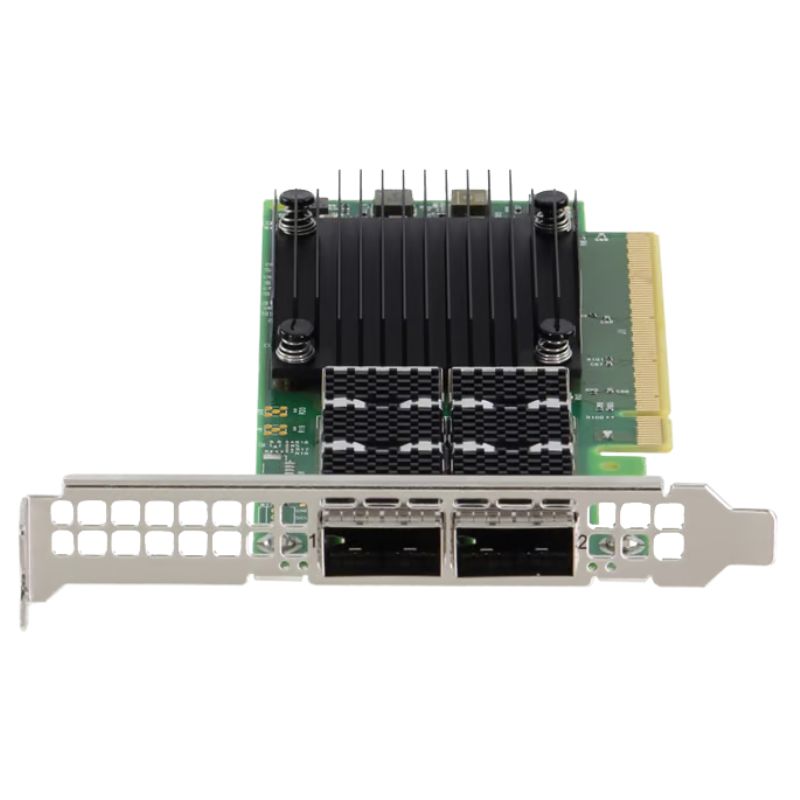


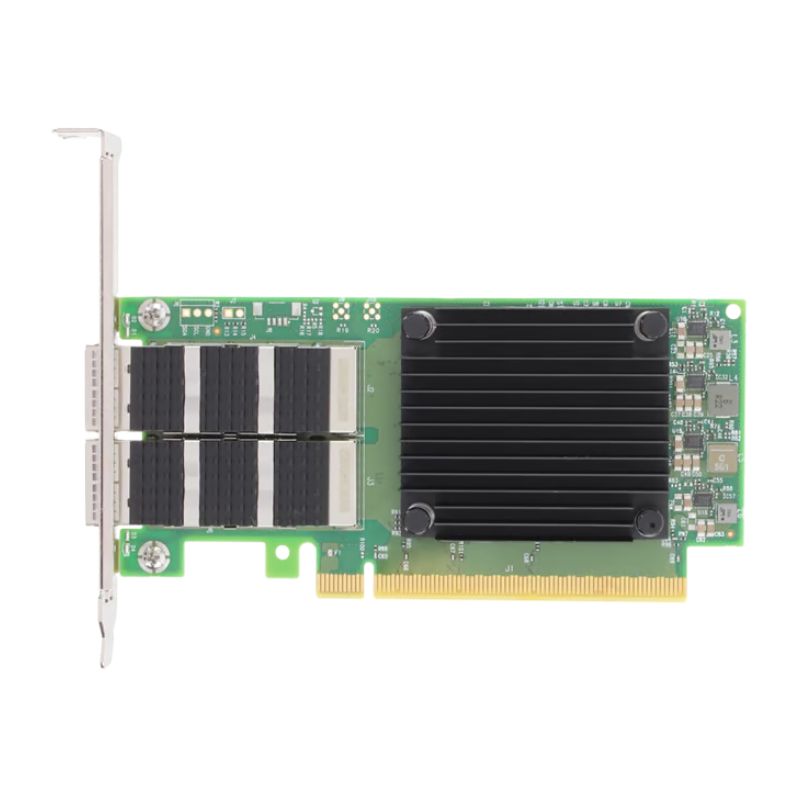
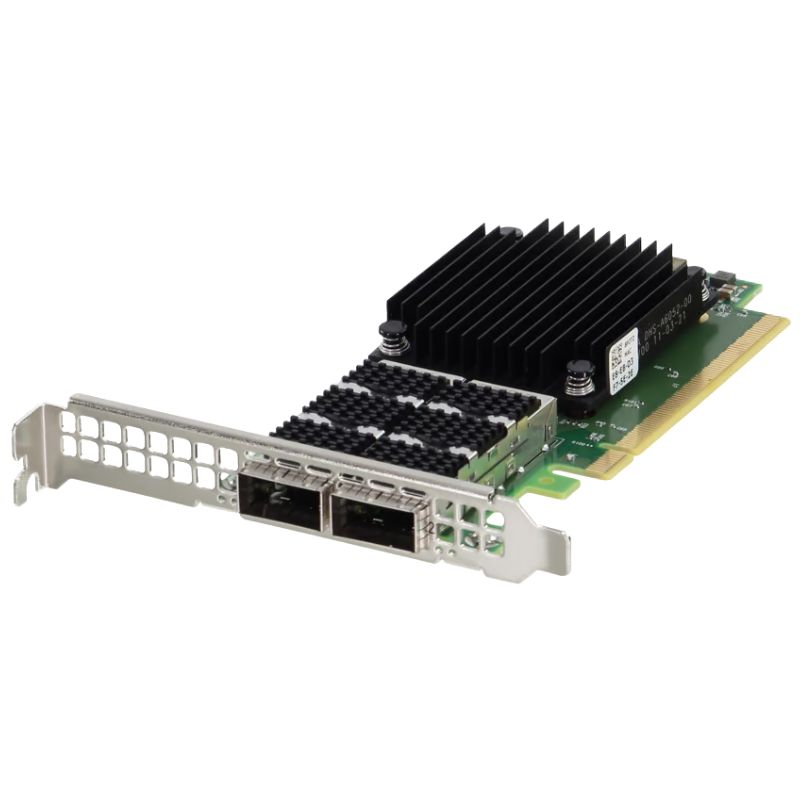
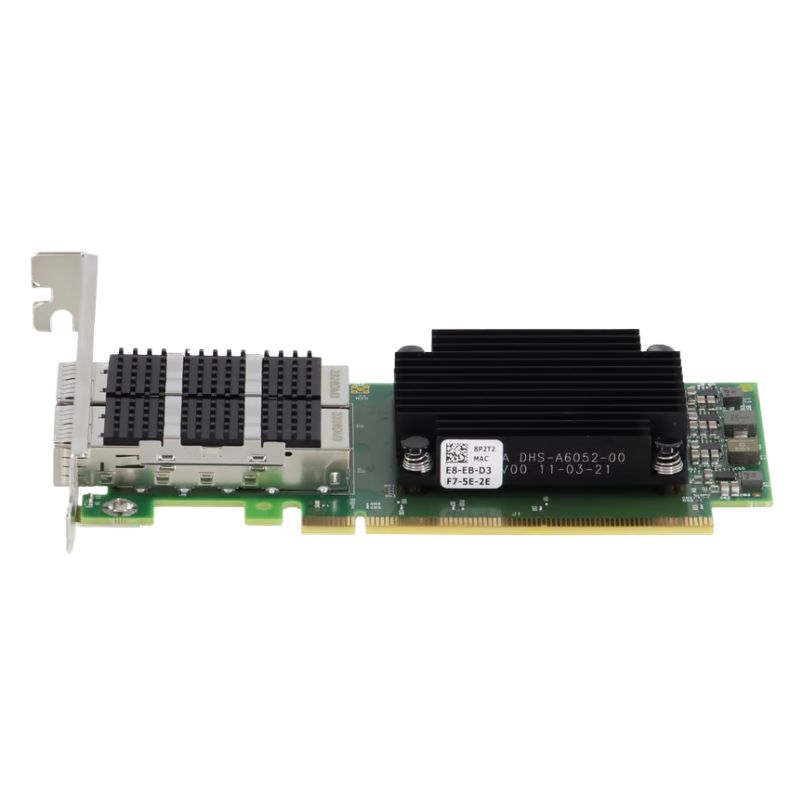
Nvidia 900-9X6AG-0086-ST0 ConnectX-6 Dx card PCIe 4.0 x16 QSFP56 100GBE Dual Port Network Adapter. Factory-Sealed New in Original Box (FSB) with 3 Years Warranty
The Nvidia 900-9X6AG-0086-ST0 ConnectX-6 Dx Ethernet Adapter Card is engineered to deliver superior performance for modern data centers. Supporting dual-port QSFP56 interfaces, advanced security features such as crypto acceleration and secure boot, and PCIe 4.0 x16 bandwidth, it is optimized for environments demanding low latency, high throughput, and secure communication.
The 900-9X6AG-0086-ST0 Nvidia ConnectX-6 Dx family represents a high-performance class of data center network adapters engineered for demanding enterprise, cloud and HPC environments. These PCIe 4.0 x16 network interface cards (NICs) with QSFP56 connectivity deliver 100GbE dual-port bandwidth, ultra-low latency, and advanced offloads for CPU efficiency. This category encompasses adapters designed to accelerate networking, storage, virtualization, and security workloads while providing the resilience, programmability, and telemetry modern infrastructures require.
The ConnectX-6 Dx series supports PCI Express 4.0 x16, enabling sustained line-rate throughput across both ports when installed in compatible servers. The x16 mechanical and electrical interface is essential for minimizing host bottlenecks when running multiple high-throughput data streams, NVMe-over-Fabrics, or virtualized network stacks. Form factors vary by vendor but typically conform to full-height, half-length add-in cards suitable for mainstream and dense server chassis.
The architecture permits flexible programmability through P4, eBPF, or vendor SDKs, enabling use as a SmartNIC for in-network compute tasks like NAT, firewalling, telemetry sampling, or custom packet manipulation. This makes the category attractive for organizations pursuing disaggregated cloud-native architectures and edge deployments where offloading complex operations from the host CPU is desirable.
Large on-chip buffering and advanced Quality of Service (QoS) controls support jitter-sensitive applications, multi-tenant isolation, and traffic engineering. Administrators can configure multiple hardware queues, rate-limiting, and priority mapping to guarantee SLAs for latency-critical flows such as remote direct memory access (RDMA) or financial trading platforms.
The adapter's hardware and software stack facilitate scaling across hyper converged systems, fabrics, and storage clusters. Features like SR-IOV, NVGRE, and VXLAN offloads reduce per-VM networking cost and help
Administrators can leverage vendor management utilities, RESTful APIs, SNMP, and telemetry frameworks for monitoring and updates. Integration with orchestration platforms such as Kubernetes, OpenStack, and VMware is common, particularly when combined with CNI plugins that offload networking functions to the NIC.
Firmware continuity is critical for security and performance. The ConnectX-6 Dx family typically supports secure firmware update mechanisms and rollback capabilities. Vendors publish guidance for staged upgrades and compatibility matrices to avoid downtime in production clusters.
HPC clusters benefit from the low-latency, high-throughput characteristics of ConnectX-6 Dx adapters. Use cases include MPI-based scientific simulations, parallel databases, and GPU-accelerated workloads where the NIC helps reduce communication overhead between compute nodes and GPUs.
In cloud environments, these adapters underpin virtual networking, tenant isolation, and bursty multi-tenant traffic patterns. Built-in acceleration for virtualization and SR-IOV helps improve VM density and reduce CPU consumption for networking tasks.
The combination of RDMA and NVMe-oF offloads reduces latency for distributed storage arrays and remote block storage. The ConnectX-6 Dx line is commonly deployed in storage nodes and as front-end adapters for software-defined storage systems.
Low-jitter, deterministic performance is crucial in trading platforms and real-time analytics. Hardware timestamping, packet prioritization, and predictable latency profiles make this category attractive for latency-sensitive finance workloads.
Compared to previous generations, ConnectX-6 Dx improves PCIe bandwidth utilization (PCIe 4.0), packet processing capacity, and programmability. These generational differences manifest in more advanced offloads, higher port speeds (QSFP56 support), and better integration with modern software stacks.
Dual-port adapters like the 900-9X6AG-0086-ST0 provide redundancy, link aggregation options, and higher aggregate throughput for multi-tenant or multi-path topologies. Single-port variants may be preferable for cost-sensitive or space-constrained deployments where only one 100GbE link is required.
Many OEMs rebrand or modify base ConnectX-6 Dx designs for server compatibility, adding vendor-specific heatsinks, firmware, or validation testing. Verify the SKU (e.g., 900-9X6AG-0086-ST0) against server vendor compatibility lists and firmware release notes to avoid interoperability issues.
Maintain firmware hygiene by deploying signed firmware, tracking CVEs, and applying patches during scheduled maintenance windows. Establish rollback procedures in case of firmware-related regressions.
Use VLAN tagging, VXLAN, NVGRE, and SR-IOV to separate tenant traffic and enforce compliance boundaries. The hardware's support for multiple traffic classes and QoS policies simplifies multi-tenant enforcement at line speeds.
Modern ConnectX-6 Dx adapters expose rich telemetry, including port-level counters, per-queue statistics, and hardware timestamps. Collect these metrics using Prometheus exporters, SNMP, or vendor-provided agents to identify congestion, packet drops, or performance anomalies early.
Monitor vendor lifecycle announcements and plan hardware refresh cycles. When planning upgrades, assess whether newer network interface generations (e.g., PCIe 5.0-capable NICs) justify migration based on expected workload growth and feature benefits.
Verify that server backplanes provide adequate PCIe lane mapping and that chassis airflow supports the thermal envelope of a high-performance NIC. In dense rack deployments, evaluate blower-style cooling or front-to-back airflow patterns endorsed by the server manufacturer.
Ensure top-of-rack and spine switches support 100GbE QSFP56 ports and the intended features (RoCEv2, PFC, ECN) if deploying RDMA or storage fabrics. Compatibility matrices between NICs and switch firmware can reduce troubleshooting time.
Enterprise-grade NICs are rated for extended duty cycles; check vendor MTBF figures and recommended operational lifetimes. Regular firmware updates and thermal monitoring extend useful life and reduce risk of field failures.
Network adapters for data centers commonly comply with CE, FCC, RoHS, and other regional safety and environmental directives. Confirm certifications relevant to your deployment geography.
Many vendors publish validated architectures that pair NICs with particular switches, storage arrays, and orchestration layers. Use these validated topologies where possible to reduce integration effort and increase predictability.
In clustered AI training or distributed databases, combining NVMe oF with RDMA offloads can dramatically reduce host CPU interference and improve effective I/O throughput. Use cases include parameter server architectures, distributed checkpointing, and low-latency database replication.
When authoring individual product pages under this category, maintain specification parity and update the SKU details (900-9X6AG-0086-ST0) in title tags, canonical URLs, and product metadata. Ensure that the card’s firmware version, validated OS list, and recommended transceivers are visible in the product detail panel to reduce pre-sales support load and returns.


 Contact Us
 Information
 Catalog
 Solid State Drives (SSD)
 Network Switches
 Hard Disk Drives
 HBA & Controllers
 PC & Servers
 PC & Server Memory
 CPU & Processors
 Network Routers
 Power Supplies
 Tape Drives & Libraries
 Network Devices
 Computer & Network Cables