
(7% discount is applied at checkout)
Cart is empty
Your go-to destination for cutting-edge server products
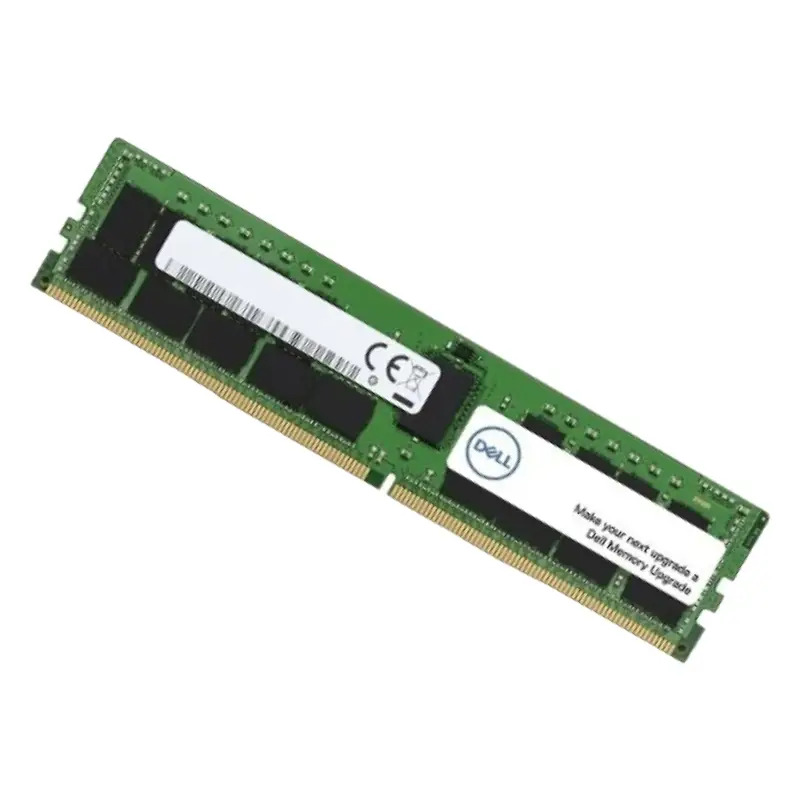
Dell 9JTGP DDR5-4800MHz 128GB PC5-38400 ECC Memory. New (System) Pull with 1 year replacement warranty - Samsung Version
| SKU/MPN | Warranty | Price | Condition | You save |
|---|---|---|---|---|
| 9JTGP | 1 Year Warranty | $5,985.00 | New (System) Pull | You save: $2,094.75 (26%) |
| 9JTGP | 1 Year Warranty | $6,427.00 | New Sealed in Box (NIB) | You save: $2,249.45 (26%) |
Explore the exceptional features of the Dell 9JTGP 128GB DDR5 SDRAM Memory Module, offering cutting-edge performance for high-demand computing environments.
Dell 9JTGP 128GB 4800MHz PC5-38400 CL40 ECC Registered 4Rx4 ECC 1.1V DDR5 SDRAM 288-pin RDIMM Memory represents a class of server-grade modules engineered for modern data center workloads and mission-critical enterprise systems. This specific configuration combines high capacity with a high transfer rate and error-correcting features. At 128GB per module, the capacity enables dense memory footprints appropriate for virtualization, in-memory databases, large-scale analytics, and multi-instance cloud workloads. The 4800MHz data rate labeled as PC5-38400 identifies the module’s peak theoretical transfer bandwidth and places it squarely in the DDR5 generation of memory technology, which introduces architectural changes over DDR4 to improve scalability and performance efficiency. The CL40 timing indicates CAS latency characteristics that, when balanced with the higher clock speed, provide effective throughput for memory-intensive server applications. ECC Registered designates the module as error-correcting and registered (buffered) for improved signal integrity and reliability in multi-module configurations typical of server motherboards that accept RDIMM modules. The 4Rx4 designation describes the internal rank and chip organization and is relevant when planning large memory topologies across memory channels and CPU memory controllers. The operating voltage of 1.1V reflects DDR5’s reduced nominal voltage compared to earlier generations, translating into better power efficiency under sustained loads. The 288-pin RDIMM form factor is the standard physical interface for many enterprise-class Intel and AMD server platforms that support DDR5 RDIMM modules, ensuring compatibility with systems explicitly designed for registered ECC DDR5 DIMMs.
The ECC (Error Correcting Code) Registered nature of this Dell 9JTGP memory module is central to its adoption in enterprise and data center environments. ECC provides the capability to detect and correct certain types of memory errors on the fly, preventing data corruption and reducing the risk of silent data errors that can compromise databases, large-scale computation, and virtualization hosts. Registered buffering, often implemented through a register between the memory controller and DRAM chips, stabilizes signals when many modules are populated across multiple channels and slots. This buffering reduces electrical load on the memory controller and enables reliable operation at higher capacities, which is crucial when configuring servers with large total memory footprints. The interplay between ECC and registered features is particularly important in rack-mounted servers and blade systems where uptime and data integrity are paramount, and when large memory configurations are needed to run dozens or hundreds of virtual machines or large in-memory services without sacrificing reliability.
The 4800MHz operating point of the Dell 9JTGP 128GB RDIMM translates to a PC5-38400 bandwidth rating, which expresses the module’s nominal peak throughput in megabytes per second under idealized conditions. This bandwidth increase relative to earlier generations of memory allows servers to feed modern CPUs and accelerators more data per second, reducing memory bandwidth bottlenecks that can throttle multi-threaded or vectorized workloads. CAS latency of CL40 should be understood in context: raw latency values when compared across generations are not directly comparable without considering clock rate. For many enterprise workloads such as large database joins, columnar analytics, machine learning inference, and virtualization, sustained bandwidth and concurrency are more impactful than absolute CAS latency. System architects often balance memory speed, latency, and capacity to match application behavior and the platform’s memory controller characteristics.
The 4Rx4 designation describes how DRAM chips on the module are organized into four ranks, each rank comprised of x4 wide DRAM chips. A rank is a set of DRAM chips that can be accessed simultaneously by the memory controller as a unit, and having multiple ranks per module can improve effective parallelism and throughput. Modules with four ranks per DIMM typically expose specific electrical and timing requirements to the memory subsystem, and certain server platforms may have restrictions on how many 4Rx4 modules may be used per channel or socket to ensure stability and achieve rated speeds. Understanding rank architecture is important when planning dense memory configurations across a server’s memory population; motherboard and CPU documentation should be consulted to determine the maximum supported ranks and the recommended population order for mixed ranks or different densities.
Compatibility with a given server platform depends on BIOS/UEFI firmware, the CPU memory controller’s DDR5 RDIMM support, and the system vendor’s memory qualifications. Dell 9JTGP modules, like other branded server memory products, are often validated against specific Dell PowerEdge models and server platforms that explicitly support 288-pin DDR5 RDIMM modules. When planning upgrades or replacements, it is necessary to reference the server’s hardware compatibility lists and memory population guidelines to ensure modules run at the intended speed and with full ECC/registered functionality. Motherboard firmware updates may expand support for higher-density modules; therefore, checking the system vendor’s release notes and qualification matrices is recommended before purchasing and installing high-density RDIMMs. Heterogeneous memory populations—mixing ranks, densities, or vendor modules—can introduce performance and stability caveats, so administrators commonly match modules across channels and banks for predictable results.
DDR5’s nominal 1.1V operating voltage is an evolution from the higher voltages of prior memory generations, and it contributes to lower power consumption per bit, which becomes significant in large-scale deployments. For data centers where hundreds or thousands of DIMMs may be installed across many racks, incremental voltage improvements translate into measurable reductions in power draw and thermal output. The lower voltage, combined with architectural changes in DDR5 such as on-DIMM power management features, helps servers sustain high memory throughput with improved energy efficiency. However, system-level power savings are also dependent on how memory is utilized; heavily loaded modules exposed to sustained high access patterns will still consume more power than idle modules, and overall platform thermals must be planned to maintain reliability and long life for memory subsystems.
High-density 128GB RDIMM modules are particularly well-suited for virtualization hosts that consolidate many virtual machines on a single physical server, where each virtual machine requires a guaranteed amount of memory to ensure performance isolation. In-memory databases, data caching layers, and memory-driven analytics platforms benefit from large single-module capacity because larger contiguous memory pools reduce the need for complex memory hierarchies and swap interaction, thereby improving response times. High-performance computing nodes running memory-intensive simulations can also benefit when large problem sets must be held in RAM for iterative operations. Additionally, cloud service providers and private cloud operators frequently deploy high-density RDIMMs to reduce the number of physical servers required to achieve a target aggregate memory capacity, which can lower overall data center footprint and operating costs when balanced against the cost per module and the capabilities of the host platform.
Before placing memory modules into production, many organizations perform burn-in and validation tests to ensure stability under expected workloads. Qualification steps also involve confirming that modules operate at advertised speeds with the intended DIMM population and that ECC mechanisms function correctly under load. Dell and other OEMs often provide qualified memory lists and guidance, and third-party testing labs can provide independent test reports when procurement policies demand additional assurance. For mission-critical applications, redundancy strategies that assume single-point DIMM failure and enable live migration of workloads can further mitigate the impact of hardware faults.
Memory integrity is a component of overall system security. ECC capability reduces the incidence of bit flips that could corrupt data structures or program state, potentially causing application-level faults. For workloads handling sensitive data, combining ECC-registered memory with full-disk encryption, secure boot, and platform-level attestation helps protect data at rest and ensure the integrity of execution environments. Some server platforms support additional memory encryption or secure enclave features that protect confidential data even if physical access to DRAM is obtained. While memory encryption and platform security are platform-specific, choosing enterprise-grade ECC RDIMMs like the Dell 9JTGP module aligns with broader security and data protection strategies by providing another layer of reliability in the stack.
In virtualized environments, large memory modules allow hypervisors to allocate generous memory quotas to guests without fragmenting address space across many smaller DIMMs. Memory topology decisions influence NUMA boundaries and impact scheduler behavior across CPU sockets. Containerized platforms that rely on host memory also benefit from large host capacities when ephemeral in-memory caches, compiled artifacts, and runtime heaps must be resident without swapping. Orchestration tools that schedule workloads based on memory requirements should be configured with accurate resource models that consider the total physical memory available after accounting for reserved system memory and management overhead. Using 128GB RDIMMs supports high consolidation ratios, but cluster operators must design failure domains and redundancy policies that assume the potential impact of node-level memory failures.


 Contact Us
 Information
 Catalog
 Solid State Drives (SSD)
 Network Switches
 Hard Disk Drives
 HBA & Controllers
 PC & Servers
 PC & Server Memory
 CPU & Processors
 Network Routers
 Power Supplies
 Tape Drives & Libraries
 Network Devices
 Computer & Network Cables