
(7% discount is applied at checkout)
Cart is empty
Your go-to destination for cutting-edge server products
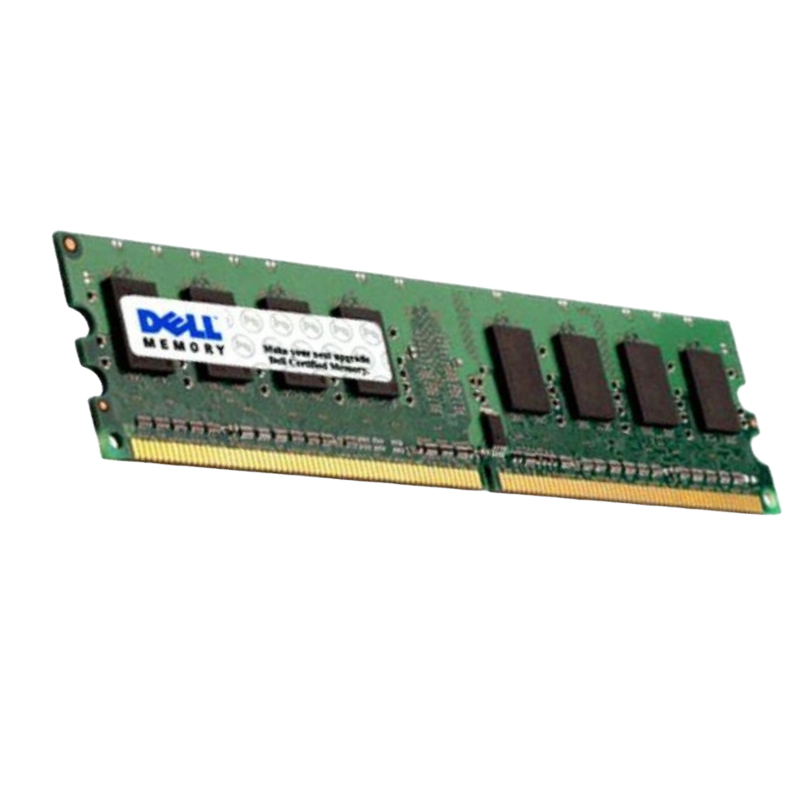
Dell A7187321 32GB PC3-14900 DDR3-1866MHz SDRAM Quad Rank CL13 240-Pin ECC Registered for Dell Systems Memory Module. New (System) Pull with 1 year replacement warranty
| SKU/MPN | Warranty | Price | Condition | You save |
|---|---|---|---|---|
| A7187321 | 1 Year Warranty | $184.00 | New Sealed in Box (NIB) | You save: $64.40 (26%) |
| A7187321 | 1 Year Warranty | Contact us for a price | New (System) Pull |
The Dell A7187321 32GB PC3-14900 DDR3-1866MHz quad rank CL13 240-pin ECC Registered memory module stands as a high-density, enterprise-class RAM choice tailored for Dell servers and workstations that require stability, scalability, and predictable performance under sustained load. Designed to meet and often exceed the expectations of datacenter operators, virtualization engineers, database administrators, and professionals running compute-heavy workloads, this module combines a large 32GB capacity with DDR3-1866 speed, registered ECC error correction, and a quad rank architecture that together yield high memory density and robust Reliability, Availability and Serviceability (RAS) characteristics. The description below explores the technical profile, compatibility guidance, performance characteristics, practical deployment advice, and purchasing considerations for the Dell A7187321 memory family, helping buyers and system integrators make informed choices and optimize system behavior.
The core technical identity of this category centers on several defining attributes: the module is a 32GB capacity DDR3 Registered DIMM rated for PC3-14900 throughput, which corresponds to DDR3-1866 MT/s operation. The memory timing is commonly cited as CL13, a latency specification that indicates the number of clock cycles the module waits for read operations. As an ECC Registered module, it includes on-board register circuitry to reduce electrical load on the memory controller and full error-correcting code support to detect and correct single-bit errors and detect multi-bit errors, boosting system reliability. The 240-pin form factor follows the standard DDR3 RDIMM mechanical layout used extensively in Dell PowerEdge servers and select Precision workstations. The quad rank design means the module contains four internal ranks of memory chips, which increases overall capacity and allows high-density memory configurations, but also interacts with memory controller rank limits and channel population rules, which are important considerations during system configuration.
Reliability is non-negotiable for enterprise servers where memory errors can lead to data corruption, application crashes, or silent failures. ECC Registered memory modules like the Dell A7187321 implement both ECC and a register buffer that intercepts control and address signals between the memory controller and DRAM chips. The ECC mechanism detects and corrects most single-bit errors and flags multi-bit errors for higher-level handling, which dramatically reduces the risk of undetected memory corruption. The registered buffer reduces electrical load, enabling higher memory population and more ranks per channel without overwhelming the memory controller. For Dell PowerEdge platforms commonly deployed in production environments, RDIMM modules are the recommended memory type to achieve optimum stability and maximum supported capacity.
Quad rank DIMMs pack more DRAM chips grouped into four logical ranks, allowing a single DIMM to present a larger amount of addressable memory to the system. This is ideal when servers need to maximize memory per channel and per socket, enabling denser virtualization consolidation, large in-memory databases, and memory-intensive analytics. The practical result is fewer DIMM slots required to reach high aggregate capacities compared with single- or dual-rank alternatives. However, rank density interacts with a platform's supported rank-per-channel limits and can cause the memory controller to fall back to lower supported speeds when populated in certain configurations. For this reason, planning channel population and observing Dell's official memory population guidelines for a given PowerEdge or Precision system is essential to retain both peak frequency and capacity goals. When engineered correctly, quad rank modules like the A7187321 unlock substantial capacity advantages without compromising ECC protection.
Although the 240-pin RDIMM form factor and JEDEC DDR3-1866 specification are standardized, compatibility with specific Dell server and workstation models depends on platform memory controller support, BIOS/UEFI firmware, and validated part number lists provided by Dell. Dell A7187321 memory modules are intended for compatibility with a range of Dell PowerEdge server generations and select Dell Precision workstations that explicitly list PC3-14900 RDIMMs in their memory support matrices. System integrators should consult Dell’s technical documentation or the server's owner manual to verify maximum supported memory speed and rank per channel limits for the exact CPU and firmware revision installed.
Memory performance in multi-socket, multi-channel systems is determined not only by DIMM speed but also by channel population balance and rank layout. When populating channels for optimal throughput, administrators should aim for symmetrical DIMM placement across channels and sockets, following Dell’s channel population diagrams. Installing quad rank modules can change how many ranks per channel the memory controller must manage, potentially reducing the maximum supported frequency if the controller's rank-per-channel ceiling is exceeded. This trade-off is a conscious design decision: higher capacity per DIMM versus the absolute maximum data rate per channel. Performance-sensitive workloads that benefit from raw bandwidth should be tested with various DIMM configurations, while capacity-sensitive workloads should prioritize higher rank modules like the A7187321 to consolidate larger memory pools while maintaining ECC protection.
The Dell A7187321 32GB RDIMM suits a wide variety of enterprise workloads. Virtualization hosts running hypervisors benefit from large per-socket memory to host many virtual machines without sacrificing per-VM memory allotment. In-memory analytics and database systems often require large contiguous memory spaces; because quad rank 32GB modules enable high capacity per slot, fewer DIMMs are needed to reach database working set sizes, simplifying maintenance and power/thermal management. High-performance computing clusters and compute nodes that employ large memory footprints per process can also find value in high-density RDIMMs, especially where application memory locality outpaces raw memory channel bandwidth. Additionally, multi-tenant cloud platforms and platform-as-a-service infrastructure that emphasize consolidation and over-subscription control use high-density RDIMMs to extend per-server capacity while maintaining ECC-based integrity for tenant data protection.
On workstation-class systems, such as Dell Precision models that support registered ECC memory, the A7187321 delivers advantages for content creators, engineers, and scientists who run memory-heavy applications like 3D rendering, simulation, and large dataset processing. Workstation BIOS and firmware often allow fine-grained memory configuration, and the presence of RDIMM support in a workstation indicates capability to manage registered modules. Nevertheless, the same compatibility and population caveats apply: consult the workstation's memory support matrix and ensure installed processors and firmware versions can initialize quad rank RDIMMs at the desired speed. For users who prioritize single-threaded performance or absolute lowest latency for interactive tasks, the difference between DDR3-1866 CL13 and lower-latency modules may be noticeable in some workloads; bench testing with representative applications is advisable.
High-density RDIMMs can increase overall system power draw and generate additional heat relative to smaller modules. In dense server configurations with many populated DIMM slots, administrators should monitor system thermal profiles and confirm adequate airflow to prevent thermal throttling. Modern datacenter designs anticipate DIMM thermal dissipation, but retrofitting higher-capacity or quad rank modules into older chassis may require attention to fan curves and chassis airflow constraints. From a longevity perspective, RDIMMs operated within manufacturer-specified voltages and ambient conditions are engineered for extended service life. ECC capability further contributes indirectly to longevity by catching and correcting soft errors that could otherwise lead to data corruption and drive repeat workload stress or application failures.
For environments where every MHz of memory speed is critical, consider whether the system will maintain DDR3-1866 under intended population; if not, evaluate alternative module ranks or plan for matching DIMM counts that preserve top speeds. Where vendor support and long-term operational consistency matter, sourcing modules that appear on the Dell compatibility list for the specific PowerEdge or Precision series ensures the smoothest deployment and preserves support agreements.
When evaluating Dell A7187321 against alternatives, consider lower-rank DIMMs for maximum speed in lightly populated systems or LRDIMM options when even higher capacity is required beyond RDIMM rank limits. For legacy systems constrained to DDR3-1600 or DDR3-1333, the A7187321 will typically run at the lower supported frequency; plan deployments accordingly. Comparing cost per gigabyte, trade-offs between module count and DIMM speed, and vendor support models helps determine whether the A7187321 best fits the intended workloads. For customers migrating to newer platforms, comparing the price and benefits of retaining high-density DDR3 modules versus investing in newer DDR4 or DDR5 architectures is a strategic decision tied to the expected lifespan of current servers and the total cost of ownership for the upgrade path.


 Contact Us
 Information
 Catalog
 Solid State Drives (SSD)
 Network Switches
 Hard Disk Drives
 HBA & Controllers
 PC & Servers
 PC & Server Memory
 CPU & Processors
 Network Routers
 Power Supplies
 Tape Drives & Libraries
 Network Devices
 Computer & Network Cables