
(7% discount is applied at checkout)
Cart is empty
Your go-to destination for cutting-edge server products
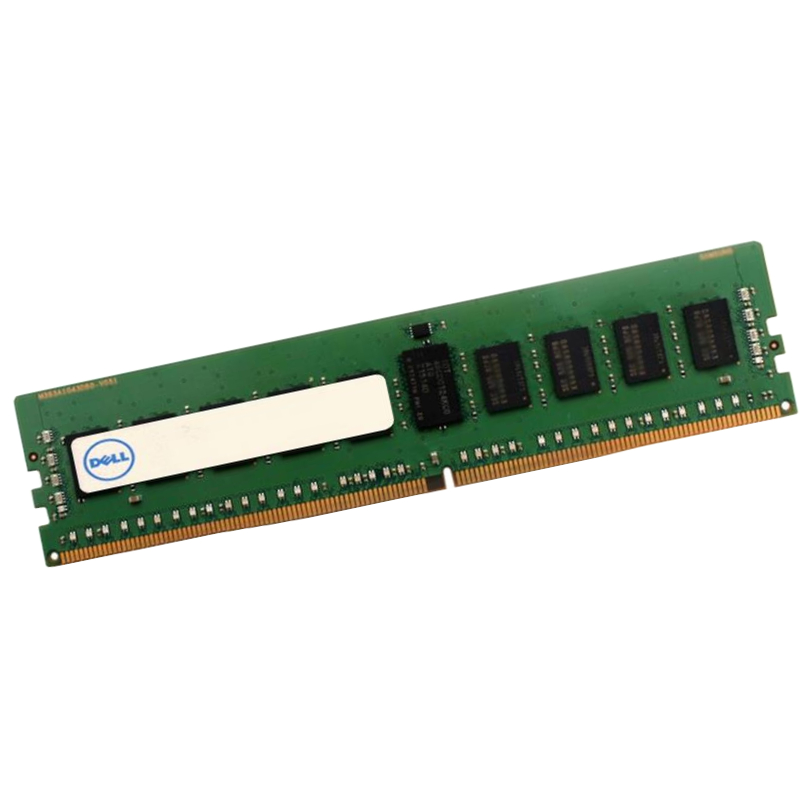
Dell A8711887 16GB 2400MHz PC4-19200 Cas-17 ECC Registered Dual Rank X8 DDR4 SDRAM 288-Pin RDIMM for Poweredge Server Memory Module. New Sealed in Box (NIB) with 1-Year Replacement Warranty - Dell Version
| SKU/MPN | Warranty | Price | Condition | You save |
|---|---|---|---|---|
| A8711887 | 1 Year Warranty | $339.00 | New Sealed in Box (NIB) | You save: $118.65 (26%) |
| A8711887 | 1 Year Warranty | $223.00 | New (System) Pull | You save: $78.05 (26%) |
The Dell A8711887 memory module delivers reliable server performance with advanced DDR4 SDRAM technology, ensuring stability and efficiency for enterprise workloads. The Dell A8711887 16GB 2400MHz PC4-19200 CAS-17 ECC Registered Dual Rank X8 DDR4 SDRAM 288-Pin RDIMM for PowerEdge server memory module represents a focused solution for enterprise-class systems that require stability, predictable performance, and compatibility with Dell PowerEdge servers.
This memory module, designed to industry standards and validated to operate within server-grade environments, blends a specific set of electrical characteristics, timing parameters, and physical form factor to ensure reliable service in virtualized workloads, database engines, caching layers, and high-availability applications. The 2400MHz data rate and PC4-19200 bandwidth position this module in a performance tier that balances throughput and latency, while CAS-17 timing and dual rank X8 organization support robust multithreaded processing without sacrificing data integrity thanks to its ECC Registered design. In deployments where uptime and fault tolerance carry premium value, the A8711887 RDIMM integrates into system-level error detection and correction strategies and contributes to maintaining consistent memory throughput across demanding server tasks.
This 288-pin RDIMM adheres to the JEDEC mechanical specifications for DDR4 server memory, making it physically compatible with the DIMM slots on compatible Dell PowerEdge motherboard architectures. The height, notch placement, and pin density are engineered for secure seating and proper electrical contact in densely packed server chassis. Because compatibility in enterprise servers includes not only the physical fit but also firmware and BIOS validation, this RDIMM is typically listed on Dell compatibility matrices for a range of PowerEdge models. That means system integrators and administrators can expect predictable system behavior during POST, during memory population changes, and while performing firmware updates. Physical reliability also includes tolerance to the thermal and acoustic conditions found in rack or blade enclosures, where consistent airflow and ambient temperatures require modules that maintain signal integrity under sustained load. When architecting memory configurations for a PowerEdge server, attention to slot population order, channel balance, and rank interleaving is crucial to maximize throughput and ensure the system's memory controller negotiates the correct timings for dual-rank modules.
The dual rank designation describes how the 16 gigabytes of memory are organized electrically across the module. Two ranks allow for an effective increase in the apparent number of independent data banks, which can improve performance under certain multithreaded or random-access workloads by increasing opportunities for memory interleaving. The X8 configuration describes the width of the DRAM chips used on the module. X8 chips are a common compromise between density and error correction capability, enabling manufacturers to populate the module with a configuration that supports ECC bit coverage while maintaining favorable thermal profiles. For systems that depend on parallel memory access patterns—such as database servers with heavy read/write operations or virtualization platforms with many small, independent guest operating systems—the dual rank design can translate into more consistent latency across concurrent transactions. The architectural choice of dual rank and X8 also influences how memory controllers schedule refresh cycles and access windows, an important consideration when planning maximum supported memory and population schemes for dual-CPU or multi-socket server configurations.
The operating frequency of 2400MHz and the associated PC4-19200 bandwidth indicate that the module moves data at a rate of 19,200 megabytes per second under ideal transfer conditions per memory channel. CAS latency 17 is the column access strobe timing that affects the number of clock cycles between the read command and when data becomes available; CAS-17 at 2400MHz is tuned for robust error-free operation across a range of server workloads. While lower CAS numbers can reduce latency, server-class memory often seeks a balance between frequency and timing to maintain signal integrity and thermal headroom in multi-module configurations. The electrical profile of the module will include considerations for supply voltage—typically within the DDR4 voltage range—and termination schemes that are designed to minimize reflections and noise on the command, address, and data busses. System firmware typically negotiates the effective timings during initialization, selecting manufacturer-defined SPD timing tables or employing XMP-like server profiles when supported. For administrators optimizing a PowerEdge for sustained throughput, understanding how frequency, CAS, and rank interleave affect real-world performance is key when configuring memory across channels and sockets.
Error-Correcting Code (ECC) memory detects and corrects single-bit errors and detects multi-bit errors, providing an additional layer of data integrity beyond standard non-ECC memory. In environments where silent data corruption cannot be tolerated—such as financial systems, scientific simulations, or persistent storage caches—ECC ensures that ephemeral or transient faults in DRAM cells do not propagate into computation or persistent storage. Registered (or buffered) memory introduces a register between the DRAM chips and the memory controller that buffers address and command signals. This buffering reduces load on the memory controller, enabling higher module counts per channel and greater overall system memory capacity without compromising signal timing. The register reduces electrical load and therefore supports larger memory configurations in servers, a critical factor for multi-socket systems or workloads that require terabytes of RAM. The pairing of ECC and registered features makes this RDIMM suitable for platforms where high memory capacity, error resilience, and long-term reliability are non-negotiable operational requirements.
When deployed in virtualized infrastructures, the characteristics of the memory module influence hosting density, consolidation ratios, and the responsiveness of guest operating systems. Virtual machines and containers often create fragmented access patterns with many small, random reads and writes; dual rank modules with moderate CAS latency provide a stable foundation for such variable loads by maintaining data throughput under mixed I/O. Databases benefit from server memory with predictable latency and error correction because caches, buffer pools, and in-memory indexes rely on consistent read/write performance. For in-memory databases or caching solutions where working sets fit in memory, the 2400MHz speed and PC4-19200 bandwidth can provide the steady data flow necessary to reduce disk I/O and boost transaction throughput. Memory bandwidth scaling across channels and sockets is also influenced by how modules are populated; matching ranks and capacities across channels avoids bottlenecks and allows the server’s memory controller to exploit full channel parallelism. In addition, workloads sensitive to latency spikes will appreciate ECC's mitigation of single-bit errors that might otherwise trigger higher-level software retries and interrupt handling that degrade performance.
Server-grade memory must endure the sustained thermal conditions of rack deployments and blade enclosures. Thermal design for a crowded chassis often assumes continuous operation at elevated ambient temperatures, so the module’s components and PCB layout aim to dissipate heat efficiently while minimizing hotspots that could trigger timing instability. The reliability of the module is further enhanced by manufacturing processes that select DRAM dies and assemblies for their ability to operate within server power profiles and extended duty cycles. In the context of high-availability infrastructure, where component failure can lead to costly downtime, the reliability metrics of ECC Registered modules play an outsized role in maintenance planning, mean time between failures (MTBF) calculations, and proactive health monitoring via system management interfaces. Dell PowerEdge systems typically expose memory health and error logs through management controllers; these logs rely on the underlying memory modules to provide accurate error reporting and status registers that inform administrators when replacement or remediation is required.
Capacity planning with 16GB RDIMMs involves balancing the number of modules per channel, the total number of channels available on the CPU, and the population order recommended by the server vendor. In dual-socket systems, balancing memory across sockets ensures symmetrical performance for NUMA-aware applications. Adding additional modules to reach higher total capacities may change the operating mode of the memory controller or force the system to run at different supported speeds depending on rank and channel loading. Therefore, administrators often reference vendor guidelines to determine whether mixing ranks and capacities will result in reduced frequencies or altered timing. Practical planning includes not only the immediate capacity needs but also growth forecasts; using modules like this 16GB RDIMM can provide a cost-effective building block to scale memory while preserving the option to replace or upgrade to larger capacities later without disrupting existing ranks or channel balances.
The 16GB module is suitable for a broad range of enterprise use cases. In virtualization hosts, a balanced mix of capacity and speed supports multi-tenant VM workloads without excessive oversubscription of memory. High-density compute clusters that run parallel simulations or big data processing can leverage the module’s dual rank attributes to maintain throughput under heavy concurrency. For database servers where memory serves as the primary working set, reliable ECC correction and registered buffering protect against corruption while sustaining transactional rates. Additionally, this RDIMM integrates well into storage controllers and cache-rich appliance designs where predictable error-free memory operation is important to preserve data integrity in the event of power disturbances or transient electrical anomalies. The module's profile is also applicable to build-outs of development and test rigs where parity between development systems and production PowerEdge servers reduces test variances caused by different memory behaviors.
Memory modules play a subtle but crucial role in data security and integrity. ECC corrects transient memory errors that could otherwise lead to incorrect computations or data corruption, a particularly salient point when processing cryptographic materials or handling financial ledgers. Registered memory further stabilizes the electrical signaling environment, reducing the likelihood of spurious faults that could open vectors for rare but impactful failure modes. In environments with strict auditing requirements, the combination of ECC logging and system management telemetry provides traceable evidence of memory health and corrective actions taken by administrators, contributing to overall infrastructure governance.
The behavior of memory is tightly coupled to the CPU's integrated memory controller and the motherboard chipset. Supported memory speeds, ranks per channel, and maximum module densities vary with processor generations and chipsets. The 2400MHz rating is one supported operating point, but actual negotiated speeds may depend on the installed CPU model and firmware settings. For optimal interoperability, systems should pair matched modules across channels and comply with the maximum supported rank and capacity per channel specified by the CPU vendor. In multi-socket systems, ensuring symmetrical memory configurations across sockets enables predictable NUMA performance characteristics. System architects should consult vendor documentation to determine whether certain combinations of ranks and speeds trigger shift to lower supported frequencies or altered timings, and plan memory configurations to align with target workload performance and latency sensitivity.


 Contact Us
 Information
 Catalog
 Solid State Drives (SSD)
 Network Switches
 Hard Disk Drives
 HBA & Controllers
 PC & Servers
 PC & Server Memory
 CPU & Processors
 Network Routers
 Power Supplies
 Tape Drives & Libraries
 Network Devices
 Computer & Network Cables