
(7% discount is applied at checkout)
Cart is empty
Your go-to destination for cutting-edge server products
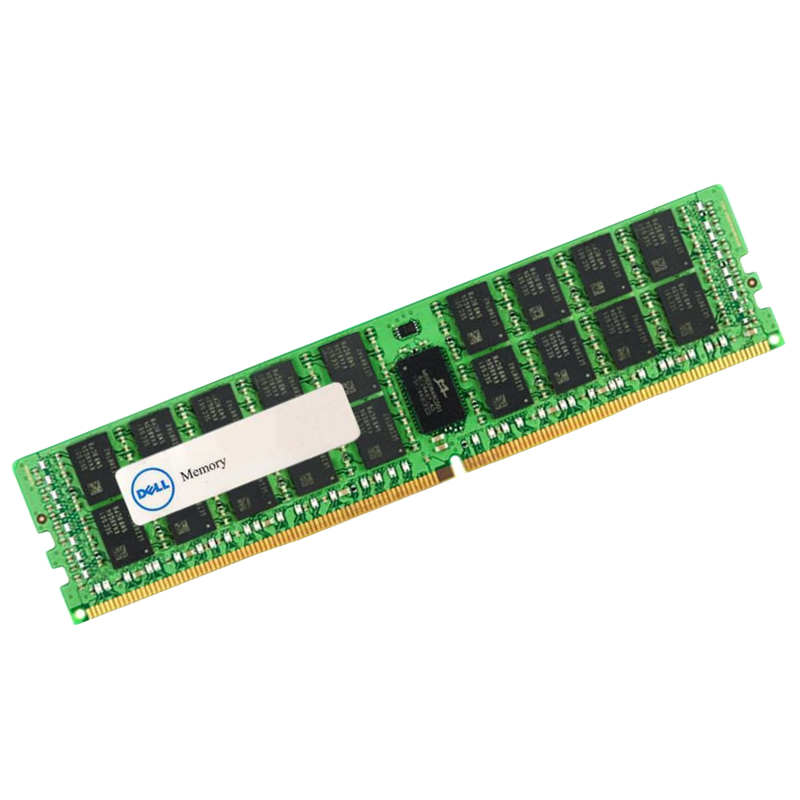
Dell A8961675 16GB 2400MHz PC4-19200 CAS-17 ECC Registered Dual Rank X8 DDR4 SDRAM 288-Pin RDIMM for Server Memory Module. New Sealed in Box (NIB) with 1-Year Replacement Warranty
| SKU/MPN | Warranty | Price | Condition | You save |
|---|---|---|---|---|
| A8961675 | 1 Year Warranty | $339.00 | New Sealed in Box (NIB) | You save: $118.65 (26%) |
| A8961675 | 1 Year Warranty | $232.00 | New (System) Pull | You save: $81.20 (26%) |
The Dell A8961675 memory module delivers reliable performance for enterprise-grade servers and workstations. Designed with advanced DDR4 SDRAM technology, this 16GB Registered DIMM ensures stability, speed, and efficiency for demanding workloads.
This Dell memory module is engineered to integrate seamlessly with a wide range of PowerEdge servers and Precision workstations, ensuring maximum compatibility and performance.
The Dell A8961675 16GB 2400MHz PC4-19200 CAS-17 ECC Registered Dual Rank X8 DDR4 SDRAM 288-Pin RDIMM occupies a precise and mission-critical niche within server memory solutions. Engineered to meet the stability, error-correction, and throughput demands of modern server platforms, this module combines ECC Registered features with a dual-rank X8 organization to deliver reliable operation under sustained loads. The 2400MHz frequency provides a balanced middle ground between energy efficiency and memory bandwidth, making the module suitable for virtualization hosts, database servers, compute nodes and storage controllers that require predictable latency and industry-standard performance. As a component in a server memory subsystem, the module’s behavior is strongly shaped by its ECC capability: the Error-Correcting Code logic detects and corrects single-bit memory errors and detects multi-bit errors, preserving data integrity during long uptimes and reducing the risk of silent data corruption. Registered buffering reduces electrical load on the memory controller, enabling higher capacities and more stable multi-module configurations on systems designed to exploit RDIMM features. This combination of ECC Registered buffering, dual-rank topology, and 2400MHz clock rate results in a dependable memory module designed for enterprise-class workloads.
At its core the module consists of a 288-pin DIMM form factor populated with x8 DRAM devices arranged into two ranks. The dual-rank configuration means the system sees two sets of memory chips that can be independently addressed by the memory controller, which can lead to higher effective throughput in many server platforms because rank interleaving permits better utilization of bus cycles. Each rank contains DRAM chips organized with x8 data width per chip, a common organization for server-grade modules that balances density and signal integrity. The 16GB capacity is achieved through the density and arrangement of those chips across the PCB. The CAS latency of 17 at the rated 2400MHz reflects the timing trade-offs made by manufacturers to maintain stability while delivering good access times for server workloads. ECC logic is implemented at the module and system level to provide single-bit correction and multi-bit detection, usually requiring motherboard and BIOS support to activate and report ECC events. The register on an RDIMM sits between the module’s command/address lines and the system memory bus, acting as a relay to reduce loading on the controller and allow for higher module counts per channel. Together these features form a coherent architecture aimed at predictable, error-resilient operation in enterprise deployments.
This RDIMM conforms to the DDR4 electrical and mechanical specification for 288-pin modules, which includes voltage regulation, signal timing, and mechanical notch placement for correct orientation and retention. The module is specified to operate at a nominal 1.2V supply for DDR4 devices, with tight control over refresh intervals and thermal characteristics to prevent wear or timing drift. The physical 288-pin edge connector is compatible with DDR4 server sockets; mechanical keying prevents accidental insertion into incompatible slots. Registered modules include additional components on the PCB such as register chips and sometimes thermal labels or heat spreaders depending on the vendor’s design choices. Thermal behavior is important in dense server racks, and while these modules typically do not include active cooling, their thermal profile is defined so that typical server chassis airflow and rack-level cooling strategies are sufficient to keep die temperatures within rated limits during continuous operation. Proper seating and chassis airflow design complement the electrical behavior to ensure the module maintains timing margins under load.
Compatibility for ECC Registered DDR4 RDIMMs is more nuanced than consumer DIMMs. Platform compatibility depends on the server chipset, BIOS/firmware support, and the processor’s memory controller. Dual-rank RDIMMs often work well in systems that support higher capacities per channel or that rely on rank interleaving to improve performance. However, not all servers accept registered modules in every slot combination — motherboard documentation and compatibility matrices should be consulted to determine maximum supported memory per slot, supported speeds under various population schemes, and any constraints that affect multi-channel or multi-socket configurations. When upgrading or scaling memory, paying attention to matching ranks, speed grades, and ECC capability across modules helps avoid unexpected downclocking or loss of ECC functionality. In multi-socket systems the interdependency between CPU memory controllers and BIOS can determine whether a module will operate at its full rated speed or at a lower speed to preserve stability across all populated channels.
The practical benefits of ECC Registered RDIMMs manifest most strongly in workloads where data correctness, long uptimes, and high memory density matter. Virtualization hosts running dozens or hundreds of VMs rely on memory isolation and predictable latency; an ECC RDIMM helps ensure that single-bit errors are corrected automatically without VM crashes. Database servers handling transactional workloads need both capacity and integrity because bit flips in memory can corrupt in-memory indices or caches; ECC plus registered buffering minimizes such risks and supports larger memory capacities required for in-memory caches. High-performance computing clusters executing long-running simulations also benefit from error correction to protect against bit errors that would otherwise invalidate extended computations. Storage controllers and network appliances that require deterministic behavior under continuous I/O loads find the registered attribute useful because it stabilizes timing when many modules are installed. In all of these scenarios the module’s 2400MHz speed aligns with a sensible compromise between the top-tier 2666–3200MHz DDR4 modules and lower-speed DIMMs, delivering effective bandwidth with conservative timing for robust operation.
Performance for server memory is measured not only in peak bandwidth but also in predictable latency under load and the ability to sustain throughput across multiple simultaneous threads or cores. The 2400MHz clock rate yields a specific data transfer rate per channel that must be considered relative to the number of memory channels on the target CPU and whether the system uses single, dual, or quad-channel interleaving. Dual-rank modules can sometimes provide higher effective throughput than single-rank modules due to rank interleaving opportunities that reduce bus idle cycles. CAS-17 timing indicates that the module takes seventeen clock cycles for column access strobe response, which interacts with the memory controller’s scheduling to determine effective access latency. ECC introduces a marginal overhead for parity checking and correction, but this overhead is typically imperceptible compared to the benefits of avoiding memory faults; for enterprise applications the trade is overwhelmingly positive because data corruption risk is minimized while absolute throughput remains high.
Memory capacity planning for servers involves matching workload requirements to module density and the number of available DIMM slots. The 16GB density offered by this module is a versatile building block: it can be combined in multiples to reach mid-range capacities in one-socket systems, and when used across many slots in dual-socket servers it scales into the hundreds of gigabytes. Dual-rank modules may influence the maximum addressable DIMM count per channel as documented by the server vendor; some systems will allow more modules of lower rank per channel before hitting controller electrical limits, while other systems optimize for fewer high-density modules. Careful planning ensures balanced channel population to maintain symmetrical memory access and avoid performance penalties. When higher capacity per slot is needed and server supports it, administrators may choose to complement 16GB RDIMMs with larger modules on other channels while ensuring compatibility and matching speeds. For memory-intensive applications such as in-memory analytics or containerized microservices with high RAM requirements, modular deployment using reliable ECC RDIMMs allows incremental growth while preserving the system’s error correction characteristics and registered buffering advantages.
While RDIMMs do not typically consume extreme power per module, cumulative power across many modules in dense blade or rack servers creates thermal considerations. The heat generated by DRAM devices and registers must be managed through proper airflow, chassis design and rack-level cooling strategies. Data center architects should ensure that front-to-back airflow patterns are unobstructed, air filters are maintained, and hot spots within dense enclosures are monitored. Monitoring DIMM temperatures through platform management tools can reveal whether particular modules operate at higher temperatures, which may indicate inadequate airflow or obstructed rails. When integrating these modules into existing data center environments, administrators should account for power dissipation per node and adjust rack-level cooling plans to prevent thermal throttling or long-term thermal stress on memory components. Performing thermal profiling under representative workloads helps validate that the deployed memory configuration remains within safe operating ranges for sustained periods.
RDIMMs are one of several server memory options, including LRDIMMs (Load-Reduced DIMMs), UDIMMs (unbuffered DIMMs), and non-ECC consumer modules. Compared to unbuffered modules, RDIMMs add a register to stabilize command/address signals and enable higher module counts; compared to LRDIMMs, RDIMMs generally consume less power per module but may not reach the same maximum capacities that load-reduced designs enable. LRDIMMs can provide higher density for memory-heavy workloads but introduce different latencies and may require different firmware validation. Non-ECC and unbuffered modules are ill-suited to enterprise environments that require error correction and large capacities because they lack the safeguards against memory faults and the electrical buffering for high module counts.


 Contact Us
 Information
 Catalog
 Solid State Drives (SSD)
 Network Switches
 Hard Disk Drives
 HBA & Controllers
 PC & Servers
 PC & Server Memory
 CPU & Processors
 Network Routers
 Power Supplies
 Tape Drives & Libraries
 Network Devices
 Computer & Network Cables