
(7% discount is applied at checkout)
Cart is empty
Your go-to destination for cutting-edge server products
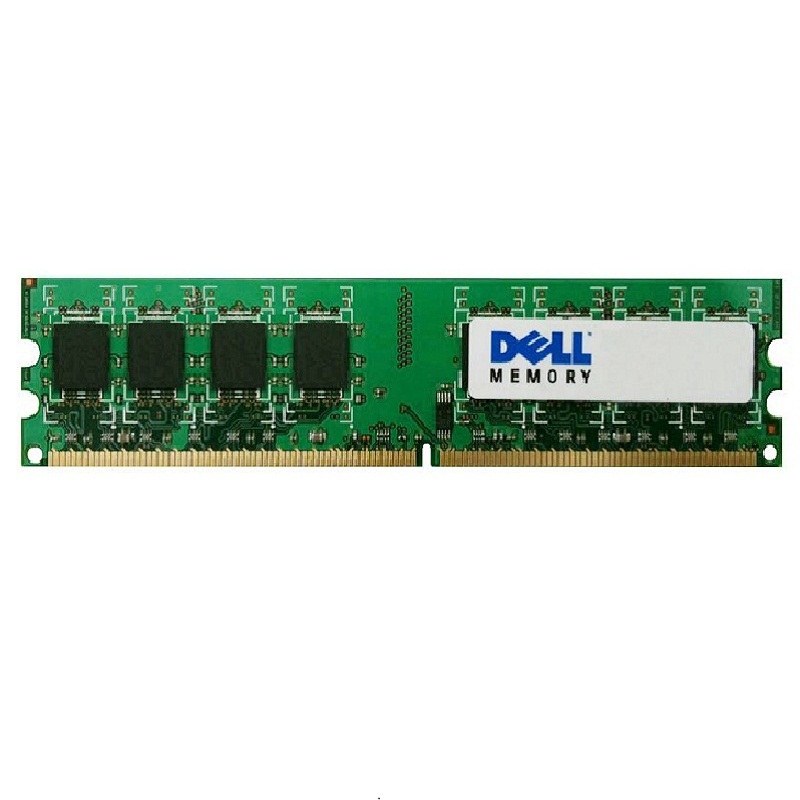
Dell A9781929 32GB 2666MHz PC4-21300 CL19 ECC Registered Dual Rank X4 1.2v DDR4 SDRAM 288-Pin RDIMM for Server Memory Module. New (System) Pull with 1 year replacement warranty - Samsung Version
| SKU/MPN | Warranty | Price | Condition | You save |
|---|---|---|---|---|
| A9781929 | 1 Year Warranty | $402.00 | New Sealed in Box (NIB) | You save: $140.70 (26%) |
| A9781929 | 1 Year Warranty | $344.00 | New (System) Pull | You save: $120.40 (26%) |
The Dell A9781929 Server Memory Module delivers exceptional performance with 32GB DDR4 SDRAM capacity, engineered for enterprise-grade reliability and speed. Designed for advanced workloads, this registered dual-rank RDIMM ensures seamless multitasking and optimized server efficiency.
This Dell memory module is optimized for a wide range of PowerEdge servers and Precision workstations, ensuring maximum compatibility and stability.
The Dell A9781929 32GB 2666MHz PC4-21300 CL19 ECC Registered Dual Rank X4 1.2v DDR4 SDRAM 288-pin RDIMM represents a class of purpose-built server memory designed for enterprise data centers, virtualization hosts, database servers, and compute-dense workloads requiring stability, predictability, and sustained throughput. This category emphasizes error-correcting code (ECC) functionality combined with registered buffering and a dual-rank x4 configuration to provide exceptional resilience against memory errors while enabling higher capacity per channel compared to commodity desktop modules. Engineered to meet rigorous server-grade standards, modules in this family use DDR4 architecture at 2666MT/s, operate at a low 1.2V power rail, and integrate timing characteristics commonly listed as CL19. The design choices reflected in this category prioritize data integrity, system compatibility with major OEM platforms, and long-term reliability in 24/7 operational environments.
At the heart of this category is the 32GB capacity per DIMM, an industry-standard sweet spot that balances memory density, cost per gigabyte, and the ability to populate multi-socket server platforms with substantial aggregate RAM. The 2666MHz speed corresponds to PC4-21300, indicating theoretical peak bandwidth of roughly 21.3GB/s per module under ideal transfer conditions. CAS latency of 19 cycles is typical for DDR4 modules at this speed; combined with the frequency this yields a predictable latency profile well-suited to enterprise workloads where consistency matters more than absolute single-threaded latency. The ECC Registered (RDIMM) architecture places a register between the memory controller and DRAM chips, reducing electrical load on the memory bus and allowing more modules per channel without signal integrity issues that plague unbuffered options. The x4 device configuration and dual-rank layout affect how the module presents as two sets of memory chips to the controller, enabling better density while shaping performance characteristics and error detection capabilities.
Error-Correcting Code on these modules actively detects and corrects single-bit memory errors and detects multi-bit errors, a foundational feature for systems tasked with maintaining data fidelity over extended uptimes. When combined with registered buffering, ECC RDIMMs reduce the electrical loading of the memory channel and improve signal timing margin, allowing server platforms to populate more DIMMs per channel, which directly impacts maximum memory capacity. The Dell A9781929 series therefore becomes a logical choice when system architects must scale memory footprints for virtualization nodes, in-memory databases, or high-performance computing nodes without compromising on reliability. The 1.2V operating voltage helps reduce power consumption and thermal dissipation relative to older, higher-voltage memory technologies, contributing to more efficient data center design.
Modules labeled with the Dell A9781929 designation are validated for compatibility with a range of Dell PowerEdge servers and enterprise motherboards that require RDIMM, ECC-capable memory. Compatibility extends to server-class Intel and AMD platforms that accept DDR4 RDIMM modules at 2666MHz; however, platform-specific validation means installers should consult server compatibility matrices and BIOS release notes. When considering upgrades, it is essential to follow vendor recommendations regarding memory population rules, supported ranks per channel, and mixing restrictions. Many enterprise platforms support mixing capacities but require matched speeds and compatible ranks to operate in optimal modes. The dual-rank x4 module architecture in this family is commonly supported but may require specific BIOS settings for maximum channel interleaving and to ensure that advanced RAS features like memory sparing or mirroring function correctly.
Entering a server upgrade scenario with a mix of RDIMM and LRDIMM or UDIMM modules can create unpredictable behavior and is generally discouraged. Modules in the Dell A9781929 family should be installed in matched sets when possible. Mixed-speed populations will typically downclock to the lowest common frequency, potentially affecting performance.
Performance characteristics for the 32GB 2666MHz RDIMM should be interpreted through the lens of sustained, multi-threaded server workloads where throughput and error resilience trump raw single-core speed. Virtualization clusters running dozens of guests, containerized microservices, and application stacks with high memory footprints benefit from the capacity and reliability this category provides. Database servers that use sizable buffer pools will see improved cache hit ratios when equipped with denser RDIMMs, and analytics workloads that stage large in-memory datasets will sustain higher parallel read/write throughput. While single-threaded latency is slightly higher than lower-latency DDR4 parts tuned for desktop use, the trade-off is acceptable and often preferred given the server environment's emphasis on concurrency and uptime.
CAS latency of 19 cycles combined with the 2666MT/s clock results in a predictable absolute latency value. In practice, application-level performance depends heavily on memory access patterns, working set sizes, and the degree to which applications exploit parallelism. Memory-bound workloads that visit large datasets sequentially will benefit from the module's bandwidth, whereas latency-sensitive tasks with small random accesses may notice modest differences compared to lower-latency modules. Enterprise systems compensate with cache hierarchies, NUMA-aware scheduling, and software optimizations that mitigate raw DRAM latency impacts.
Products in this category undergo stringent testing regimes during manufacturing to ensure they meet the error rate, timing, and environmental specifications expected of server memory. Burn-in tests, JEDEC standard compliance checks, and ECC validation are typical quality control steps. Dell-labeled modules often pass additional system-level validation on target server models, testing for compatibility across BIOS revisions and under varying workloads. The result is a memory SKU intended to minimize field returns and deliver consistent operational behavior under heavy and continuous load. For environments where redundancy is critical, these modules form part of an overall resilience strategy that includes RAID for storage, ECC for memory, and clustered compute architectures for failover.
In cloud and colocation environments where hardware standardization is a priority, using validated RDIMMs simplifies lifecycle management and reduces the amount of SKU diversity technicians must stock. High-performance compute nodes that run simulations or scientific compute with large memory footprints also benefit from the module's combination of capacity and ECC protection. In all these contexts, the modules are chosen to provide a predictable platform for sustained operations rather than for achieving the last increment of micro-benchmark performance.
Beyond standard ECC correction, the category interacts with server-level security measures that protect data in flight and at rest. Memory encryption features provided by modern CPUs can work alongside ECC to secure sensitive in-memory data. Additionally, features like memory scrubbers periodically scan and correct memory errors proactively, reducing the probability of error accumulation. Administrators should ensure that BIOS and firmware settings that control memory encryption and scrubber behavior are aligned with organizational security policies and that any regulatory requirements for data protection are met when operating in sensitive environments.
Compared to unbuffered DIMMs and low-cost UDIMM alternatives, ECC RDIMMs prioritize reliability and scalability over cost minimization. LRDIMMs offer even higher capacity per module through load-reduction techniques and an on-module buffer but may introduce different compatibility considerations and cost implications. For many server use cases the RDIMM balance of price, performance, and compatibility remains attractive, and the Dell A9781929 family exemplifies that balance with its moderate density, proven frequency, and ECC capabilities. Selection should be informed by platform validation lists, workload demands, and budgetary constraints.


 Contact Us
 Information
 Catalog
 Solid State Drives (SSD)
 Network Switches
 Hard Disk Drives
 HBA & Controllers
 PC & Servers
 PC & Server Memory
 CPU & Processors
 Network Routers
 Power Supplies
 Tape Drives & Libraries
 Network Devices
 Computer & Network Cables