(7% discount is applied at checkout)
Cart is empty
Your go-to destination for cutting-edge server products
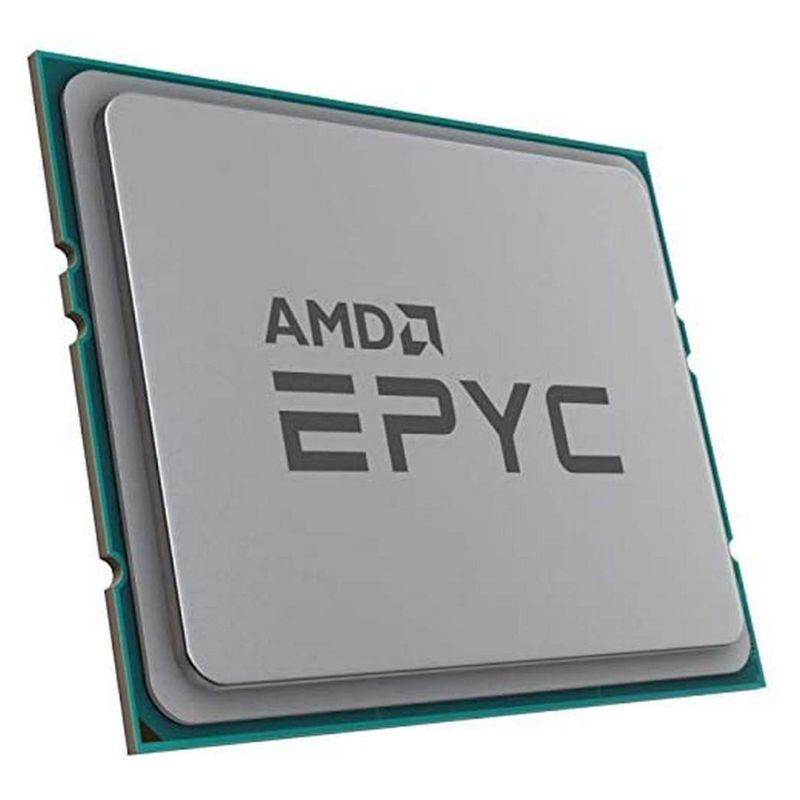


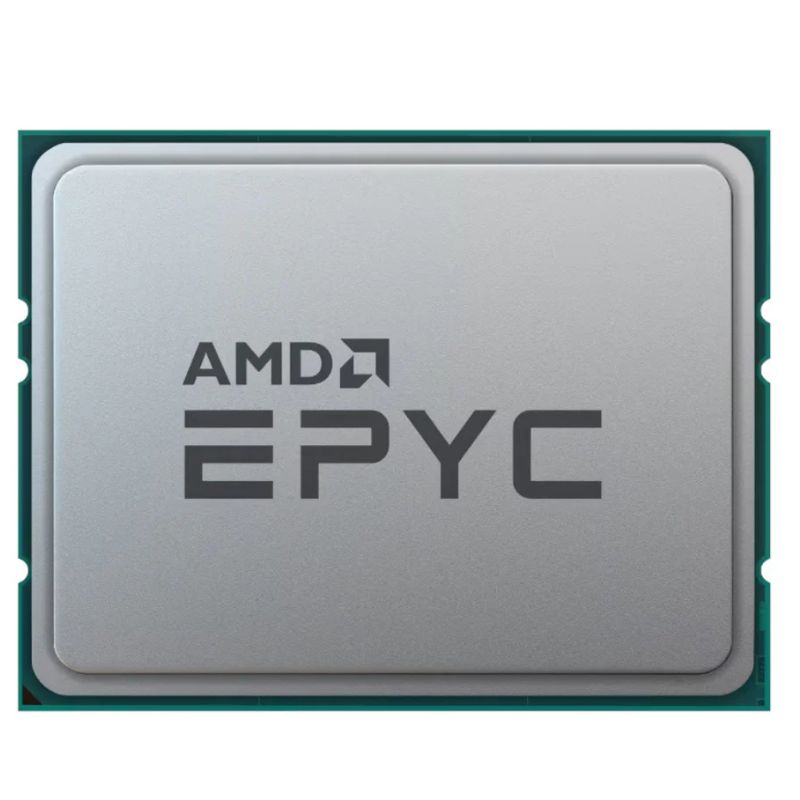
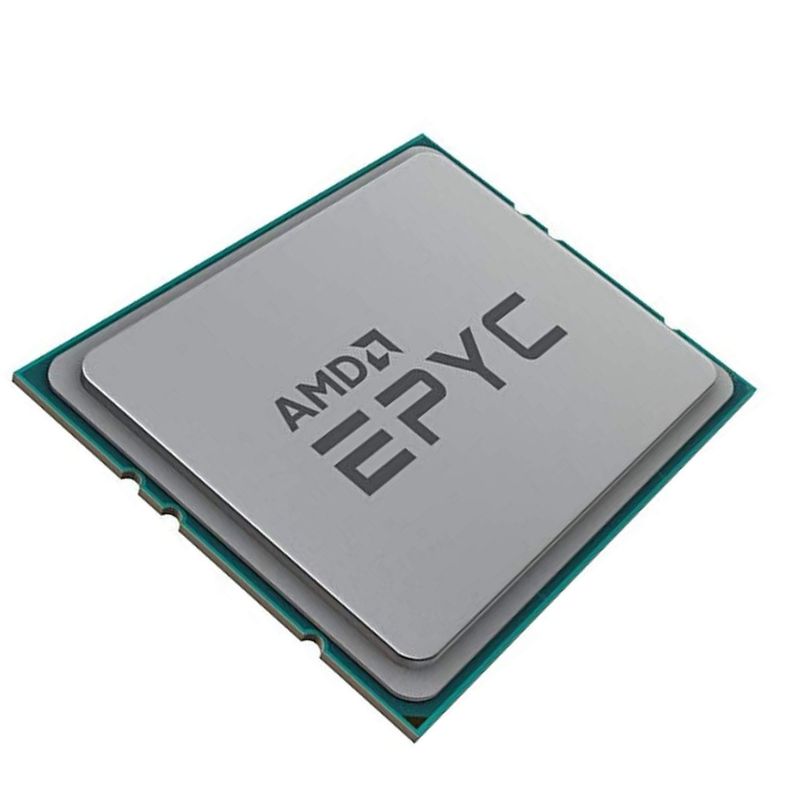
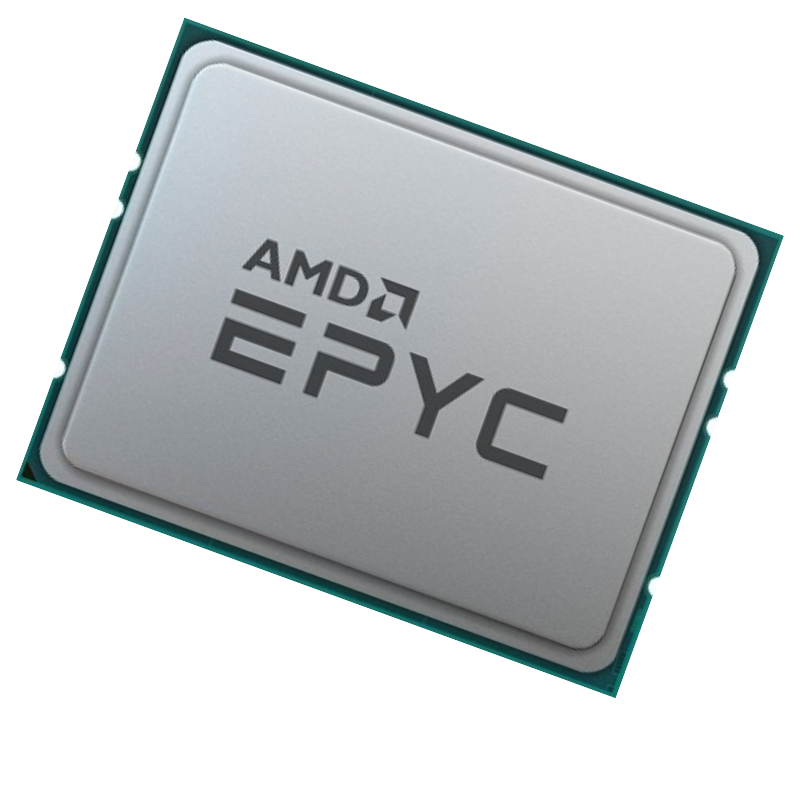
AMD 100-100000313WOF 2.95GHz 32-Core EPYC 75F3 256mb L3 Cache Socket Sp3 7nm 280W Processor. New System Pull with 1 Year Replacement Warranty. Dell Locked
| SKU/MPN | Warranty | Price | Condition | You save |
|---|---|---|---|---|
| 100-100000313WOF | 1 Year Warranty | $2,137.00 | New (Box Not Sealed) | You save: $747.95 (26%) |
| 100-100000313WOF | 1 Year Warranty | Contact us for a price | New (System) Pull |
The AMD 100-100000313WOF EPYC 75F3 processor represents a powerful advancement in high-performance data center computing. Engineered using 7nm process technology and built on the proven Zen 3 architecture, this 32-core, 64-thread CPU delivers exceptional computational throughput and power efficiency for enterprise servers and cloud infrastructures. Designed for Socket SP3 platforms, the EPYC 75F3 operates at a base frequency of 2.95GHz with impressive boost capabilities, offering high scalability for diverse workloads. This processor is a member of the EPYC 7003 series, which is known for balancing raw performance with energy efficiency, optimizing resource utilization across modern virtualized environments and high-demand databases.
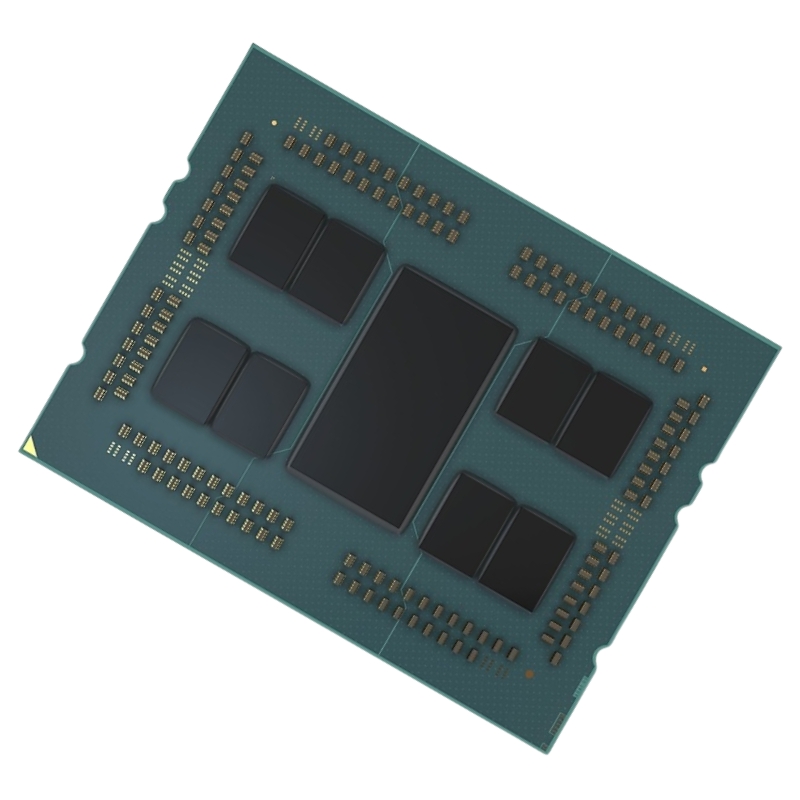
The EPYC 75F3 utilizes AMD’s Zen 3 microarchitecture, which refines instruction pipelines and improves per-core efficiency. This 7nm architecture maximizes transistor density while reducing thermal output. Each of the 32 cores operates within an optimized cache hierarchy featuring a massive 256MB of L3 cache. This enables faster data access and minimizes latency, crucial for applications requiring rapid data retrieval and large-scale parallel computation. The design integrates dual-die configurations for enhanced scalability and workload balancing, which helps improve data throughput and system responsiveness.
Manufactured on TSMC’s advanced 7nm FinFET process, the AMD EPYC 75F3 achieves higher transistor efficiency per watt compared to previous generations. This technology enables increased core density, allowing more processing units in the same silicon footprint while maintaining manageable thermal design power (TDP). The processor’s 280W TDP ensures optimal balance between energy consumption and performance output, making it suitable for high-density computing environments where thermal control is critical for reliability.
Zen 3 introduces a unified 8-core complex design that enhances inter-core communication and memory latency. Unlike the previous Zen 2 architecture, where cores were divided between two complexes, Zen 3 allows all eight cores to access the same L3 cache directly. This architectural enhancement translates to faster data sharing between threads and better single-threaded performance. The improved branch prediction and instruction scheduling also help boost performance consistency across varied workloads such as virtualization, AI inference, and computational modeling.
The EPYC 75F3 excels in performance scaling across different workloads. With 32 cores and 64 threads, it is designed for multi-threaded tasks including virtualization, AI training, and cloud-native application hosting. Its base frequency of 2.95GHz can dynamically boost under load, ensuring rapid data computation for real-time applications. This processor supports PCI Express 4.0 for improved bandwidth and data transfer rates, essential for connecting to high-speed NVMe storage and advanced GPUs.
Each core in the AMD EPYC 75F3 operates with improved instruction-per-clock (IPC) efficiency, providing more processing power per cycle. This efficiency benefits parallel workloads such as database analytics, enterprise virtualization, and containerized microservices. The CPU’s simultaneous multithreading (SMT) technology doubles the number of threads per core, improving multitasking capability without significantly increasing power draw. This translates into better performance for multi-tenant environments and server workloads where concurrency and throughput are critical.
The processor’s Precision Boost 2 and Precision Boost Overdrive technologies dynamically adjust clock speeds based on power and thermal conditions. This intelligent power management ensures optimal performance across varied workloads. Combined with AMD’s advanced energy optimization, the EPYC 75F3 delivers consistent compute performance while maintaining efficient thermal profiles, a necessity in dense rack configurations and data center infrastructures.
The AMD EPYC 75F3 supports eight channels of DDR4 memory with speeds up to 3200MHz. This vast memory bandwidth allows faster data exchange between CPU and RAM, reducing memory bottlenecks. It also supports large memory capacities per socket, making it suitable for in-memory databases, big data processing, and high-performance computing applications. With support for ECC memory, data integrity and reliability are maintained under continuous load, preventing data corruption in mission-critical environments.
AMD’s EPYC line, including the 75F3 model, incorporates multiple hardware-level security features designed to protect data integrity and system reliability. These technologies enhance isolation between virtual machines, encrypt data in memory, and defend against malicious attacks targeting firmware and runtime environments.
Secure Encrypted Virtualization with Secure Nested Paging (SEV-SNP) offers full memory encryption for virtualized environments. Each virtual machine receives a unique encryption key, ensuring that even if a hypervisor is compromised, the VM’s memory remains protected. This level of security allows enterprises to confidently deploy multi-tenant workloads and sensitive applications in shared cloud environments without risking exposure of critical data.
AMD Memory Guard provides real-time DRAM encryption, shielding data from physical attacks such as cold boot exploits. This feature operates transparently without impacting system performance, making it an ideal choice for organizations prioritizing compliance and data security. Combined with ECC memory support, the EPYC 75F3 processor ensures continuous data integrity across the system lifecycle.
Built for the Socket SP3 platform, the AMD EPYC 75F3 ensures seamless compatibility with a wide range of enterprise-grade motherboards and server systems. This includes support for dual-socket configurations that enable expansion up to 64 cores and 128 threads in a single system. Compatibility with PCIe 4.0 infrastructure allows integration with high-speed storage, GPUs, and network adapters, creating balanced server architectures optimized for compute-intensive tasks.
The EPYC 75F3 features 128 lanes of PCI Express 4.0, doubling the throughput compared to PCIe 3.0. This enables rapid communication with NVMe SSDs, GPUs, and networking hardware. High-speed connectivity ensures faster data transfer for storage-heavy workloads, making this processor an excellent choice for high-IOPS databases, distributed storage solutions, and GPU-accelerated computing. The PCIe 4.0 interface future-proofs data center investments by enabling compatibility with next-generation expansion cards and accelerators.
With its high core count and simultaneous multithreading, the EPYC 75F3 excels in cloud computing environments. It enables dense virtualization, supporting more virtual machines per physical host without performance degradation. Integration with VMware, Microsoft Hyper-V, and KVM ensures seamless deployment in both private and hybrid cloud environments. The processor’s energy efficiency and compute density make it ideal for organizations running containerized workloads, microservices, and AI-driven applications in clustered configurations.
The AMD EPYC 75F3 is designed to deliver top-tier performance without compromising on energy efficiency. Its 280W thermal design power is intelligently managed through adaptive power tuning and temperature monitoring, ensuring stability even under continuous load. AMD’s energy optimization framework dynamically adjusts power delivery to balance workload demands and maintain operational efficiency in large-scale deployments.
Integrated sensors within the EPYC 75F3 continuously monitor temperature and power consumption. These sensors work with AMD’s Precision Boost technology to optimize clock speeds and prevent thermal throttling. This ensures consistent performance across variable thermal conditions, especially in densely packed server racks where airflow is limited. The processor’s efficient heat dissipation design also allows for reduced cooling requirements, lowering operational costs in data center environments.
Reducing total cost of ownership is a key factor in large-scale server operations. The EPYC 75F3’s power efficiency allows organizations to deploy more compute capacity within the same energy budget. This directly contributes to sustainability initiatives by reducing carbon emissions associated with energy consumption. The combination of high computational throughput and low power-per-core ratio enables greater performance-per-watt efficiency compared to competing CPUs in the same class.
The processor’s power management system dynamically scales frequency and voltage according to workload intensity. Light workloads consume minimal power, while demanding applications trigger enhanced clock speeds for maximum throughput. This ensures that data centers can maintain high levels of performance without excessive energy draw, improving return on investment for enterprise deployments.
The AMD EPYC 75F3 processor is built to handle a wide array of enterprise-grade workloads, from high-performance computing (HPC) to virtualization and cloud-native applications. Its balance of core density, high cache capacity, and superior I/O bandwidth make it suitable for modern data-intensive and computationally complex tasks.
For scientific simulations, research workloads, and modeling applications, the EPYC 75F3 provides immense parallel compute capability. Its 32 cores can process large datasets simultaneously, reducing execution times for compute-bound workloads. The wide memory channels and large L3 cache further optimize data retrieval, essential for workloads like weather forecasting, molecular dynamics, and computational fluid dynamics.
Enterprises operating large virtualized infrastructures benefit from the EPYC 75F3’s ability to host multiple virtual machines with consistent performance. The combination of high thread counts, large cache, and memory bandwidth allows for high VM density per host. This translates into reduced hardware requirements, streamlined resource management, and enhanced cost efficiency for service providers offering infrastructure-as-a-service (IaaS) or platform-as-a-service (PaaS) solutions.
Data-driven organizations rely on the EPYC 75F3 for handling demanding database operations. The CPU’s low-latency cache architecture and memory channels accelerate query processing in relational and non-relational databases. This makes it an ideal platform for applications such as Oracle, PostgreSQL, and Microsoft SQL Server. Analytics engines like Apache Spark and Hadoop also benefit from the high concurrency levels enabled by the processor’s 32 cores and robust memory bandwidth.
The 256MB shared L3 cache allows rapid data access across cores, minimizing delays during high concurrency operations. The cache hierarchy design improves throughput for multi-threaded applications by reducing memory fetch latency. With 8 memory channels supporting high-capacity DIMMs, the EPYC 75F3 allows for extensive memory scaling per socket, providing the foundation for compute-intensive tasks such as large database operations, AI modeling, and virtualization.
The 128 PCIe 4.0 lanes enable high-speed connections to multiple devices, ensuring ample bandwidth for storage arrays, GPU accelerators, and high-speed networking. This bandwidth allows system architects to build flexible and scalable infrastructures that accommodate diverse workloads without creating data bottlenecks. The processor’s extensive I/O capacity supports redundancy, high availability, and efficient load balancing in clustered computing environments.


 Contact Us
 Information
 Catalog
 Solid State Drives (SSD)
 Network Switches
 Hard Disk Drives
 HBA & Controllers
 PC & Servers
 PC & Server Memory
 CPU & Processors
 Network Routers
 Power Supplies
 Tape Drives & Libraries
 Network Devices
 Computer & Network Cables