(7% discount is applied at checkout)
Cart is empty
Your go-to destination for cutting-edge server products
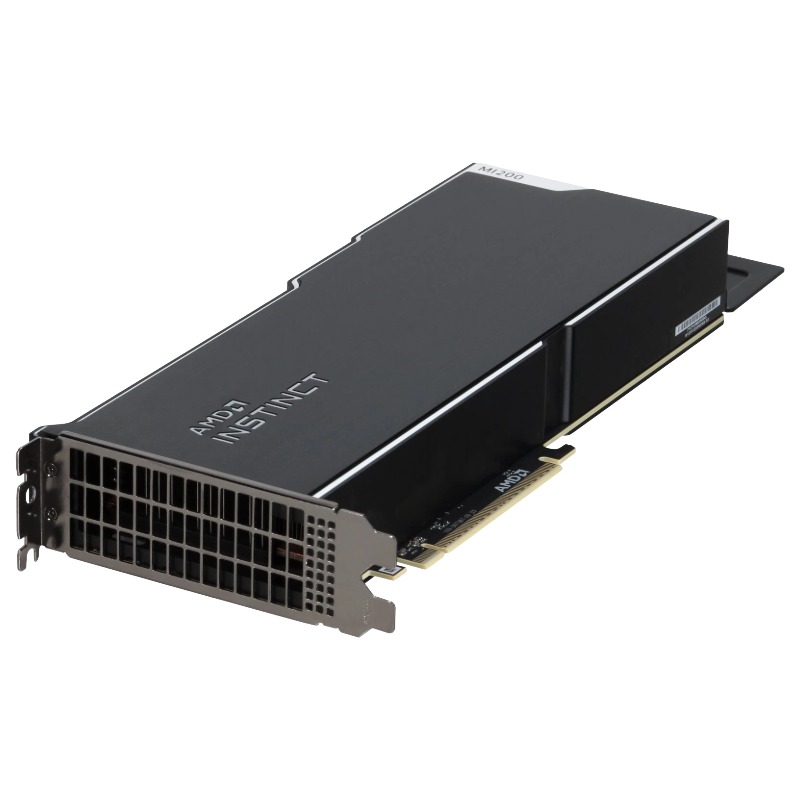


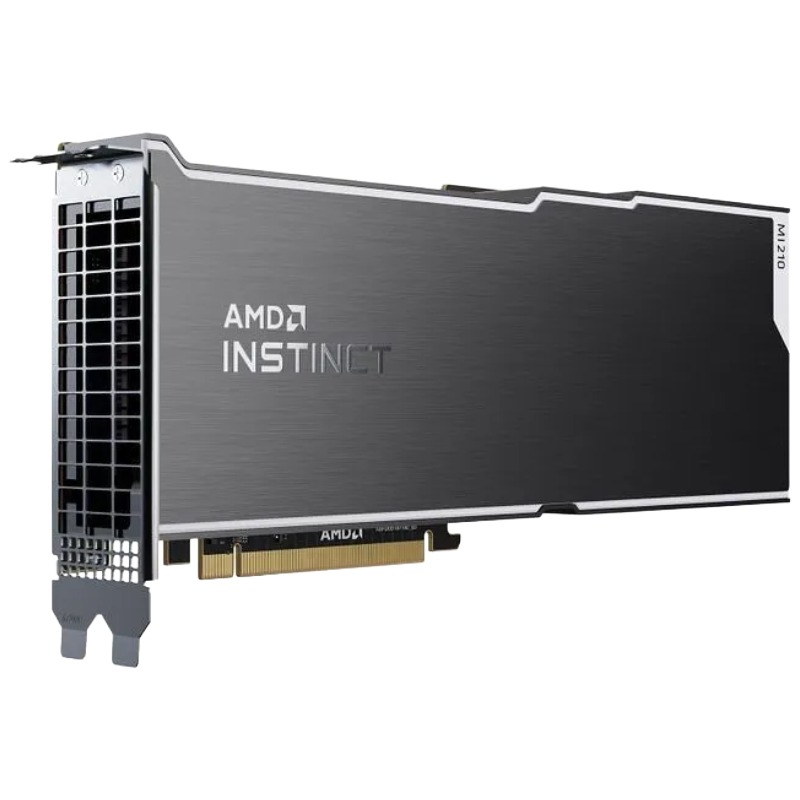
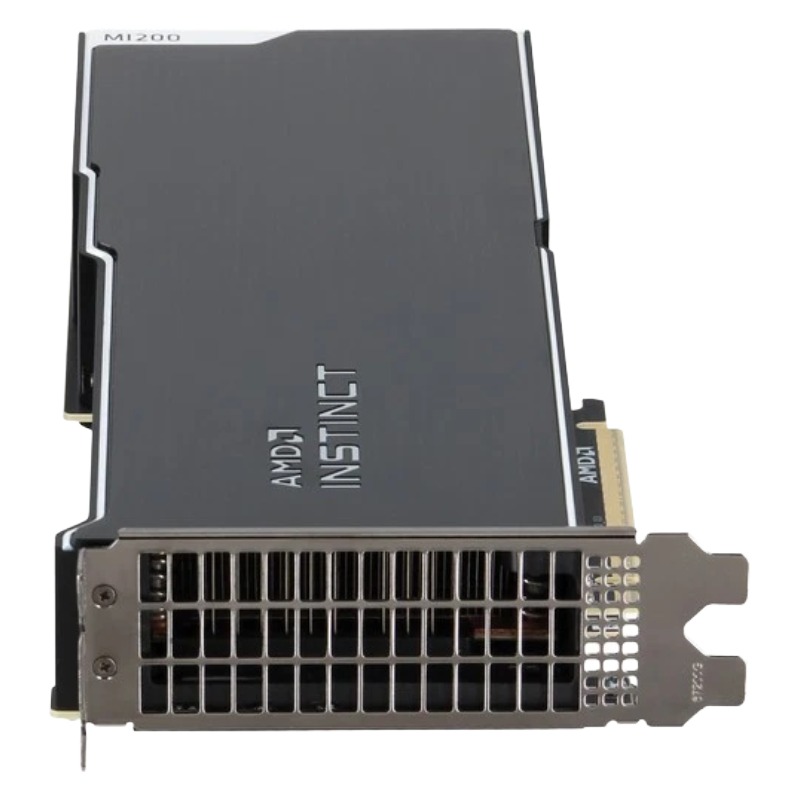
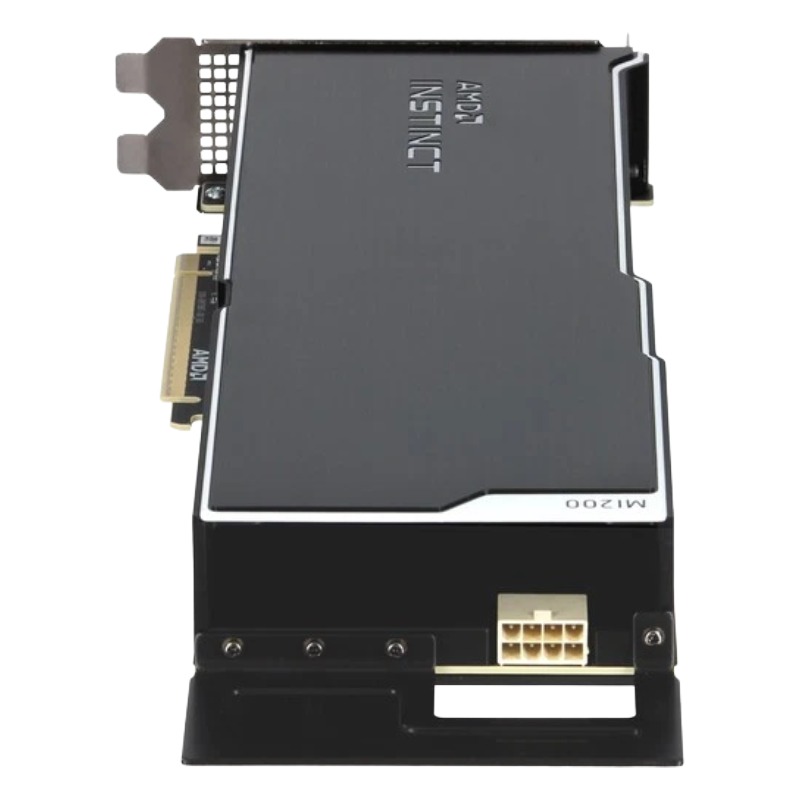
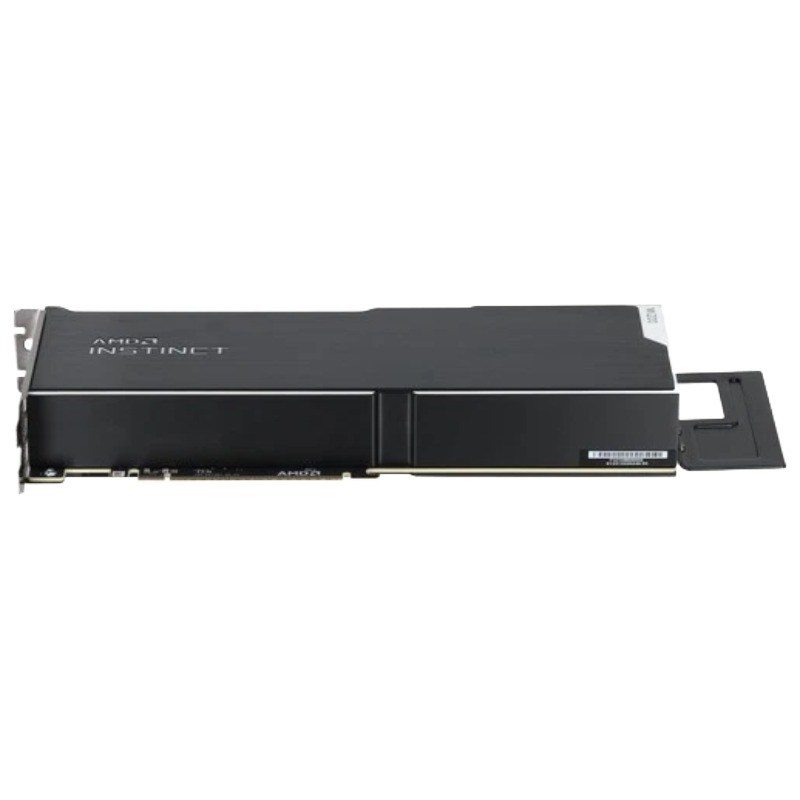
AMD 100-300000008H Instinct MI210 64GB HBM2E 2x Slot PCI-Express 4.0 1.6 GHz Graphic Card. New Sealed in Box (NIB) with 3 Years Warranty
The AMD 100-300000008H MI210 64GB HBM2E PCI-Express 4.0 graphics accelerator is engineered for advanced data center computing, artificial intelligence processing, scientific simulations, deep learning environments, and enterprise-grade HPC infrastructure. Built on the AMD CDNA 2 architecture, this GPU accelerator delivers exceptional computational throughput while maintaining energy-efficient operation for large-scale deployments. The dual-slot PCIe form factor allows seamless integration into modern server platforms and enterprise compute clusters.
Designed for demanding computational workflows, the AMD MI210 accelerator combines high memory bandwidth, advanced matrix operations, and scalable multi-GPU communication capabilities. Its 64GB HBM2E memory configuration enables organizations to process large datasets, complex neural network models, and intensive engineering simulations with reduced latency and improved responsiveness.
The CDNA 2 architecture implemented in the AMD MI210 accelerator is optimized specifically for compute-oriented workloads rather than traditional graphics rendering. This architecture focuses on maximizing floating-point performance, memory throughput, and parallel processing efficiency for enterprise and scientific applications.
AMD Infinity Fabric technology integrated within the accelerator enhances communication between compute resources, enabling higher scalability in multi-GPU environments. This design supports large-scale AI training systems, simulation clusters, and high-density server infrastructure where data movement efficiency is critical.
The GPU architecture also introduces enhanced matrix core capabilities, supporting accelerated AI inferencing and deep learning frameworks. Organizations deploying machine learning models can benefit from increased tensor operation performance and optimized compute efficiency across large neural network workloads.
The AMD 100-300000008H MI210 incorporates advanced compute units engineered for high parallelism and optimized execution efficiency. These compute units process massive numbers of simultaneous operations, making the accelerator highly suitable for scientific analysis, molecular modeling, weather forecasting, and financial simulations.
Optimized instruction pipelines improve throughput for FP64, FP32, and mixed precision operations. The accelerator is particularly effective for HPC environments requiring double-precision accuracy, ensuring reliable computational integrity for engineering and scientific workloads.
Enterprise deployments require stability, reliability, and predictable performance under continuous workloads. The AMD MI210 accelerator includes enterprise-grade reliability features designed for 24/7 operation in high-density server environments.
Error correction technologies, advanced thermal monitoring, and optimized power delivery mechanisms contribute to operational stability across extended computational tasks. These capabilities are essential for research laboratories, cloud providers, and enterprise data centers running mission-critical applications.
One of the most significant features of the AMD MI210 graphics accelerator is its 64GB HBM2E memory subsystem. High Bandwidth Memory technology dramatically improves memory throughput compared to traditional GDDR-based solutions, enabling faster data access and improved application performance.
The large memory capacity allows enterprise applications to process extensive datasets directly within GPU memory, reducing bottlenecks associated with memory transfers and improving workload efficiency. AI training models, finite element analysis, seismic imaging, and genomic sequencing all benefit from the increased memory resources.
HBM2E memory technology delivers exceptional bandwidth while consuming lower power compared to conventional memory architectures. The vertically stacked memory design minimizes signal distance and improves communication efficiency between the GPU processor and memory modules.
This architecture enables ultra-fast data access speeds necessary for high-performance computing applications. Large-scale AI models requiring extensive parameter storage can operate more efficiently with reduced latency and increased throughput.
Scientific applications handling multi-dimensional datasets also gain substantial advantages from the accelerator’s high-bandwidth memory subsystem. Complex simulations involving fluid dynamics, astrophysics, or climate modeling benefit from rapid memory access and efficient parallel computation.
The 64GB memory capacity supports processing of exceptionally large workloads without excessive reliance on system memory or storage resources. Enterprises working with advanced analytics, big data environments, and AI training frameworks can maintain higher processing efficiency while reducing memory bottlenecks.
Applications such as transformer-based AI models, image recognition systems, and natural language processing engines require substantial memory resources. The AMD MI210 accelerator provides the capacity necessary for modern AI infrastructure and next-generation machine learning environments.
Bandwidth optimization technologies integrated within the MI210 architecture improve data handling efficiency across compute-intensive tasks. The accelerator minimizes memory contention and ensures consistent performance even under heavy computational loads.
For virtualization environments and multi-user compute clusters, these optimizations help maintain stable throughput while supporting simultaneous workloads across enterprise infrastructures.
The AMD 100-300000008H MI210 utilizes a PCI-Express 4.0 x16 interface, enabling high-speed communication between the GPU accelerator and host system. PCIe Gen4 technology significantly increases bandwidth compared to previous-generation interfaces, supporting faster data transfer rates and lower latency.
High-speed connectivity is essential for AI training clusters, GPU-accelerated databases, and enterprise analytics platforms where large volumes of data must move efficiently between CPUs, storage systems, and accelerator hardware.
PCI-Express 4.0 doubles the available bandwidth compared to PCIe Gen3, providing enhanced throughput for demanding applications. This increased bandwidth improves data streaming performance and accelerates communication between system components.
Modern server platforms equipped with PCIe Gen4 support can fully leverage the MI210 accelerator’s computational capabilities. Reduced communication latency helps improve overall workflow efficiency and enhances responsiveness for distributed compute environments.
The PCIe Gen4 interface also supports future scalability, ensuring compatibility with evolving server architectures and next-generation infrastructure deployments.
Enterprise servers often deploy multiple GPU accelerators within a single chassis. The dual-slot design of the AMD MI210 enables efficient installation in high-density compute servers while maintaining adequate airflow and thermal management.
Multi-GPU configurations are essential for AI model training, large simulation environments, and parallel rendering workloads. The accelerator’s architecture supports scalable compute deployments with optimized communication pathways between GPUs.
The accelerator integrates seamlessly into enterprise data center infrastructure, supporting advanced virtualization technologies, GPU pass-through configurations, and cloud-native deployments. Organizations implementing AI-as-a-service platforms or GPU virtualization environments benefit from the MI210’s flexible deployment capabilities.
Matrix operations represent a fundamental component of AI workloads. The AMD MI210 includes specialized acceleration technologies for matrix computation, improving throughput for tensor-based calculations and neural network processing.
Enhanced matrix performance reduces training times for large language models, recommendation engines, and predictive analytics systems. Organizations can iterate faster during AI development cycles while maintaining computational efficiency.
Inference optimization features allow the accelerator to efficiently process deployed AI models in production environments. Real-time analytics systems, image classification platforms, and intelligent automation solutions can achieve lower latency and improved throughput using the MI210 accelerator.
High memory bandwidth and advanced compute capabilities ensure consistent performance across concurrent inference workloads within enterprise AI environments.
The AMD 100-300000008H MI210 accelerator is widely suitable for scientific research and advanced simulation workloads requiring substantial floating-point performance and computational precision. Research institutions, engineering firms, and government laboratories often rely on GPU acceleration for modeling and simulation applications.
Applications such as computational fluid dynamics, finite element analysis, seismic processing, quantum chemistry, and astrophysical modeling benefit from the accelerator’s extensive parallel processing capabilities.
Many scientific applications require highly accurate double-precision arithmetic to ensure computational reliability. The AMD MI210 accelerator delivers strong FP64 performance, making it ideal for engineering simulations and scientific calculations.
Researchers performing complex mathematical modeling can achieve faster results while maintaining precision across extensive computational tasks. High double-precision throughput also improves scalability for large simulation clusters.
Enterprise accelerators operating within dense server environments require advanced thermal management to maintain performance stability. The AMD MI210 graphics accelerator incorporates an optimized thermal design suitable for continuous high-load operation.
The dual-slot form factor supports efficient airflow within rack-mounted servers and enterprise compute systems. Effective heat dissipation contributes to improved reliability and consistent computational performance under demanding workloads.
Modern data centers prioritize cooling efficiency and power optimization. The MI210 accelerator is engineered to support efficient thermal operation while delivering substantial compute density.
Server manufacturers and infrastructure architects can deploy multiple accelerators within a single chassis while maintaining stable operating temperatures and predictable airflow characteristics.
Long-duration AI training sessions and scientific simulations place sustained thermal demands on accelerator hardware. The AMD MI210 is designed to maintain operational stability during extended computational tasks.
Advanced monitoring technologies help regulate thermal conditions and optimize performance across variable workloads, ensuring reliable operation in enterprise environments.
High-density compute clusters require accelerators capable of delivering maximum performance within constrained rack space. The MI210’s dual-slot design enables efficient deployment in enterprise rack environments without excessive space consumption.
This design flexibility allows organizations to increase compute density while supporting scalable infrastructure growth.
The AMD 100-300000008H MI210 accelerator supports virtualization and cloud-based compute environments, enabling organizations to deploy GPU-accelerated services across enterprise and cloud infrastructure platforms.
Cloud providers, research institutions, and enterprise IT environments can utilize the accelerator for virtual desktop infrastructure, AI cloud services, and shared GPU resource allocation.
Research organizations and enterprise users often require shared access to GPU resources. The AMD MI210 enables efficient resource sharing while maintaining high computational throughput for concurrent workloads.
This flexibility supports collaborative development environments and improves utilization across multi-user compute infrastructure.
Enterprise accelerators deployed within critical infrastructure environments require robust security and reliability capabilities. The AMD MI210 includes technologies designed to protect data integrity and maintain operational consistency.
Secure compute environments are increasingly important for AI development, confidential research projects, and enterprise analytics platforms handling sensitive information.
Error correction mechanisms within the memory subsystem help maintain computational accuracy during large-scale workloads. ECC functionality reduces the likelihood of data corruption and improves reliability for scientific and enterprise applications.
Organizations conducting financial modeling, healthcare analytics, or mission-critical simulations benefit from enhanced data integrity and reduced computational risk.
Continuous enterprise workloads demand hardware capable of stable long-term operation. The AMD MI210 incorporates enterprise-grade components and monitoring technologies designed to support consistent performance under intensive usage conditions.
Predictable operation and reduced downtime contribute to improved infrastructure efficiency and lower operational disruption across data center environments.
Secure infrastructure deployment is essential for enterprise AI and HPC systems. The accelerator supports advanced security frameworks and enterprise deployment standards for protected compute environments.
Organizations implementing secure cloud computing platforms or confidential analytics environments can integrate the MI210 into broader enterprise security architectures.


 Contact Us
 Information
 Catalog
 Solid State Drives (SSD)
 Network Switches
 Hard Disk Drives
 HBA & Controllers
 PC & Servers
 PC & Server Memory
 CPU & Processors
 Network Routers
 Power Supplies
 Tape Drives & Libraries
 Network Devices
 Computer & Network Cables