(7% discount is applied at checkout)
Cart is empty
Your go-to destination for cutting-edge server products
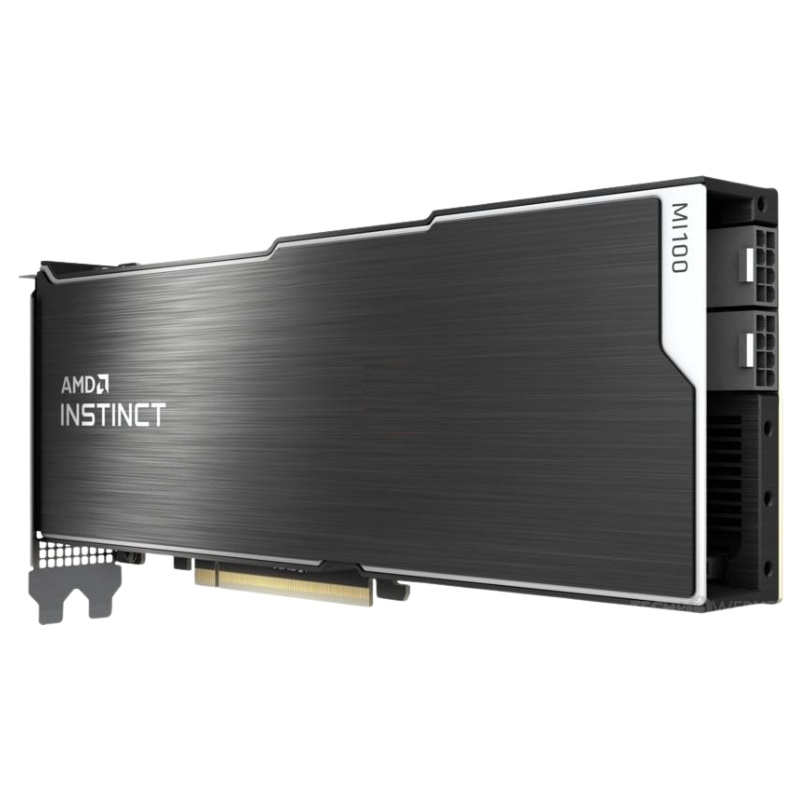


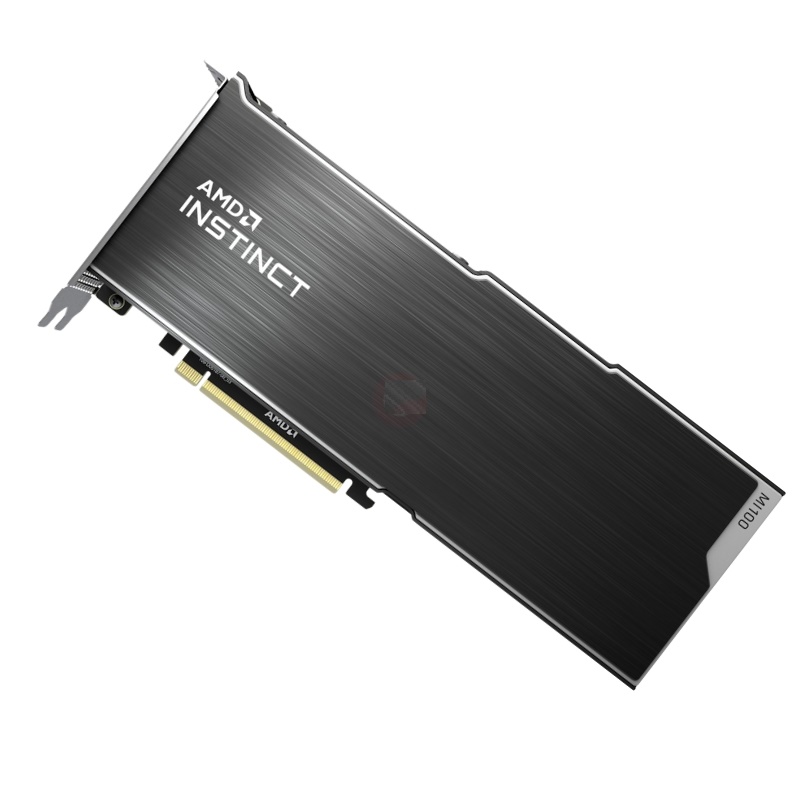
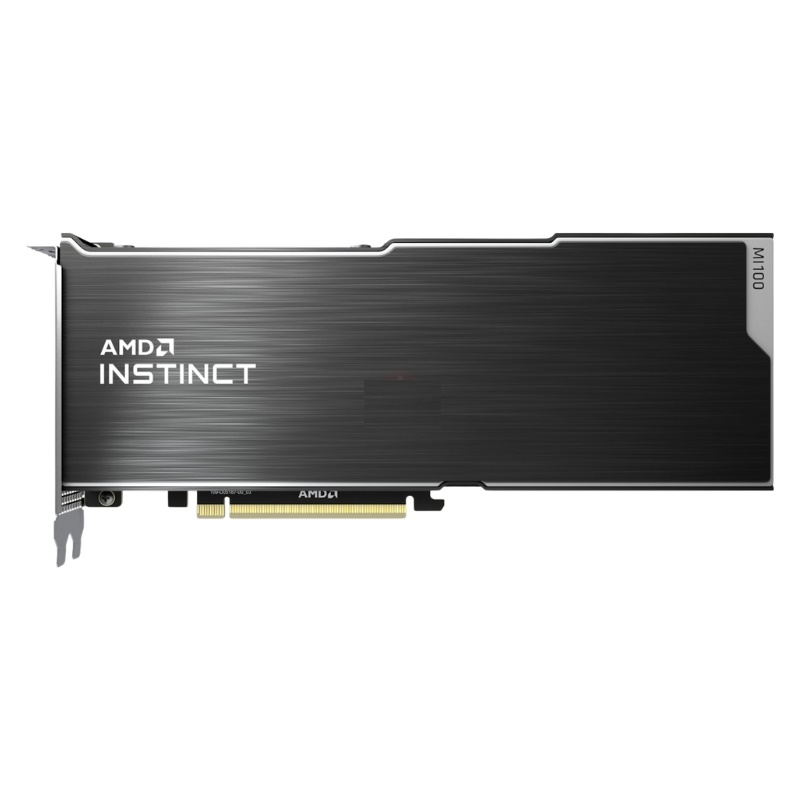
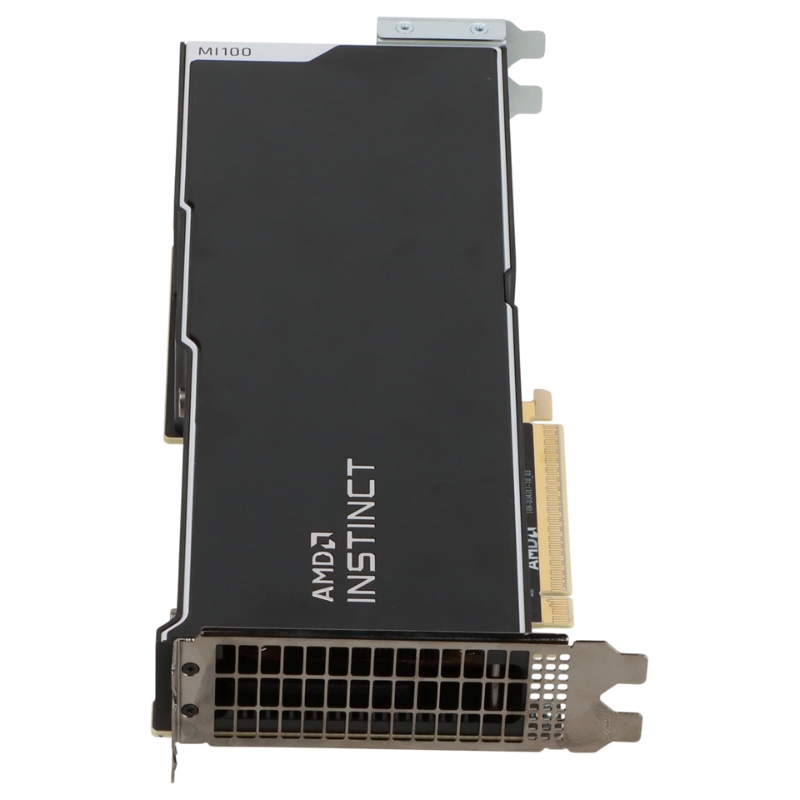
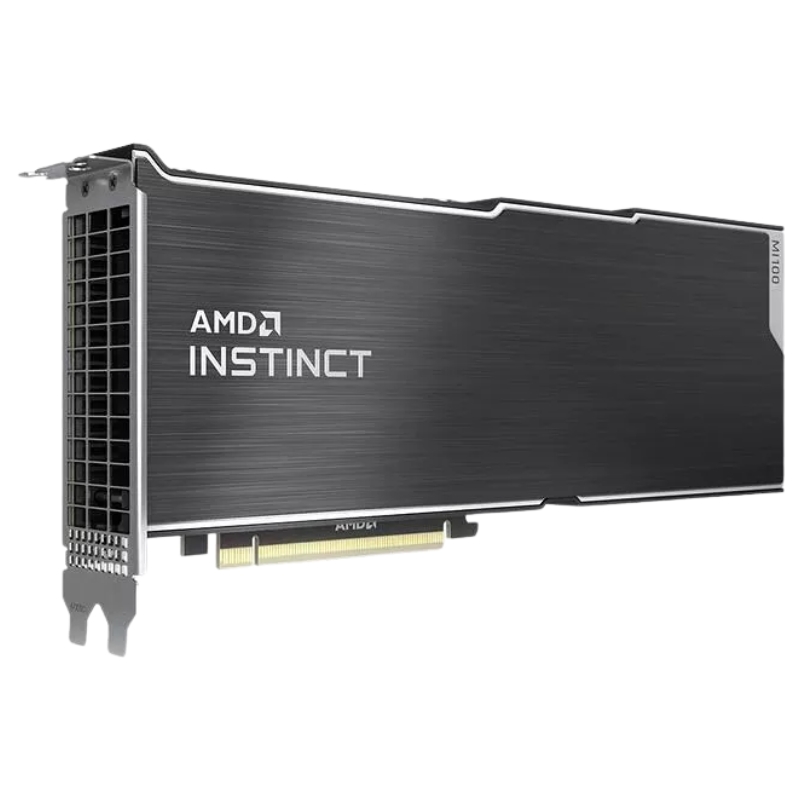
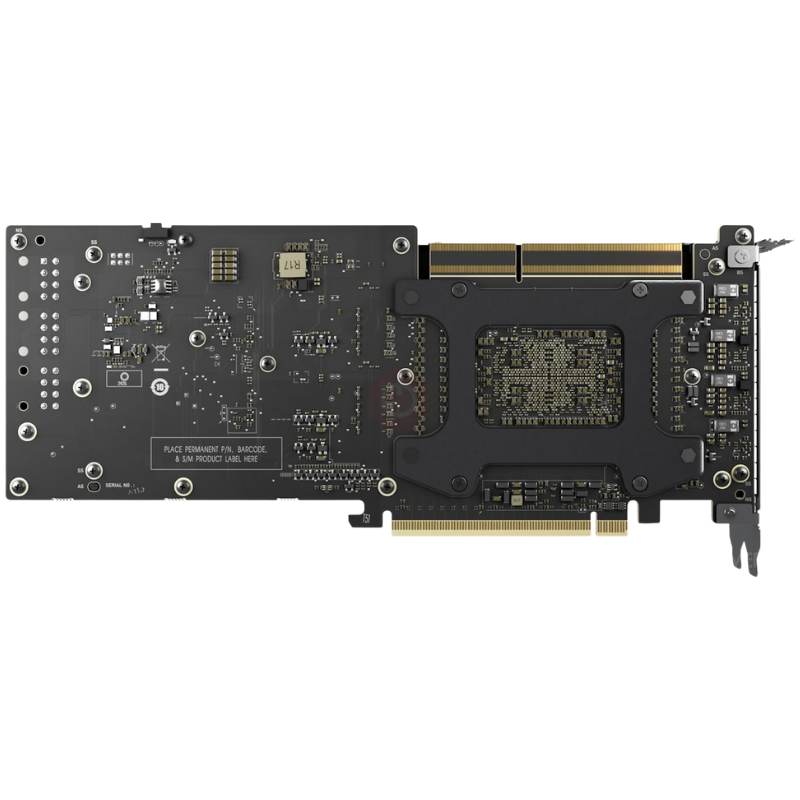
AMD 100-506116 32GB HBM2 Radeon Instinct MI100 PCIE 4.0 x16 Professional Graphics Card. Excellent Refurbished with 1 year replacement warranty
The AMD 100-506116 32GB HBM2 Radeon Instinct MI100 PCIe 4.0 x16 Professional Graphics Card is a high-performance GPU designed for advanced computing tasks, AI workloads, and data-intensive applications. With its powerful architecture, large memory capacity, and support for the latest APIs, it delivers exceptional speed, efficiency, and scalability for enterprise and research environments.
The AMD 100-506116 32GB HBM2 Radeon Instinct MI100 PCIe 4.0 x16 Professional Graphics Card is a groundbreaking accelerator designed for the next generation of high-performance computing (HPC), artificial intelligence (AI), deep learning, and data-intensive workloads. As part of AMD’s Radeon Instinct series, the MI100 sets new standards in computational performance, memory bandwidth, and scalability, offering enterprise environments and research institutions a robust platform for tackling the most demanding parallel processing tasks. With its cutting-edge CDNA architecture, 32GB of HBM2 memory, and PCIe 4.0 interface, this GPU delivers exceptional performance in scientific simulations, machine learning training, and large-scale data analytics applications.
The Radeon Instinct MI100 is built on AMD’s first-generation CDNA architecture, optimized specifically for data center and compute-intensive tasks rather than gaming workloads. Unlike RDNA architectures designed for graphics rendering, CDNA focuses entirely on accelerating floating-point operations, tensor computations, and large-scale data parallelism, making the MI100 a preferred choice for enterprise and research environments.
With up to 11.5 TFLOPS of FP64 double-precision performance and 23.1 TFLOPS of FP32 single-precision performance, the MI100 is engineered to accelerate computationally intensive workloads such as molecular dynamics, fluid simulations, and weather modeling. It also supports 46.1 TFLOPS of FP16 half-precision performance, making it highly suitable for deep learning training and inference where lower precision computation enhances throughput without sacrificing accuracy. The CDNA architecture integrates next-generation matrix cores optimized for mixed-precision operations, which significantly improve training times for AI models and boost the performance of complex mathematical computations.
Scalability is one of the core strengths of the MI100. AMD’s Infinity Fabric interconnect technology allows multiple MI100 GPUs to communicate efficiently, minimizing latency and maximizing bandwidth in multi-GPU configurations. This interconnect architecture ensures that scaling from a single GPU to multi-node clusters remains seamless, enabling researchers and enterprises to deploy powerful compute clusters tailored to their specific needs. The MI100 can operate in multi-GPU configurations with exceptional interconnect bandwidth, which is crucial for workloads that require synchronized computation across multiple accelerators, such as large-scale simulations or distributed AI model training.
The AMD Radeon Instinct MI100 is equipped with 32GB of second-generation High Bandwidth Memory (HBM2), delivering up to 1.23 TB/s of memory bandwidth. This ultra-fast memory architecture is essential for handling massive datasets, ensuring that data can move quickly between the GPU and memory without becoming a bottleneck. The large memory capacity allows for the processing of complex AI models and high-resolution simulations without the need for frequent memory swaps, which can significantly reduce computation times.
HBM2 memory is stacked vertically near the GPU die, which reduces latency and improves energy efficiency compared to traditional GDDR memory. This architecture allows the MI100 to efficiently feed its computational cores with data, which is particularly important in workloads such as deep neural network training, where memory access speed can directly impact training throughput. The large memory capacity also ensures that the MI100 can handle increasingly complex models and datasets, which is essential in fields like genomics, seismic processing, and high-resolution 3D rendering for scientific visualization.
The AMD 100-506116 utilizes a PCIe 4.0 x16 interface, offering twice the data transfer bandwidth of PCIe 3.0. This enhanced throughput ensures that the MI100 can communicate with the host system, storage, and other GPUs at the highest possible speeds, reducing bottlenecks and maximizing performance across data-intensive workloads. PCIe 4.0 is particularly important in environments that require fast data ingestion and real-time analysis, such as AI inference pipelines and large-scale data analytics platforms.
The increased bandwidth provided by PCIe 4.0 also enhances scalability in multi-GPU configurations, enabling more efficient load balancing and faster inter-GPU communication. This allows systems equipped with multiple MI100 accelerators to operate at peak performance, with minimal overhead due to data transfer limitations.
The Radeon Instinct MI100 is purpose-built to accelerate AI workloads, from training deep neural networks to performing real-time inference. With support for FP16, BF16, and mixed-precision compute modes, the MI100 can deliver high throughput while maintaining the precision required for accurate model development. Its tensor cores are optimized for matrix multiplications, the fundamental operations underlying deep learning, enabling faster training times and higher performance across a variety of AI frameworks.
AMD’s ROCm (Radeon Open Compute) software platform complements the MI100’s hardware capabilities, providing developers with an open-source ecosystem for building, optimizing, and deploying GPU-accelerated applications. ROCm includes support for major machine learning frameworks such as TensorFlow, PyTorch, and MXNet, ensuring that the MI100 integrates seamlessly into existing AI development workflows. Its open-source nature also gives researchers greater control over software optimization, enabling them to tailor performance for specific workloads and hardware configurations.
Mixed-precision computing combines the speed of lower-precision arithmetic with the accuracy of higher-precision calculations. The MI100’s matrix cores are designed to handle FP16 and BF16 computations efficiently, which can dramatically accelerate the training of deep learning models while reducing power consumption. This approach is particularly beneficial for large-scale neural networks, where the computational demand is immense, and even small efficiency gains can translate into substantial time and energy savings.
By leveraging mixed-precision techniques, organizations can train models faster without compromising accuracy, enabling quicker iteration cycles and faster deployment of AI solutions. This capability makes the MI100 an excellent choice for industries such as autonomous driving, natural language processing, and medical imaging, where rapid model development and deployment are critical.
Beyond AI, the AMD Radeon Instinct MI100 excels in traditional HPC workloads that require massive parallel processing power. Its high double-precision performance and memory bandwidth make it ideal for scientific simulations, engineering computations, and other research-intensive tasks. Applications such as quantum mechanics simulations, finite element analysis, and computational fluid dynamics benefit significantly from the MI100’s computational power and efficiency.
The MI100’s architecture is optimized for a wide range of floating-point operations, enabling researchers and engineers to tackle complex problems with unprecedented speed and accuracy. Its ability to handle large datasets and perform massive parallel computations ensures that it can accelerate even the most demanding scientific workloads.
Despite its immense power, the MI100 is engineered for energy efficiency, delivering exceptional performance per watt. This efficiency is crucial in data center environments, where power and cooling costs are significant considerations. The MI100’s advanced thermal design ensures reliable operation even under heavy workloads, with optimized cooling solutions that maintain stable performance while minimizing energy consumption.
Efficient thermal management also contributes to longer hardware lifespan and improved system stability, making the MI100 a cost-effective choice for enterprises and research institutions looking to build or expand their GPU-accelerated compute infrastructure.
The AMD 100-506116 Radeon Instinct MI100 is designed for seamless integration into modern data center infrastructures. Its PCIe 4.0 x16 interface ensures compatibility with a wide range of enterprise-class servers and workstations. Whether deployed in single-GPU systems for dedicated tasks or multi-GPU clusters for large-scale parallel processing, the MI100 offers the flexibility required to meet diverse computational needs.
Support for industry-standard software stacks and APIs, including ROCm, HIP, and OpenCL, ensures that the MI100 can be integrated into existing workflows without requiring significant changes to application code. This compatibility reduces deployment complexity and accelerates time-to-value for organizations adopting GPU acceleration.
The MI100’s support for major AI and HPC frameworks allows organizations to leverage their existing software ecosystems while benefiting from the GPU’s performance and efficiency. Developers can easily port existing CUDA-based code to AMD’s HIP platform, enabling them to run applications originally designed for other GPU architectures on the MI100 without extensive modifications.
This compatibility extends to popular container orchestration platforms such as Kubernetes, enabling easy deployment of GPU-accelerated workloads in containerized environments. Combined with ROCm’s support for Docker and Singularity containers, the MI100 provides a versatile solution for modern data center and cloud-native computing environments.
Enterprises can leverage the MI100’s performance for big data analytics, real-time data processing, and cloud-native AI services. Its scalability and PCIe 4.0 interface make it ideal for cloud data centers, where workload density and throughput are critical. The MI100 enables organizations to build GPU-accelerated virtual machines and containerized applications, delivering high-performance compute resources for AI, analytics, and scientific workloads on demand.
Cloud service providers can integrate the MI100 into their infrastructure to offer GPU-accelerated services, providing customers with the performance required for complex workloads without the need for on-premises hardware. This approach enables enterprises to scale their compute capabilities flexibly and cost-effectively.
The Radeon Instinct MI100 features 7,680 stream processors, delivering exceptional parallel processing capabilities across a wide range of workloads. Its peak performance of 11.5 TFLOPS (FP64), 23.1 TFLOPS (FP32), and 46.1 TFLOPS (FP16) positions it as one of the most powerful compute accelerators in its class. These performance levels enable the MI100 to tackle demanding computational tasks such as matrix multiplications, vector operations, and scientific simulations with ease.
The GPU also supports BF16 (Bfloat16) precision, which combines the dynamic range of FP32 with the storage efficiency of FP16, further enhancing performance in AI training workloads. This versatility in precision formats allows developers to optimize performance for different applications, balancing speed and accuracy based on workload requirements.
The 32GB of HBM2 memory is organized across four stacks, providing an aggregate bandwidth of up to 1.23 TB/s. This bandwidth is critical for feeding the GPU’s computational cores with data at high speeds, minimizing latency and maximizing throughput. The large memory capacity also enables the MI100 to handle large datasets and complex models without frequent memory transfers, which can slow down computation.
The memory architecture is optimized for both random and sequential access patterns, ensuring consistent performance across different types of workloads. Whether processing massive matrices for machine learning or streaming data for real-time analytics, the MI100’s memory subsystem delivers the performance required for sustained high throughput.
The MI100 features a dual-slot PCIe form factor, making it compatible with a wide range of server chassis and workstation configurations. Its power consumption is rated at approximately 300 watts, balancing high performance with energy efficiency. The GPU’s thermal design ensures stable operation under sustained load, with advanced cooling solutions that maintain optimal operating temperatures even in dense data center environments.
Energy efficiency is a key consideration for modern data centers, and the MI100 delivers exceptional performance per watt. This efficiency reduces operational costs and supports sustainability initiatives, making the MI100 an environmentally responsible choice for high-performance computing.
AMD’s ROCm platform is at the heart of the MI100’s software ecosystem, providing a comprehensive suite of tools, libraries, and frameworks for developing GPU-accelerated applications. ROCm supports popular programming languages such as C++, Python, and Fortran, enabling developers from various backgrounds to harness the power of the MI100. It also includes optimized math libraries and communication frameworks, such as rocBLAS and RCCL, which accelerate common computational tasks and streamline multi-GPU communication.
The ROCm platform’s open-source nature fosters collaboration and innovation within the developer community, allowing researchers and organizations to customize and extend its capabilities. This openness also ensures that the MI100 remains compatible with emerging software frameworks and standards, providing long-term value and flexibility.
The Heterogeneous-compute Interface for Portability (HIP) is a key component of the ROCm ecosystem, enabling developers to write portable GPU code that runs on both AMD and NVIDIA hardware. HIP simplifies the process of migrating existing CUDA code to AMD platforms, reducing the time and effort required to adopt the MI100 in existing workflows. This portability ensures that organizations can take advantage of the MI100’s performance without being locked into a single hardware vendor.
Security is a critical consideration in enterprise and data center environments, and the Radeon Instinct MI100 incorporates several features to protect data and ensure reliable operation. AMD’s Secure Processor technology provides hardware-level security features that safeguard sensitive data and prevent unauthorized access. This hardware root of trust ensures that firmware and software running on the MI100 are verified and secure.
Reliability is further enhanced by rigorous validation and testing processes that ensure the MI100 meets the highest standards for data center deployment. Its robust design and advanced error correction mechanisms minimize the risk of hardware failures, ensuring consistent performance and uptime in mission-critical environments.


 Contact Us
 Information
 Catalog
 Solid State Drives (SSD)
 Network Switches
 Hard Disk Drives
 HBA & Controllers
 PC & Servers
 PC & Server Memory
 CPU & Processors
 Network Routers
 Power Supplies
 Tape Drives & Libraries
 Network Devices
 Computer & Network Cables