(7% discount is applied at checkout)
Cart is empty
Your go-to destination for cutting-edge server products
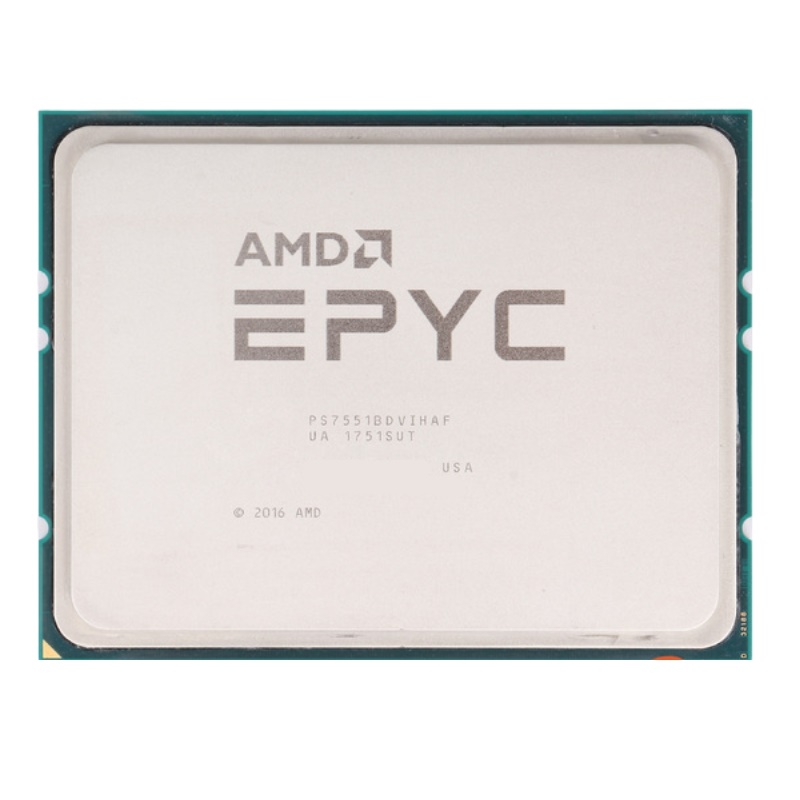


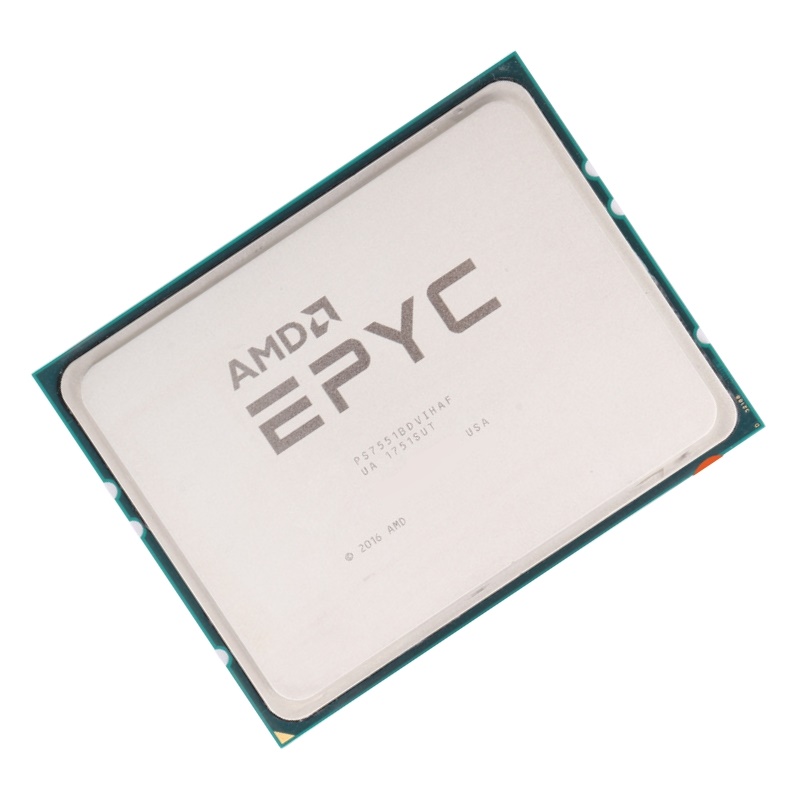
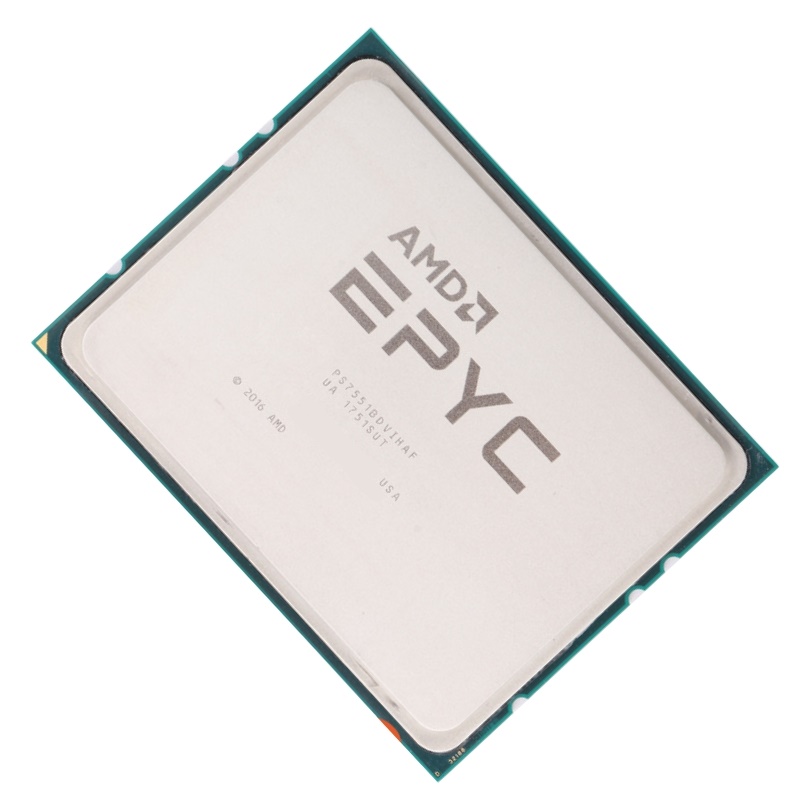
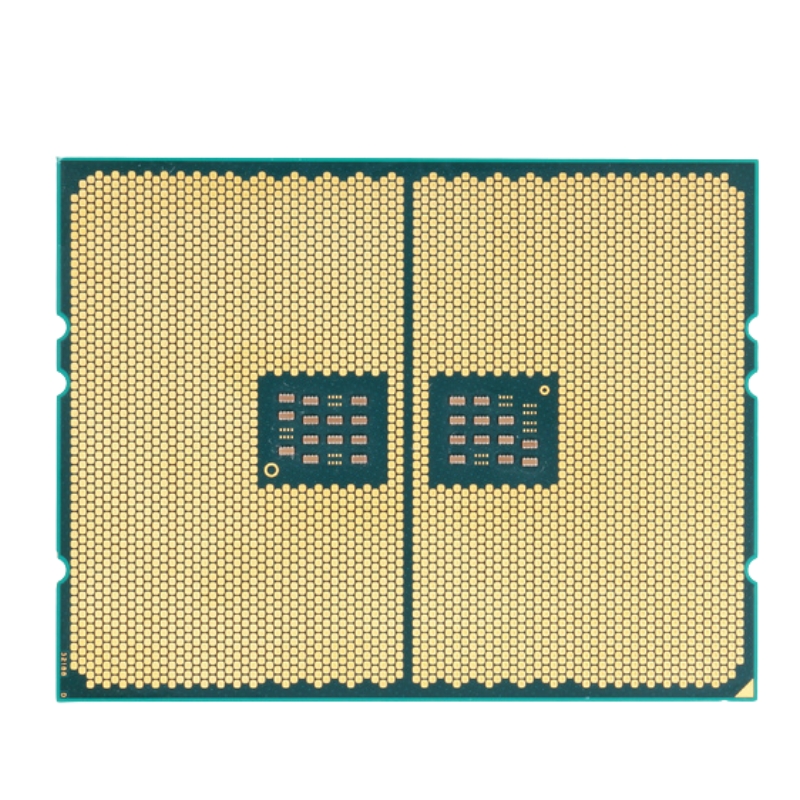
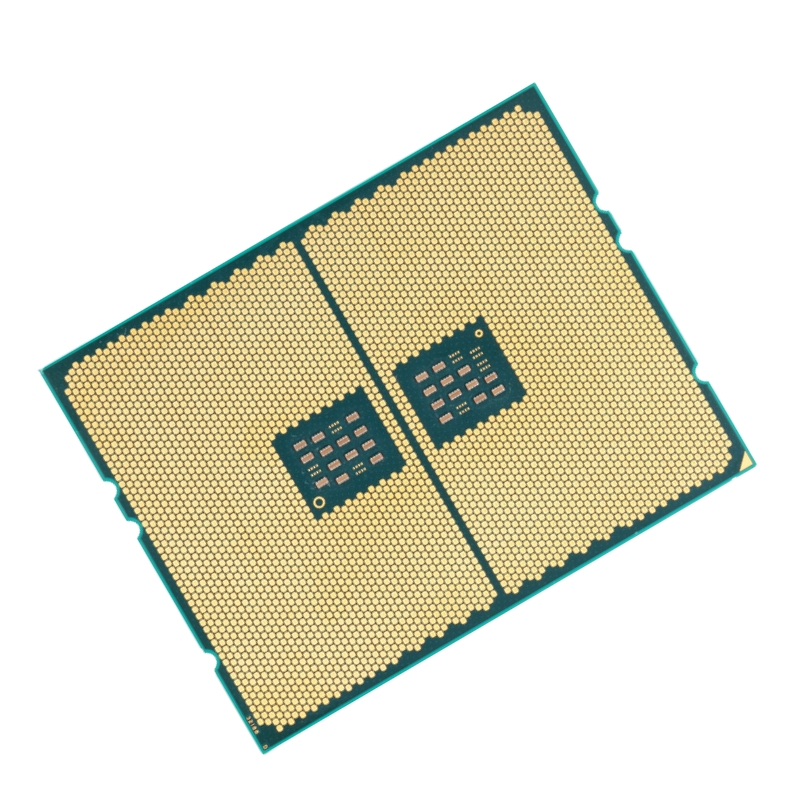
AMD PS7551BDVIHAF EPYC 7551 2.0GHz 32-Core 180W 64MB Cache TDP SP3 Socket Processor. New (System) Pull with 1 year replacement warranty
The AMD EPYC 7551 processor, model PS7551BDVIHAF, is engineered to deliver exceptional computational power for enterprise-grade systems. With 32 cores operating at a base frequency of 2.0GHz, this CPU is tailored for data-intensive environments and scalable infrastructure.
Built on AMD’s cutting-edge Zen architecture, the EPYC 7551 is optimized for virtualization, cloud deployments, and high-throughput computing. Its multi-core design ensures parallel processing efficiency, making it ideal for server farms and data centers.
This processor is designed for SP3 socket motherboards, ensuring seamless integration with enterprise-grade server platforms. Its architecture supports DDR4 memory and PCIe lanes for high-speed data transfer and peripheral connectivity.
The AMD PS7551BDVIHAF EPYC 7551 2.0GHz 32-Core 180W 64MB Cache TDP SP3 Socket Processor stands as a cornerstone SKU in enterprise server and datacenter deployments where a balance of raw core count, memory bandwidth, and platform scalability matter most. This category centers on high-density, performance-per-watt conscious single-socket and dual-socket server systems built around AMD’s EPYC microarchitecture. Description and discussion in this category focus on real-world engineering trade-offs, deployment models, and optimization strategies that leverage the PS7551BDVIHAF EPYC 7551 processor’s attributes: 32 physical cores at a base frequency of 2.0 GHz, a substantial 64 MB of last-level cache, a rated thermal design power of 180 W, and compatibility with the SP3 socket family. The category encompasses motherboards, validated memory configurations, cooling solutions, firmware and BIOS tuning, virtualization and containerization best practices, storage and I/O topologies, power delivery and rack-level considerations, and lifecycle planning for long-term enterprise use.
Memory topology is a defining element for the AMD PS7551BDVIHAF EPYC 7551 category. The EPYC architecture provides a multi-channel memory interface that allows servers to scale both capacity and bandwidth. For workloads that demand large addressable memory spaces, such as virtualization hosts running dozens of VMs or in-memory key-value stores, equipping a system with the recommended population of DDR4 modules per channel maximizes throughput and reduces contention. Memory validation and error-correcting code (ECC) support are central to enterprise reliability, and this category typically references motherboard compatibility lists and validated memory kits optimized for EPYC platforms. When designing a system, administrators must align DIMM speed, capacity, and distribution across channels to avoid suboptimal performance due to imbalanced channel utilization. In multi-socket clusters, consistent memory configuration across nodes promotes predictable latency and even task scheduling by orchestration systems.
For virtualization heavy hosts running dozens of virtual machines, memory capacity per core is an important metric. A balanced approach often assigns an average range of memory per vCPU tailored to VM roles, with database-intensive VMs receiving higher per-core allocations. For high-performance computing or scientific computing clusters that utilize the AMD PS7551BDVIHAF EPYC 7551, larger contiguous memory allocations and NUMA-aware application placement produce better scaling. For data analytics pipelines and in-memory caching solutions, prioritizing lower-latency memory modules while leveraging the full complement of memory channels helps ensure the processor’s 64 MB cache and wide memory interface are used effectively to reduce paging and off-chip memory stalls.
With a TDP of 180 W, the AMD PS7551BDVIHAF EPYC 7551 requires careful thermal management. Rack-scale deployments should consider airflow patterns, fan curves, and heat-sink solutions that maintain junction temperatures under sustained load. Server chassis with front-to-back airflow, high-efficiency fans, and well-designed heat sinks are recommended. For dense compute racks, planning for adequate cold aisle containment and ensuring power distribution units can handle peak draw are equally important. Liquid cooling solutions have become increasingly common in datacenter designs that host high-TDP processors; indirect or direct liquid cooling can reduce the acoustic footprint and improve sustained performance by limiting thermal throttling. Administrators should validate that the selected cooling solution integrates with the motherboard’s VRM layout and does not obstruct memory and PCIe slots that will be used for storage and networking expansions.
Power distribution planning for a server category anchored by the AMD PS7551BDVIHAF EPYC 7551 must factor in the processor’s sustained power draw, peak transient currents, and the power requirements of attached peripherals such as GPUs, NVMe drives, and network interface cards. Rack density calculations should include headroom for power spikes during boot and under peak computational bursts. Power supply selection, redundant PSU configurations, and PDUs should be sized with both efficiency and redundancy in mind. Energy efficiency incentives often influence datacenter design decisions; optimizing power usage effectiveness (PUE) requires balancing cooling capacity and power provisioning to minimize waste while retaining reliability. Where applicable, administrators may use power capping and telemetry to prevent overcommitment of available power resources while maintaining service-level objectives.
One of the strengths of the AMD PS7551BDVIHAF EPYC 7551 ecosystem is the generous allocation of PCIe lanes, which permits flexible I/O topologies. Storage architects can design systems that place NVMe SSDs directly on the PCIe fabric, enabling low-latency access for databases and caching layers. The processor’s platform supports a range of RAID controllers, NVMe over Fabrics gateways, and high-bandwidth network adapters. Careful attention to lane mapping between CPU, chipset, and mezzanine slots avoids contention and preserves full throughput for storage arrays. For hyperconverged infrastructures, integrating local NVMe with distributed storage software exploits the EPYC’s lane count and memory bandwidth for high IOPS and throughput. In hyperscale environments, combining high-speed networking with local NVMe reduces cross-node traffic and improves application-level performance.
Design resilience begins by matching storage performance tiers to application needs and layering redundancy via software-defined storage or hardware RAID where appropriate. For latency-sensitive transactional workloads, prioritize NVMe SSDs attached with direct PCIe lanes to the EPYC socket and implement consistent monitoring to detect degradation patterns early. For archival and backup, use high-capacity SATA or SAS tiers with offsite replication. Firmware management across storage devices and regular integrity checks should be incorporated into routine maintenance to prevent silent data corruption. The EPYC 7551’s memory and cache architecture complement storage resilience strategies by enabling efficient write buffering and read caching in software-defined storage stacks.
This category frequently targets virtualization platforms and containerized workloads. The EPYC 7551’s core count and memory throughput make it a natural fit for hypervisor hosts running KVM, VMware ESXi, or Microsoft Hyper-V at high consolidation ratios. Container orchestration frameworks such as Kubernetes benefit from the processor’s NUMA characteristics and cache size when scheduling pods with strict resource constraints. For maximum performance, administrators should adopt NUMA-aware scheduling and ensure that CPU and memory pinning are applied for high-priority services. Software-defined networking and SR-IOV for network adapters can push more network throughput to guests with minimal host overhead. Licensing costs per socket and per-core considerations also influence consolidation strategies, especially for commercial hypervisor stacks that apply per-socket or per-core licensing models.
Achieving predictable guest performance requires isolating noisy neighbors and tuning the scheduler to respect real-time or latency-critical workloads. Applying CPU pinning and reserving memory regions per guest reduces scheduler jitter. Enabling hardware virtualization features and I/O passthrough for dedicated devices reduces virtualization overhead. For containerized environments, controlling cgroup limits and using real-time kernel patches for deterministic behavior can further improve service-level stability. Observability through tracing and metrics collection allows teams to correlate host-level resource pressure with application performance, enabling informed scaling and placement decisions across the EPYC 7551-based fleet.
Hardware-backed security mechanisms protect workloads from a range of threats when properly integrated with OS and hypervisor features. Secure enclave technologies and support for cryptographic accelerators provide avenues for offloading sensitive operations and reducing attack surfaces. When configuring systems, administrators should enable platform-supported memory protection technologies where available and align encryption strategies with performance expectations. Implementing role-based access control and segregating management networks from production traffic further reduces risk. Regular vulnerability scanning and penetration testing of both software stacks and management frameworks strengthen the overall security posture of EPYC 7551 deployments.
Compatibility is central to deploying the AMD PS7551BDVIHAF EPYC 7551. The SP3 socket family supports a set of server motherboards that vary by form factor, VRM design, I/O complement, and manageability features. Choosing a motherboard involves matching lane distributions, supported DIMM capacities, and expansion slot configurations to the target workload. Qualified vendor lists and firmware compatibility notes are essential references when specifying systems at scale. The ecosystem includes validated NICs, storage controllers, accelerators, and power modules that have been tested against EPYC platforms to reduce integration risk. For OEM and ODM procurement, ensuring that the BIOS revision and BMC firmware image are aligned with vendor support agreements prevents late-stage compatibility surprises.
For high-performance use cases, prioritize motherboards with robust VRMs, superior cooling for voltage regulation modules, and multiple full-length PCIe slots mapped directly to socket lanes. For density-focused deployments, smaller form factor boards with compact cooling and consolidated I/O may be preferable, but designers must ensure sufficient power and thermal headroom. Management features such as integrated IPMI or Redfish-compatible BMCs, out-of-band management modules, and TPM support should be considered mandatory for enterprise deployments. Modular design choices that permit future upgrades of storage or networking without full platform replacement increase long-term value, particularly for organizations seeking cost-effective lifecycle strategies.
Achieving optimal performance with the AMD PS7551BDVIHAF EPYC 7551 involves tuning at multiple layers: firmware, OS kernel, scheduler, and application. Kernel parameters controlling interrupt affinity, CPU governor settings, and NUMA balancing play significant roles. For latency-sensitive services, disabling certain power-saving features and locking CPU frequencies to higher performance states can reduce jitter. For throughput-bound workloads, enabling large pages and optimizing cache affinity reduce TLB pressure and increase sustained throughput. File system selection, storage alignment, and I/O scheduler choices also impact performance for disk-intensive applications. Close iteration between benchmarking and real-world testing ensures that theoretical optimizations translate into measurable application gains.
Comprehensive observability is required to maintain performance over time. Telemetry should include CPU package and core-level utilization, cache hit rates if available, memory bandwidth and latency statistics, PCIe and NVMe health metrics, and thermal and power telemetry. Correlating these metrics with application-level traces reveals resource contention and enables targeted remediation. Automated alerting on degradation triggers proactive remediation steps such as rebalancing workloads across nodes, adjusting resource limits, or scheduling maintenance windows for firmware upgrades. Long-term trend analysis helps in predicting capacity shortfalls and planning hardware refresh cycles before service quality degrades.
When comparing the AMD PS7551BDVIHAF EPYC 7551 to other processors in the EPYC family or competing server CPUs, consider core architecture generation, per-core IPC improvements, memory subsystem enhancements, and platform-level features like integrated accelerators or memory encryption. Upgrade pathways often emphasize socket compatibility and firmware maturity. For teams planning a phased refresh, assessing whether the existing SP3 socket platform supports newer EPYC generations or whether a platform migration will be necessary impacts capital planning. For many organizations, the EPYC 7551 represents a balanced point between older legacy designs and newer EPYC generations, offering a compelling mix of cores and cache for established workloads while still fitting into existing SP3-compatible infrastructure in many cases.
Decisions to upgrade should be data-driven. Core metrics include application-specific throughput improvements, energy savings per unit of work, latency reductions, and TCO over a projected lifecycle. Benchmarking representative workloads on candidate hardware provides the empirical basis for these calculations. Attention should also be paid to ecosystem maturity: driver support, firmware availability, and third-party validation help reduce migration risk. For organizations constrained by budget or change windows, incremental upgrades of storage, memory, or networking components can postpone a full platform refresh while still delivering measurable benefits.
Deploying systems based on the AMD PS7551BDVIHAF EPYC 7551 requires coordinated planning across procurement, network, storage, and operations teams. Standardized reference architectures that document validated BIOS settings, memory population rules, cooling profiles, and tested driver versions reduce integration time and operational surprises. Operational playbooks should capture firmware update procedures, emergency thermal mitigation steps, and escalation contacts for rapid hardware replacement. Ensuring compatibility of orchestration tools and monitoring stacks with the telemetry outputs of the platform simplifies management at scale. Finally, capacity planning and lifecycle management guidelines ensure predictable total cost and availability over the multi-year lifespan expected of enterprise server deployments.


 Contact Us
 Information
 Catalog
 Solid State Drives (SSD)
 Network Switches
 Hard Disk Drives
 HBA & Controllers
 PC & Servers
 PC & Server Memory
 CPU & Processors
 Network Routers
 Power Supplies
 Tape Drives & Libraries
 Network Devices
 Computer & Network Cables