(7% discount is applied at checkout)
Cart is empty
Your go-to destination for cutting-edge server products
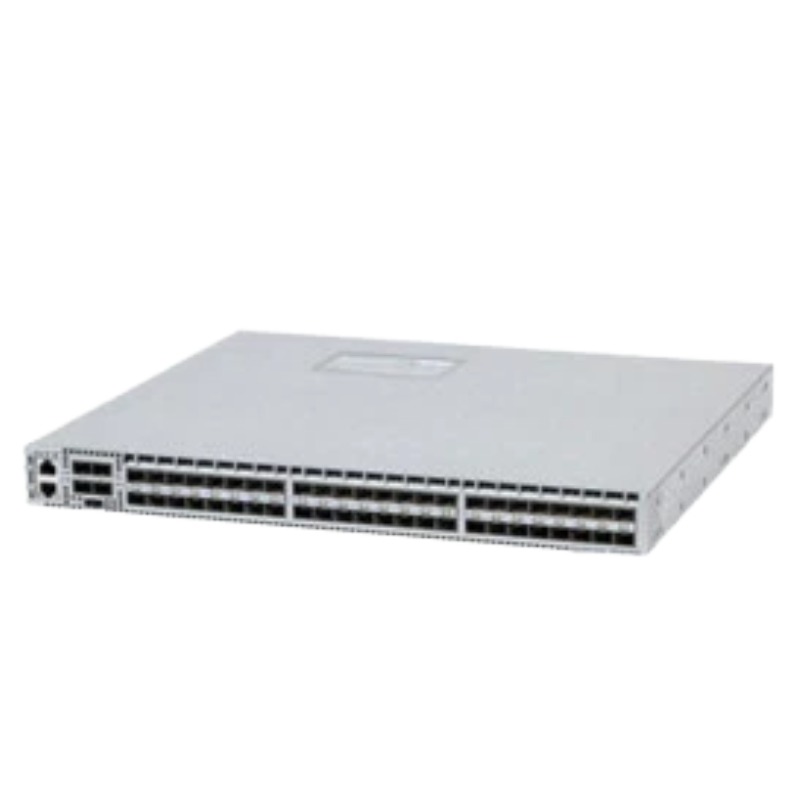


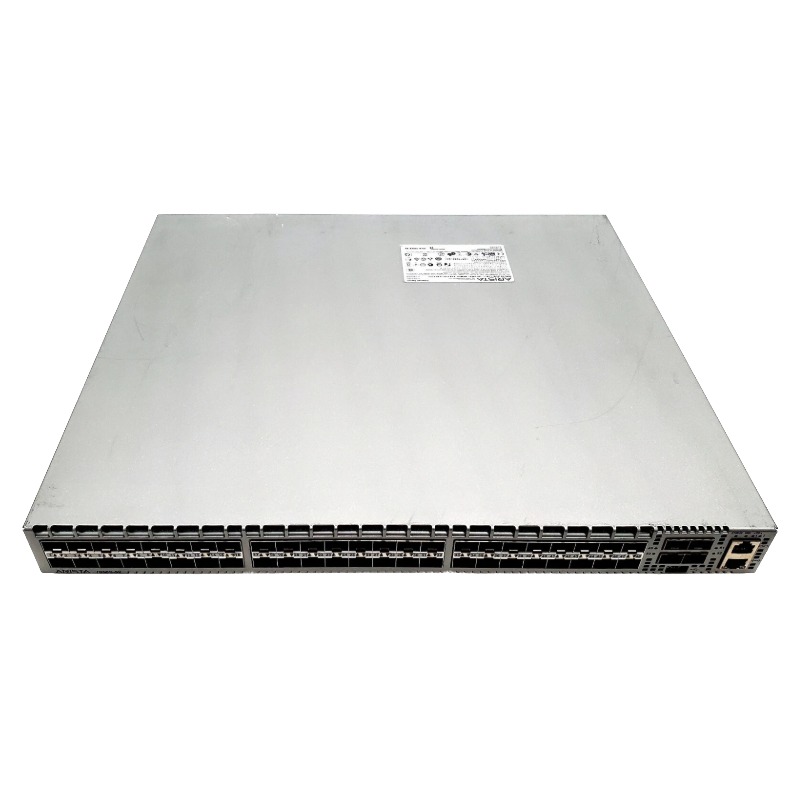
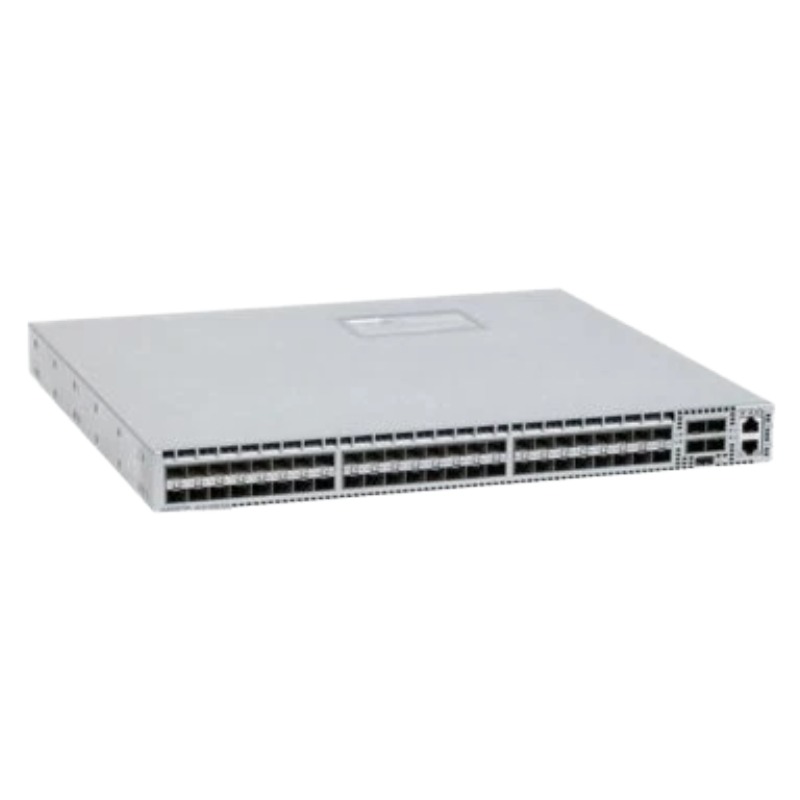
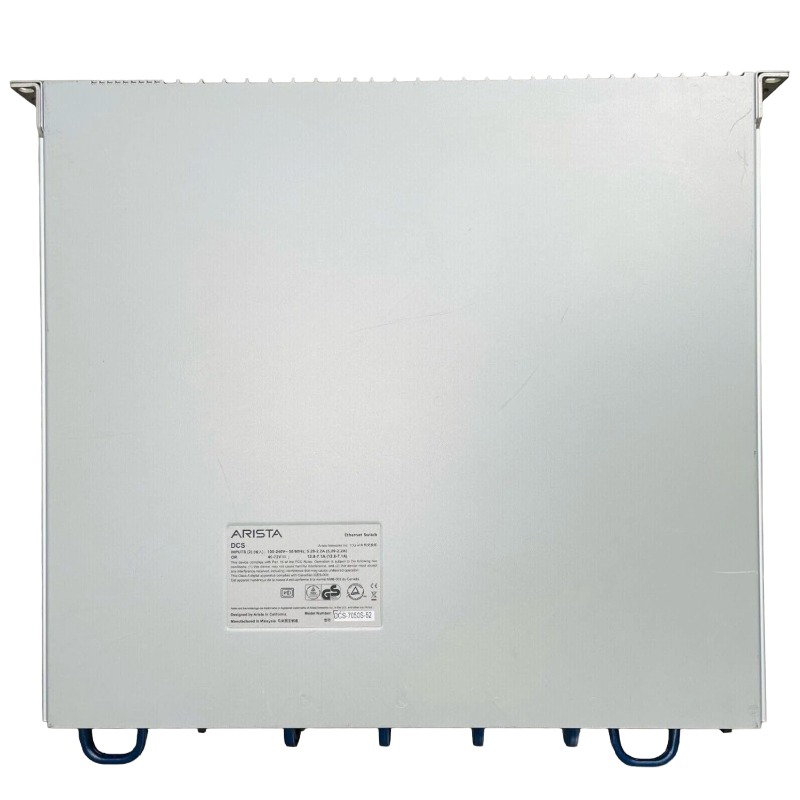
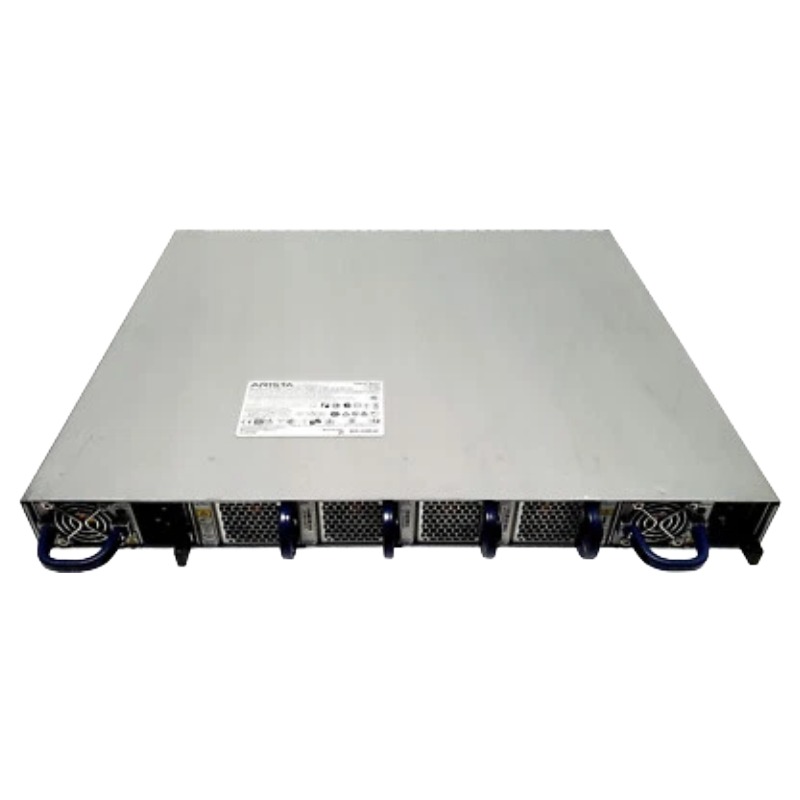
Arista DCS-7050S-52-R 52 Ports 10GBE Sfp+ Layer 3 Switch R-f Airflow. Excellent Refurbished with 1 Year Replacement Warranty.
The Arista DCS-7050S-52-R is a robust, high-density Layer 3 switch engineered for modern data center environments requiring ultra-low latency and high throughput. Designed with scalability and reliability in mind, it delivers efficient performance for cloud computing, enterprise networking, and virtualization workloads.
The Arista DCS-7050S-52-R 52 Ports 10GbE SFP+ Layer 3 Switch R-F Airflow belongs to a high-performance data center switching category designed for modern cloud-scale networking environments. This class of switches is engineered to deliver ultra-low latency, high throughput, and advanced Layer 3 routing capabilities while maintaining flexibility for spine-leaf and leaf-spine architectures. Built with a strong emphasis on scalability and reliability, this category of switches is widely adopted in enterprise data centers, cloud infrastructure deployments, virtualization environments, and high-frequency computing clusters where predictable performance is essential.
10GbE SFP+ switching refers to Ethernet switches that utilize Small Form-factor Pluggable Plus (SFP+) transceiver ports capable of supporting 10 Gigabit Ethernet speeds per port. In the context of the Arista DCS-7050S-52-R, the 52-port configuration allows for high-density connectivity, enabling large-scale aggregation of servers, storage systems, and networking appliances within a data center rack or pod.
Layer 3 switching integrates routing functionality directly into the switch hardware, enabling IP-based forwarding decisions at wire speed. This allows the Arista DCS-7050S-52-R to handle inter-VLAN routing, dynamic routing protocols, and traffic segmentation without relying on external routers. This significantly reduces latency and improves network efficiency, especially in environments with heavy east-west traffic patterns such as cloud computing and distributed applications.
The 52-port design is optimized for environments requiring extensive server connectivity while maintaining compact rack usage. Each SFP+ port can be configured with fiber or copper transceivers, making the switch highly adaptable to different data center topologies. High port density also reduces the need for multiple aggregation switches, simplifying network design and reducing operational overhead.
At the core of the Arista DCS-7050S-52-R is a high-performance switching fabric designed to deliver line-rate performance across all ports simultaneously. The architecture is optimized for non-blocking performance, ensuring that all 52 ports can operate at full 10GbE speed without congestion under ideal conditions. This makes it suitable for demanding workloads such as big data analytics, distributed databases, and virtualization clusters.
The switch leverages advanced application-specific integrated circuits (ASICs) that are optimized for packet forwarding, routing table lookups, and traffic classification. These ASICs are responsible for minimizing latency while maximizing throughput efficiency. The hardware offload capabilities reduce CPU dependency and ensure deterministic performance under heavy traffic loads.
Efficient buffer management is critical in high-speed switching environments. The Arista DCS-7050S-52-R incorporates intelligent buffering mechanisms that help manage traffic bursts, microbursts, and congestion scenarios. Queue scheduling algorithms ensure fair bandwidth distribution while prioritizing critical traffic flows based on quality of service (QoS) policies.
The R-F (Reverse Front-to-Back or Front-to-Rear depending on deployment standard) airflow design ensures optimal cooling efficiency in modern hot-aisle/cold-aisle data center environments. This configuration aligns with industry-standard rack cooling strategies, allowing the switch to integrate seamlessly into existing thermal management systems.
High-density 10GbE switches generate significant heat under load, making thermal efficiency a key design factor. The airflow system in this category ensures consistent cooling across all internal components, including ASICs, memory modules, and power supplies. This reduces the risk of thermal throttling and improves long-term hardware reliability.
The integrated Layer 3 routing capabilities support advanced protocols such as OSPF, BGP, and static routing configurations. This enables dynamic traffic management across complex network topologies. The ability to route at hardware speed significantly reduces packet processing delays and enhances overall network responsiveness.
Latency is a critical factor in modern data center performance. The Arista DCS-7050S-52-R is engineered for ultra-low latency switching, making it suitable for latency-sensitive applications such as financial trading platforms, real-time analytics, and high-performance computing clusters.
Quality of Service (QoS) features allow network administrators to prioritize critical traffic such as storage replication, voice, and video data streams. Traffic engineering tools provide granular control over bandwidth allocation and congestion management.
This switch is commonly deployed in leaf-spine architectures where it serves as a leaf switch connecting directly to servers and uplinking to spine switches. This architecture reduces hop counts and improves bandwidth consistency across the network fabric.
Modern data centers require multi-tenant isolation and virtualization support. The switch provides features such as VLAN segmentation, VRF (Virtual Routing and Forwarding), and VXLAN support, enabling secure and scalable multi-tenant environments.
The Arista DCS-7050S-52-R runs on the Arista Extensible Operating System (EOS), a highly modular and Linux-based network operating system. EOS provides robust programmability, automation capabilities, and high availability features that are essential for modern DevOps-driven networking environments.
EOS supports Python scripting, APIs, and automation frameworks that allow network engineers to integrate the switch into CI/CD pipelines. This reduces manual configuration errors and enhances operational efficiency.
The operating system is designed with redundancy mechanisms that ensure minimal downtime. Stateful failover and process isolation help maintain network stability even during hardware or software faults.
The switch supports advanced telemetry features that provide real-time insights into network performance, traffic patterns, and hardware health. This enables proactive troubleshooting and performance optimization.
It integrates seamlessly with network monitoring tools and analytics platforms, allowing centralized visibility across large-scale infrastructures. This is essential for maintaining SLA compliance in enterprise environments.
A non-blocking architecture ensures that the switch can handle full wire-speed traffic across all ports simultaneously. This eliminates bottlenecks and ensures predictable performance even during peak utilization periods.
Efficient packet forwarding is achieved through hardware acceleration and optimized forwarding tables. This reduces CPU load and ensures consistent throughput performance.
The switch is designed to maintain performance even under heavy east-west traffic loads commonly found in cloud-native applications and distributed computing systems.
This switch is widely used in modern data center fabrics where high-speed connectivity and low latency are essential. It acts as a foundational element in building scalable and resilient network architectures.
Cloud service providers rely on this category of switches to support virtual machine traffic, container orchestration systems, and distributed storage networks. The high port density and Layer 3 capabilities make it ideal for cloud-scale environments.
In HPC environments, where compute nodes require extremely fast interconnects, the switch provides the necessary bandwidth and low latency to support parallel processing workloads and scientific simulations.
Enterprises deploy these switches in core and aggregation layers to consolidate traffic from multiple access switches and ensure efficient routing between different network segments.
The switch supports a wide range of routing protocols including OSPF, BGP, RIP, and static routing. This ensures compatibility with diverse network infrastructures and enterprise environments.
Support for multicast routing and overlay technologies such as VXLAN allows efficient traffic distribution in large-scale virtualized environments.
Security is enhanced through access control lists (ACLs), VLAN segmentation, and policy-based routing. These features help enforce strict security boundaries within the network.
The switch includes protection mechanisms against network attacks such as broadcast storms, MAC flooding, and unauthorized access attempts.


 Contact Us
 Information
 Catalog
 Solid State Drives (SSD)
 Network Switches
 Hard Disk Drives
 HBA & Controllers
 PC & Servers
 PC & Server Memory
 CPU & Processors
 Network Routers
 Power Supplies
 Tape Drives & Libraries
 Network Devices
 Computer & Network Cables