(7% discount is applied at checkout)
Cart is empty
Your go-to destination for cutting-edge server products
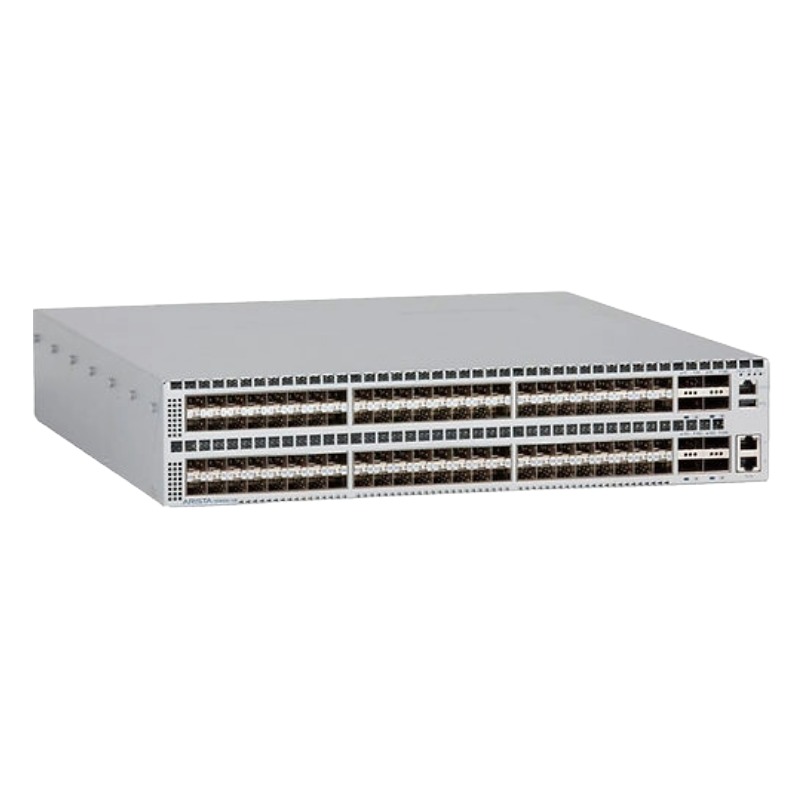


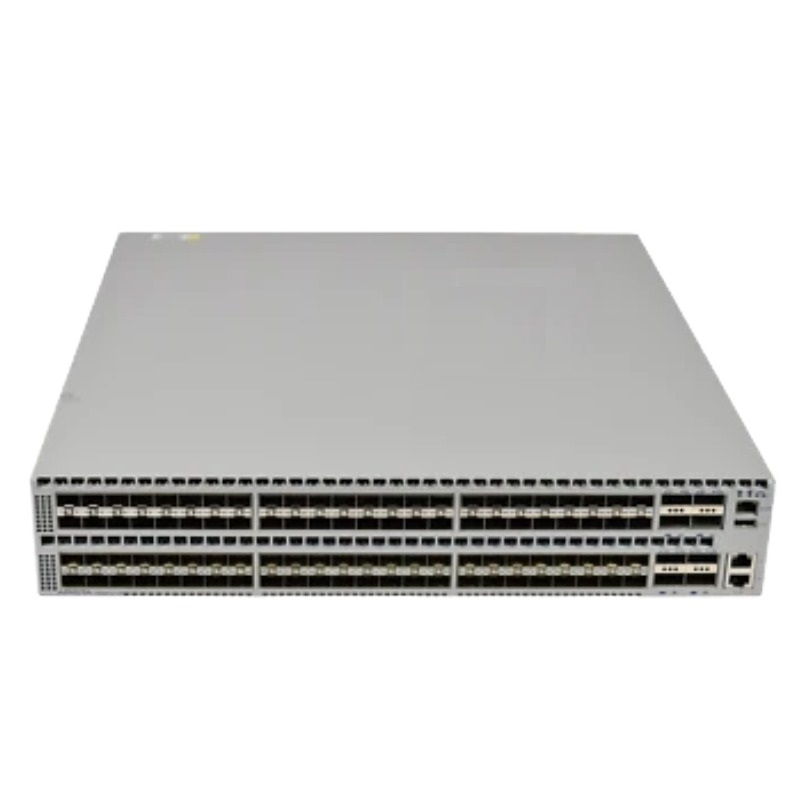
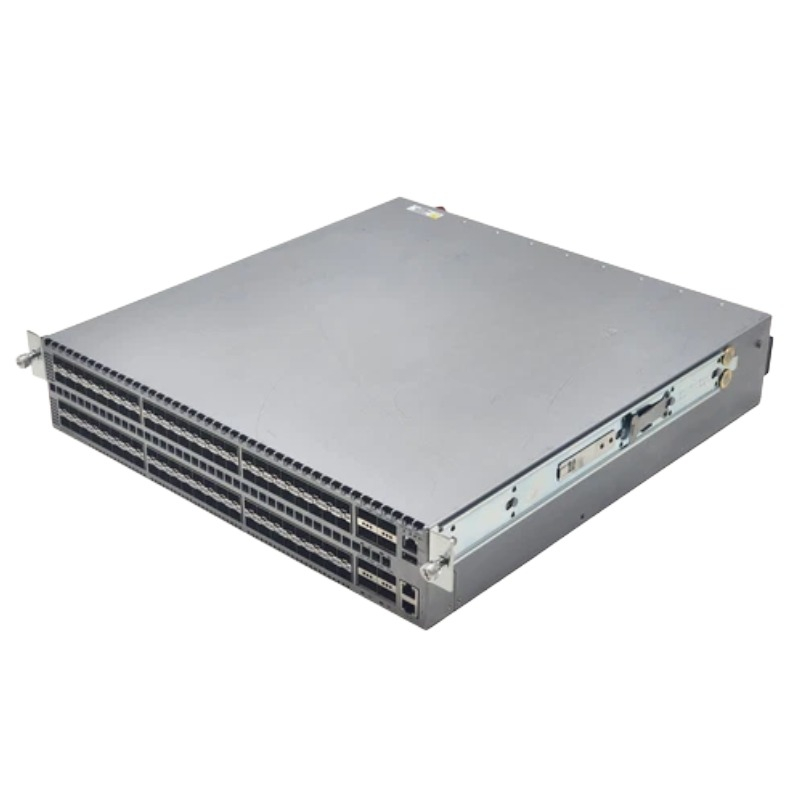
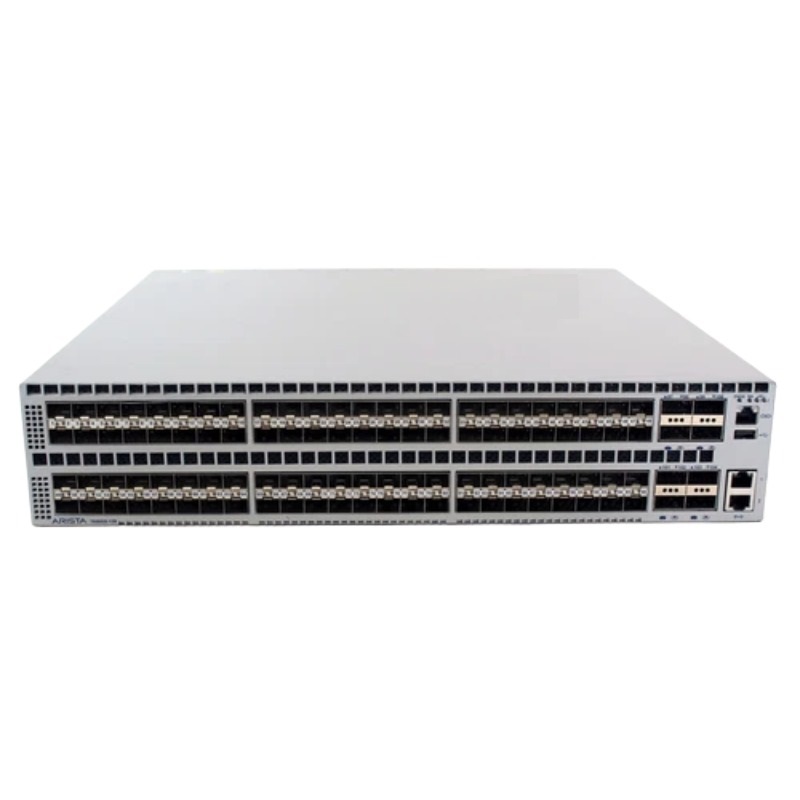
Arista DCS-7050SX2-128-R 96 Ports 10GB SFP+ 8x 40GB QSFP+ Back-to-Front Air Switch. Excellent Refurbished with 1 Year Replacement Warranty.
The Arista DCS-7050SX2-128-R is a high-density, ultra-low latency Ethernet switch engineered for demanding enterprise and cloud-scale environments. Designed for scalable data center deployments, it delivers exceptional throughput, flexible port configuration, and robust system reliability.
The Arista DCS-7050SX2-128-R is a high-density, low-latency data center switch designed for modern cloud-scale environments requiring predictable performance, high throughput, and flexible port configuration. Built on a robust switching architecture, this platform supports advanced Layer 2 and Layer 3 features while maintaining ultra-low latency forwarding characteristics essential for hyperscale data center fabric deployments. The combination of 96 x 10GbE SFP+ ports and 8 x 40GbE QSFP+ uplinks positions this switch as a powerful aggregation or top-of-rack solution optimized for spine-leaf architectures.
Engineered for demanding enterprise, service provider, and cloud data center environments, this switch delivers consistent packet forwarding performance with non-blocking architecture and deep buffering capabilities. Its back-to-front airflow design ensures optimized cooling efficiency in hot aisle/cold aisle deployments, making it suitable for high-density rack environments where thermal control is critical for uptime and hardware longevity.
The switch provides a substantial 96-port 10GbE SFP+ interface configuration, enabling dense server connectivity for virtualization clusters, cloud computing nodes, and storage networks. These ports support both fiber and DAC (Direct Attach Copper) connections, offering flexibility for short-range and long-range deployments. This high port density allows organizations to consolidate multiple racks of servers into a single switching layer, reducing operational complexity and cabling overhead.
The SFP+ interfaces are optimized for high-speed east-west traffic within data centers, where virtual machine mobility, distributed applications, and containerized workloads require consistent low-latency communication. This architecture is particularly effective in environments leveraging hyper-converged infrastructure (HCI) and software-defined networking (SDN).
In addition to high-density 10GbE access ports, the Arista DCS-7050SX2-128-R includes 8 uplink ports supporting 40GbE QSFP+ connections. These uplinks provide high-capacity aggregation paths toward spine switches in a leaf-spine architecture, ensuring efficient traffic distribution and minimal oversubscription ratios.
The 40GbE QSFP+ uplinks can be configured for either single 40GbE connections or breakout into multiple 10GbE links, depending on network design requirements. This flexibility allows network engineers to optimize bandwidth allocation dynamically based on workload distribution and growth patterns.
The switch architecture is designed to deliver wire-speed performance across all ports simultaneously without degradation in throughput. This ensures that east-west traffic within the data center is handled efficiently, reducing bottlenecks commonly found in oversubscribed legacy switching architectures.
At the core of the DCS-7050SX2-128-R lies a high-performance forwarding engine optimized for deterministic latency. This is particularly critical for financial trading systems, real-time analytics platforms, and high-frequency transaction environments where microseconds matter.
The switch utilizes cut-through forwarding techniques, enabling packet forwarding to begin before the entire frame is received. This reduces overall latency and improves application responsiveness in latency-sensitive environments.
The Arista 7050SX2 series supports a comprehensive set of Layer 2 and Layer 3 protocols, making it suitable for both traditional and modern network architectures. It supports VLAN segmentation, link aggregation (LACP), and advanced routing protocols such as OSPF, BGP, and ECMP for scalable routing across distributed environments.
The switch is optimized for overlay networking technologies such as VXLAN with EVPN control planes, enabling scalable multi-tenant architectures. This is particularly beneficial in cloud environments where network virtualization and tenant isolation are critical.
By supporting VXLAN-based overlays, the switch enables seamless extension of Layer 2 networks across Layer 3 boundaries, facilitating workload mobility across data center zones and availability regions.
Advanced QoS capabilities ensure traffic prioritization based on application requirements. This includes classification, marking, shaping, and queuing mechanisms that allow mission-critical workloads to maintain priority over best-effort traffic.
The switch incorporates congestion management techniques such as ECN (Explicit Congestion Notification) and dynamic buffer allocation, ensuring smooth traffic flow during peak network utilization periods.
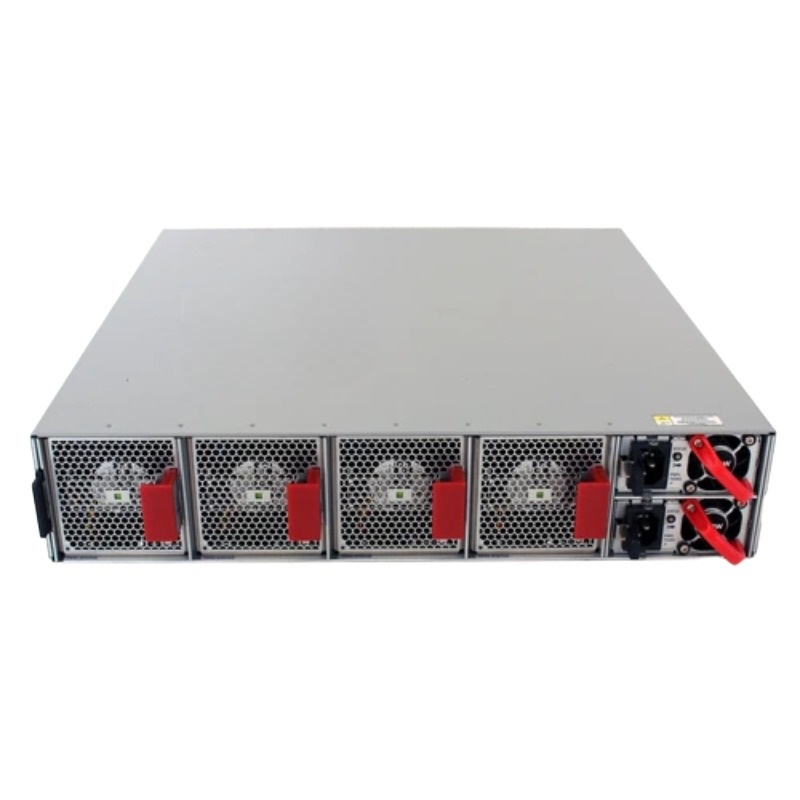
The back-to-front airflow design of the Arista DCS-7050SX2-128-R ensures that cool air is drawn from the front of the rack and expelled through the rear. This airflow direction aligns with standard data center cooling architectures, improving thermal efficiency and reducing hotspots within high-density deployments.
This airflow configuration is fully compatible with hot aisle/cold aisle containment strategies commonly used in modern data centers. It enhances cooling predictability and reduces the risk of thermal throttling under sustained load conditions.
Efficient airflow management reduces the need for excessive cooling infrastructure, thereby lowering overall power consumption and contributing to improved PUE (Power Usage Effectiveness) metrics in enterprise environments.
The Arista DCS-7050SX2-128-R is commonly deployed as a leaf switch in leaf-spine architectures. In this role, it provides direct connectivity to servers, storage arrays, and compute nodes while connecting upstream to spine switches via high-speed 40GbE uplinks.
Leaf-spine architectures minimize hop count between endpoints, and this switch is optimized for handling large volumes of east-west traffic typical in distributed cloud applications and microservices architectures.
Equal-Cost Multi-Path (ECMP) routing ensures efficient distribution of traffic across multiple spine uplinks, reducing congestion and improving overall network resiliency.
As data center demands grow, the switch supports scalable fabric expansion without requiring major architectural redesigns. Its modular uplink structure ensures seamless integration into expanding network topologies.
The platform supports redundant power supplies to ensure continuous operation in the event of a power module failure. This redundancy is critical for mission-critical environments requiring 99.999% uptime.
Hot-swappable power and fan modules allow maintenance without system downtime, ensuring continuous network availability during hardware replacement or upgrades.
Support for link aggregation, redundant paths, and rapid failover mechanisms ensures minimal disruption during network faults or topology changes.
Routing protocols supported by the switch include fast convergence mechanisms, ensuring minimal packet loss during failover events.
The switch runs on the Arista Extensible Operating System (EOS), a highly modular and programmable network operating system designed for automation and scalability. EOS provides a single binary image with process-level separation, enhancing stability and upgrade flexibility.
EOS supports open APIs such as REST, gRPC, and Python-based automation tools, enabling integration with DevOps pipelines and infrastructure-as-code frameworks.
Integration with tools like Ansible, Puppet, and Chef allows automated configuration management, reducing manual intervention and configuration errors.
Advanced telemetry features enable real-time visibility into network performance metrics. Streaming telemetry allows continuous monitoring of latency, packet loss, and throughput.
Network analytics tools provide insights into traffic patterns and anomalies, enabling proactive capacity planning and fault detection before service impact occurs.
The switch supports advanced segmentation techniques including VLANs, VRFs, and ACLs, ensuring secure isolation between different network tenants or application domains.
Granular ACLs allow administrators to define precise traffic filtering rules, enhancing network security and reducing attack surfaces within the infrastructure.
Control plane policing mechanisms protect the switch from denial-of-service attacks targeting routing and management interfaces.
Secure protocols such as SSH, TACACS+, and RADIUS are supported for authenticated and encrypted management access.


 Contact Us
 Information
 Catalog
 Solid State Drives (SSD)
 Network Switches
 Hard Disk Drives
 HBA & Controllers
 PC & Servers
 PC & Server Memory
 CPU & Processors
 Network Routers
 Power Supplies
 Tape Drives & Libraries
 Network Devices
 Computer & Network Cables