(7% discount is applied at checkout)
Cart is empty
Your go-to destination for cutting-edge server products
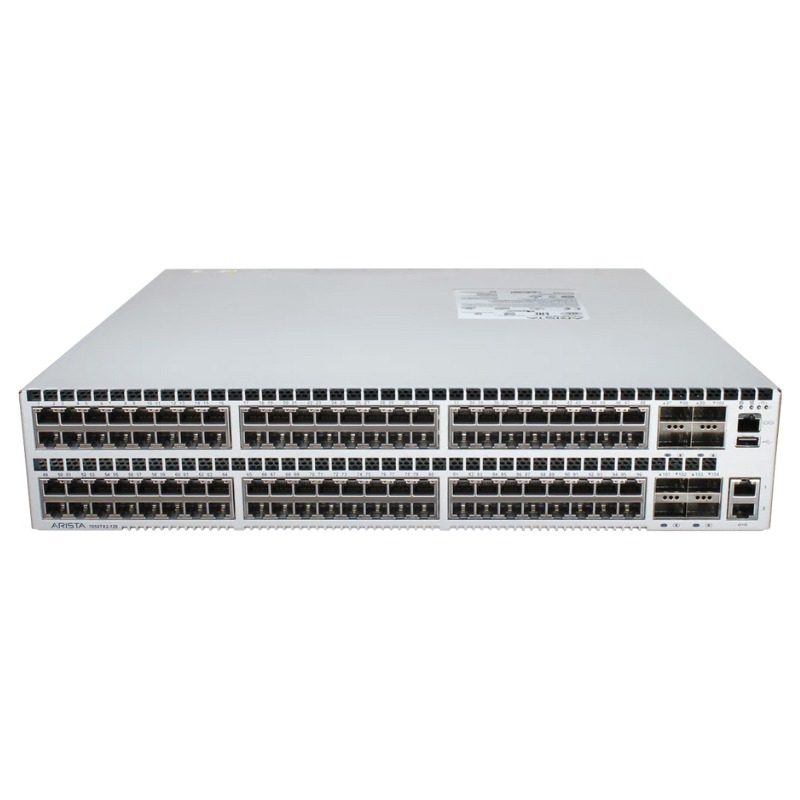


Arista DCS-7050TX-128-R 96x 10GB Copper 8x 40GB QSFP+ B-F Airflow Switch. Excellent Refurbished with 1-Year Replacement Warranty
The Arista DCS-7050TX-128-R is a powerful network switch engineered for high-density environments. With advanced throughput, flexible connectivity, and robust architecture, this device is ideal for enterprise data centers and large-scale IT infrastructures.
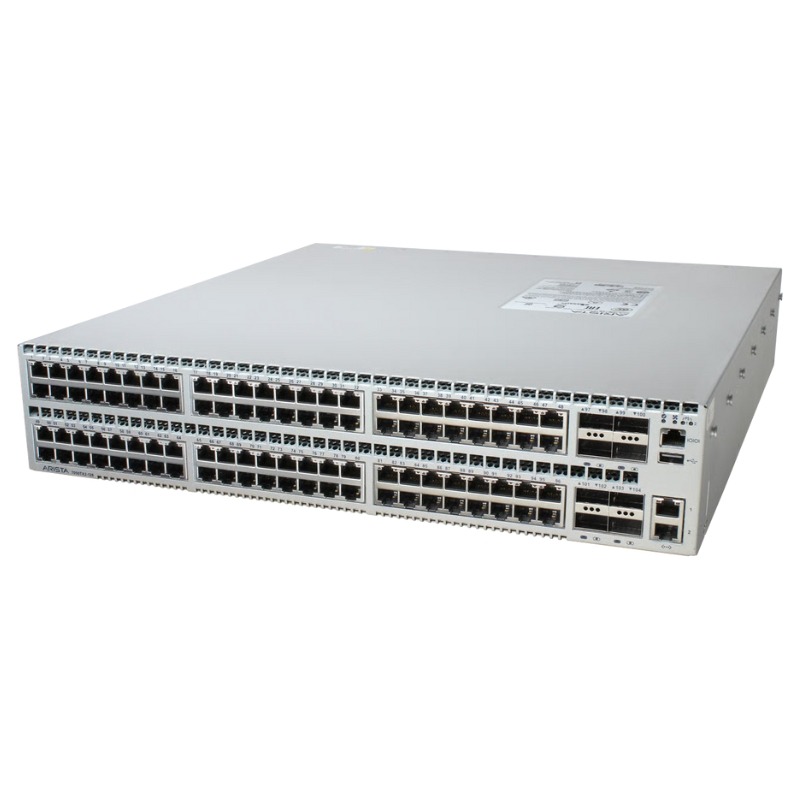
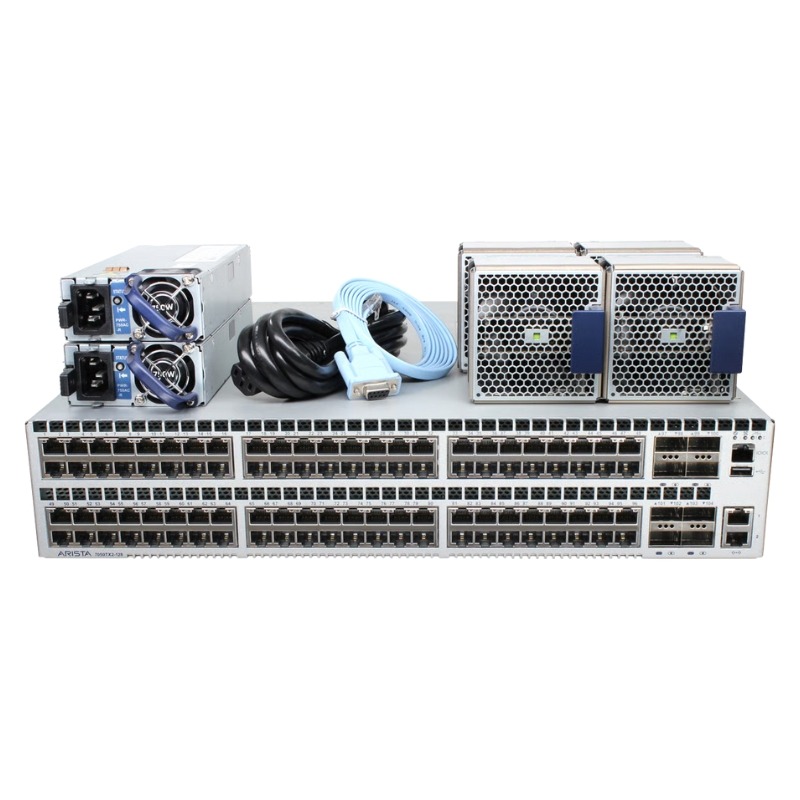
The Arista DCS-7050TX-128-R 96x 10GB Copper 8x 40GB QSFP+ Back-to-Front Airflow Switch represents a high-density, low-latency Top-of-Rack (ToR) switching solution purpose-built for modern enterprise data centers, cloud infrastructures, and high-performance computing environments. Designed to deliver exceptional Layer 2 and Layer 3 functionality with deterministic performance, this 1RU fixed-configuration switch integrates 96 10GBASE-T copper ports alongside 8 QSFP+ 40GbE uplink interfaces, providing flexible connectivity options for aggregation, spine-leaf architectures, and high-bandwidth application clusters.
Engineered with Arista’s Extensible Operating System (EOS), this model offers programmable automation, advanced telemetry, and scalable network design. The back-to-front airflow configuration ensures optimal cooling efficiency in hot aisle/cold aisle deployments, making it suitable for high-density racks and enterprise-grade colocation facilities. Organizations seeking robust 10GbE copper switching combined with powerful 40GbE uplinks benefit from a design that balances cost efficiency, power optimization, and operational scalability.
The switch is equipped with 96 10GBASE-T ports, enabling direct copper connectivity to servers, hyperconverged appliances, and storage systems. Copper-based 10GbE provides cost-effective cabling with backward compatibility for 1GbE environments, supporting gradual infrastructure upgrades. This density significantly reduces the need for additional aggregation layers, simplifying rack-level architecture and minimizing cable complexity.
10GBASE-T technology supports standard Cat6a and Cat7 cabling, offering deployment flexibility without the need for optical transceivers in short- to medium-distance scenarios. Enterprises deploying virtualization clusters, private cloud platforms, or large-scale compute farms benefit from simplified provisioning and lower operational expenditures. The high port count ensures that even dense virtualization clusters can be fully connected within a single rack.
Each RJ-45 interface supports auto-negotiation between 1000BASE-T and 10GBASE-T speeds, allowing seamless coexistence with legacy network components. This ensures that infrastructure upgrades can be staged without immediate replacement of all endpoints. The switch’s hardware architecture maintains consistent throughput and low latency across both 1GbE and 10GbE operations, ensuring reliable performance during migration phases.
In addition to copper access ports, the switch features 8 QSFP+ 40GbE uplinks, enabling high-speed aggregation and spine connectivity. These ports support breakout configurations to 4x10GbE, offering additional design flexibility for diverse deployment models. Whether used for uplink redundancy or cross-rack communication, the 40GbE interfaces deliver significant bandwidth capacity to prevent oversubscription bottlenecks.
The inclusion of multiple 40GbE uplinks allows implementation of leaf-spine topologies, ensuring east-west traffic flows efficiently within data centers. As applications increasingly rely on distributed microservices and virtualization, robust east-west bandwidth becomes critical. The 40GbE capability ensures scalability for high-throughput workloads such as big data analytics, AI training clusters, and distributed storage systems.
Modern data centers adopt spine-leaf architectures to provide predictable latency and horizontal scalability. The DCS-7050TX-128-R integrates seamlessly within such frameworks, offering consistent forwarding performance and high fabric throughput. By leveraging 40GbE uplinks, organizations can interconnect multiple leaf switches with spine layers to create a resilient and high-capacity switching fabric.
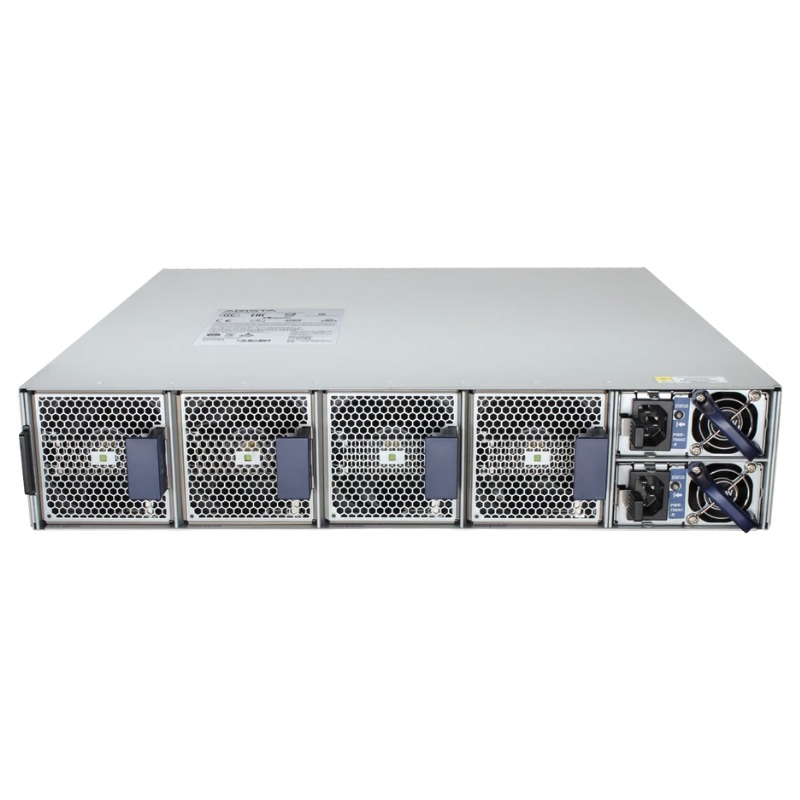
The back-to-front airflow design ensures compatibility with structured data center cooling strategies. In hot aisle/cold aisle containment setups, airflow direction plays a critical role in maintaining thermal stability. This configuration pulls cool air from the rear and exhausts warm air through the front, aligning with specific rack layouts and environmental controls.
Efficient airflow management contributes to reduced power consumption and improved hardware longevity. Enterprise facilities with dense server deployments require consistent cooling performance to prevent thermal throttling and hardware degradation. The switch’s optimized airflow path supports sustained operation even under maximum throughput loads, maintaining consistent performance metrics.
The DCS-7050TX-128-R supports extensive Layer 2 features including VLAN segmentation, spanning tree protocols, link aggregation, and multicast management. These capabilities allow granular traffic segmentation, enhanced fault tolerance, and broadcast domain control. High MAC address table capacity ensures scalability across large enterprise networks.
Layer 3 functionality includes support for static routing, dynamic routing protocols, and equal-cost multi-path routing. This ensures efficient traffic forwarding across multiple paths, optimizing bandwidth utilization and redundancy. The hardware-based forwarding plane maintains wire-speed routing without performance degradation under heavy loads.
Low-latency switching is essential for latency-sensitive workloads such as financial trading applications, real-time analytics, and high-frequency transaction systems. The hardware architecture is designed to deliver predictable microsecond-level latency, minimizing jitter and packet delay variation.
Arista’s EOS provides a modular, Linux-based operating system with a fully programmable architecture. Network administrators can automate provisioning, configuration management, and monitoring using APIs and scripting interfaces. Integration with orchestration tools supports Infrastructure as Code methodologies, enabling rapid deployment and consistent configuration standards.
EOS architecture isolates processes to prevent cascading failures. Stateful fault containment ensures that individual software components can restart independently without affecting overall system stability. This design enhances uptime and reduces maintenance windows.
Real-time streaming telemetry and detailed analytics provide visibility into traffic patterns, congestion points, and performance metrics. These insights enable proactive capacity planning and faster troubleshooting. Integration with monitoring platforms enhances operational intelligence.
As a 1RU fixed switch, the DCS-7050TX-128-R is optimized for ToR deployment, consolidating server connections within individual racks. This approach reduces cabling complexity and improves manageability. Each rack can function as an independent leaf node within a broader fabric architecture.
Organizations building private cloud environments benefit from the switch’s density and automation capabilities. Virtualized workloads demand consistent bandwidth and reliable failover mechanisms. The integration of high-speed uplinks and advanced routing ensures stable multi-tenant environments.
HPC clusters and distributed storage systems generate high east-west traffic volumes. The switch’s 96 copper ports allow dense server interconnection, while 40GbE uplinks provide backbone bandwidth to aggregation layers. This ensures minimal latency and optimal throughput for data-intensive workloads.
Modern workloads often run in virtual machines and containerized environments. The switch supports network virtualization overlays and automation frameworks that simplify integration with hypervisors and container orchestration platforms. This ensures efficient workload mobility and consistent network policies.
Applications such as big data processing, real-time analytics, and AI model training demand consistent high throughput. The combination of 96 10GbE ports and 8 40GbE uplinks ensures sufficient aggregate bandwidth to prevent congestion in high-demand scenarios.
The port density and uplink capacity support favorable oversubscription ratios, minimizing contention during peak traffic periods. This translates to consistent application performance and improved end-user experience.


 Contact Us
 Information
 Catalog
 Solid State Drives (SSD)
 Network Switches
 Hard Disk Drives
 HBA & Controllers
 PC & Servers
 PC & Server Memory
 CPU & Processors
 Network Routers
 Power Supplies
 Tape Drives & Libraries
 Network Devices
 Computer & Network Cables