(7% discount is applied at checkout)
Cart is empty
Your go-to destination for cutting-edge server products
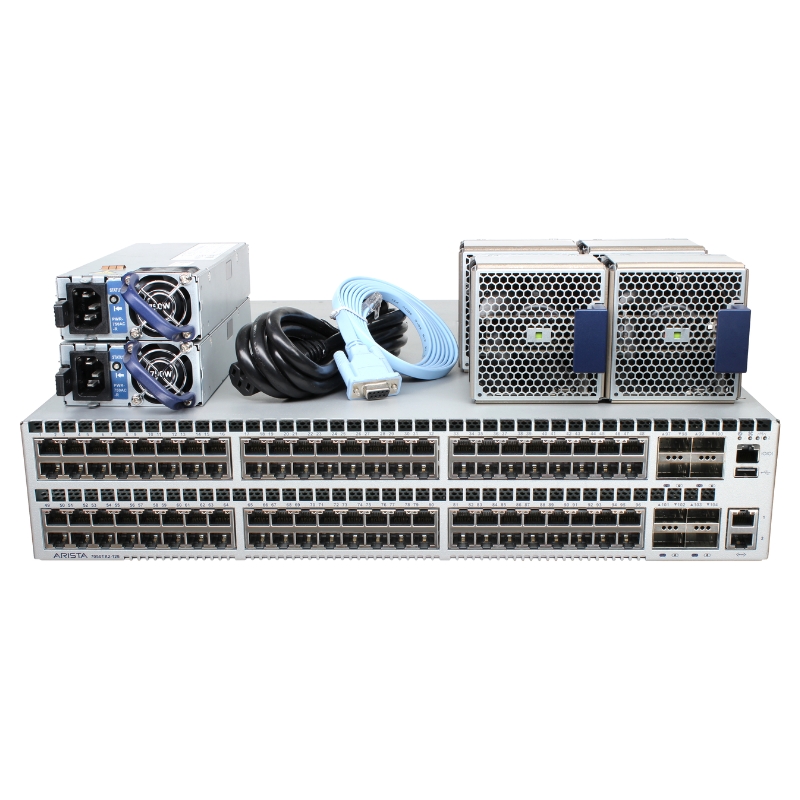


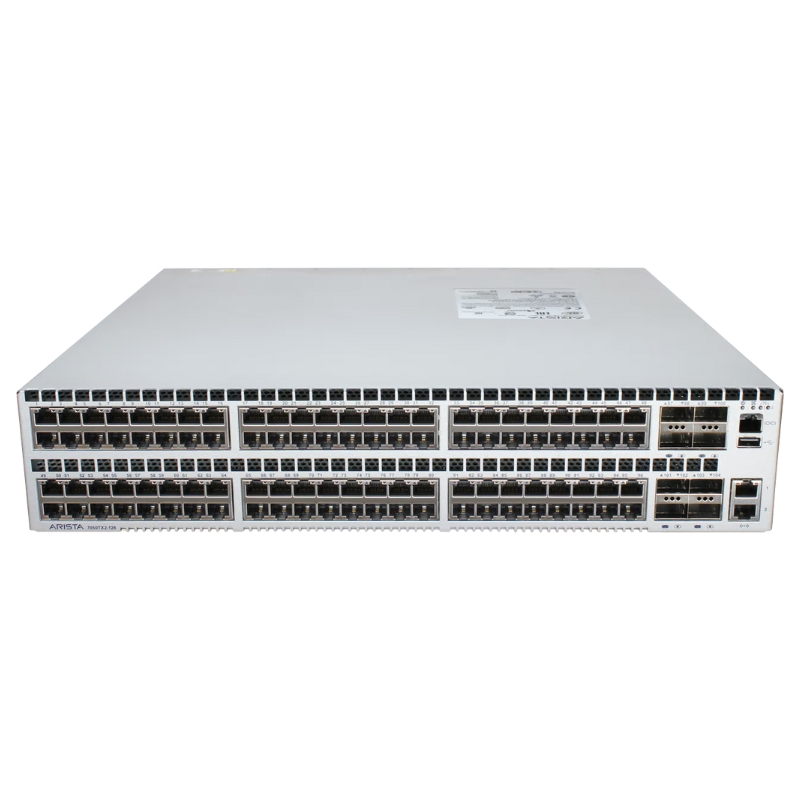
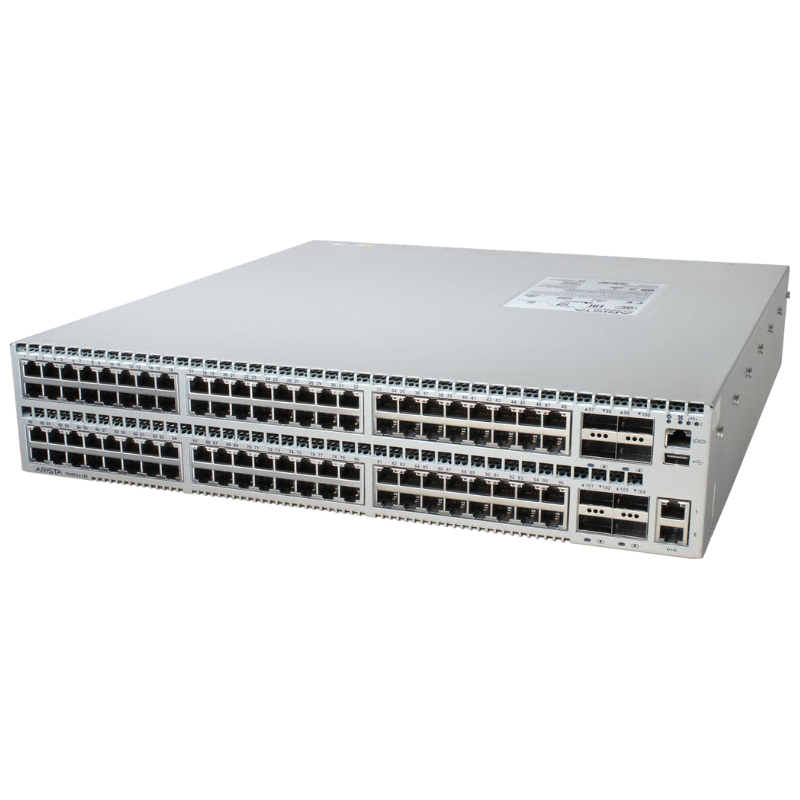
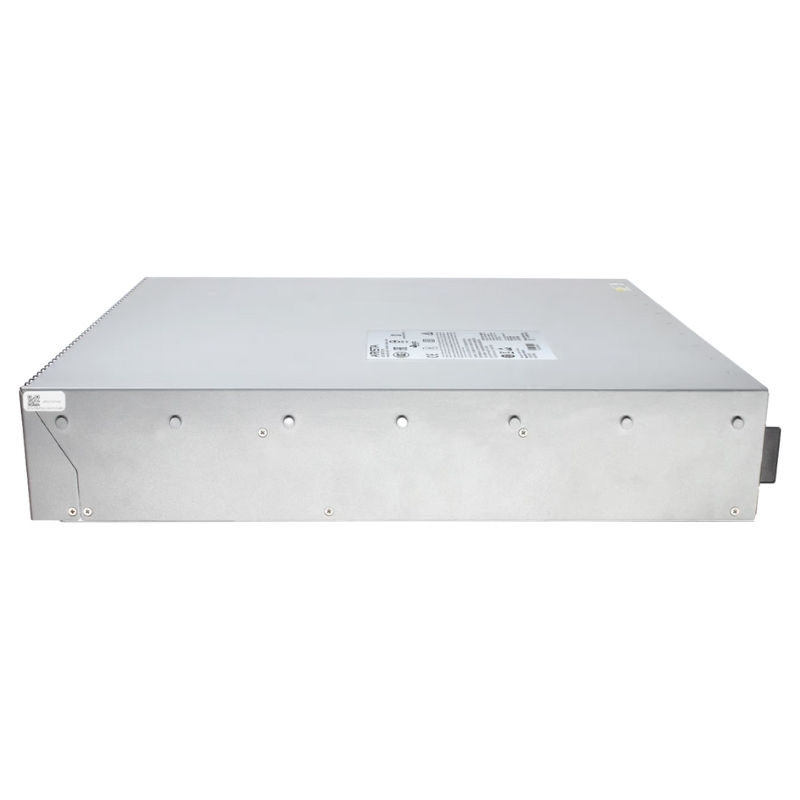
Arista DCS-7050TX2-128-F 96X 10GB Copper 8X 40GB QSFP+ F-B Airflow Switch. Excellent Refurbished with 1 Year Replacement Warranty
The Arista DCS-7050TX2-128-F is a high-performance network switch designed for enterprise-grade connectivity, offering 96x 10G copper ports and 8x 40G QSFP+ uplinks with front-to-back airflow for efficient cooling.
The Arista DCS-7050TX2-128-F belongs to a specialized category of high-density, low-latency data center switches engineered for enterprise, cloud, and high-performance computing environments. This category focuses on fixed-configuration switches optimized for top-of-rack and leaf-layer deployments where high port density, predictable latency, and consistent throughput are essential. Switches in this class are designed to handle east-west traffic patterns generated by virtualized workloads, distributed applications, and modern microservices architectures.
Within this category, copper-based 10 Gigabit Ethernet connectivity is combined with high-speed QSFP+ uplinks to support aggregation and spine-layer connectivity. The emphasis is on providing line-rate performance across all ports while maintaining deterministic behavior under heavy load. These switches are commonly deployed in environments where application performance, scalability, and operational simplicity are tightly linked to network design.
This category of switches is primarily associated with leaf and top-of-rack roles in Clos-based network architectures. By placing high-density switching close to servers, latency is minimized and bandwidth contention is reduced. The Arista DCS-7050TX2-128-F exemplifies this approach by offering a large number of 10 Gigabit copper ports suitable for direct server attachment, paired with 40 Gigabit uplinks for high-speed aggregation.
Fixed-configuration switches eliminate the complexity of modular chassis systems while delivering predictable performance characteristics. This simplicity translates into faster deployment cycles, lower power consumption per port, and reduced operational overhead. In environments where rapid scaling is required, this category supports repeatable rack-level designs that can be replicated across data halls.
Modern data center traffic is dominated by east-west flows between servers rather than north-south flows to external networks. Switches in this category are architected to handle high volumes of simultaneous low-latency connections, ensuring consistent application response times. Non-blocking switching fabrics and deep buffering capabilities are key characteristics, enabling smooth traffic handling during burst conditions.
The internal architecture of this category prioritizes throughput consistency and fairness, preventing congestion hotspots that could degrade application performance. This is particularly important for distributed databases, real-time analytics, and clustered compute workloads.
The defining feature of this category is its emphasis on high port density using cost-effective and widely adopted Ethernet standards. With ninety-six 10 Gigabit Ethernet copper interfaces, switches like the DCS-7050TX2-128-F support dense server connectivity without the need for external transceivers. Copper interfaces reduce per-port cost and simplify cabling in short-reach environments such as server racks and adjacent rows.
Complementing the copper ports are eight 40 Gigabit QSFP+ interfaces that provide high-bandwidth uplinks to aggregation or spine switches. This combination enables flexible network designs where multiple 10 Gigabit access ports can be oversubscribed or configured in non-oversubscribed topologies depending on workload requirements.
10GBASE-T copper connectivity remains a key component of enterprise and private cloud data centers due to its compatibility with existing cabling infrastructure. Switches in this category leverage advanced PHY technology to deliver reliable 10 Gigabit performance over standard twisted-pair cabling. This reduces migration complexity for organizations upgrading from 1 Gigabit Ethernet environments.
Copper-based connectivity also supports auto-negotiation and backward compatibility, enabling mixed-speed environments during transition phases. This flexibility is valuable in enterprise data centers where hardware refresh cycles are gradual and heterogeneous.
The inclusion of 40 Gigabit QSFP+ uplinks places this category firmly within high-performance data center networking. These uplinks support high-capacity connections to spine switches, enabling scalable leaf-spine architectures with predictable latency and bandwidth. QSFP+ interfaces can also be used in breakout configurations to support multiple lower-speed connections where needed.
High-speed uplinks ensure that access-layer congestion does not become a bottleneck as server densities increase. This capability is essential for virtualization platforms and cloud-native applications that generate significant inter-node traffic.
Switches in this category are designed with low-latency forwarding as a core requirement. Deterministic latency ensures that packet forwarding times remain consistent regardless of traffic patterns or load conditions. This is achieved through cut-through switching architectures, efficient packet processing pipelines, and optimized buffering strategies.
Low latency is critical for workloads such as financial trading platforms, real-time analytics, and distributed storage systems where microseconds can impact performance outcomes. By minimizing jitter and delay, this category supports predictable application behavior.
A non-blocking switching fabric is a hallmark of this category, ensuring that all ports can operate at full line rate simultaneously. This capability is essential in dense server environments where multiple high-throughput flows may occur concurrently. Line-rate performance across all interfaces guarantees that network infrastructure does not constrain application scalability.
Advanced scheduling algorithms and queue management techniques further enhance performance by prioritizing latency-sensitive traffic while maintaining fairness across flows. These mechanisms contribute to overall network stability under peak load conditions.
Effective buffering is a critical aspect of this category, allowing switches to absorb traffic bursts without packet loss. Deep buffers and intelligent congestion management algorithms help maintain throughput during transient congestion events. This is particularly important in environments with uneven traffic distributions or sudden workload spikes.
By reducing packet drops and retransmissions, switches in this category improve application efficiency and reduce CPU overhead on connected servers.
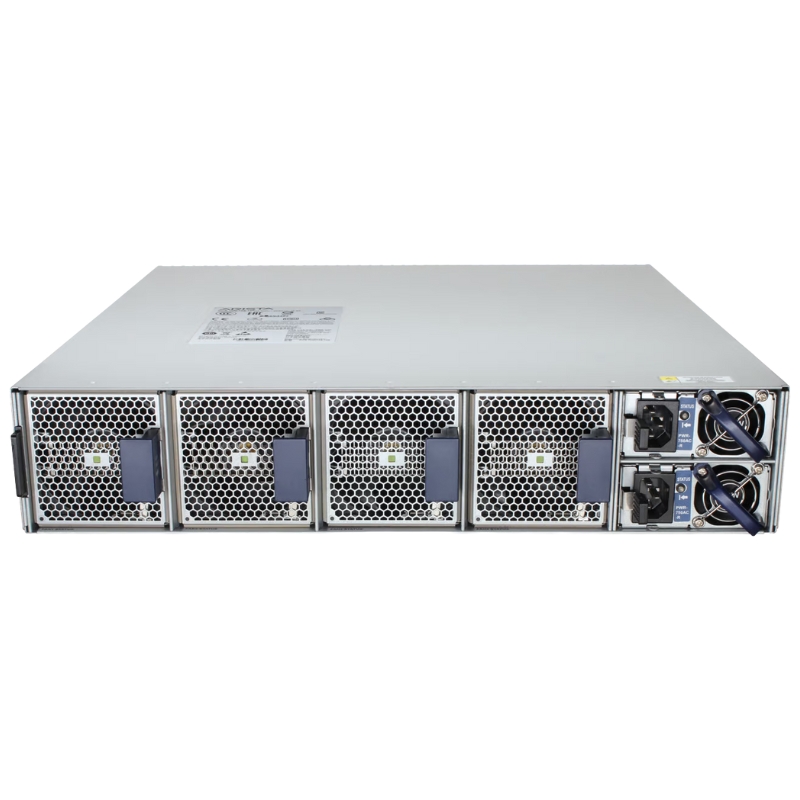
The Arista DCS-7050TX2-128-F features front-to-back airflow, commonly referred to as F-B airflow, which aligns with standard data center cooling strategies. This category emphasizes thermal efficiency to support high port densities and sustained performance. Proper airflow design ensures that heat generated by high-speed ASICs and PHY components is effectively dissipated.
Front-to-back airflow allows cold air to enter from the equipment aisle and exhaust hot air into the hot aisle, maintaining consistent temperature profiles across racks. This design is compatible with containment systems and modern cooling infrastructures.
Energy efficiency is a key consideration in this category, as high-density switches can contribute significantly to overall data center power consumption. Advanced silicon processes and power management features help reduce watts per gigabit, improving operational efficiency. Efficient power supplies and intelligent fan control further optimize energy usage.
Lower power consumption not only reduces operating costs but also simplifies thermal management, enabling higher equipment densities without exceeding cooling capacity.
Switches in this category are designed for continuous operation in mission-critical environments. Redundant power supplies, robust cooling systems, and high-quality components contribute to high availability. Mean time between failure metrics are optimized through rigorous testing and validation.
Reliability is essential for data center networks where downtime can have significant financial and operational consequences. This category supports always-on environments with minimal maintenance windows.
This category of switches is tightly integrated with advanced network operating systems that emphasize programmability, automation, and visibility. Arista EOS, commonly associated with this category, provides a modular, stateful operating environment that supports modern DevOps workflows. Consistent software behavior across platforms simplifies network operations and troubleshooting.
Automation readiness is a defining attribute, enabling integration with orchestration tools, configuration management systems, and telemetry platforms. This supports rapid provisioning, policy enforcement, and real-time monitoring in large-scale deployments.
Deep visibility into network behavior is essential for managing complex data center environments. Switches in this category provide granular telemetry data, including interface statistics, latency measurements, and congestion indicators. Streaming telemetry enables real-time insights that support proactive troubleshooting and performance optimization.
Enhanced visibility reduces mean time to resolution and supports capacity planning by providing accurate usage metrics.
Open APIs and programmability frameworks are integral to this category, allowing network behavior to be controlled programmatically. This facilitates integration with software-defined networking controllers and custom automation scripts. Programmability enables rapid adaptation to changing workload requirements and supports continuous deployment models.


 Contact Us
 Information
 Catalog
 Solid State Drives (SSD)
 Network Switches
 Hard Disk Drives
 HBA & Controllers
 PC & Servers
 PC & Server Memory
 CPU & Processors
 Network Routers
 Power Supplies
 Tape Drives & Libraries
 Network Devices
 Computer & Network Cables