(7% discount is applied at checkout)
Cart is empty
Your go-to destination for cutting-edge server products
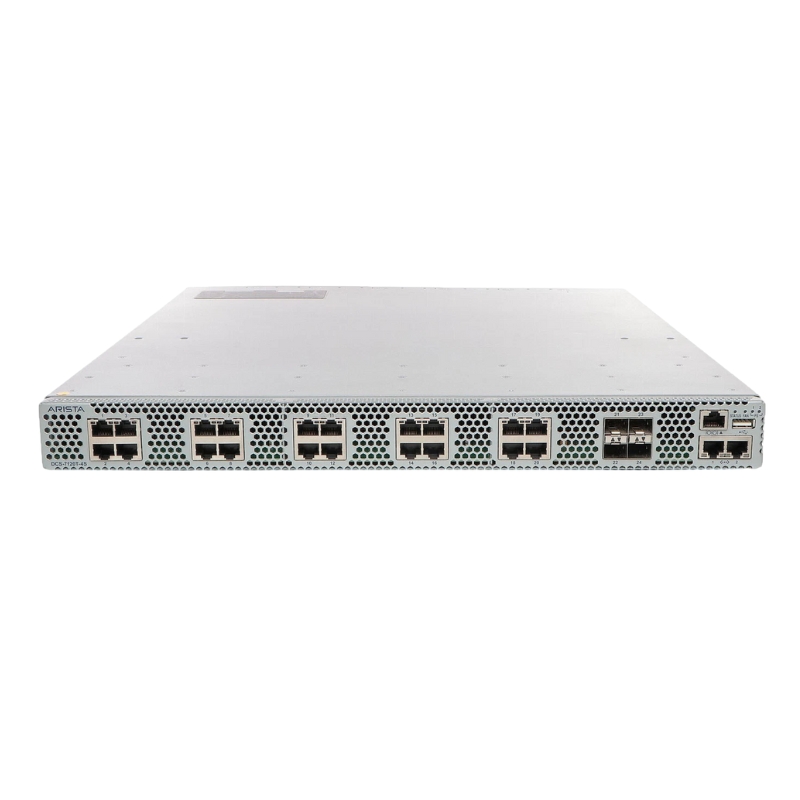


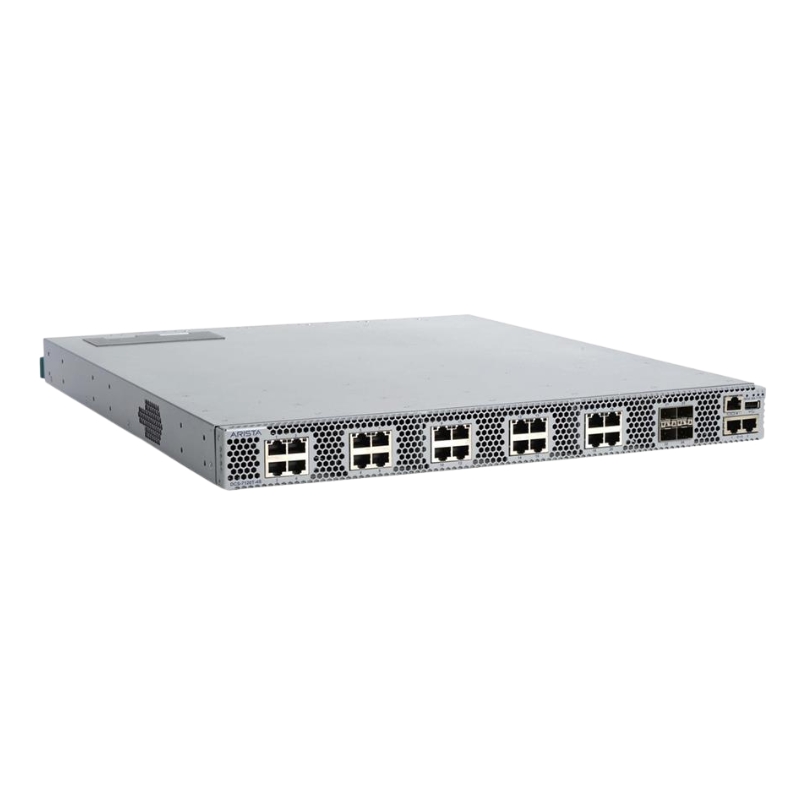
Arista DCS-7120T-4S-F 7120T-4S 20 Ports RJ45 4x Ports 10GbE SFP+ Front-to-rear Airflow Layer 3 Managed Ethernet Switch. Excellent Refurbished with 1 Year Replacement Warranty
The Arista DCS-7120T-4S-F represents a pinnacle of compact, high-performance switching for modern data center edge, enterprise core, and high-density 10GbE aggregation environments. As part of Arista's highly regarded 7120TX series, this fixed-configuration switch is engineered to deliver the robust features and low-latency performance of the Arista EOS in a fanless, silent, or ultra-quiet form factor.
The Arista DCS-7120T-4S-F stands as a cornerstone in modern network infrastructure, designed to bridge the gap between high-density 1GbE access and 10GbE uplink requirements. This 24-port Layer 3 managed Ethernet switch is engineered for environments demanding reliability, low latency, and sophisticated traffic management. Its unique blend of twenty 1GbE RJ45 ports and four 10GbE SFP+ ports, coupled with a front-to-rear airflow design, makes it an ideal solution for data center top-of-rack (ToR) deployments, enterprise wiring closets, and performance-sensitive aggregation layers.
At its heart, the Arista DCS-7120T-4S-F 7120T-4S-F is built on a purpose-built switching silicon that delivers wire-speed performance across all ports. This ensures that whether you're handling massive data transfers, real-time applications, or virtualized workloads, the switch operates without bottlenecks.
The defining feature of this switch is its versatile port arrangement. The twenty 100/1000BASE-T RJ45 ports provide flexible connectivity for a wide array of devices, from servers and storage arrays to IP cameras and access points. These copper ports support Auto-MDI/MDIX and Energy-Efficient Ethernet (EEE). The four 10GbE SFP+ uplink ports offer high-speed connectivity for aggregation, linking to core switches, or connecting to high-performance storage. These ports are multi-rate, supporting 1GbE and 10GbE optics and DAC cables, allowing for seamless integration into existing 1GbE SFP or newer 10GbE infrastructures.
RJ45 Ports: 20 x 10/100/1000BASE-T (Auto-negotiation, Auto-MDI/MDIX). SFP+ Ports: 4 x 1/10G SFP+ (Supported via SFP+ optics or DAC cables). Management Port: 1 x 10/100/1000BASE-T out-of-band management port. Console Port: 1 x RJ45 serial console port for CLI management.
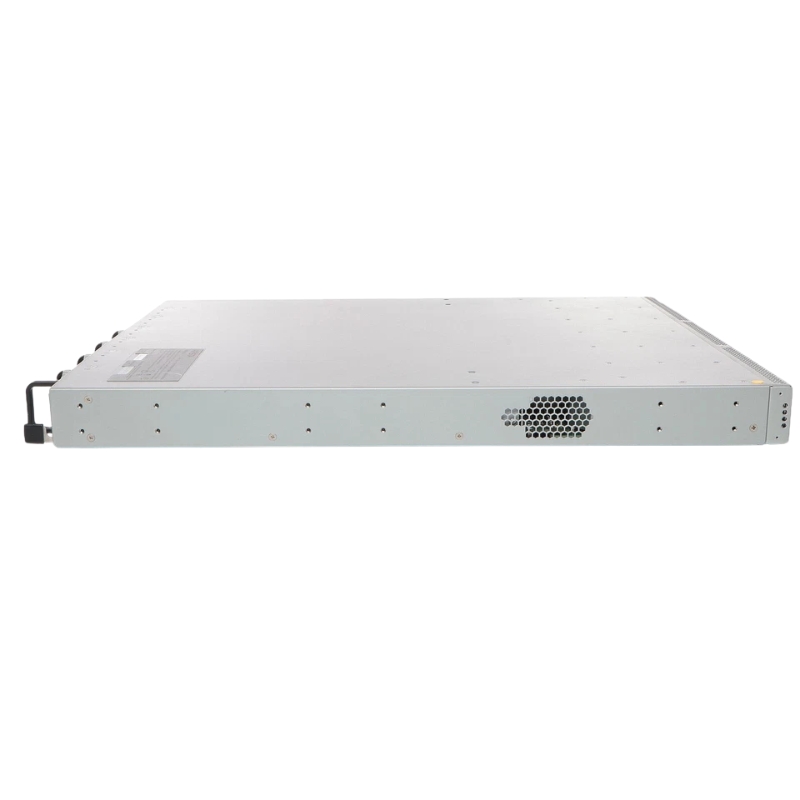
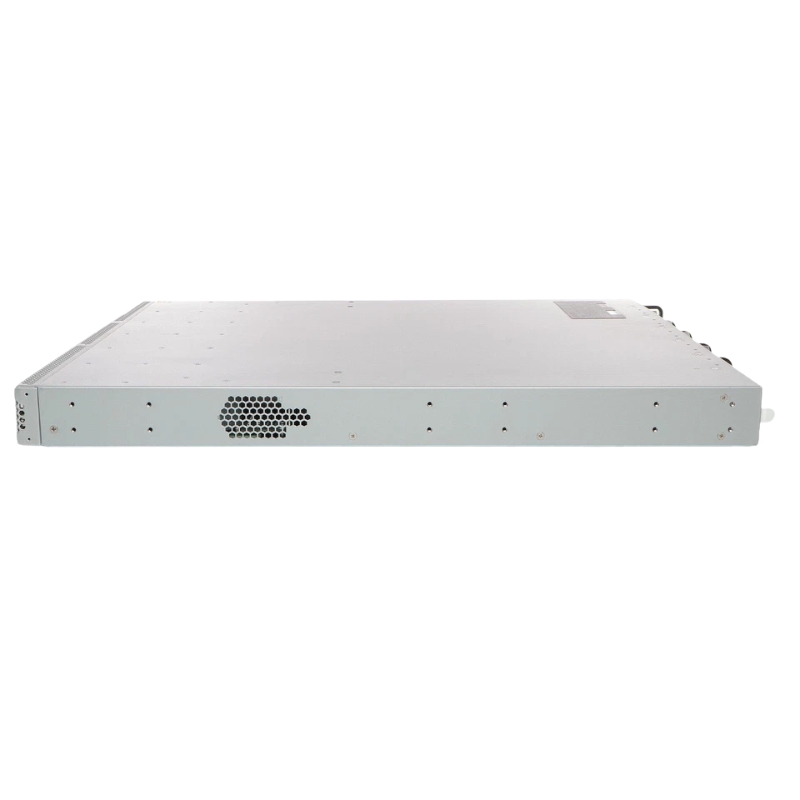
The switch features a robust 1U rack-mountable form factor. A critical design element is its front-to-rear airflow (designated by the "-F" in the model number). This is engineered for compatibility with data center hot-aisle/cold-aisle cooling configurations, where intake is from the front and exhaust is to the rear. This design optimizes thermal efficiency and aligns with modern data center best practices.
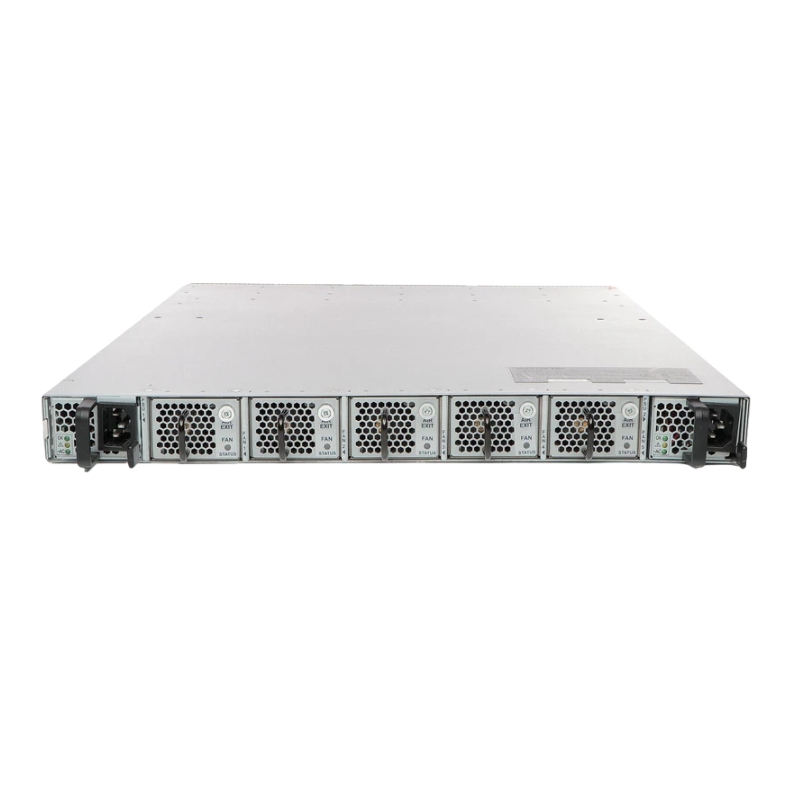
The unit is equipped with hot-swappable, redundant power supplies (typically 350W AC) and variable-speed, reversible fans. The power supplies are highly efficient. The fan modules can be configured for either front-to-rear or rear-to-front airflow, providing deployment flexibility in diverse environments.
The defining characteristic of the DCS-7120T-4S-F is its hybrid port arrangement, which provides exceptional flexibility for network design and cabling infrastructure.
The twenty copper ports offer standard, high-flexibility connectivity for a vast range of devices. They support 10/100/1000 Mbps speeds with auto-negotiation and MDI/MDIX auto-sensing.
A key variant of this platform includes Power over Ethernet (PoE+) support on these RJ45 ports. While the base "7120T-4S-F" model may not include PoE, the "PX" variant can deliver up to 30 watts per port, simplifying the deployment of wireless access points, VoIP phones, IP security cameras, and other networked devices by eliminating the need for local power supplies.
The four SFP+ ports provide high-speed uplinks for aggregation, connecting to core switches, or inter-switch links. They support 1GbE using SFP optics or 10GbE using SFP+ direct-attach copper (DAC) cables or optical transceivers.
These ports are compatible with a wide ecosystem of industry-standard SFP/SFP+ modules from Arista and other vendors, allowing for connectivity over multi-mode fiber (SR), single-mode fiber (LR, ER, ZR), and passive or active twinaxial copper cables, enabling cost-effective and optimized connections from meters to kilometers.
Running the full-featured Arista EOS, this switch operates as a fully capable Layer 3 router, supporting a comprehensive suite of IPv4 and IPv6 protocols for seamless integration into complex network topologies.
The switch supports OSPFv2/v3 and BGPv4/v4+ for scalable enterprise and data center routing. Its implementation supports equal-cost multi-path (ECMP) routing, allowing for efficient load-balancing of traffic across multiple uplink paths, increasing aggregate throughput and providing redundancy.
Virtual Routing and Forwarding (VRF) enables network segmentation and multi-tenancy at the routing layer, allowing a single physical switch to maintain separate routing tables for different departments or customers. Optional MPLS features support Layer 3 VPNs for advanced service provider or large enterprise edge deployments.
The switch provides a complete set of Layer 2 features for building resilient and manageable networks. This includes comprehensive IEEE 802.1Q VLAN support, VLAN trunking, and Multiple Spanning Tree Protocol (MSTP/RSTP) for loop prevention and path redundancy.
Arista's Multi-Chassis Link Aggregation (MLAG) technology allows two 7120T-4S-F switches (or one paired with another compatible Arista switch) to act as a single logical switch from the perspective of downstream devices. This provides hitless active-active redundancy for server uplinks, switch stacks, or entire network segments, eliminating spanning-tree blocked ports and utilizing all available bandwidth.
The true power of the Arista DCS-7120T-4S-F 7120T-4S-F is unlocked by the Arista Extensible Operating System (EOS). EOS is a modular, Linux-based network operating system that provides unparalleled stability, automation capabilities, and visibility.
As a fully-featured Layer 3 switch, it supports static routing and dynamic routing protocols including OSPF, BGP, and RIP. This enables it to act as a routing boundary within the data center or campus, reducing the need to hairpin traffic through core routers and decreasing latency.
The switch offers advanced features for creating logical network overlays and segments. It supports VLANs (802.1Q) with a large scale, VXLAN routing and bridging (with hardware VTEP functionality), and EVPN for control plane learning. This makes it a capable leaf switch in VXLAN/EVPN fabric architectures.
The DCS-7120T-4S-F is engineered for high-performance environments where predictable latency and throughput are non-negotiable.
The switch boasts a high switching fabric capacity and a forwarding rate sufficient to handle wire-speed traffic on all ports simultaneously, both at line rate for the 1GbE ports and the 10GbE uplinks. This ensures no packet loss under full load in designed scenarios.
Equipped with ample shared buffer memory, the switch can effectively absorb traffic microbursts and handle congestion scenarios without dropping packets, which is crucial for TCP performance and loss-sensitive applications like storage.
Beyond hardware redundancy, EOS provides software resiliency. Features like MLAG (Multi-Chassis Link Aggregation) allow the creation of active-active links across two physical switches, providing redundancy and increasing bandwidth. It also supports Graceful Restart for routing protocols and stateful switchover.
The versatility of the Arista 7120T-4S-F makes it suitable for a range of demanding network environments.
In the data center, it serves as an excellent ToR switch, connecting rack servers via 1GbE and providing high-speed 10GbE uplinks to spine or core switches. Its front-to-rear airflow, redundant power, and low latency are ideal for this role.
For hypervisor hosts running VMware, Hyper-V, or KVM, the switch provides ample 1GbE ports for virtual machine traffic, vMotion, and management, with 10GbE uplinks for aggregated throughput.
In large enterprise networks, it can aggregate traffic from multiple access switches (wiring closets) via its 10GbE ports, performing inter-VLAN routing and applying security policies before handing off traffic to the core.
The combination of low latency, high throughput, and support for jumbo frames makes this switch a viable option for iSCSI or NFS storage networks, connecting storage arrays to application servers.


 Contact Us
 Information
 Catalog
 Solid State Drives (SSD)
 Network Switches
 Hard Disk Drives
 HBA & Controllers
 PC & Servers
 PC & Server Memory
 CPU & Processors
 Network Routers
 Power Supplies
 Tape Drives & Libraries
 Network Devices
 Computer & Network Cables