(7% discount is applied at checkout)
Cart is empty
Your go-to destination for cutting-edge server products
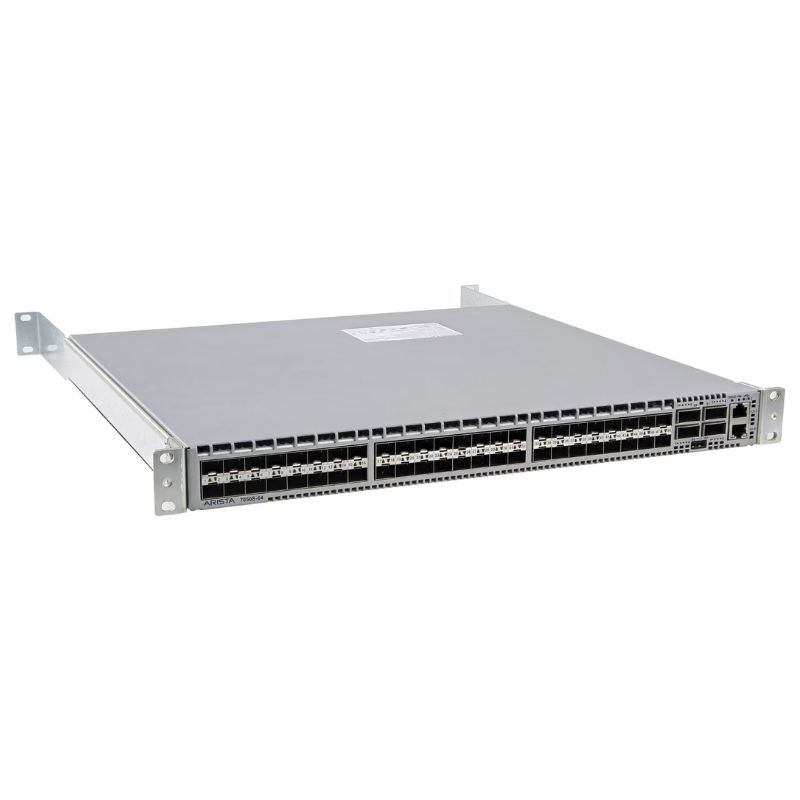


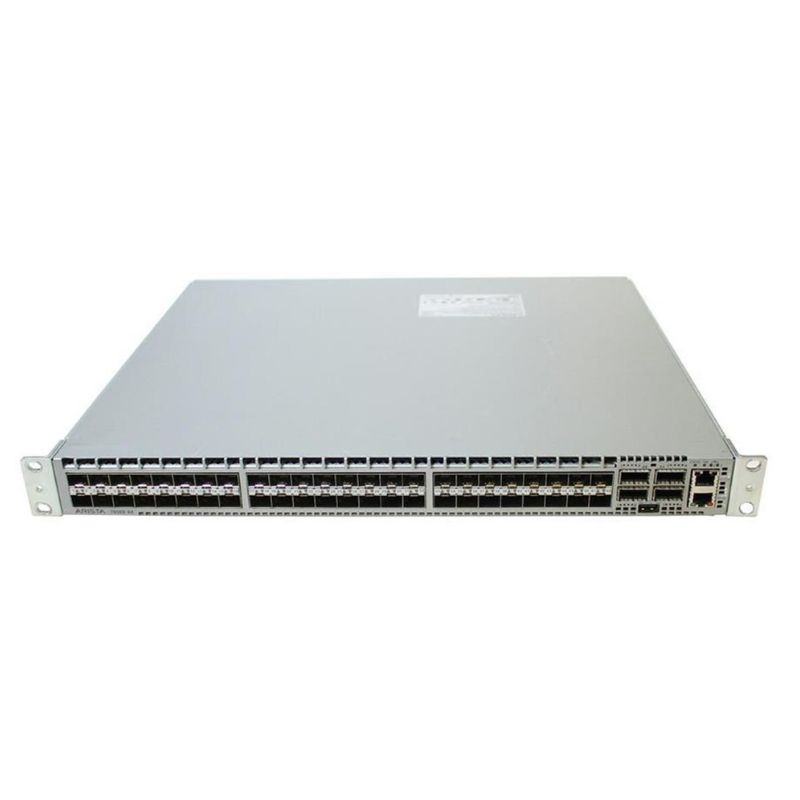
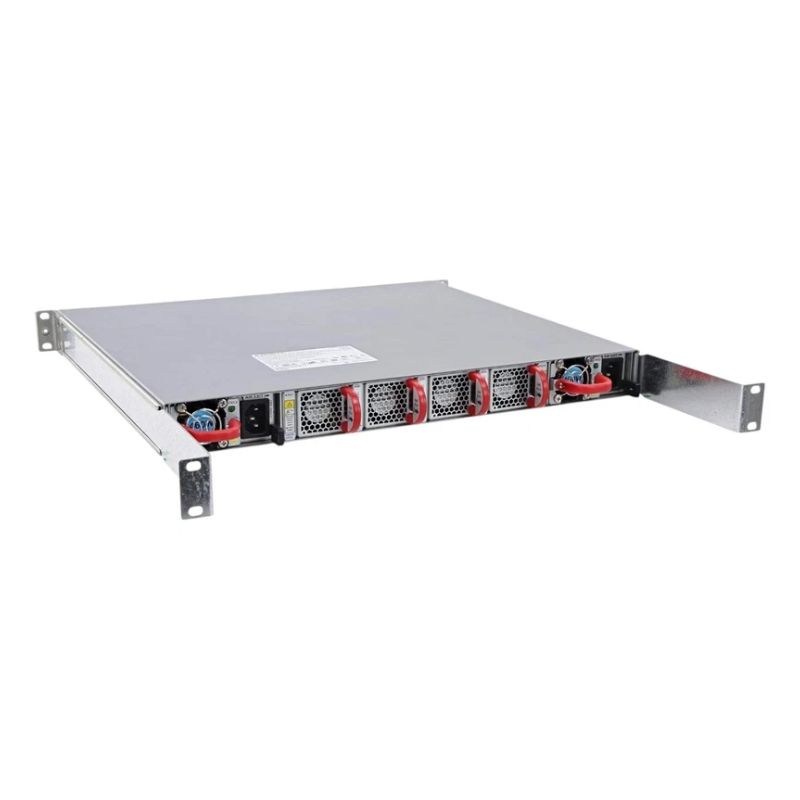
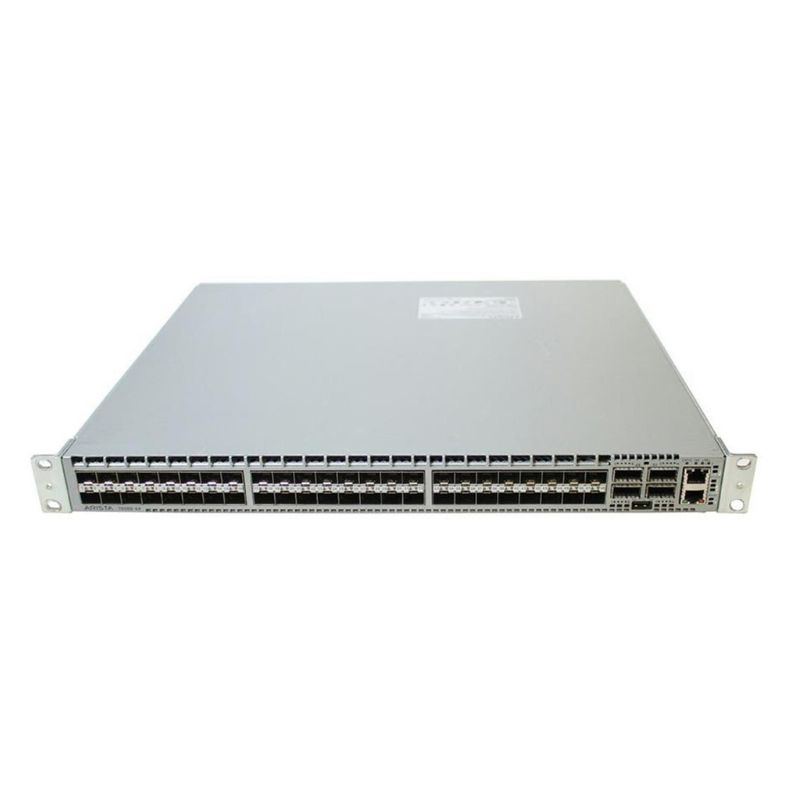
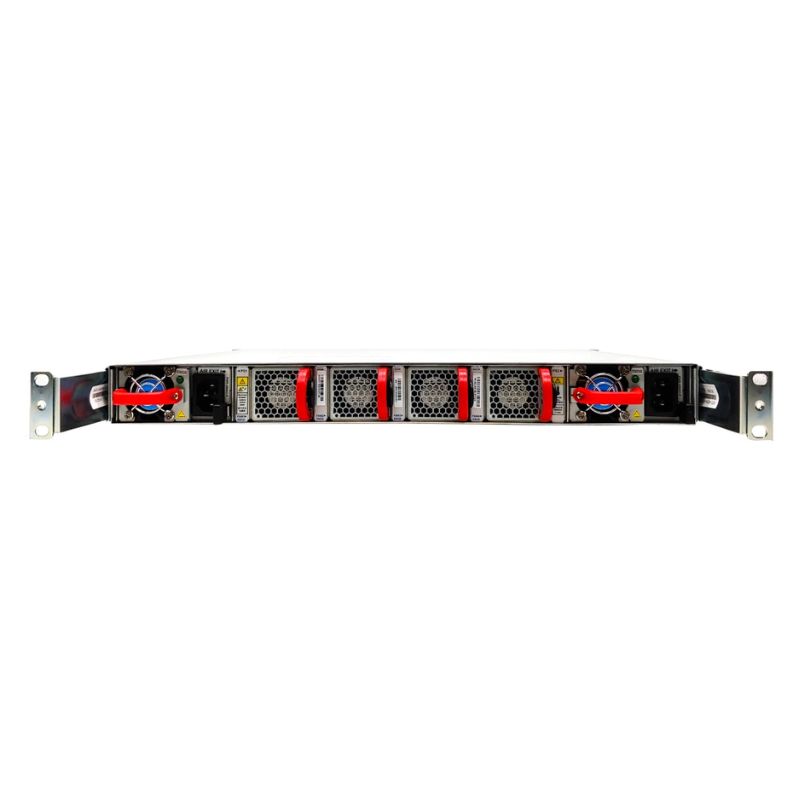
Arista DCS-7150S-64-CL-R 48x 10GB SFP+ 4x 40GB QSFP+ B-f Airflow Switch. Excellent Refurbished with 1 year Replacement Warranty
The ARISTA DCS-7150S-64-CL-R is engineered for high-performance networking scenarios that demand speed, accuracy, and reliability. Designed for modern data centers and compute-heavy infrastructures, this switch blends ultra-low latency with powerful throughput to maintain seamless traffic flow across demanding workloads.
The Arista DCS-7150S-64-CL-R 48x 10GB SFP+ 4x 40GB QSFP+ B-f Airflow Switch category represents a specialized class of high-performance data center switching solutions designed to deliver consistent low latency, high throughput, and enterprise-grade reliability. Within modern network infrastructures, switches in this category play a vital role in aggregation layers, top-of-rack deployments, and scalable spine-leaf architectures. Organizations leveraging high-density virtualization, cloud computing, big data analytics, and storage-intensive environments benefit from the optimized packet processing and efficient design found across this product segment.
This category emphasizes flexibility and scalability by combining dense 10 Gigabit Ethernet connectivity with high-bandwidth 40 Gigabit uplinks. The design philosophy revolves around predictable performance, reduced bottlenecks, and enhanced automation compatibility, allowing network teams to deploy resilient and highly manageable infrastructures. With advanced switching capabilities and enterprise-ready operating systems, solutions in this category provide extensive programmability and monitoring options that align with modern DevOps workflows and software-defined networking approaches.
Another important aspect of this category is operational efficiency. With front-to-back airflow options such as B-f airflow configurations, switches are engineered to integrate seamlessly into hot aisle and cold aisle containment strategies. Efficient cooling contributes to extended hardware lifespan, improved reliability, and reduced power consumption. Organizations seeking to optimize data center layouts appreciate the adaptability offered by airflow-optimized switches, ensuring consistent thermal management across high-density racks.
Network administrators selecting solutions within this category often require deterministic performance for latency-sensitive applications. Financial trading platforms, real-time analytics engines, and high-performance computing clusters rely on predictable packet forwarding and minimal jitter. The architecture of these switches prioritizes low latency and high packet processing rates to accommodate workloads that demand rapid data transmission and uninterrupted availability.
Scalability remains a cornerstone of the Arista DCS-7150S-64-CL-R switch category. The inclusion of multiple high-speed uplinks ensures seamless integration into larger network fabrics. As organizations expand, these switches enable efficient interconnectivity with aggregation or spine layers while maintaining consistent performance levels. Modular network designs benefit from standardized port configurations, allowing infrastructure teams to scale horizontally without major architectural overhauls.
Reliability and fault tolerance are also defining traits of this category. Built with enterprise-class components and advanced operating systems, switches provide features such as redundant power supply support, comprehensive monitoring, and extensive logging capabilities. These attributes help organizations maintain continuous network operations even during maintenance events or unexpected failures.
The category’s software ecosystem complements its hardware capabilities by offering automation frameworks, centralized management platforms, and API-driven configuration models. This empowers network engineers to implement Infrastructure as Code strategies, automate repetitive tasks, and deploy consistent configurations across large fleets of devices. Such automation reduces operational complexity while improving deployment speed and accuracy.
Switches within the Arista DCS-7150S-64-CL-R category are characterized by dense 10GB SFP+ connectivity, enabling organizations to support numerous servers and storage devices within a compact rack footprint. High-density port configurations minimize the number of switches required, reducing cabling complexity and simplifying network design. This density is particularly advantageous in data centers where space optimization is essential.
The inclusion of multiple 40GB QSFP+ uplinks offers significant flexibility for connecting to higher-capacity network layers. These uplinks enable efficient aggregation and high-bandwidth data transfers between racks, clusters, or core network components. By supporting high-speed uplinks alongside numerous access ports, switches in this category facilitate balanced traffic distribution and prevent congestion during peak workloads.
Advanced Layer 2 and Layer 3 features further enhance the versatility of this category. Support for VLAN segmentation, routing protocols, multicast traffic handling, and access control mechanisms allows organizations to design secure and scalable networks. Comprehensive traffic management capabilities ensure optimal bandwidth allocation and maintain consistent application performance.
Many switches in this category include extensive monitoring tools and telemetry features that provide deep visibility into network operations. Real-time analytics enable administrators to identify performance issues quickly and optimize resource utilization. These monitoring capabilities also contribute to proactive maintenance strategies, reducing downtime and improving service reliability.
Another key feature is support for automation frameworks and programmable interfaces. APIs and scripting capabilities empower network teams to automate provisioning, monitor device health, and implement policy changes with minimal manual intervention. This level of automation significantly reduces operational overhead and supports large-scale deployments with consistent configurations.
Performance remains a defining characteristic of the Arista DCS-7150S-64-CL-R switch category. Engineered to handle demanding workloads, these switches deliver high packet throughput and consistent forwarding rates even under heavy traffic conditions. Low latency architecture ensures minimal delays, making the category ideal for applications that require real-time data processing.
Advanced buffering and queue management capabilities help maintain traffic stability during bursts or spikes in network usage. These mechanisms prevent packet loss and maintain predictable performance across multiple workloads. High-frequency trading environments, real-time video streaming platforms, and AI processing clusters all benefit from the responsive packet handling found in this category.
The internal switching fabric is optimized to handle high bandwidth without introducing performance bottlenecks. By leveraging efficient packet processing pipelines and hardware acceleration, switches can deliver consistent throughput while minimizing CPU utilization. This design ensures that performance remains stable even as network demands grow.
Hardware-assisted features such as deep packet inspection and advanced traffic classification enable organizations to enforce network policies without compromising performance. Combined with robust QoS capabilities, these features help prioritize critical traffic and maintain application responsiveness.
Additionally, the architecture supports advanced monitoring techniques such as flow analysis and telemetry streaming. These features provide actionable insights into network behavior, allowing administrators to fine-tune configurations and maintain optimal performance over time.
The B-f airflow configuration is an important component of this switch category, aligning with modern data center cooling strategies. By directing airflow from the back to the front, switches integrate seamlessly into hot aisle containment designs and maintain consistent thermal performance across racks.
Efficient cooling not only enhances reliability but also contributes to energy savings. Optimized airflow reduces the need for excessive cooling resources, helping organizations lower operational costs and maintain environmentally responsible data center operations.
Proper airflow management also supports higher density deployments by preventing localized overheating. This is especially valuable in environments with numerous high-performance servers operating continuously. Maintaining optimal temperatures ensures that hardware components function reliably over extended periods.
Data center planners often select switches in this category specifically for their airflow compatibility with existing infrastructure. Consistent airflow direction across multiple devices simplifies rack design and reduces potential cooling conflicts. As a result, network engineers can deploy high-performance switching solutions without compromising overall data center efficiency.
Cloud service providers and enterprises with virtualized infrastructures rely heavily on switches within this category to deliver reliable connectivity between hypervisors and storage arrays. Dense port configurations allow numerous virtual machines to communicate efficiently while maintaining consistent performance levels.
Software-defined networking environments benefit from programmable APIs and automation support. Network administrators can deploy consistent configurations across large infrastructures, ensuring seamless scaling as demand increases. Automation capabilities also enable rapid provisioning of new services without manual configuration overhead.
Enterprises managing large volumes of data require reliable switching solutions capable of handling continuous traffic flows. This category supports storage protocols and high-throughput data transfers, ensuring efficient communication between application servers and storage devices.
High availability features such as redundant components and advanced failover mechanisms help maintain uninterrupted operations. Enterprises running mission-critical applications benefit from the reliability and resilience offered by switches in this segment.
Research institutions and scientific computing environments depend on low latency networking to process complex simulations and large data sets. The performance characteristics of this category make it suitable for HPC clusters requiring rapid inter-node communication.
With support for high-bandwidth uplinks and scalable architectures, research teams can expand their computing resources without compromising network performance. Reliable data transfer speeds enable faster analysis cycles and improved productivity for scientific workloads.
Modern network infrastructures demand advanced automation capabilities, and this category delivers comprehensive tools to streamline operations. API-driven configuration and centralized management platforms allow administrators to manage large deployments efficiently while maintaining consistent policies.
Security features play a crucial role in protecting sensitive data and maintaining regulatory compliance. Access control lists, segmentation technologies, and monitoring tools help prevent unauthorized access and detect potential threats in real time. Integrated logging and alerting systems provide visibility into network events, enabling rapid response to security incidents.
Centralized management platforms simplify device provisioning and monitoring. Administrators can deploy firmware updates, monitor performance metrics, and troubleshoot issues from a unified interface. This centralized approach reduces operational complexity and enhances overall network reliability.
Advanced analytics capabilities provide insights into network traffic patterns and user behavior. By leveraging telemetry and real-time data analysis, organizations can optimize resource allocation and maintain consistent service quality. Predictive maintenance features further enhance reliability by identifying potential issues before they impact operations.
The Arista DCS-7150S-64-CL-R switch category is designed to accommodate evolving infrastructure requirements. High-speed uplinks and flexible port configurations enable seamless integration into existing network architectures while supporting future expansion. Organizations can deploy these switches as part of spine-leaf topologies or as standalone aggregation devices.
Compatibility with industry-standard protocols ensures interoperability with a wide range of networking equipment and management tools. This flexibility allows organizations to integrate new technologies without replacing their entire infrastructure. Standardized configurations simplify maintenance and reduce operational complexity.
Long-term scalability is supported through advanced software capabilities and modular network design principles. As traffic demands increase, organizations can expand capacity by adding additional switches without significant architectural changes. This scalability protects investments and ensures networks remain capable of supporting emerging workloads.
Integration with orchestration platforms and cloud management tools further enhances the category’s value. Automated workflows streamline provisioning and configuration processes, reducing deployment times and minimizing errors. This integration also facilitates hybrid cloud environments, enabling seamless communication between on-premises infrastructure and cloud resources.
Reliability is a core characteristic of this switch category, with robust hardware components designed for continuous operation. Redundant power supply options and advanced cooling mechanisms help maintain uptime even during challenging conditions. These features ensure that networks remain operational and capable of supporting critical business processes.
Power efficiency contributes to reduced operational costs and environmentally responsible data center operations. Optimized hardware design minimizes energy consumption without compromising performance. Energy-efficient switches enable organizations to achieve sustainability goals while maintaining high-performance networking capabilities.
Operational stability is further enhanced by comprehensive diagnostic tools and monitoring features. Administrators can track hardware health, analyze performance trends, and implement proactive maintenance strategies. Detailed logging capabilities provide valuable insights into network behavior and help troubleshoot potential issues quickly.
With a focus on reliability and efficiency, switches in this category provide a stable foundation for enterprise networks, cloud infrastructures, and high-performance computing environments. Their consistent performance and advanced feature sets make them a valuable component of modern data center architectures.


 Contact Us
 Information
 Catalog
 Solid State Drives (SSD)
 Network Switches
 Hard Disk Drives
 HBA & Controllers
 PC & Servers
 PC & Server Memory
 CPU & Processors
 Network Routers
 Power Supplies
 Tape Drives & Libraries
 Network Devices
 Computer & Network Cables