(7% discount is applied at checkout)
Cart is empty
Your go-to destination for cutting-edge server products
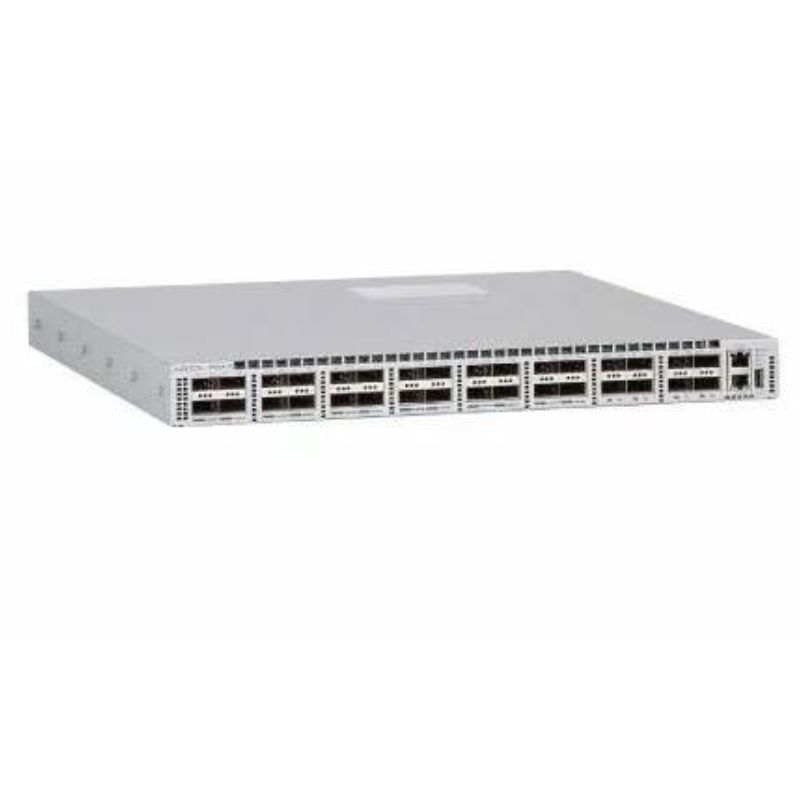


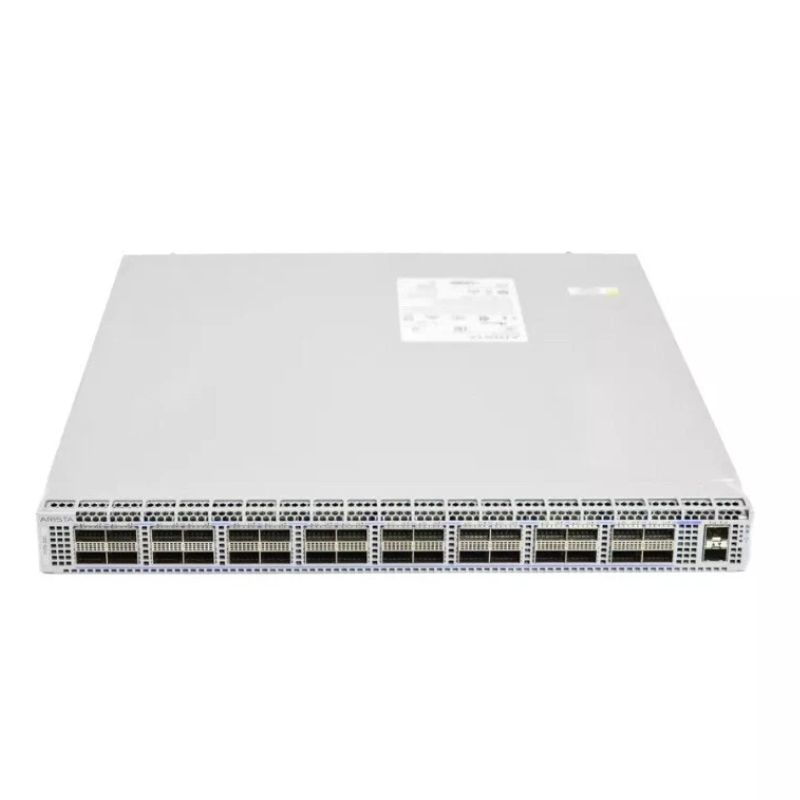
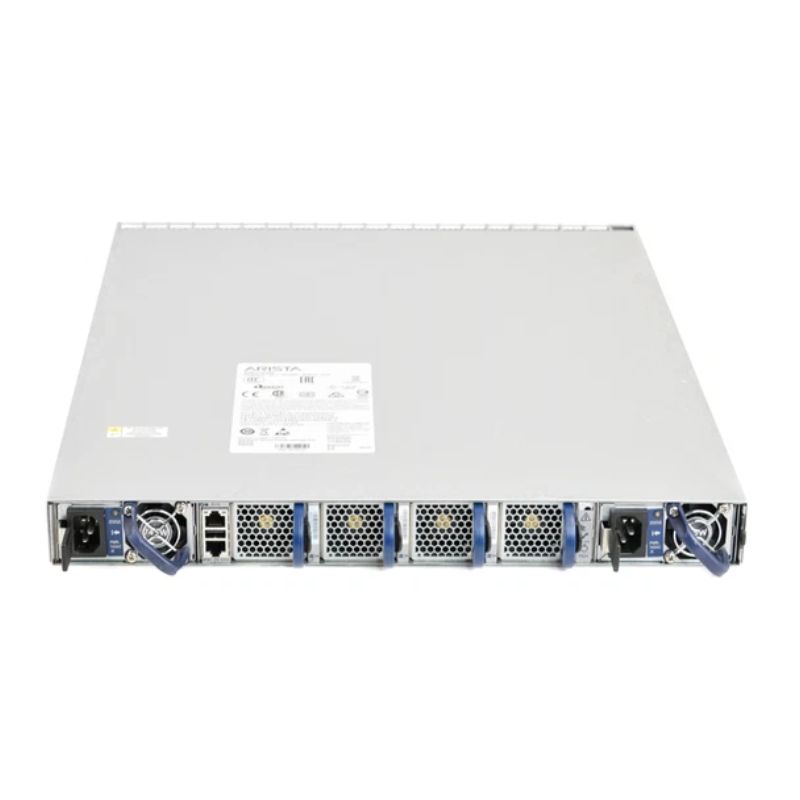
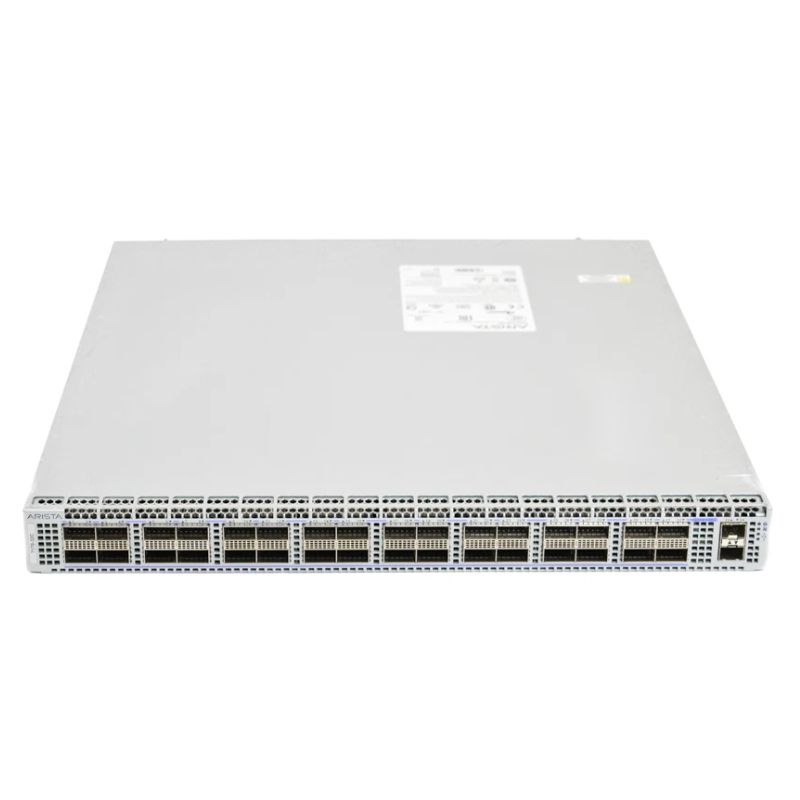
Arista DCS-7170-32C-F 7170 Programmable 32 X 100GBE QSFP Switch Front To Rear Air 2 X Ac. Excellent Refurbished with 1 year Replacement Warranty. Call
The Arista DCS-7170-32C-F is a high-performance programmable data center switch engineered to deliver extreme throughput, ultra-low latency, and deep programmability for modern cloud networks, enterprise data centers, and high-frequency computing environments. Built with advanced silicon architecture and designed to handle demanding east-west traffic patterns, this 32-port 100GbE QSFP switch supports scalable deployments that require flexibility, automation, and long-term investment protection. With front-to-rear airflow and dual AC power supplies, the platform fits seamlessly into hot-aisle/cold-aisle designs and ensures operational continuity even under heavy workloads.
This category focuses on network infrastructure solutions centered around the Arista 7170 programmable switching platform, highlighting performance advantages, operational efficiency, deployment versatility, and network automation capabilities. The switch stands out in environments where ultra-low latency and deterministic performance are critical, such as high-frequency trading networks, AI and machine learning clusters, high-performance computing fabrics, and advanced enterprise campus cores.
The DCS-7170-32C-F provides thirty-two QSFP100 ports capable of supporting a wide range of Ethernet speeds including 100GbE, 40GbE, and breakout configurations for 4x25GbE or 4x10GbE connectivity. This level of density enables network architects to design scalable spine-leaf topologies, collapsed core architectures, or high-bandwidth aggregation layers without requiring excessive rack space. Organizations can consolidate infrastructure while maintaining high levels of redundancy and performance.
With breakout capabilities, each QSFP port can be configured to support multiple lower-speed connections, allowing gradual upgrades from legacy infrastructure to high-speed fabrics. This flexibility reduces capital expenditures by enabling phased migrations and supports hybrid environments where multiple generations of hardware coexist. Engineers can deploy the switch as a spine node in hyperscale data centers, a low-latency leaf switch for compute clusters, or a high-performance aggregation device for storage networks.
Support for advanced optical modules and direct-attach copper cables provides deployment versatility across different rack distances and interconnect requirements. Short-range DACs help reduce costs within racks, while long-range optics enable data center interconnect and metro connectivity. These options allow network planners to tailor infrastructure precisely to workload demands and growth projections.
One of the defining characteristics of the Arista 7170 series is its deterministic, ultra-low latency architecture. Designed for environments where microseconds matter, the DCS-7170-32C-F delivers consistent packet processing speeds that make it suitable for latency-sensitive workloads such as financial trading platforms, scientific research simulations, and real-time analytics engines. Hardware acceleration and advanced buffer management ensure that traffic flows efficiently even under bursty conditions.
In addition to low latency, the platform offers deep visibility into network performance metrics, enabling administrators to monitor jitter, congestion, and packet loss in real time. This capability is essential for organizations that rely on high-performance applications and need to maintain strict service-level agreements. The switch’s architecture supports cut-through forwarding, allowing packets to traverse the network with minimal delay and ensuring predictable performance across large-scale deployments.
Low-latency switching also improves application responsiveness in distributed computing environments. By reducing the time required for nodes to exchange data, the switch enhances cluster efficiency and accelerates computational workloads. As data center traffic patterns become increasingly east-west focused, platforms like the DCS-7170-32C-F play a crucial role in maintaining high levels of performance and efficiency.
The Arista 7170 platform is built around programmability and automation, providing operators with the tools needed to manage modern, software-defined data centers. Through open APIs, scripting capabilities, and integration with automation frameworks, the switch allows administrators to automate provisioning, configuration management, and policy enforcement. This reduces manual errors, accelerates deployment cycles, and improves operational consistency.
Support for advanced telemetry and streaming analytics enables proactive monitoring and predictive maintenance. Operators can gather granular insights into traffic flows, resource utilization, and performance trends, helping them identify potential bottlenecks before they impact applications. Automation frameworks such as Ansible, Python-based scripts, and network orchestration tools integrate seamlessly with the switch’s operating system, enabling large-scale deployments to be managed from a centralized platform.
The programmable nature of the switch also allows organizations to customize packet processing and implement specialized workflows. This is particularly beneficial for research institutions, financial organizations, and service providers that require unique traffic handling or monitoring capabilities. Programmability ensures that the infrastructure can evolve alongside changing application requirements.
The front-to-rear airflow design of the DCS-7170-32C-F aligns with modern data center cooling strategies. By directing air from the cold aisle to the hot aisle, the switch supports efficient thermal management and reduces the risk of overheating in densely populated racks. This airflow configuration simplifies deployment in standardized environments and ensures compatibility with high-density server infrastructure.
Efficient cooling contributes not only to performance stability but also to reduced energy consumption and operational costs. Intelligent fan control adjusts cooling levels based on workload and environmental conditions, minimizing power usage while maintaining optimal temperature ranges. The ability to operate reliably in demanding thermal environments makes the switch suitable for hyperscale data centers, colocation facilities, and enterprise server rooms.
Thermal efficiency also improves hardware longevity. Components experience less stress when maintained within recommended temperature ranges, reducing the likelihood of premature failure and minimizing downtime. This translates into lower maintenance costs and higher overall reliability for mission-critical networks.
Equipped with dual AC power supplies, the DCS-7170-32C-F ensures high availability and resilience against power disruptions. Redundant power configurations allow the switch to continue operating even if one power source fails, providing uninterrupted connectivity for critical workloads. Hot-swappable power modules enable maintenance or replacement without shutting down the system, further enhancing uptime.
Redundancy is essential in environments where downtime can result in significant financial losses or operational disruptions. Financial institutions, cloud service providers, and healthcare organizations rely on infrastructure that can withstand unexpected failures. The dual AC power design provides an added layer of protection, ensuring that applications remain accessible and networks remain stable.
Power efficiency is also a key consideration. The switch’s hardware design optimizes energy consumption without compromising performance, contributing to lower operating expenses and a reduced environmental footprint. Organizations seeking to improve sustainability metrics benefit from infrastructure that balances power efficiency with high throughput.
The DCS-7170-32C-F integrates seamlessly into spine-leaf architectures, which are widely used in cloud and enterprise data centers to achieve predictable performance and horizontal scalability. By providing high-bandwidth links between leaf switches and spine nodes, the platform helps ensure consistent latency and efficient traffic distribution. This architecture simplifies scaling as new racks or clusters are added.
In addition to spine-leaf deployments, the switch can function as a core or aggregation device in enterprise networks. Its high port density and advanced routing capabilities allow it to handle large volumes of traffic while maintaining reliability and security. Organizations undergoing digital transformation initiatives often rely on platforms like the Arista 7170 to support hybrid cloud connectivity, virtualization, and containerized workloads.
The platform’s programmability also makes it suitable for software-defined networking environments. Integration with orchestration platforms enables dynamic traffic management and automated network provisioning. This level of flexibility allows IT teams to respond quickly to changing business requirements and deploy new services without extensive manual intervention.
Security features within the Arista 7170 series help organizations protect sensitive data and maintain compliance with industry regulations. Advanced access control mechanisms, segmentation capabilities, and monitoring tools provide granular visibility into network activity. Administrators can implement micro-segmentation strategies to isolate workloads and reduce the risk of lateral movement by malicious actors.
Real-time telemetry and advanced analytics enable rapid detection of anomalies and potential threats. By integrating with security information and event management systems, the switch becomes an integral part of a comprehensive cybersecurity strategy. Visibility into traffic flows also assists in troubleshooting performance issues and ensuring that applications operate efficiently.
In environments where regulatory compliance is critical, detailed logging and reporting capabilities support audits and forensic analysis. Organizations can maintain detailed records of network activity, helping them demonstrate adherence to data protection standards and internal governance policies.
The DCS-7170-32C-F is designed with long-term scalability in mind. High-speed interfaces and programmable architecture allow organizations to adapt to evolving technologies without frequent hardware replacements. As applications demand greater bandwidth and lower latency, the switch provides a foundation capable of supporting next-generation workloads.
Investment protection is achieved through flexible port configurations, software upgrades, and support for emerging protocols. Enterprises can deploy the switch today and continue to leverage its capabilities as their infrastructure evolves. This scalability is particularly valuable for rapidly growing businesses, research institutions expanding compute capacity, and cloud providers onboarding new customers.
The ability to scale horizontally also improves resilience. Additional switches can be integrated into the network fabric to increase capacity and redundancy without significant architectural changes. This modular approach reduces complexity while enabling seamless expansion.
The Arista DCS-7170-32C-F serves a wide range of industries that require high-speed connectivity and reliable performance. Financial services organizations leverage the platform for algorithmic trading and market data distribution, where low latency and deterministic performance are essential. Research and academic institutions use the switch to support large-scale simulations, data analysis, and collaborative projects that involve massive data transfers.
Cloud service providers benefit from the switch’s scalability and automation capabilities, enabling them to deploy multi-tenant environments with consistent performance. Media and entertainment companies use high-bandwidth networks to manage video production workflows, real-time streaming, and content distribution. Healthcare organizations rely on robust infrastructure to support imaging systems, telemedicine platforms, and data-intensive research initiatives.
Enterprise IT departments deploying AI and machine learning workloads also find value in the switch’s performance characteristics. High-speed interconnects facilitate rapid data exchange between compute nodes, accelerating training processes and improving model accuracy. The platform’s programmability ensures that specialized workflows can be implemented without complex hardware modifications.
Ease of management is a central aspect of the Arista 7170 series. Centralized management tools and intuitive interfaces enable administrators to configure, monitor, and troubleshoot the network from a single platform. Automation reduces repetitive tasks and allows IT teams to focus on strategic initiatives rather than routine maintenance.
Zero-touch provisioning capabilities streamline deployment in large-scale environments. New switches can be automatically configured when connected to the network, reducing installation time and minimizing human error. Advanced diagnostics provide detailed insights into hardware health and network performance, enabling proactive maintenance and reducing downtime.
The combination of programmability, automation, and advanced analytics helps organizations maintain efficient operations even as networks grow in complexity. By simplifying management workflows, the switch contributes to lower operational costs and improved overall productivity.


 Contact Us
 Information
 Catalog
 Solid State Drives (SSD)
 Network Switches
 Hard Disk Drives
 HBA & Controllers
 PC & Servers
 PC & Server Memory
 CPU & Processors
 Network Routers
 Power Supplies
 Tape Drives & Libraries
 Network Devices
 Computer & Network Cables