(7% discount is applied at checkout)
Cart is empty
Your go-to destination for cutting-edge server products
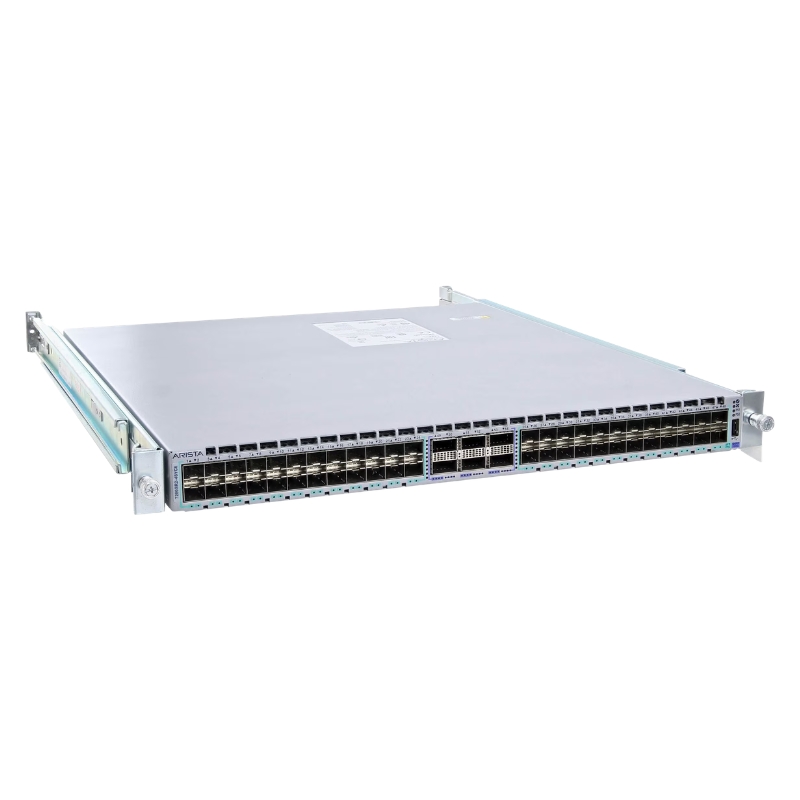


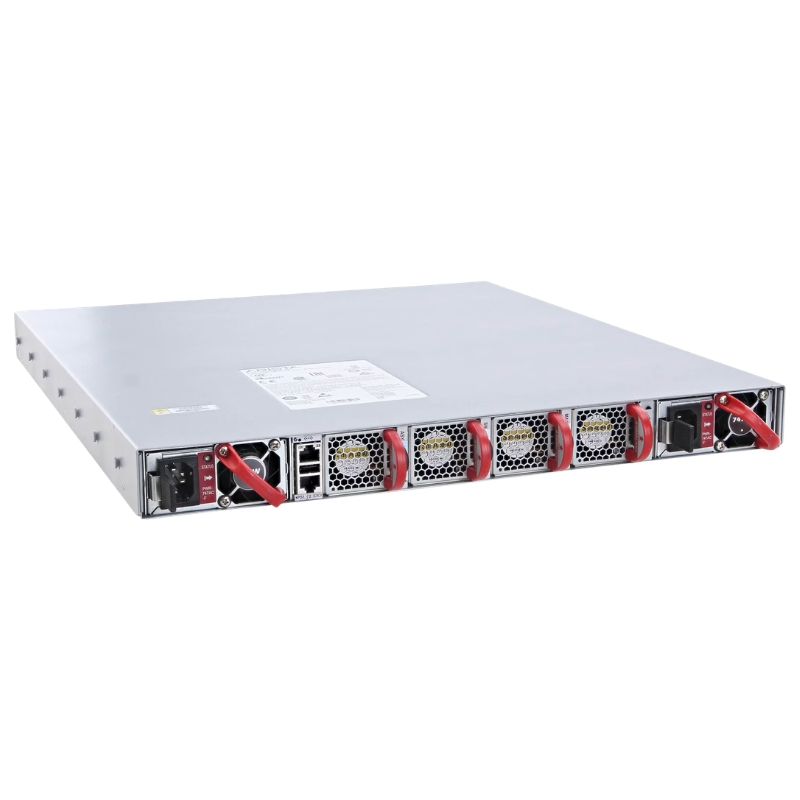
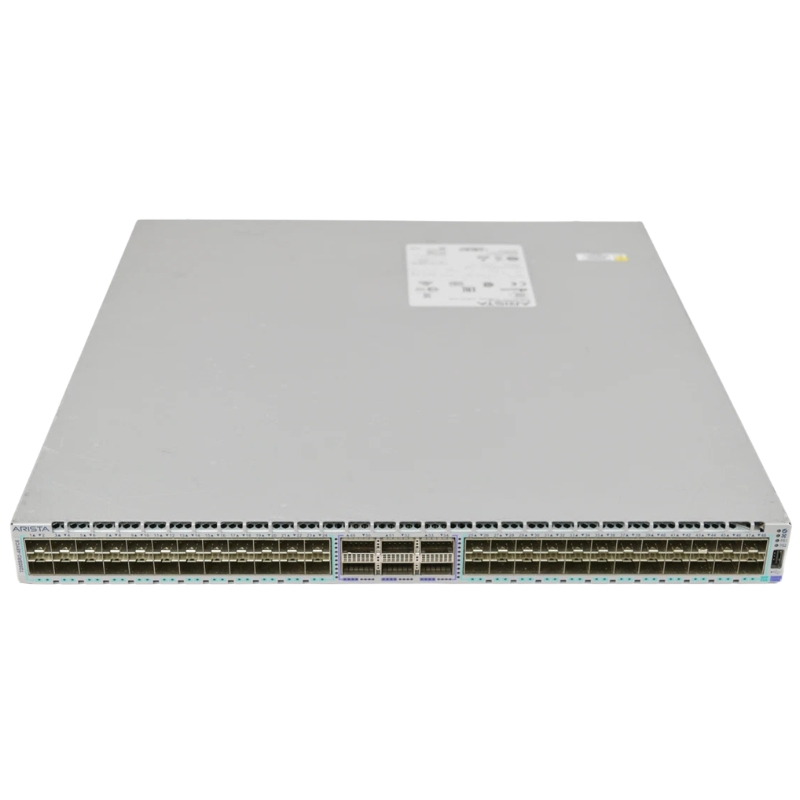
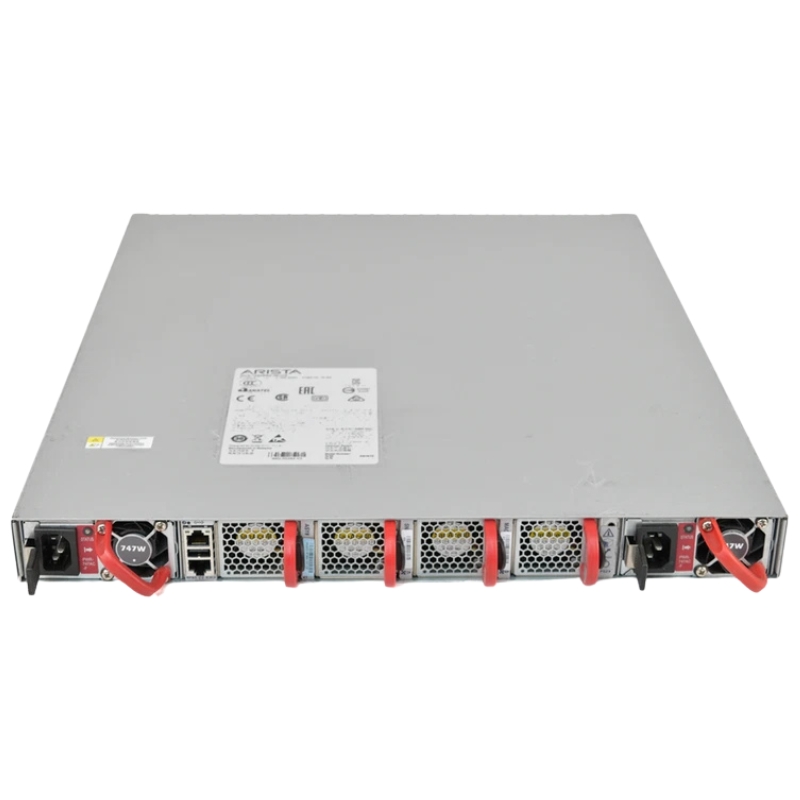
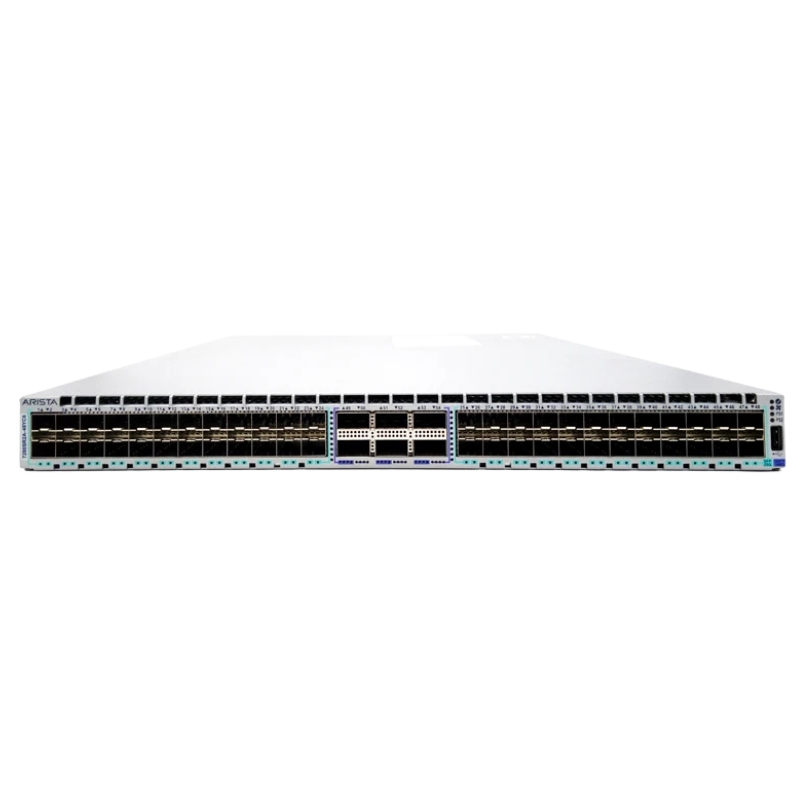
Arista DCS-7280SR3-48YC8-F 48x 25GB SFP28 8x 100GB QSFP28 F B Airflow Switch. Excellent Refurbished with 1 year Replacement Warranty
The Arista DCS-7280SR3-48YC8-F is a high-performance data center switch engineered for scalability, speed, and reliability. With advanced port configurations and robust architecture, it is designed to meet modern networking demands.
The Arista DCS-7280SR3-48YC8-F represents a high-performance, ultra-low latency data center switch designed for modern cloud, enterprise, and service provider environments. Built as part of the Arista 7280R3 Series from Arista Networks, this model delivers advanced routing capabilities, deep buffering architecture, and high-density 25GbE and 100GbE connectivity in a compact 1RU form factor. With 48 SFP28 ports supporting 10GbE and 25GbE speeds and 8 QSFP28 uplink ports capable of 40GbE and 100GbE, this switch is engineered to handle demanding east-west traffic patterns in high-density data centers.
The Arista DCS-7280SR3-48YC8-F is optimized for leaf-spine architectures, delivering 48x 25GbE SFP28 ports that enable high-speed server aggregation. Each SFP28 port supports backward compatibility with 10GbE, allowing seamless integration into existing infrastructures while enabling gradual network upgrades. The inclusion of 8x 100GbE QSFP28 uplink ports provides flexible high-bandwidth connectivity for spine switches, core aggregation layers, or high-performance interconnects.
This port configuration ensures scalable bandwidth capacity for environments transitioning from 10GbE to 25GbE server access. With support for breakout configurations, each 100GbE QSFP28 port can be divided into multiple lower-speed connections, enhancing deployment flexibility. This makes the DCS-7280SR3-48YC8-F particularly valuable in hyperscale data centers and high-performance enterprise environments where traffic volumes continue to increase year over year.
The F-B (front-to-back) airflow design of the Arista DCS-7280SR3-48YC8-F is tailored for data center rack deployments where hot aisle and cold aisle containment strategies are implemented. Front-to-back airflow ensures that cool air is drawn in from the cold aisle at the front of the rack and expelled as warm air through the rear, aligning with standard data center cooling methodologies.
Proper airflow alignment significantly enhances thermal efficiency and reduces the risk of overheating in high-density rack configurations. By selecting the F-B airflow variant, data center operators can ensure compatibility with structured cooling designs and maintain optimal operational stability under heavy workloads.
A defining characteristic of the Arista 7280R3 Series is its deep buffer architecture. The DCS-7280SR3-48YC8-F incorporates large packet buffers that are specifically engineered to manage bursty traffic patterns, microbursts, and high-traffic scenarios common in cloud-scale and financial trading networks.
Deep buffers reduce packet loss during congestion events and improve application performance for latency-sensitive workloads. Applications such as high-frequency trading, distributed storage systems, and virtualization platforms benefit significantly from enhanced congestion management capabilities.
The Arista DCS-7280SR3-48YC8-F supports comprehensive Layer 2 switching and advanced Layer 3 routing features. It enables dynamic routing protocols including OSPF, BGP, IS-IS, and multicast routing capabilities. The hardware is optimized for large routing tables and supports extensive IPv4 and IPv6 deployments.
With high route scale and support for EVPN-VXLAN overlays, this switch is ideally suited for modern software-defined networking (SDN) deployments. Enterprises and service providers can build highly scalable and resilient fabrics capable of supporting thousands of tenants, virtual networks, and endpoints.
EOS offers extensive programmability through open APIs, including RESTful interfaces, eAPI, and integration with automation frameworks such as Ansible, Puppet, and Chef. This enables seamless integration into DevOps workflows and supports infrastructure-as-code strategies.
Network automation is critical for large-scale environments where manual configuration increases the risk of errors. By utilizing EOS automation capabilities, organizations can deploy consistent configurations across hundreds or thousands of devices while minimizing downtime and configuration drift.
Arista EOS employs a state-sharing architecture that isolates software processes and ensures rapid recovery in the event of failures. This modular design enhances network uptime and provides operational continuity. Combined with redundant power supplies and hot-swappable fan modules, the DCS-7280SR3-48YC8-F is engineered for mission-critical deployments.
For enterprise environments, this switch can serve as a core or aggregation layer device, delivering high-performance routing, segmentation, and policy enforcement. Its deep buffers and large routing scale make it suitable for campuses, branch aggregation, and private cloud infrastructures.
Financial institutions demand deterministic latency and minimal packet loss. The DCS-7280SR3-48YC8-F’s low-latency architecture and deep buffering ensure consistent performance under intense traffic bursts. Combined with EOS programmability, it supports advanced telemetry and real-time monitoring essential for financial networks.
The Arista DCS-7280SR3-48YC8-F provides substantial switching capacity, supporting line-rate forwarding across all ports. With non-blocking architecture, it ensures that all 48 SFP28 ports and 8 QSFP28 uplinks can operate simultaneously at full speed without oversubscription.
This level of performance guarantees optimal application responsiveness and ensures compatibility with high-performance computing clusters, large-scale storage networks, and cloud-native workloads.
Ultra-low latency performance is a hallmark of the 7280R3 series. The switch is engineered to deliver predictable latency across both Layer 2 and Layer 3 forwarding scenarios. Low latency is critical in environments such as distributed databases and financial exchanges, where microseconds can significantly impact outcomes.


 Contact Us
 Information
 Catalog
 Solid State Drives (SSD)
 Network Switches
 Hard Disk Drives
 HBA & Controllers
 PC & Servers
 PC & Server Memory
 CPU & Processors
 Network Routers
 Power Supplies
 Tape Drives & Libraries
 Network Devices
 Computer & Network Cables