(7% discount is applied at checkout)
Cart is empty
Your go-to destination for cutting-edge server products
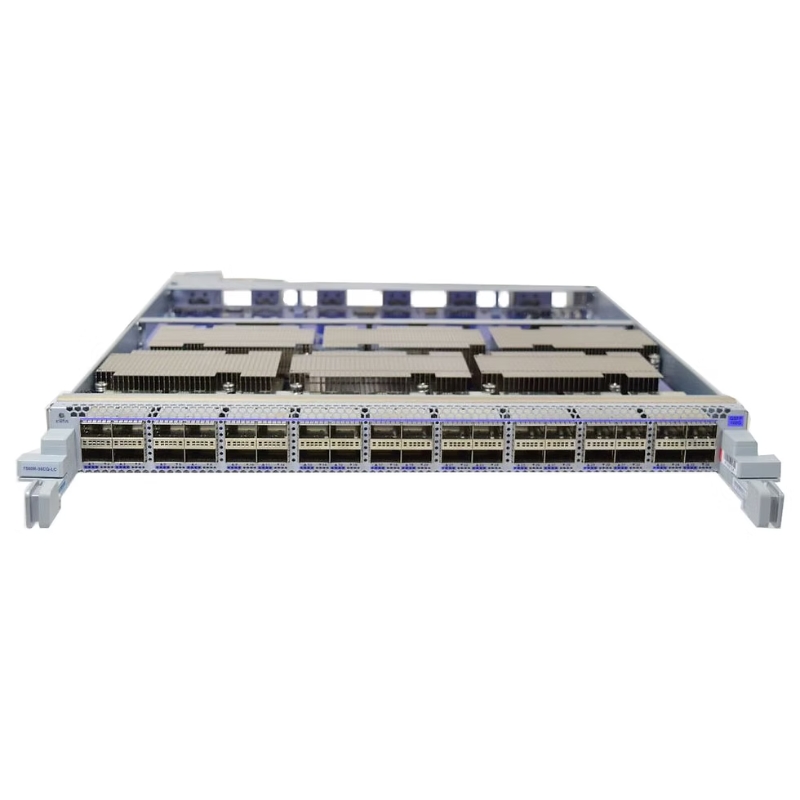


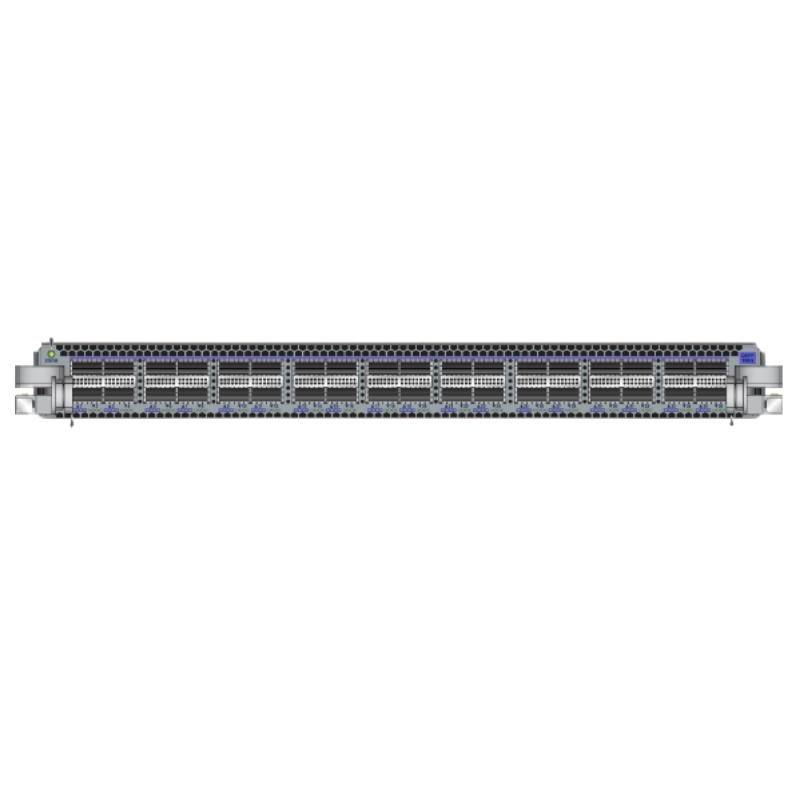
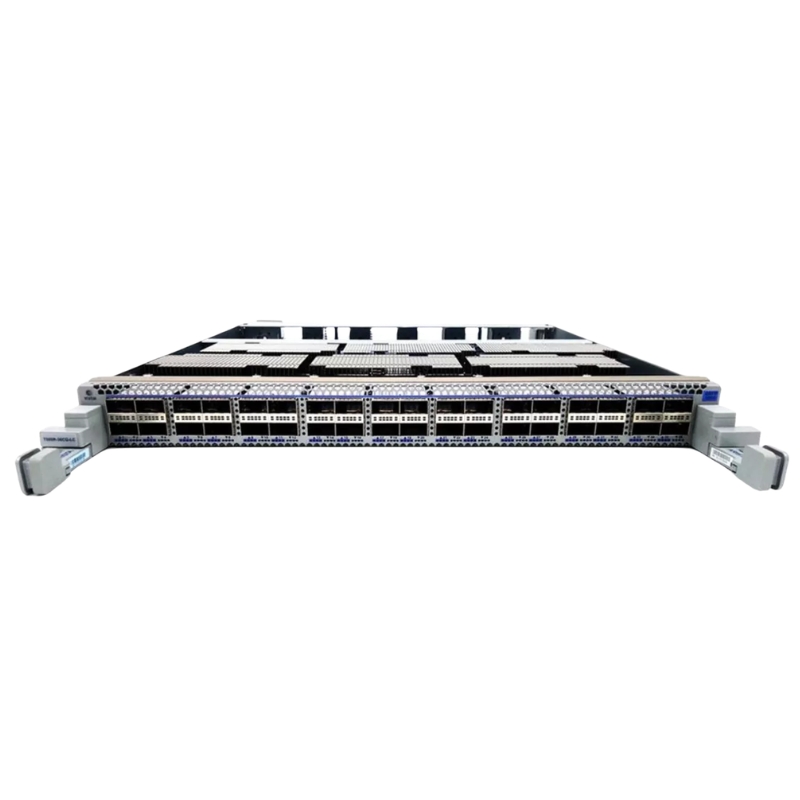
Arista DCS-7500R3-36CQ-LC 7500R3 Series 36-Port 100GBE QSFP 100 1RU Line Card. Excellent Refurbished with 1-Year Replacement Warranty
The Arista DCS-7500R3-36CQ-LC is a high-performance line card from the 7500R3 Series, designed with 36 ports of 100GbE QSFP100 in a compact 1RU form factor. It delivers exceptional throughput, advanced packet forwarding, and robust memory management, making it ideal for large-scale data centers and enterprise networking environments.
The Arista DCS-7500R3-36CQ-LC 7500R3 Series 36-Port 100GbE QSFP 1RU Line Card Module represents a purpose-built high-performance networking component engineered to extend the scalability and forwarding intelligence of modular spine and core switching platforms. Designed specifically for deployment within the 7500R3 universal spine architecture, this line card delivers ultra-dense 100 Gigabit Ethernet connectivity optimized for hyperscale data centers, carrier-grade routing environments, large enterprise cores, and cloud interconnection infrastructures where deterministic latency and predictable throughput remain critical. The evolution of data center traffic patterns toward east-west communication has demanded switching modules capable of handling massive parallel flows without congestion or packet loss. The 36-port QSFP100 configuration enables network architects to aggregate enormous traffic volumes while maintaining operational efficiency within a compact 1RU line card footprint.
Within the 7500R3 chassis ecosystem, line cards function as scalable forwarding engines interconnected through a high-capacity switching fabric. The DCS-7500R3-36CQ-LC module integrates seamlessly into this architecture, contributing both forwarding bandwidth and routing intelligence to the distributed system. Each installed module expands total chassis throughput, enabling incremental infrastructure growth without service disruption.
The internal switching fabric of the 7500R3 platform ensures non-blocking performance between line cards. The 36CQ-LC module communicates through a high-bandwidth fabric interface that maintains deterministic packet delivery regardless of load conditions. This architecture minimizes oversubscription and ensures predictable forwarding behavior across Layer 2 and Layer 3 workloads. By leveraging advanced packet scheduling and intelligent load balancing across fabric paths, the line card preserves performance consistency even during traffic bursts common in distributed storage replication, real-time analytics, or virtualization migrations.
Each QSFP100 interface supports flexible breakout configurations, allowing operators to subdivide ports into multiple lower-speed interfaces such as 4x25GbE or 2x50GbE deployments. This adaptability enables gradual migration from legacy speeds toward 100GbE infrastructures without requiring complete hardware replacement cycles.
One of the defining characteristics of the 7500R3 routing platform lies in its deep buffering capability, and the DCS-7500R3-36CQ-LC line card extends this advantage directly to network edge aggregation and core routing layers. Deep packet buffers play an essential role in mitigating congestion caused by microbursts, uneven traffic distribution, or sudden workload spikes. High-performance computing clusters, distributed databases, and financial transaction systems frequently generate bursty traffic patterns that overwhelm shallow-buffer switching designs. The deep-buffer architecture incorporated within this line card absorbs transient congestion while maintaining packet integrity, preventing retransmissions and preserving application responsiveness.
Modern digital infrastructure requires massive routing table scalability combined with high-speed packet processing. The DCS-7500R3-36CQ-LC line card contributes extensive routing scale to the chassis by supporting large forwarding tables capable of accommodating millions of routes across IPv4 and IPv6 environments. Internet exchange points, telecom backbone providers, and hyperscale cloud operators benefit from the ability to manage extensive route advertisements while maintaining wire-speed forwarding across all interfaces. The architecture ensures that growth in routing complexity does not introduce performance penalties.
The line card enables unified Layer 2 switching and Layer 3 routing within a single hardware framework, supporting modern network overlays and underlays simultaneously. VXLAN-based segmentation allows scalable tenant isolation across distributed environments while maintaining efficient hardware-based forwarding.
EVPN control-plane integration allows seamless workload mobility between geographically distributed data centers. Enterprises deploying hybrid cloud strategies rely on these capabilities to extend networks securely while preserving consistent addressing and policy enforcement across locations.
EOS delivers a fully programmable Linux-based networking environment that separates control-plane processes into independent stateful agents. This modular operating structure improves resilience while enabling live upgrades without traffic interruption.
Integration with enhances centralized visibility and orchestration across distributed switching fabrics. CloudVision provides telemetry-driven analytics capable of identifying anomalies, performance degradation, or configuration inconsistencies in real time.
Continuous telemetry streaming eliminates reliance on legacy polling methods by delivering granular operational metrics directly to analytics platforms. This allows predictive troubleshooting, automated remediation workflows, and advanced performance optimization across entire data center fabrics.
Despite delivering extremely high forwarding capacity, the 1RU line card maintains efficient power consumption through optimized ASIC design and airflow engineering. The DCS-7500R3-36CQ-LC module aligns airflow direction with chassis cooling systems, ensuring uniform temperature distribution and preventing localized hotspots that may reduce hardware lifespan. Intelligent monitoring continuously tracks environmental conditions, allowing proactive adjustments to cooling policies.
Large enterprise campuses increasingly adopt data center-class switching platforms within core environments. The DCS-7500R3-36CQ-LC module delivers sufficient bandwidth to consolidate aggregation and core layers into simplified architectures that reduce latency while improving manageability. High-speed connectivity enables seamless integration between private clouds, storage networks, and enterprise applications requiring real-time responsiveness across distributed organizational infrastructures.
Hybrid deployments combining on-premises data centers and public cloud resources depend on consistent networking performance. The line card enables secure, high-capacity interconnection that supports workload portability without compromising throughput or reliability.


 Contact Us
 Information
 Catalog
 Solid State Drives (SSD)
 Network Switches
 Hard Disk Drives
 HBA & Controllers
 PC & Servers
 PC & Server Memory
 CPU & Processors
 Network Routers
 Power Supplies
 Tape Drives & Libraries
 Network Devices
 Computer & Network Cables