(7% discount is applied at checkout)
Cart is empty
Your go-to destination for cutting-edge server products
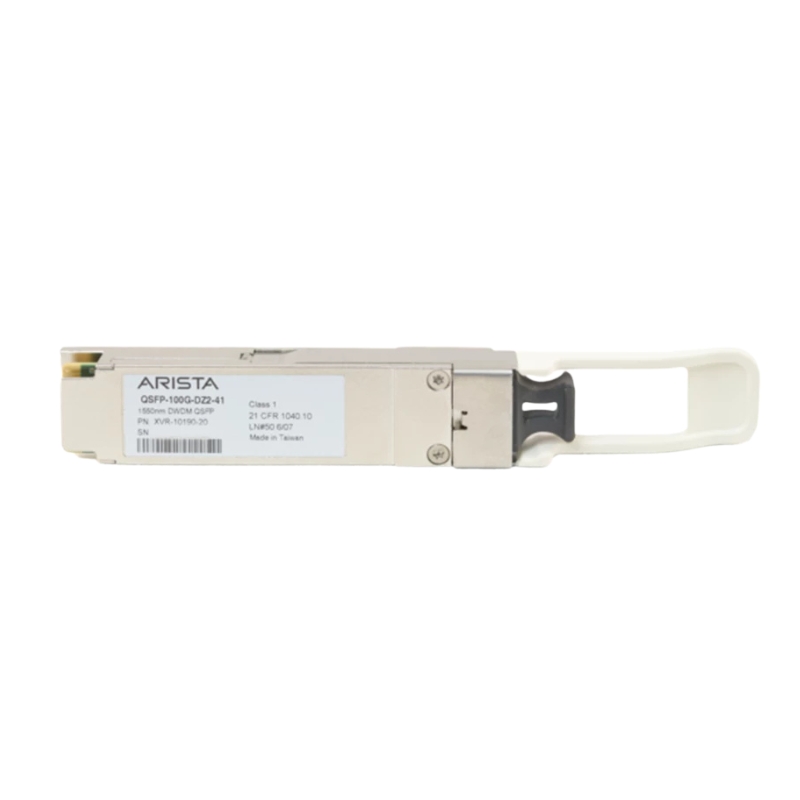


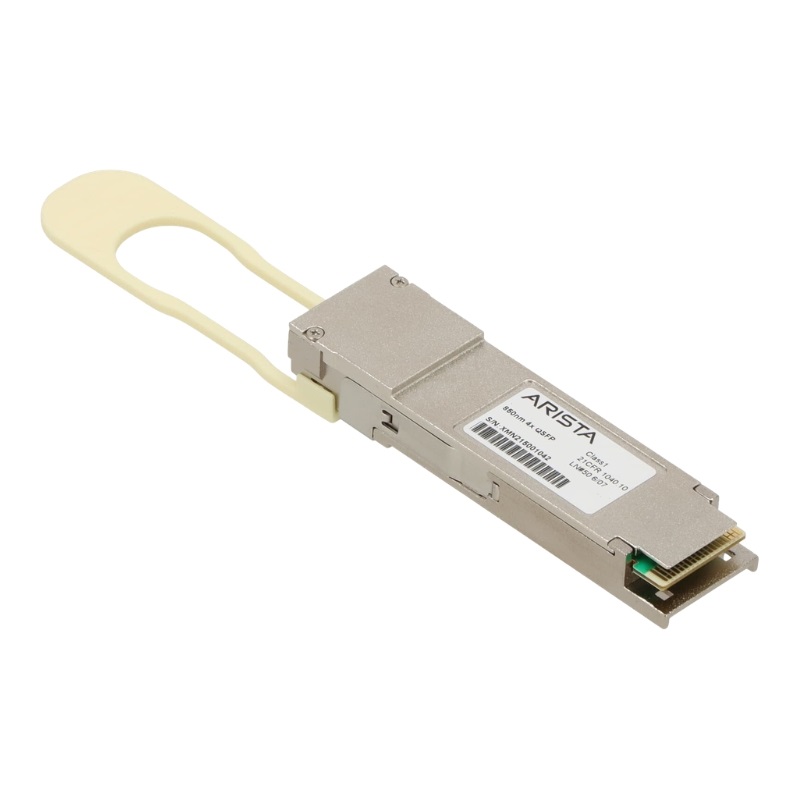
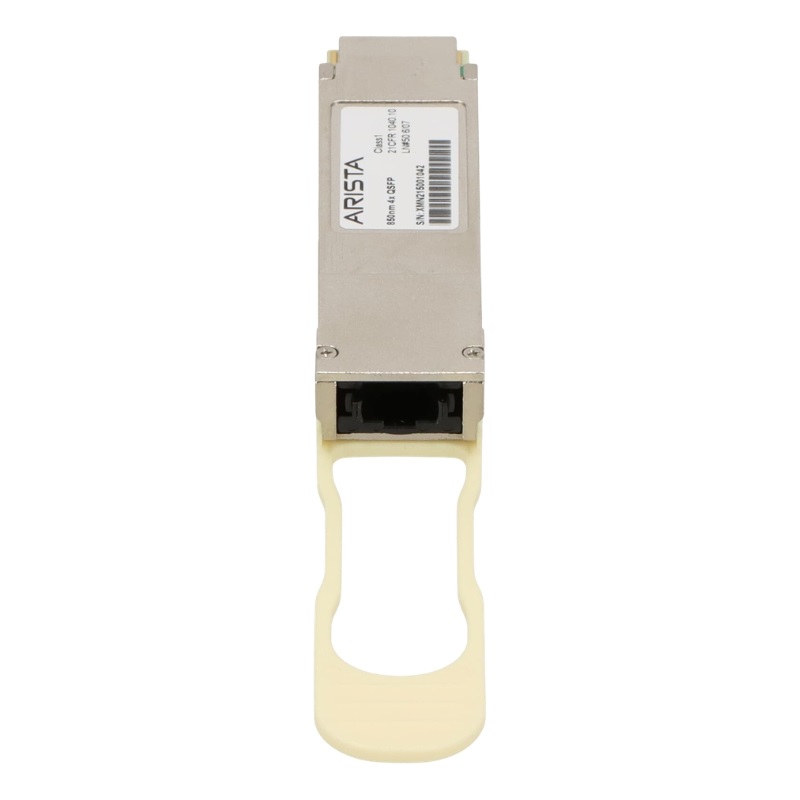
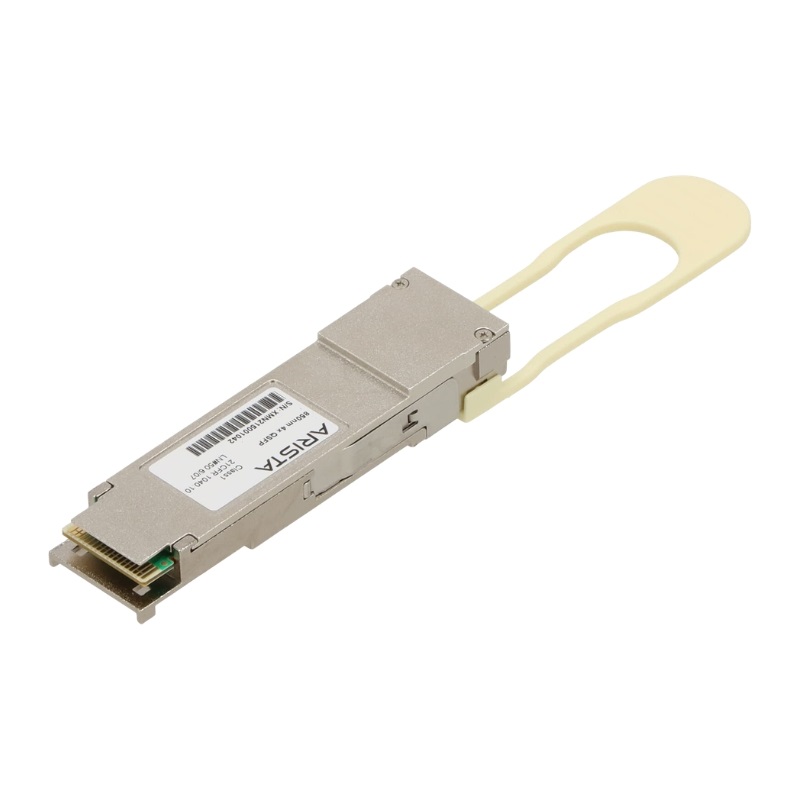
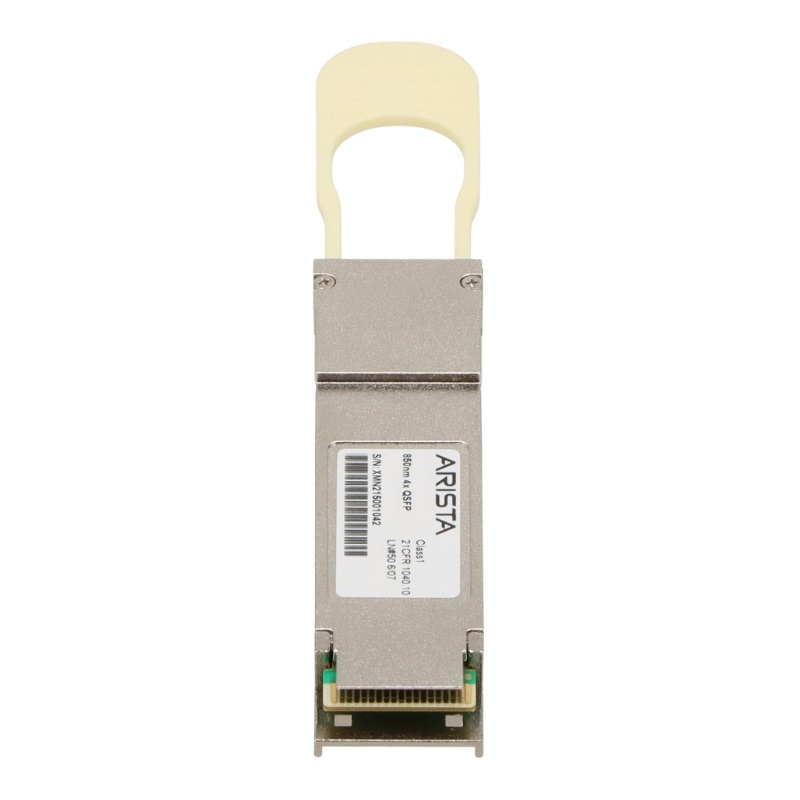
Arista QSFP-100G-DZ2-41 QSFP 100G DWDM XCVR Transceiver. Excellent Refurbished with 1 year Replacement Warranty
The Arista QSFP-100G-DZ2-41 is a high-performance DWDM transceiver designed for reliable data transmission across long distances. This optical module ensures seamless connectivity for modern networking infrastructures.
The Arista QSFP-100G-DZ2-41 QSFP 100G DWDM XCVR Transceiver represents a high-performance optical module engineered to deliver reliable, high-density 100 Gigabit Ethernet connectivity across dense wavelength-division multiplexing infrastructures. Designed for compatibility with enterprise, hyperscale, data center interconnect, and service provider environments, this advanced QSFP transceiver supports long-haul and metro optical networking applications requiring superior signal integrity, spectral efficiency, and operational reliability. Developed to integrate seamlessly within switching platforms manufactured by :contentReference[oaicite:0]{index=0}, this transceiver is optimized for performance, interoperability, and predictable deployment across complex optical transport architectures.
Operating within the DWDM spectrum, the QSFP-100G-DZ2-41 module enables high-capacity transmission across standardized wavelength grids, allowing multiple 100G signals to coexist on a single fiber pair. The transceiver’s engineering emphasizes consistent optical output, low bit error rates, and advanced digital diagnostics monitoring to support mission-critical network infrastructures. As organizations expand bandwidth demands driven by cloud computing, big data analytics, artificial intelligence workloads, and distributed enterprise operations, the Arista QSFP-100G-DZ2-41 offers a scalable solution capable of meeting evolving performance requirements without sacrificing network stability or efficiency.
Dense wavelength-division multiplexing technology allows multiple optical carrier signals to be transmitted simultaneously over a single fiber by utilizing different wavelengths of laser light. The Arista QSFP-100G-DZ2-41 operates on a precise ITU-T grid channel, enabling coexistence with other DWDM wavelengths without interference. This spectral efficiency dramatically increases fiber utilization, allowing network operators to maximize infrastructure investments while scaling throughput capacity.
DWDM technology is critical in modern backbone, metro, and data center interconnect networks where fiber resources are limited and high bandwidth is mandatory. The QSFP-100G-DZ2-41 transceiver provides stable wavelength accuracy and tight channel spacing compliance, ensuring predictable optical performance across long distances and dense channel environments. Its ability to maintain signal fidelity over extended fiber spans makes it suitable for high-demand carrier-grade deployments.
The 100G throughput delivered by the QSFP-100G-DZ2-41 supports data-intensive applications such as high-performance computing clusters, cloud service infrastructures, disaster recovery replication, and real-time analytics. The module leverages advanced modulation techniques and forward error correction support to optimize signal transmission across extended distances. These technologies reduce signal degradation while maintaining consistent packet delivery and low latency, which is essential for latency-sensitive applications.
By enabling reliable 100G transport across DWDM systems, the transceiver eliminates bottlenecks that can arise from legacy 10G or 40G infrastructures. Network architects can design scalable backbones with confidence, knowing that the module is engineered for high optical output precision and consistent digital signal processing alignment.
The QSFP (Quad Small Form-Factor Pluggable) design provides compact, hot-swappable functionality suitable for high-density switch platforms. The Arista QSFP-100G-DZ2-41 integrates seamlessly into QSFP ports, allowing rapid deployment, easy replacement, and simplified network upgrades. The compact footprint enables higher port density within switches and routers, supporting scalable data center and service provider architectures.
Hot-swappability ensures minimal downtime during maintenance or upgrades. Network engineers can replace or upgrade modules without powering down equipment, preserving operational continuity in environments where uptime is critical. This mechanical design contributes significantly to operational flexibility and long-term cost efficiency.
High-speed optical modules must maintain strict thermal stability to ensure consistent performance. The QSFP-100G-DZ2-41 incorporates advanced thermal management components that regulate temperature under heavy workloads. Efficient power consumption contributes to lower overall energy costs and reduced heat generation within switch chassis environments.
In high-density racks and hyperscale data centers, thermal efficiency becomes increasingly important. By maintaining stable operating temperatures, the module minimizes the risk of performance degradation and extends the lifecycle of both the transceiver and associated network hardware.
The DZ2-41 designation indicates operation on a specific ITU-defined DWDM channel within the C-band frequency spectrum. Strict adherence to wavelength tolerances ensures compatibility with multiplexers, demultiplexers, optical add-drop multiplexers, and reconfigurable optical add-drop multiplexer systems deployed across carrier and enterprise networks. Precise channel alignment prevents cross-channel interference and maintains clean optical separation across densely packed wavelengths.
This compliance supports flexible network expansion. Organizations can incrementally add wavelengths without redesigning existing fiber infrastructure. The result is a highly modular, scalable network transport layer capable of evolving alongside bandwidth requirements.
The Arista QSFP-100G-DZ2-41 is engineered for long-distance transmission, typically supporting metro and regional spans depending on network design and amplification strategies. When deployed within amplified DWDM systems incorporating erbium-doped fiber amplifiers and dispersion compensation technologies, the module can sustain reliable connectivity over significant distances.
Long-haul performance depends on link budget planning, fiber quality, splice integrity, and optical amplification configuration. The transceiver’s high optical output power and receiver sensitivity contribute to a robust link budget, enabling flexible deployment across various topologies including ring, mesh, and point-to-point architectures.
Integrated diagnostics facilitate rapid fault isolation. In complex optical networks with multiple wavelengths and amplification stages, pinpointing the source of degradation can be challenging. The module’s monitoring capabilities provide granular data that supports efficient troubleshooting and targeted corrective action.
Preventative maintenance becomes more precise and data-driven. Rather than relying solely on scheduled inspections, network operators can use performance metrics to determine when intervention is necessary, optimizing resource allocation and improving overall network reliability.
The Arista QSFP-100G-DZ2-41 is designed for seamless integration into compatible 100G QSFP ports on switching and routing platforms. Firmware recognition ensures that the module operates according to specified parameters, maintaining consistent optical performance and management visibility. This tight integration reduces configuration complexity and ensures predictable behavior across production environments.
Interoperability within standardized DWDM systems enables compatibility with third-party passive optical components such as mux/demux units, amplifiers, and patch panels. This flexibility allows network designers to construct vendor-agnostic optical layers while maintaining consistent transceiver performance.
Maintaining signal integrity over extended distances requires advanced encoding and error correction mechanisms. The QSFP-100G-DZ2-41 supports high-performance modulation schemes combined with forward error correction to mitigate optical impairments. These features enhance tolerance to dispersion, attenuation, and noise, ensuring consistent throughput even in challenging transmission conditions.
Error correction reduces retransmissions and maintains predictable latency profiles. In environments where real-time data processing and high-frequency transactions are critical, minimizing packet loss and jitter is essential for maintaining service quality.
As enterprises expand digital services and service providers increase customer bandwidth allocations, scalability becomes paramount. The QSFP-100G-DZ2-41 allows incremental capacity expansion by adding additional wavelengths to existing fiber infrastructure. This modular growth strategy reduces capital expenditures and avoids disruptive overhauls.
High-density 100G ports enable aggregation of multiple lower-speed connections into consolidated high-speed uplinks. The result is simplified network design, reduced cable complexity, and improved manageability across core and aggregation layers.
Telecommunications providers rely on DWDM technology to deliver broadband, mobile backhaul, and enterprise connectivity services. The QSFP-100G-DZ2-41 enables cost-effective expansion of metro transport capacity without additional fiber deployment. By leveraging wavelength multiplexing, carriers can accommodate rapid traffic growth driven by streaming media, 5G networks, and cloud services.
Carrier-grade reliability, precise wavelength control, and robust diagnostics align with stringent service-level agreements. The module’s performance characteristics support both wholesale bandwidth offerings and retail connectivity services.
Hyperscale data centers demand extreme bandwidth and low-latency interconnections across vast geographic regions. The QSFP-100G-DZ2-41 provides the optical foundation for interconnecting distributed compute clusters, storage arrays, and edge facilities. Its DWDM support allows cloud operators to scale capacity rapidly while optimizing fiber utilization.
By supporting predictable latency and stable throughput, the transceiver contributes to consistent user experiences across globally distributed cloud platforms. The efficiency of wavelength multiplexing reduces infrastructure complexity and simplifies network planning.
Successful deployment of the QSFP-100G-DZ2-41 requires careful link budget analysis. Engineers must account for fiber attenuation, connector losses, splice losses, and amplifier gain. Proper planning ensures that received optical power remains within acceptable operating thresholds, preventing signal degradation and minimizing error rates.
Routine fiber inspection and cleaning further preserve signal integrity. Maintaining clean connectors and high-quality patch cables is essential in DWDM environments where tight channel spacing demands precise optical performance.
In extended reach deployments, optical amplifiers and dispersion management modules enhance transmission distance and signal clarity. The QSFP-100G-DZ2-41 operates effectively within amplified DWDM systems, supporting integration with reconfigurable optical add-drop multiplexers for dynamic wavelength provisioning.
Such flexibility enables agile service activation and efficient network reconfiguration. Operators can adjust wavelength assignments and routing paths without physical rewiring, improving responsiveness to changing traffic patterns.
While 100G remains a widely deployed backbone speed, many networks are transitioning toward 200G and 400G architectures. The QSFP-100G-DZ2-41 provides a stable foundation for gradual upgrades, allowing coexistence with higher-speed wavelengths within the same DWDM infrastructure. This coexistence strategy ensures smooth migration without disrupting existing services.
Investment in high-quality 100G DWDM modules supports long-term strategic planning. Organizations can incrementally expand bandwidth while maintaining compatibility with future optical technologies and evolving standards.


 Contact Us
 Information
 Catalog
 Solid State Drives (SSD)
 Network Switches
 Hard Disk Drives
 HBA & Controllers
 PC & Servers
 PC & Server Memory
 CPU & Processors
 Network Routers
 Power Supplies
 Tape Drives & Libraries
 Network Devices
 Computer & Network Cables