(7% discount is applied at checkout)
Cart is empty
Your go-to destination for cutting-edge server products
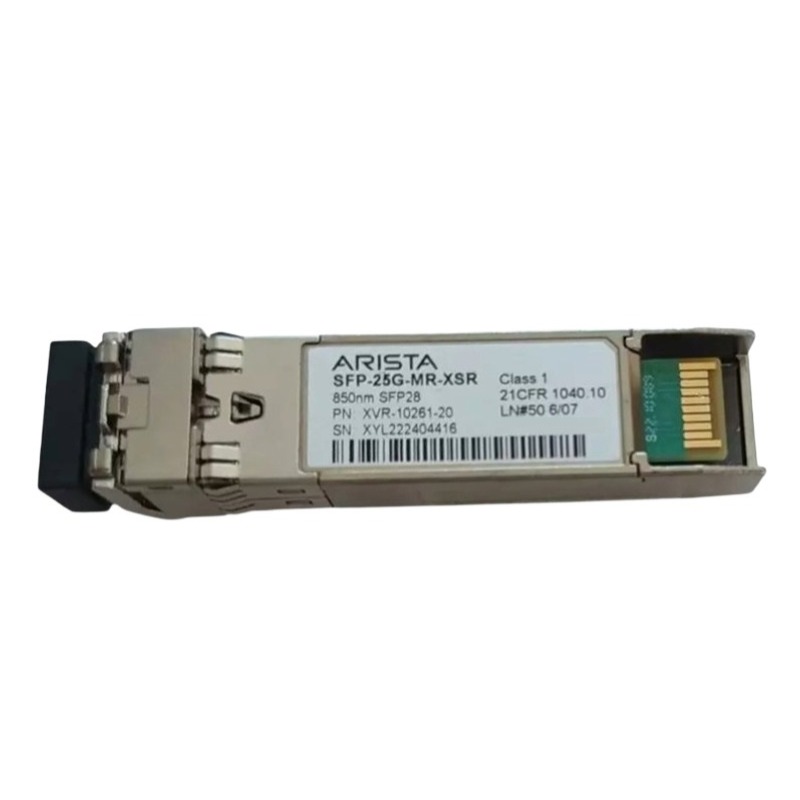


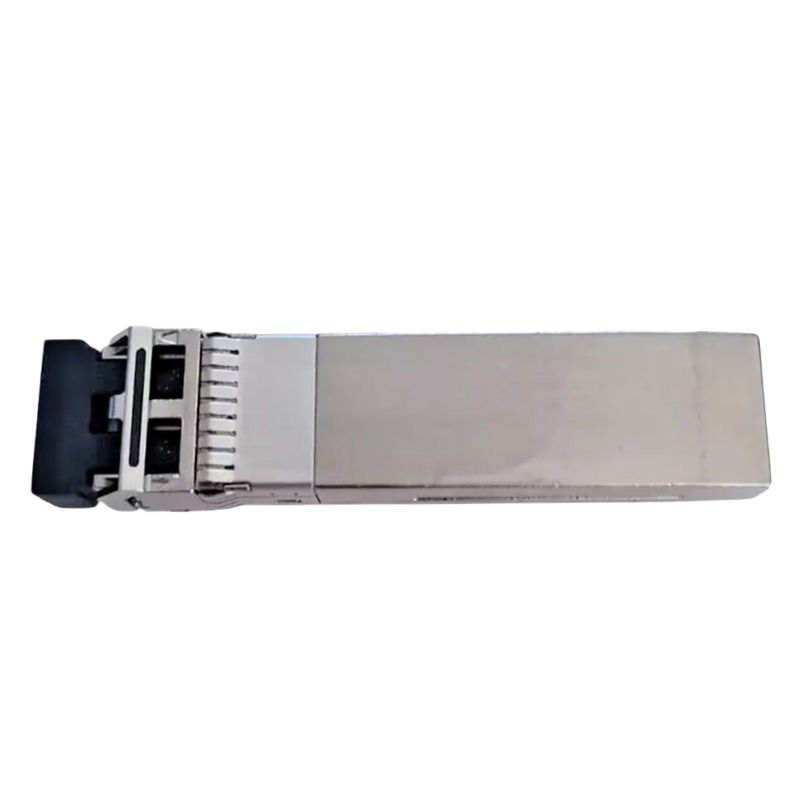
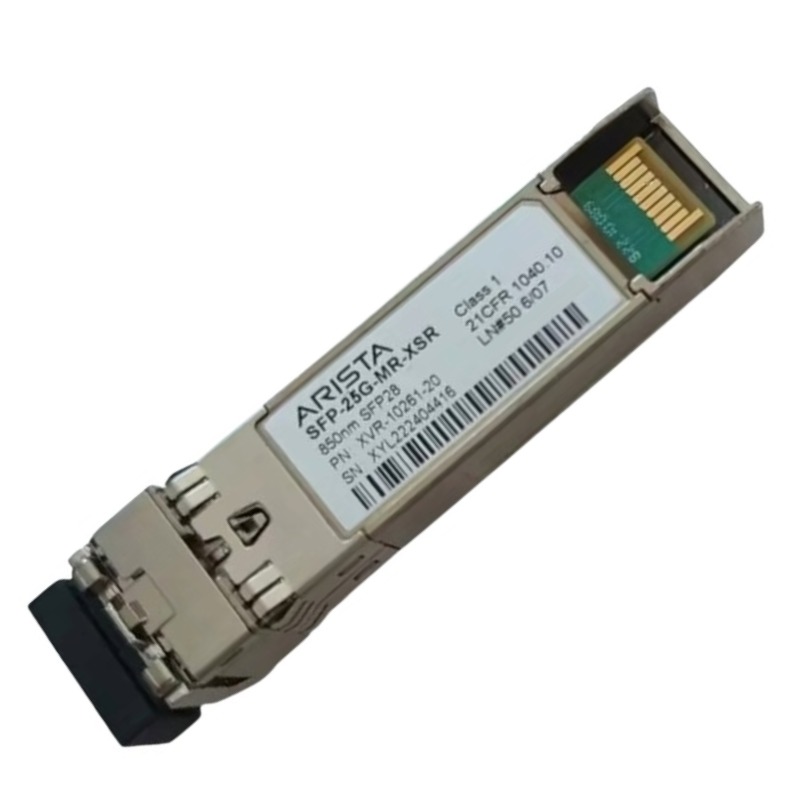
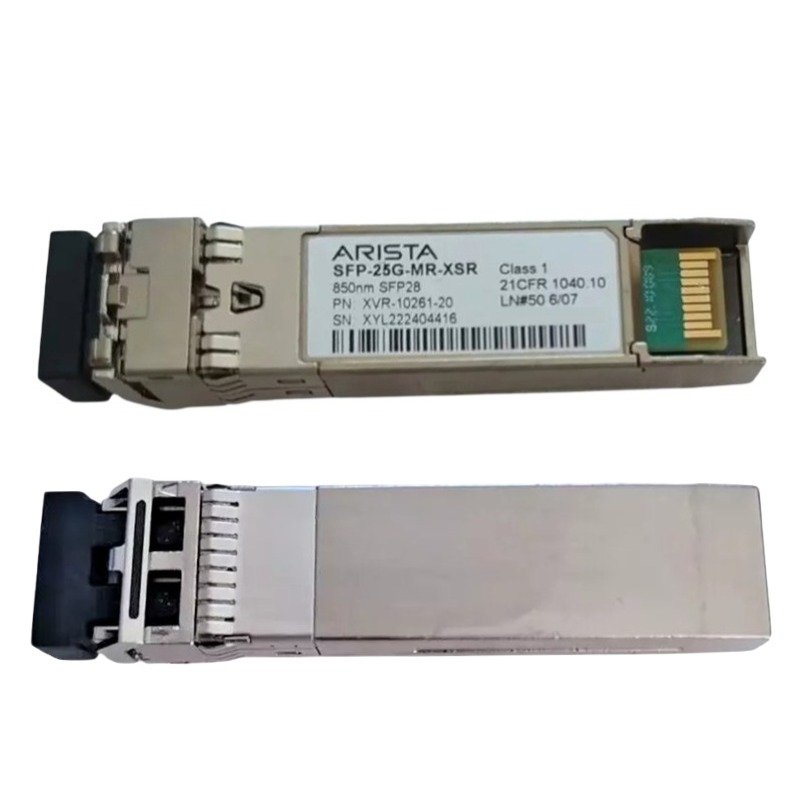
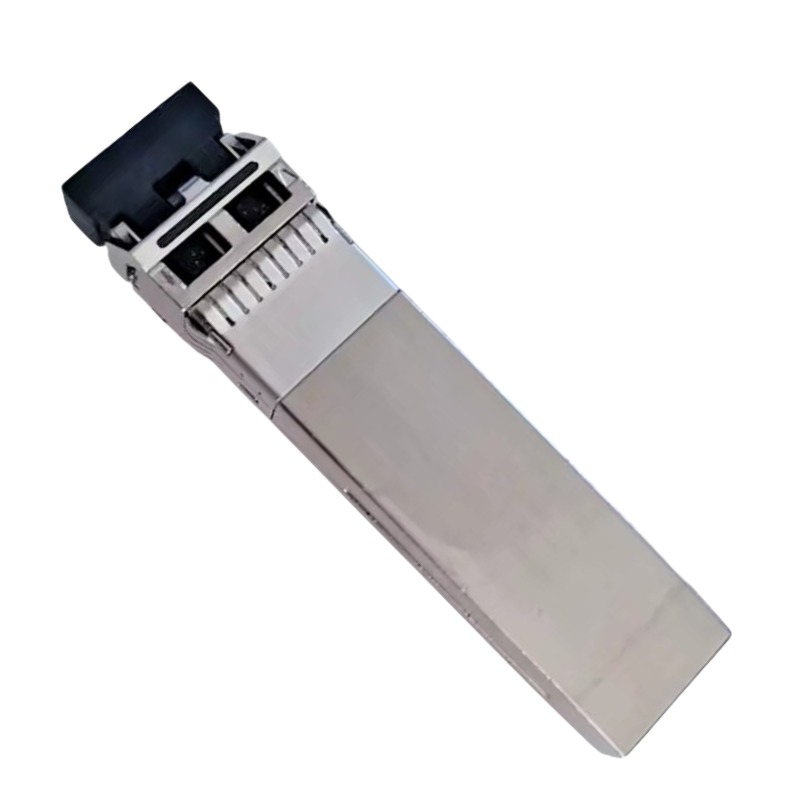
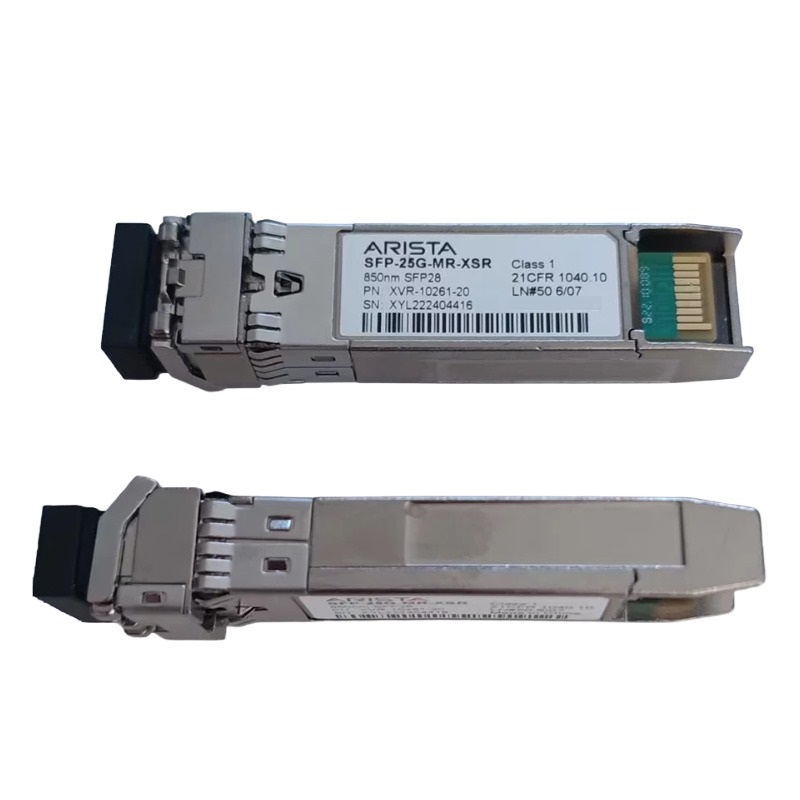
Arista XVR-10261-20 Dual Rate 10/25GBASE-MR-XSR SFP Optical Transceiver Module. Excellent Refurbished with 1 Year Replacement Warranty
The Arista XVR-10261-20 Dual Rate 10/25GBASE-MR-XSR SFP Optical Transceiver Module is a high-performance networking component designed for modern data center and enterprise fiber connectivity. It delivers flexible dual-rate operation, supporting both 10GbE and 25GbE environments with reliable short-range optical transmission.
Supports dual-rate operation, making it suitable for both legacy and next-generation Ethernet infrastructure.
The Arista XVR-10261-20 Dual Rate 10/25GBASE-MR-XSR SFP Optical Transceiver Module represents a high-performance optical networking component designed for modern data center and enterprise-grade switching environments. Built to support both 10 Gigabit Ethernet and 25 Gigabit Ethernet operation modes, this module provides flexible bandwidth scaling for organizations that require efficient, high-density optical interconnects without replacing entire fiber infrastructures. The architecture of this transceiver is optimized for low latency, high signal integrity, and seamless interoperability within Arista-based networking ecosystems as well as compatible third-party systems that adhere to standardized SFP optical specifications.
As data traffic continues to grow exponentially across cloud computing platforms, virtualization clusters, and hyperscale environments, optical transceivers such as the XVR-10261-20 play a critical role in ensuring that backbone connectivity remains stable and scalable. This module belongs to a category of advanced SFP-based optical solutions that bridge the gap between legacy 10G networks and newer 25G architectures, allowing gradual network evolution rather than disruptive infrastructure overhauls.
The SFP (Small Form-factor Pluggable) architecture used in the Arista XVR-10261-20 module is engineered to deliver high-density port deployment while maintaining a compact physical footprint. This compact design enables network operators to maximize switch port utilization in constrained rack environments. The dual-rate capability enhances operational flexibility, allowing a single optical module type to support multiple network speeds, which reduces inventory complexity and operational overhead.
The module integrates precision optical components within a tightly controlled enclosure designed to minimize signal loss and electromagnetic interference. This design ensures that both short-range and medium-reach optical transmissions maintain consistent performance characteristics even in high-density switching environments where thermal and electrical interference may be present.
One of the defining characteristics of the XVR-10261-20 is its dual-rate functionality, supporting both 10 Gigabit Ethernet (10GBASE) and 25 Gigabit Ethernet (25GBASE) transmission modes. This capability allows seamless integration into mixed-generation network infrastructures where legacy systems coexist with modern high-speed deployments. The module dynamically adjusts modulation and signaling parameters to match the required operational speed without requiring hardware replacement.
This dual-rate support significantly enhances network migration strategies by enabling incremental upgrades. Instead of replacing entire switch fabrics or fiber cabling systems, network administrators can deploy these modules selectively, ensuring compatibility across different network tiers while gradually increasing throughput capacity.
The modulation techniques used in the XVR-10261-20 module are optimized for high-speed optical communication. At 25G operation, the module utilizes advanced signaling techniques designed to maintain low bit error rates while maximizing data throughput across multimode or single-mode fiber depending on configuration. At 10G operation, it maintains backward compatibility with established Ethernet standards while preserving optical clarity and minimizing jitter.
Signal integrity is maintained through precise laser calibration and photodetector sensitivity tuning. These components are engineered to ensure consistent performance even under varying environmental conditions such as temperature fluctuations or mechanical vibration within data center racks.
The optical transmission system within the XVR-10261-20 module is designed to operate at carefully selected wavelengths that optimize fiber performance and reduce attenuation. This allows stable data transmission over specified distances without requiring signal regeneration in typical deployment scenarios. The optical engine is tuned for consistent output power levels, ensuring minimal degradation across supported link distances.
The stability of optical wavelength output is critical in dense wavelength environments, where multiple channels may coexist within shared fiber infrastructures. The module's internal stabilization mechanisms help maintain signal integrity even when deployed alongside other high-speed optical transceivers.
At the core of the XVR-10261-20 module lies a sophisticated electrical-to-optical conversion system. Incoming electrical signals from the switch ASIC are processed through high-speed serialization and deserialization circuits that prepare data streams for optical transmission. These circuits ensure that data integrity is preserved during conversion, minimizing latency and preventing signal distortion.
The module’s internal circuitry is optimized for low power consumption while maintaining high throughput efficiency. This balance is essential for large-scale data centers where hundreds or thousands of transceiver modules may operate simultaneously, contributing significantly to overall energy consumption profiles.
On the receiving side, the XVR-10261-20 module is equipped with high-sensitivity photodetectors capable of accurately interpreting incoming optical signals even in low-power scenarios. The signal recovery process includes amplification, filtering, and clock data recovery mechanisms that reconstruct clean digital signals for transmission back to the host system.
This high level of receiver sensitivity ensures stable communication links across supported distances while minimizing packet loss and retransmission overhead. The design is particularly beneficial in environments where fiber quality or connector conditions may vary over time.
The Arista XVR-10261-20 module is engineered to deliver extremely low latency performance, making it suitable for high-frequency trading networks, cloud computing backbones, and latency-sensitive virtualization environments. The internal signal processing pipeline is streamlined to reduce unnecessary buffering and minimize transmission delay between electrical and optical domains.
Throughput efficiency is enhanced by optimizing serialization ratios and ensuring that encoding overhead remains minimal. This results in near-line-rate performance across both supported speeds, enabling consistent network utilization even under peak traffic conditions.
Bit error rate performance is a critical metric for optical transceivers, and the XVR-10261-20 is designed with advanced error correction and detection capabilities. These mechanisms ensure that corrupted data packets are identified and corrected where possible, maintaining reliable communication across the network fabric.
Signal integrity is further reinforced through adaptive equalization techniques that compensate for signal degradation caused by fiber attenuation or connector imperfections. This ensures stable performance even in long-term deployments where environmental conditions may fluctuate.
In hyperscale cloud environments, the XVR-10261-20 module is frequently deployed to support east-west traffic between server clusters. Its dual-rate capability allows cloud operators to dynamically allocate bandwidth resources based on workload demand, improving overall infrastructure efficiency.
The scalability of this module makes it particularly valuable in environments where rapid expansion is required. As compute nodes increase, optical interconnects must scale accordingly, and the ability to deploy both 10G and 25G connections using a single module type simplifies this process significantly.
Within enterprise networks, this optical transceiver is often used in core switching and aggregation layers where high-speed data transfer is essential. Its compatibility with Arista switching platforms ensures seamless integration into existing network topologies, reducing deployment complexity and minimizing configuration overhead.
The module’s reliability also makes it suitable for mission-critical applications where downtime is not acceptable. Financial institutions, research laboratories, and large-scale corporate environments benefit from its stable and predictable performance characteristics.
Energy efficiency is a major design consideration in the XVR-10261-20 module. The optical transceiver is engineered to operate with minimal power draw while still maintaining high-speed performance. This reduces operational costs and contributes to improved thermal profiles within densely populated switch chassis.
Efficient power regulation circuits ensure that energy usage remains consistent across varying workloads. This stability helps network operators predict power requirements more accurately and optimize cooling infrastructure accordingly.
The module is designed with thermal dissipation mechanisms that allow it to function reliably in high-temperature environments commonly found in data centers. Heat generated during operation is efficiently distributed across the module housing to prevent localized hotspots that could degrade performance.
Environmental stability is further enhanced through robust component selection that ensures long-term reliability under continuous operation. This makes the module suitable for 24/7 mission-critical deployments where thermal stress is a constant consideration.
The XVR-10261-20 module is designed to work within structured fiber optic infrastructures, supporting both single-mode and multi-mode fiber configurations depending on deployment requirements. This adaptability allows network designers to integrate the module into diverse optical environments without extensive redesign of existing cabling systems.
Fiber compatibility plays a key role in determining deployment flexibility. By supporting standardized fiber types, the module ensures that organizations can extend or upgrade their networks without significant infrastructure replacement costs.
The module adheres to standardized optical connector interfaces that ensure interoperability with a wide range of networking equipment. This standardization simplifies installation procedures and reduces the likelihood of compatibility issues during deployment.
Physical layer consistency ensures that signal transmission remains stable across different hardware vendors and system architectures, provided that optical specifications are aligned.
Reliability is a cornerstone of the XVR-10261-20 design philosophy. The module is tested under rigorous conditions to ensure stable performance over extended operational lifecycles. This includes stress testing under varying temperatures, humidity levels, and electrical load conditions.
Long-term stability reduces maintenance requirements and minimizes network downtime, which is essential for enterprise and cloud environments where continuous availability is required.
Each optical component within the module is selected based on strict quality standards to ensure durability and consistent performance. Manufacturing processes include precision calibration and alignment procedures that guarantee optical accuracy and signal reliability.
Quality assurance testing ensures that each module meets performance benchmarks before deployment, reducing the likelihood of field failures and enhancing overall network reliability.
The dual-rate functionality of the XVR-10261-20 module provides a clear migration path for organizations transitioning from 10G to 25G network architectures. This gradual transition approach allows infrastructure upgrades without requiring full system replacements, thereby reducing capital expenditure and operational disruption.
As network demands continue to increase, this type of scalable optical solution becomes essential for maintaining performance without sacrificing flexibility or cost efficiency.
In next-generation data centers, optical transceivers will continue to play a foundational role in enabling high-speed connectivity between distributed computing resources. The XVR-10261-20 module fits into this evolving landscape by offering a balance between backward compatibility and forward-looking performance capabilities.
Its design reflects the growing need for modular, scalable, and energy-efficient networking components that can adapt to rapidly changing technological requirements.


 Contact Us
 Information
 Catalog
 Solid State Drives (SSD)
 Network Switches
 Hard Disk Drives
 HBA & Controllers
 PC & Servers
 PC & Server Memory
 CPU & Processors
 Network Routers
 Power Supplies
 Tape Drives & Libraries
 Network Devices
 Computer & Network Cables