(7% discount is applied at checkout)
Cart is empty
Your go-to destination for cutting-edge server products
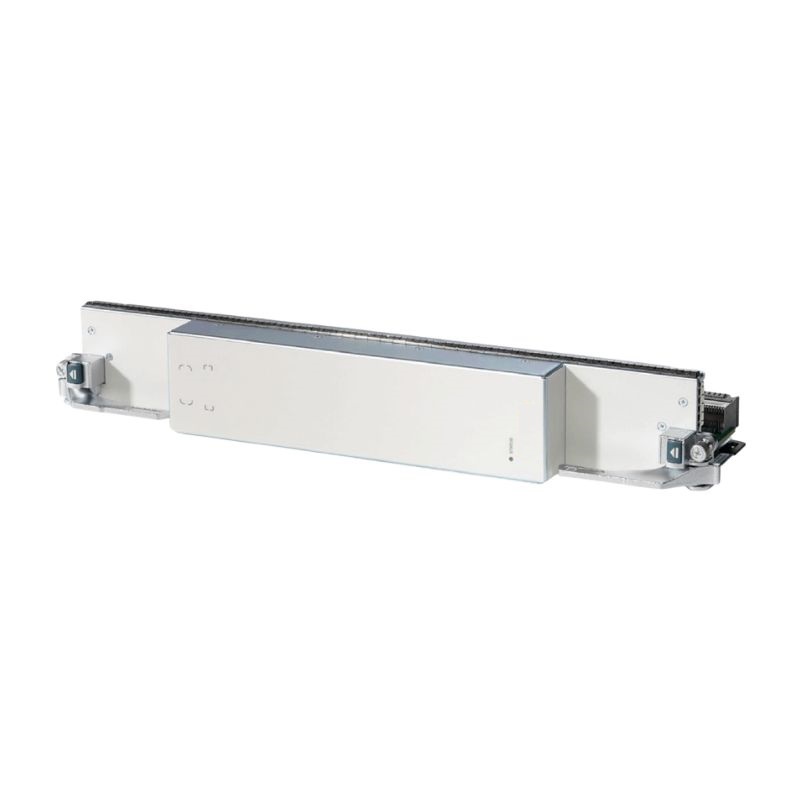


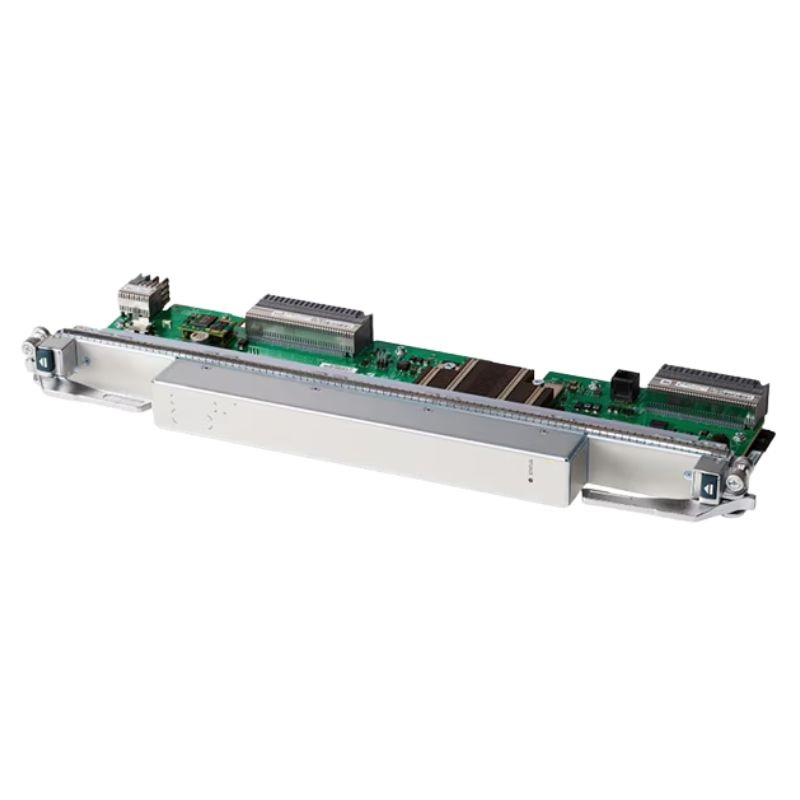
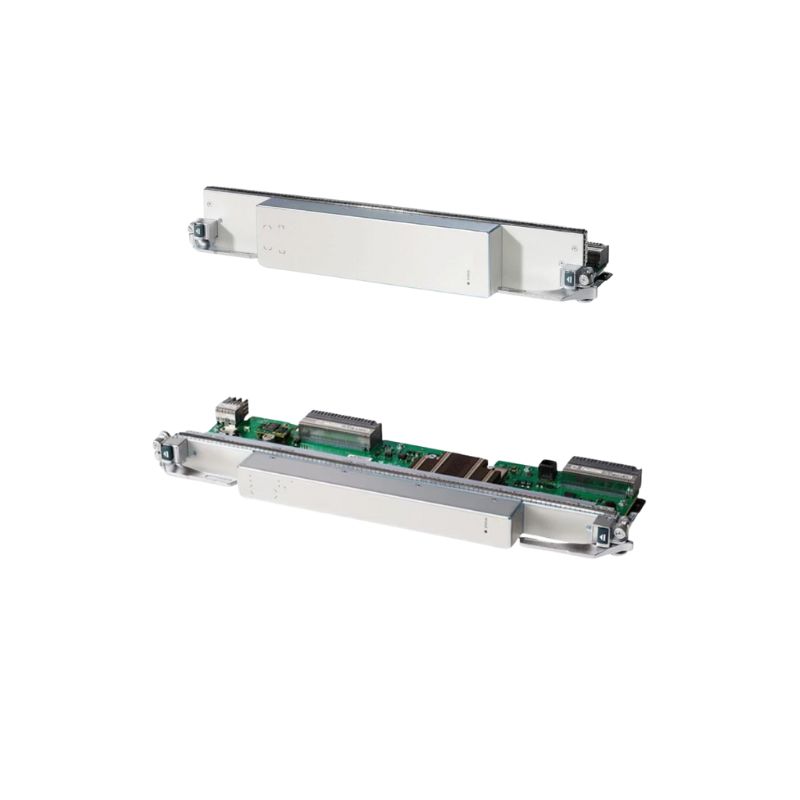
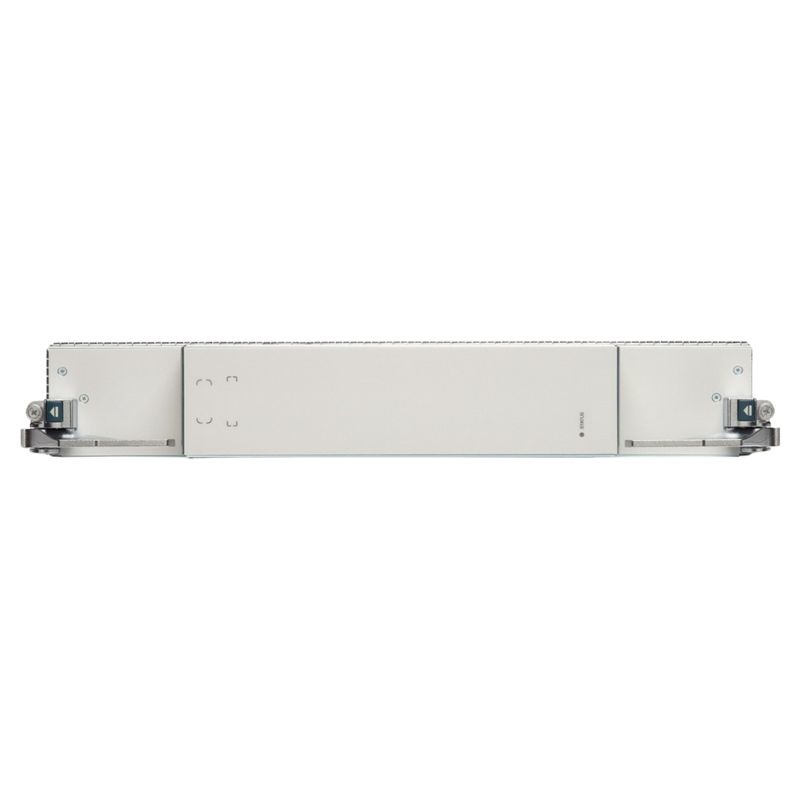
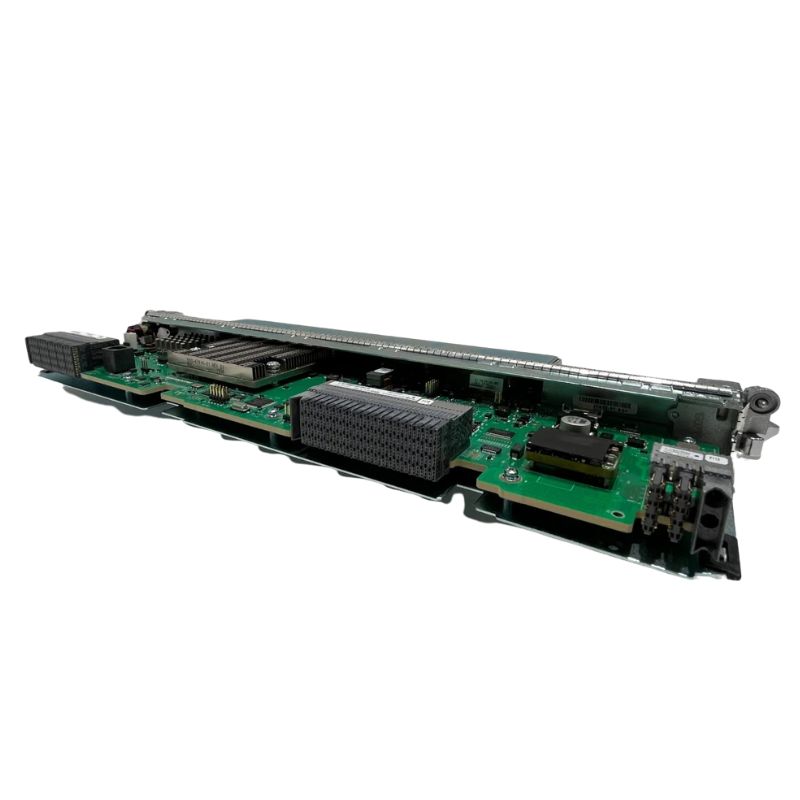
Cisco ASR-9922-SFC-FILR ASR 9922 Switch Fabric Card. Excellent Refurbished with 1 year replacement warranty
The Cisco ASR-9922-SFC-FILR is a high-performance switch fabric card designed to enhance data handling and optimize network efficiency. It delivers reliable performance for enterprise and service provider infrastructures.
Designed for superior performance, this switch fabric card ensures:
With a robust architecture, the ASR-9922-SFC-FILR is built to endure demanding operational conditions:
Ensures compatibility with Cisco networking systems to deliver:
Ideal for high-capacity data and communication networks, including:
In a distributed architecture router like the Cisco ASR 9922, line cards process packets locally, but the movement of data between these cards happens across the switch fabric. The Switch Fabric Card (SFC) is the high-bandwidth, non-blocking backplane that interconnects all system components. The ASR-9922-SFC-FILR is the engine enabling the system's aggregate throughput of multiple terabits per second, ensuring that data flows seamlessly without contention, regardless of which line cards are communicating.
Non-Blocking Connectivity: Provides full bisectional bandwidth, allowing all line card slots to communicate at their maximum capacity simultaneously.
Centralized Arbitration: Manages data flow priorities and ensures fair access to fabric resources across all system components.
High Availability & Redundancy: Designed for N+N redundancy, allowing for multiple fabric card failures without impacting system operation.
Scalability: Works in concert with multiple fabric cards to scale the system's aggregate switching capacity.
The Cisco ASR-9922-SFC-FILR is a Field-Replaceable Unit (FRU) with specific technical attributes that network architects must understand for proper system planning and scaling.
The SFC installs vertically into dedicated fabric card slots in the rear of the ASR 9922 chassis. The "FILR" suffix in the part number denotes a specific hardware revision and feature set. It is crucial to verify software compatibility and fabric mixing rules with other SFC models (like SFC-FIC or earlier revisions) within the same chassis.
As a core system component, the fabric card has a defined power consumption range. While individual card consumption is part of the system total, understanding its contribution is essential for accurate power supply (PSU) sizing and thermal management within the data center rack.
The performance of the ASR-9922-SFC-FILR is not measured in isolation but as part of a fabric group. Its key metric is its contribution to the system's total fabric capacity and bandwidth per slot.
A single ASR 9922 chassis can be populated with multiple fabric cards. The aggregate switching capacity scales linearly with the number of active fabric cards. For instance, a system with five fabric cards active will have a significantly higher total fabric bandwidth than a system with the minimum required for redundancy. The ASR-9922-SFC-FILR is a component in this scalable matrix.
The available fabric bandwidth directly determines the maximum throughput a high-rate line card (such as a 400G or 1T capable card) can achieve. A fully populated fabric is required to realize the full potential of all line card slots operating at peak capacity.
The deployment of the Cisco ASR 9922 router, and by extension its switch fabric cards, is targeted at the most demanding network edges and cores.
At the core of a Tier-1 service provider network, the ASR 9922 with high-performance fabric cards handles massive BGP tables and terabits of transit traffic. The non-blocking architecture of the ASR-9922-SFC-FILR ensures low latency and zero packet loss during congestion, which is critical for maintaining service level agreements (SLAs).
In IX and high-density DCI scenarios, the router acts as a massively scalable switch. The fabric cards manage the intense, any-to-any traffic patterns between hundreds of peers or data centers, where predictable performance and ultra-high availability are non-negotiable.
The transition to 5G introduces unprecedented bandwidth demands and ultra-low latency requirements. The ASR 9922 router, powered by robust switch fabric, serves as a Scalable User Plane Function (SUPF) or a massive aggregation router for 5G gNodeBs. The fabric's capacity is essential for handling the surge in mobile data and the dense interconnection of network slices.
Within a 5G architecture, the fabric card must support advanced QoS and scheduling mechanisms that are enforced across the fabric itself. This ensures that a guaranteed slice of bandwidth and priority is maintained end-to-end across the router, from ingress to egress line card.
Network uptime is paramount. The design of the Cisco ASR 9922 Switch Fabric Card category is inherently built for fault tolerance.
The ASR 9922 employs an N+N redundancy model for its fabric. This means the system can continue operating at full capacity even with the failure of multiple fabric cards. For example, in a system configured with six total fabric cards, it may operate in a 4+2 active/standby configuration, where two cards are hot standbys. The ASR-9922-SFC-FILR cards operate within this matrix, with the system software automatically managing failover.
The redundancy extends beyond hardware. Coupled with Cisco IOS XR software, the system supports hitless failover of fabric functions and ISSU. This allows the fabric planes to be upgraded or maintained without dropping traffic, a requirement for networks that demand "five-nines" (99.999%) availability.
The SFCs support OIR, allowing a faulty card to be replaced or a new card to be added for capacity expansion without powering down the entire chassis. This feature is critical for maintaining continuous service during hardware maintenance.
Procuring and integrating the correct fabric card requires careful attention to compatibility and licensing details.
The ASR-9922-SFC-FILR is compatible with the Cisco ASR 9922 Router chassis. It is imperative to check the minimum required Cisco IOS XR Software version. Using an SFC with an older, incompatible software version can result in the card being rejected by the system or operating in a degraded mode.
Cisco provides specific guidelines on mixing different generations or types of fabric cards within the same chassis. Often, all fabric cards in a single fabric plane must be identical. Mixing without adherence to published guidelines can lead to system instability or reduced performance.


 Contact Us
 Information
 Catalog
 Solid State Drives (SSD)
 Network Switches
 Hard Disk Drives
 HBA & Controllers
 PC & Servers
 PC & Server Memory
 CPU & Processors
 Network Routers
 Power Supplies
 Tape Drives & Libraries
 Network Devices
 Computer & Network Cables