(7% discount is applied at checkout)
Cart is empty
Your go-to destination for cutting-edge server products
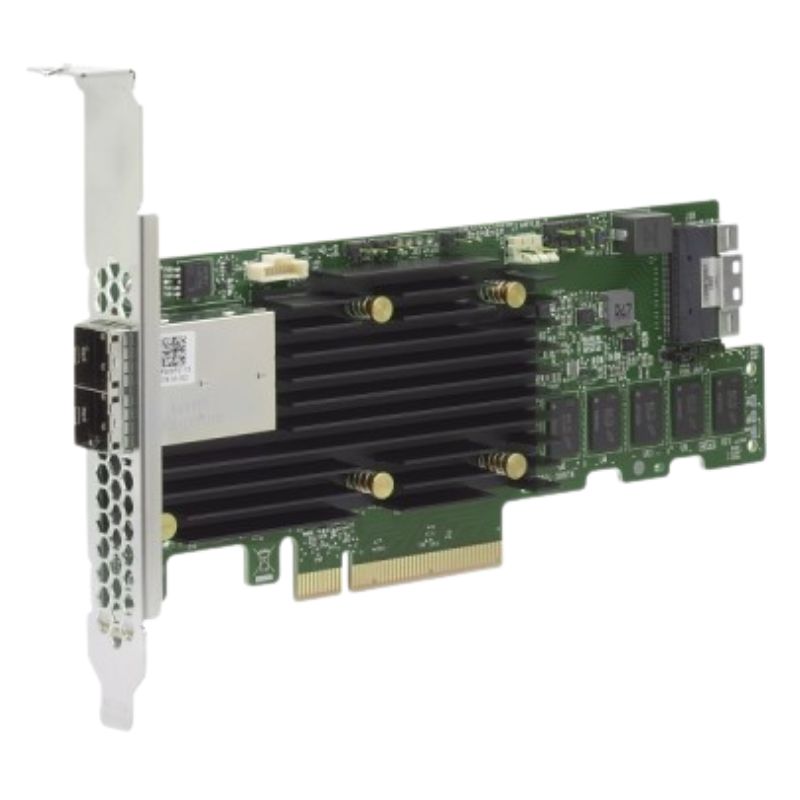


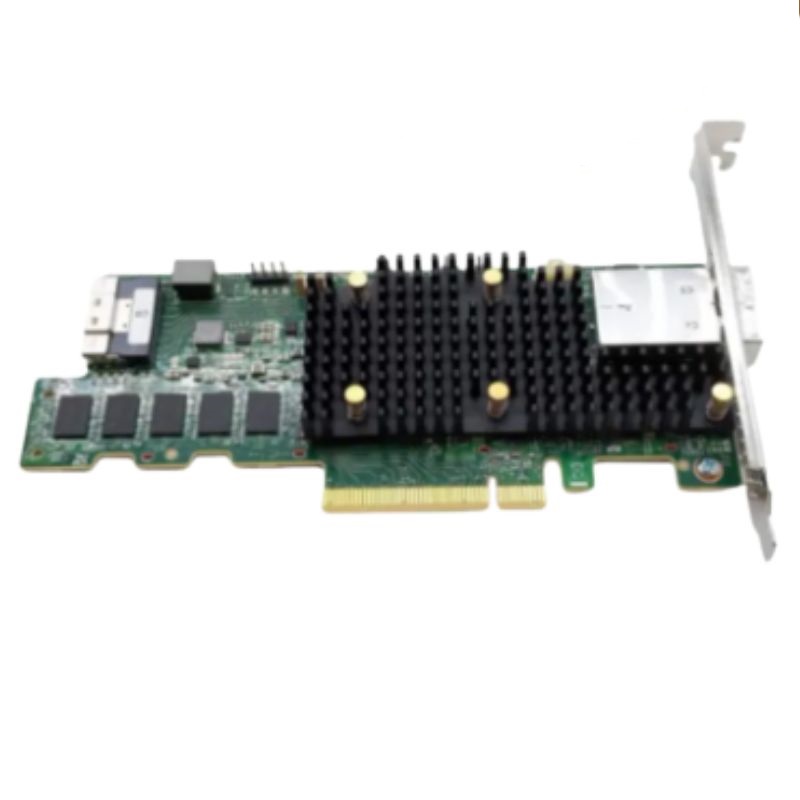
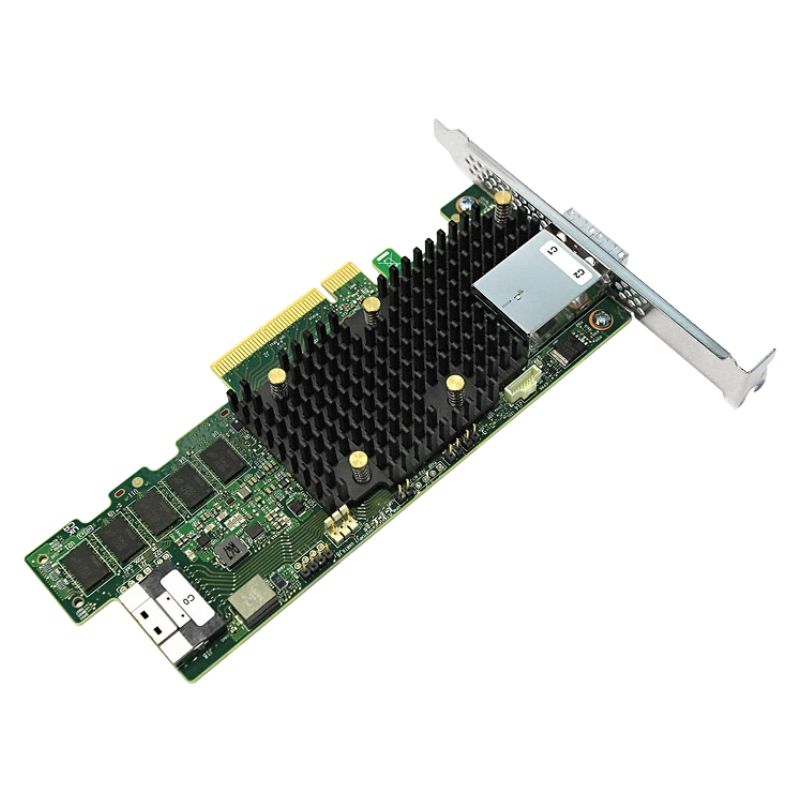
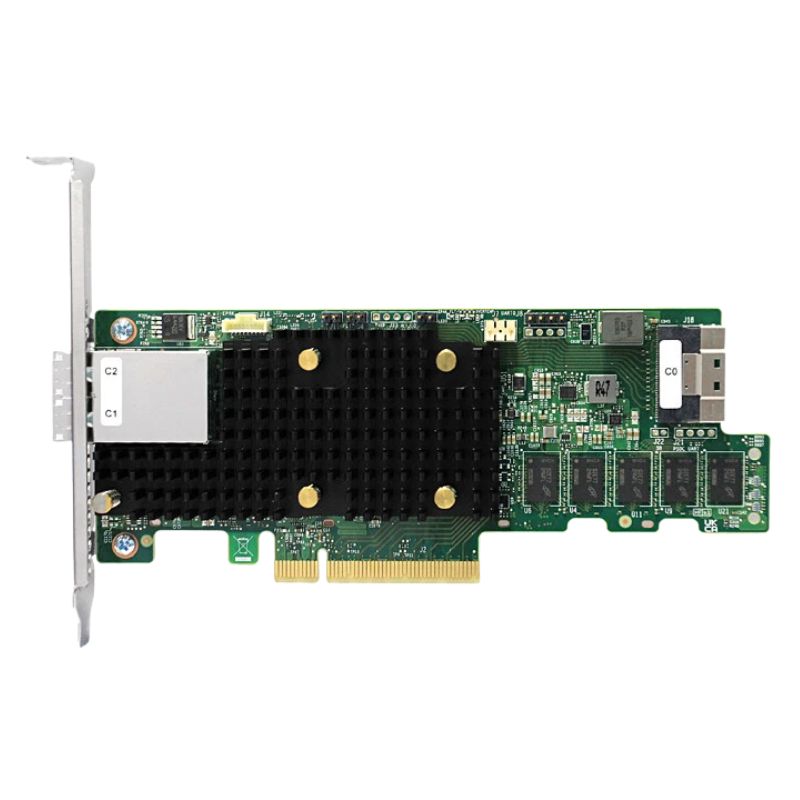
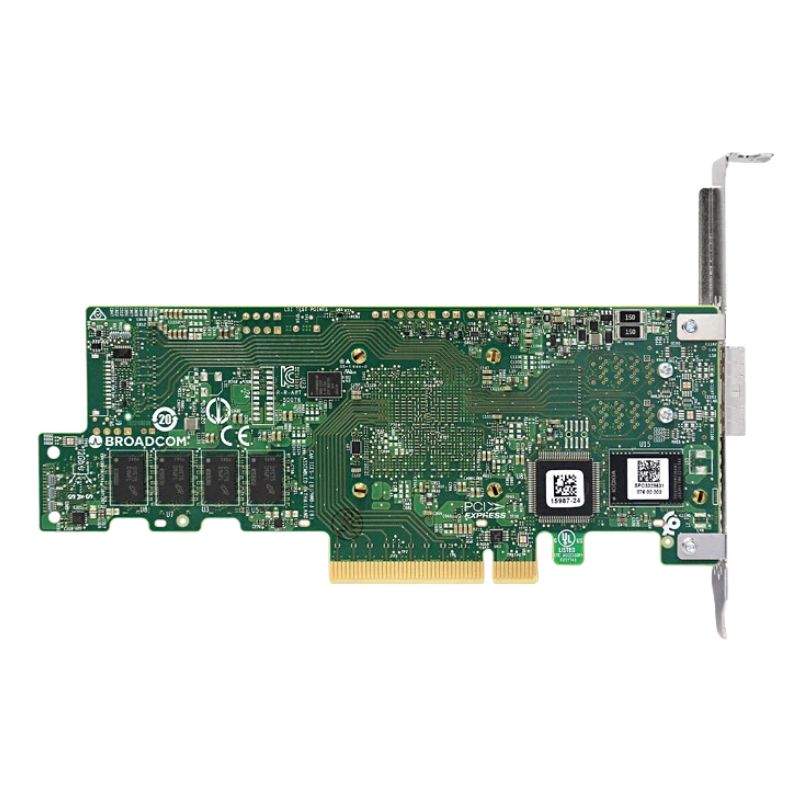
Broadcom SAS9580-8I8E MegaRAID 9500 PCI-E Gen 4.0 SAS 12GBPS, SATA 6GBPS, Tri-Mode Storage Adapter. Factory-Sealed New in Original Box (FSB) with 3 Years Warranty
The Broadcom SAS9580-8I8E MegaRAID 9500 is a high-performance storage adapter designed for enterprise-level workloads. Supporting 12Gb/s SAS, 6Gb/s SATA, and Gen 4.0 PCIe NVMe, it provides flexible connectivity and reliability for data-intensive applications.
The Broadcom SAS9580-8I8E MegaRAID 9500 PCI-E Gen 4.0 Tri-Mode Storage Adapter belongs to a class of enterprise-grade I/O controllers designed to deliver relentless performance, robust data protection, and flexible connectivity for modern data centers. As a category, Tri-Mode storage adapters bridge the legacy and the future by combining support for 12Gb/s SAS and 6Gb/s SATA with advanced PCIe Gen 4 host connectivity and comprehensive RAID capabilities. These adapters are aimed at organizations that require high IOPS, low latency, and resilient storage stacks—whether the workload is virtualized infrastructure, large-scale databases, analytics, backup and archival systems, or mixed hot/cold storage tiers. On category pages, content should highlight interoperability, throughput, manageability, and long-term TCO benefits while systematically addressing procurement, deployment scenarios, and technical differentiators that matter to IT decision makers and purchasing teams.
At the heart of this category are controllers engineered to extract maximum bandwidth from PCI-Express Gen 4.0 host interfaces while delivering protocol translation and aggregation across SAS and SATA storage devices. The controllers are optimized for high queue depths and parallel I/O, which translates into improved transactional throughput for databases and reduced response times for latency-sensitive applications. Important selling points include adaptive caching mechanisms, intelligent I/O scheduling, hardware acceleration for parity and rebuild computations, and advanced error-handling features that minimize rebuild windows and protect data integrity. From a value perspective, these adapters allow IT teams to scale capacity economically by mixing high-capacity SATA disks with high-performance SAS drives or NVMe devices where supported, enabling right-sizing of performance to application needs and delivering attractive cost per gigabyte metrics without sacrificing reliability.
Performance for this category is measured not only in raw throughput but also in IOPS, sustained sequential bandwidth, and predictable latency under load. The PCI-E Gen 4.0 host interface doubles the per-lane throughput of Gen 3, enabling higher aggregate throughput when paired with a server’s CPU and memory subsystem. Controllers in this class often include large onboard DRAM caches, NV-cache or persistent memory options, and sophisticated write-back/write-through policies to maximize effective performance. For workloads such as OLTP databases, virtual desktop infrastructure (VDI), and real-time analytics, the ability to sustain thousands to millions of IOPS while keeping 99th percentile latency low is a defining characteristic. Marketing and technical content should emphasize how features like hardware RAID engines and dedicated I/O processors free the host CPU from storage overhead, improving overall application efficiency.
This category supports scalable topologies, from single server deployments to multi-server clusters. Scalability is delivered through multiple device ports, expanders, and support for large drive counts via backplanes and JBOD enclosures. Because these adapters operate at industry standard protocols (SAS and SATA), they provide wide device compatibility across generations of HDDs and SSDs, as well as compatibility with RAID expansions and enclosure management. Enterprise buyers should look for controllers with flexible port mapping, multipath I/O support, and firmware that is actively maintained to support new drive models and capacity points. Clear compatibility matrices and validated configuration guides are essential assets on any product or category page to reduce procurement friction and installation risk.
Reliability and data protection are central to the category’s value proposition. These controllers typically implement hardware RAID levels from simple RAID 0 and RAID 1 to advanced enterprise levels such as RAID 5, RAID 6, and hybrid levels designed for mixed media usage. Many include features like fast initialization, background patrol read, drive roaming, and predictive failure analysis. Parity offload and dedicated rebuild engines shorten recovery time after a drive failure, reducing the risk window for subsequent failures. Some models provide battery backup or supercapacitor-backed cache protection to ensure in-flight data is not lost in the event of power loss. For compliance and enterprise grade SLAs, support for end-to-end data path protection, T10 DIF/DIX metadata, and secure erase functionality are important talking points in category descriptions aimed at enterprise buyers.
Management features are a key differentiator when evaluating storage adapters. Leading solutions provide unified graphical and command line management tools, RESTful APIs for automation, and integration with orchestration platforms like VMware vSphere, Red Hat OpenShift, and popular hypervisors. On the category page, emphasize capabilities such as remote firmware update, role-based access control, SNMP traps, and proactive health monitoring that enable administrators to maintain uptime and respond quickly to anomalies. Modern data centers value adapters that integrate with existing monitoring stacks and support telemetry exports for capacity planning and performance trending. Documentation highlighting the management ecosystem, scripting examples, and recommended monitoring thresholds adds credibility and helps technical buyers visualize operational workflows.
Tri-Mode controllers excel across a broad set of deployment scenarios. For high-density virtualization clusters, they aggregate many SATA drives to achieve large total capacity while offering RAID-level protection and caching acceleration for VM workloads. In mixed media environments, SAS drives deliver consistent performance for hot datasets while cost-effective SATA drives provide offline or cold capacity. Analytics clusters benefit from the high sequential throughput and parallelism these controllers provide, while backup appliances and archival systems leverage the controllers’ ability to manage large drive counts and efficient rebuild strategies. Evolving storage tiers that combine HDDs and SSDs can be orchestrated using tiering policies to automatically place hot data on faster media, improving application responsiveness without adding administrative complexity.
Cloud and virtualization platforms place unique demands on storage: unpredictable I/O patterns, high concurrency, and dynamic provisioning. Category content should highlight how Tri-Mode adapters support VM density through robust RAID configurations, caching for small random writes, and support for passthrough or HBA modes when low-latency direct device access is required. For containerized environments, the ability to carve logical volumes quickly and reliably matters, as does integration with software-defined storage controllers and orchestration layers. Documentation and product pages should outline recommended best practices for tuning, such as cache policies and queue depth adjustments, to achieve optimal performance for virtualized workloads.
Operational efficiency is another important lens for this category. While performance is paramount, power and cooling costs scale with density. Controllers that support power management features, optimized firmware that reduces unnecessary drive spindowns, and compatibility with energy-efficient drive models contribute to lower TCO over the lifecycle. For hyperscale or co-lo customers, the ability to predict power draw and thermal behavior under full load supports capacity planning and reduces unexpected infrastructure costs. Product descriptions should address the physical form factor, slot requirements, and any special cooling considerations, helping purchasers to assess fit into existing server chassis and racks.


 Contact Us
 Information
 Catalog
 Solid State Drives (SSD)
 Network Switches
 Hard Disk Drives
 HBA & Controllers
 PC & Servers
 PC & Server Memory
 CPU & Processors
 Network Routers
 Power Supplies
 Tape Drives & Libraries
 Network Devices
 Computer & Network Cables