
(7% discount is applied at checkout)
Cart is empty
Your go-to destination for cutting-edge server products
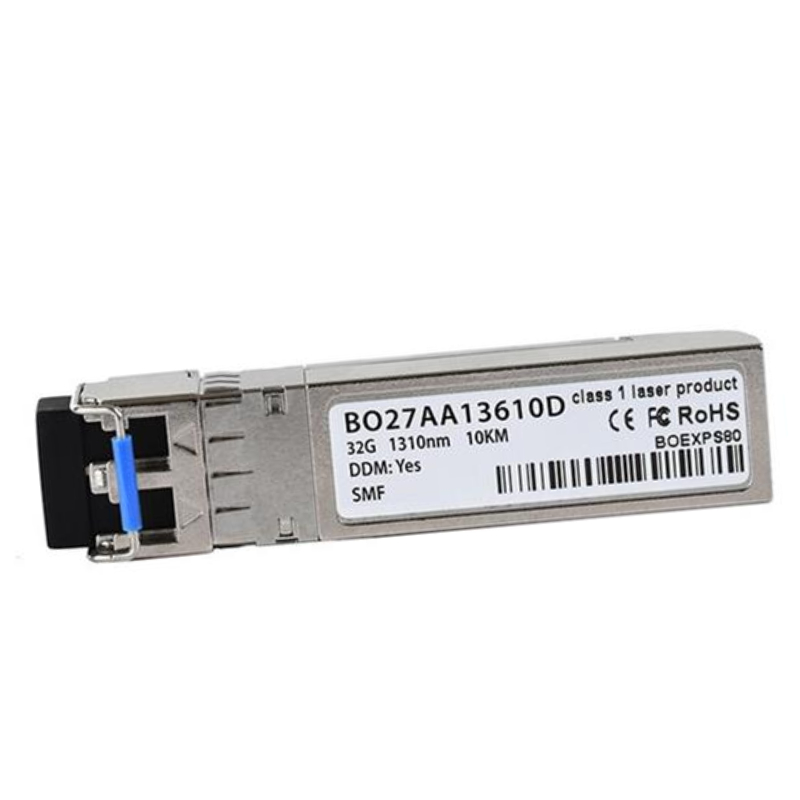
Brocade XBR-000238 32G Long-Wave Fibre Channel Single-Mode SFP+ Transceiver with 10KM Range. Excellent Refurbished with 1 year Replacement Warranty
The Brocade XBR-000238 is a long-wave 32G Fibre Channel SFP+ transceiver module. Designed for single-mode fiber communication, this pluggable device ensures high-speed connectivity, energy efficiency, and advanced monitoring capabilities for enterprise-grade networking and storage infrastructures.
The Brocade XBR-000238 32G Long-Wave Fibre Channel Single-Mode SFP+ Transceiver represents a critical component in modern storage area network (SAN) infrastructures, where ultra-low latency, high throughput, and long-distance optical transmission are essential. Designed for enterprise-class environments, this transceiver supports 32G Fibre Channel connectivity, enabling rapid data movement between storage arrays, servers, and switching fabrics in mission-critical applications.
In high-density data centers, the demand for reliable and scalable optical transceivers continues to grow as virtualization, cloud computing, and large-scale storage environments expand. The 32G Fibre Channel standard provides a significant performance leap compared to previous generations, making this optical module essential for organizations aiming to maintain competitive storage performance and operational efficiency.
Storage Area Networks rely heavily on optical transceivers to facilitate seamless communication between storage devices and compute nodes. The Brocade XBR-000238 fits into this architecture as a high-speed interface module that ensures stable and lossless data transmission over single-mode fiber infrastructure. In enterprise SAN deployments, the transceiver acts as a bridge between Brocade switching equipment and optical fiber cabling, allowing data to traverse long distances without degradation.
The importance of such components increases in distributed storage environments where data centers are geographically separated. The long-wave design of this SFP+ transceiver enables extended reach capabilities, making it suitable for inter-building or campus-wide deployments where traditional short-range optics are insufficient.
The 32G Fibre Channel standard enhances bandwidth efficiency and reduces latency, which is crucial for high-performance applications such as real-time analytics, database transactions, and virtualization workloads. By delivering faster frame processing and improved encoding mechanisms, this technology supports next-generation storage environments that demand continuous uptime and predictable performance.
As enterprise workloads become more data-intensive, the need for robust optical connectivity grows proportionally. The Brocade XBR-000238 ensures that infrastructure bottlenecks are minimized, allowing storage systems to operate at maximum efficiency under heavy workloads.
The engineering behind the Brocade XBR-000238 32G Long-Wave Fibre Channel SFP+ Transceiver is centered on precision optics, thermal stability, and signal integrity. It is designed to operate using single-mode fiber, which supports long-distance transmission with minimal attenuation. The long-wave optical signaling typically operates in the 1310 nm wavelength range, which is optimized for extended reach applications.
This optical module is built with advanced photonic components that ensure accurate signal conversion between electrical and optical domains. The integration of high-quality laser diodes and photodetectors allows for consistent performance even under fluctuating environmental conditions, such as temperature variations and network congestion.
Single-mode fiber plays a crucial role in long-distance optical communication due to its narrow core diameter, which minimizes modal dispersion. The Brocade XBR-000238 leverages this medium to achieve superior transmission clarity over extended distances. This makes it ideal for backbone network connections and inter-switch links within large-scale SAN environments.
By utilizing single-mode fiber infrastructure, organizations can maintain high data integrity while reducing signal loss. This capability is especially important in environments where data consistency and uptime are critical, such as financial institutions, healthcare systems, and cloud service providers.
A key aspect of any optical transceiver is its power budget, which determines the maximum distance over which data can be transmitted reliably. The Brocade XBR-000238 is engineered to maintain a balanced optical power output and sensitivity range, ensuring that signals remain within acceptable thresholds throughout transmission.
This balance minimizes the risk of packet loss, retransmissions, and latency spikes. In enterprise environments, maintaining signal integrity directly translates into improved application performance and reduced downtime, making optical budget management a critical design consideration.
The Brocade XBR-000238 is specifically designed for seamless integration within Brocade’s Fibre Channel switching ecosystem. This ensures optimal compatibility and performance when deployed in Brocade-supported SAN fabrics. The transceiver works in conjunction with Brocade switches to deliver end-to-end high-speed connectivity across storage networks.
Within these environments, the transceiver plays a vital role in maintaining fabric stability and supporting advanced SAN services such as zoning, multipathing, and traffic optimization. Its consistent performance ensures that data flows smoothly between storage arrays and compute nodes without disruption.
Modern data centers often consist of heterogeneous storage systems and multi-vendor environments. The Brocade XBR-000238 is engineered with interoperability in mind, allowing it to function effectively across diverse SAN architectures. This ensures that organizations can integrate the module into existing infrastructures without requiring extensive redesign or replacement of current systems.
Such flexibility is essential for enterprises that rely on incremental upgrades rather than complete infrastructure overhauls. By supporting interoperability, this transceiver helps reduce capital expenditure while enhancing overall network performance.
Fibre Channel fabrics depend on stable optical links to maintain consistent performance. The Brocade XBR-000238 contributes to fabric stability by delivering predictable signal behavior and low error rates. This stability is crucial for maintaining synchronized communication between multiple nodes within a SAN environment.
Performance optimization is achieved through efficient encoding and error correction mechanisms that reduce retransmission overhead. As a result, storage systems can operate more efficiently, even under heavy traffic conditions.
The Brocade XBR-000238 32G Long-Wave Fibre Channel Transceiver is widely used in enterprise data centers where high-speed storage connectivity is essential. Its primary applications include storage replication, high-availability clustering, virtualization infrastructure, and cloud computing environments.
In virtualization-heavy environments, where multiple virtual machines share storage resources, the need for high-bandwidth and low-latency connections becomes critical. This transceiver ensures that virtual workloads can access storage resources efficiently without experiencing performance degradation.
Cloud service providers rely heavily on scalable storage networks that can handle fluctuating workloads. The Brocade XBR-000238 supports such environments by providing high-speed connectivity between distributed storage nodes. Its long-wave capabilities make it suitable for inter-rack and inter-building communication in large-scale cloud deployments.
This scalability ensures that cloud infrastructures can grow without compromising performance or requiring significant redesign of the underlying network architecture.
In disaster recovery and high-availability systems, data replication between geographically separated sites is essential. The long-distance transmission capability of this transceiver makes it ideal for such applications. It ensures that data can be replicated in near real-time across remote locations, enhancing resilience and business continuity.
Organizations implementing disaster recovery strategies benefit from reduced recovery time objectives and improved data consistency when using high-performance optical modules such as this.
The performance of the Brocade XBR-000238 is defined by its ability to maintain consistent 32G Fibre Channel speeds across supported distances. This ensures that storage workloads are processed efficiently, with minimal latency and maximum throughput.
Operational efficiency is further enhanced by the transceiver’s low power consumption and optimized thermal design. In high-density data centers, power efficiency is a key factor in reducing operational costs and improving cooling efficiency.
Latency is a critical metric in storage networking, particularly for transactional workloads and real-time applications. The Brocade XBR-000238 minimizes latency by enabling direct and efficient optical signal conversion. This results in faster data transfer cycles and improved application responsiveness.
Throughput optimization is achieved by ensuring that the transceiver fully supports the 32G Fibre Channel data rate without bottlenecks. This allows storage arrays and servers to communicate at maximum efficiency.
Enterprise environments require components that can operate reliably under varying environmental conditions. The Brocade XBR-000238 is designed to maintain performance stability across a wide temperature range, ensuring consistent operation in both controlled and high-density rack environments.
Its robust construction and high-quality optical components reduce the likelihood of failure, making it suitable for mission-critical deployments where downtime is not acceptable.


 Contact Us
 Information
 Catalog
 Solid State Drives (SSD)
 Network Switches
 Hard Disk Drives
 HBA & Controllers
 PC & Servers
 PC & Server Memory
 CPU & Processors
 Network Routers
 Power Supplies
 Tape Drives & Libraries
 Network Devices
 Computer & Network Cables