(7% discount is applied at checkout)
Cart is empty
Your go-to destination for cutting-edge server products
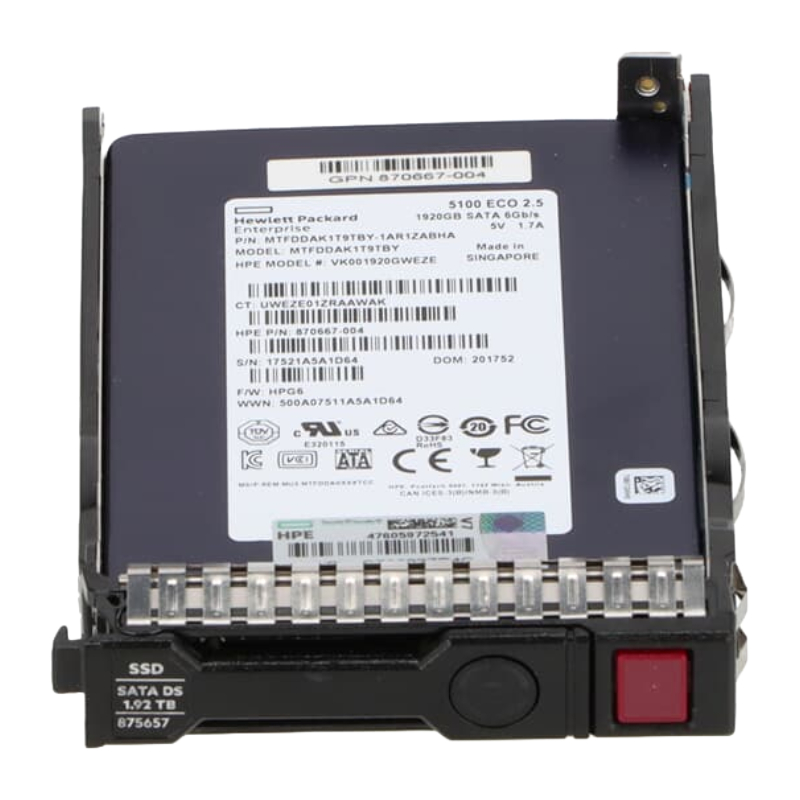


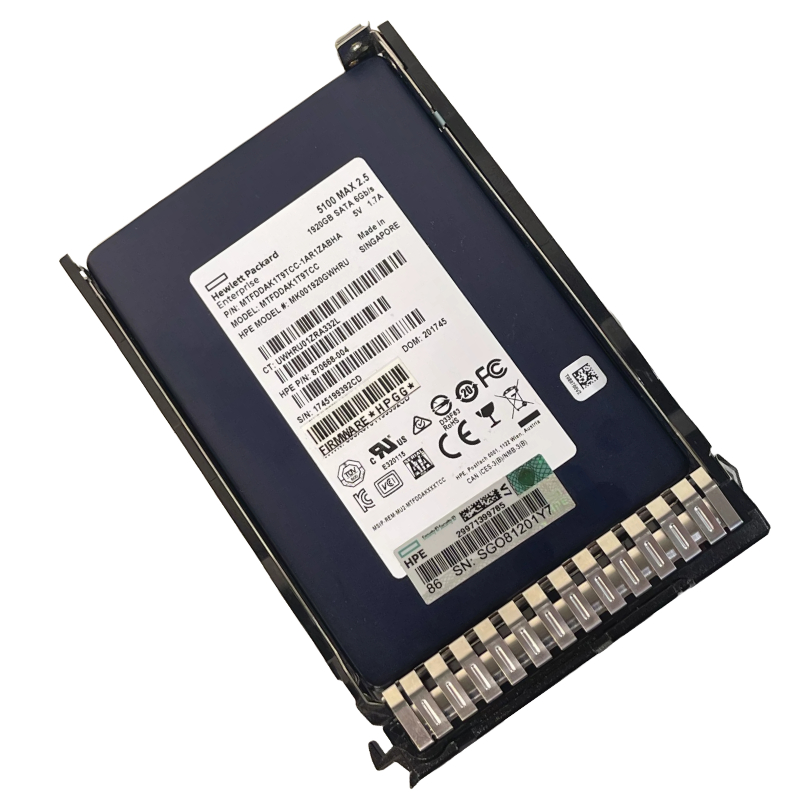
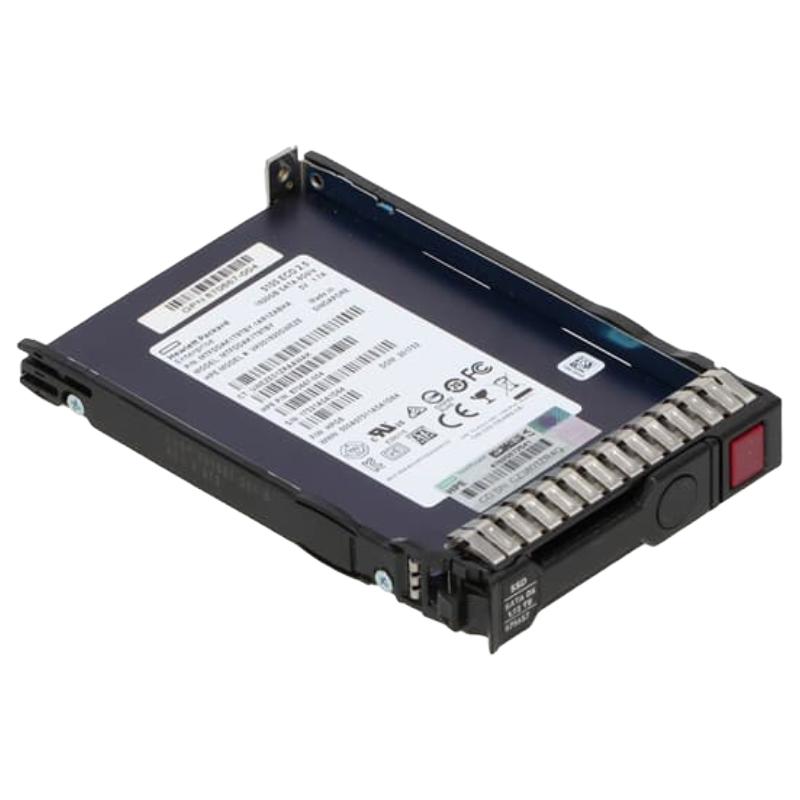
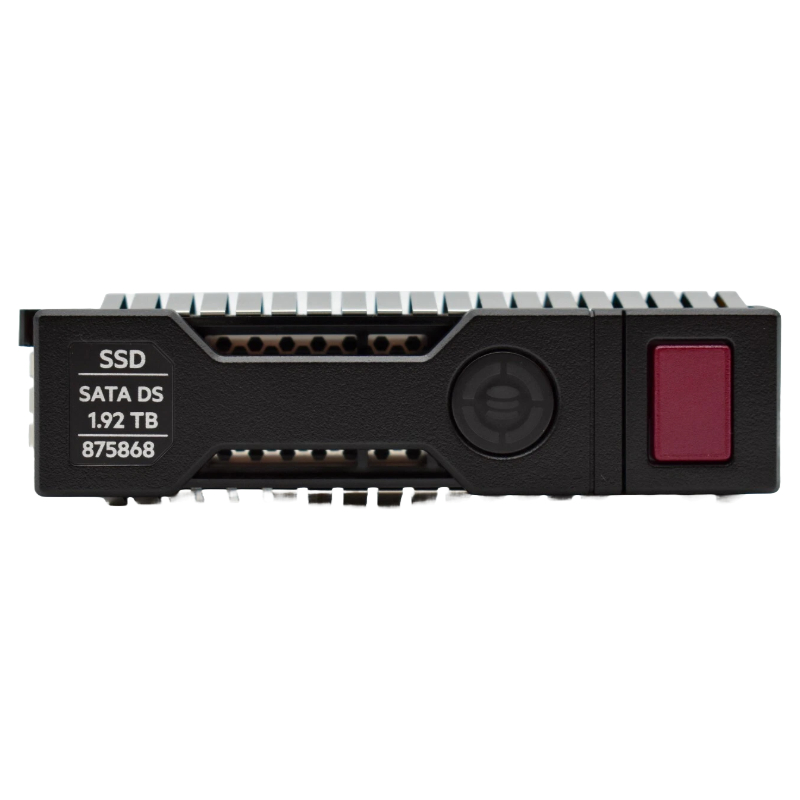
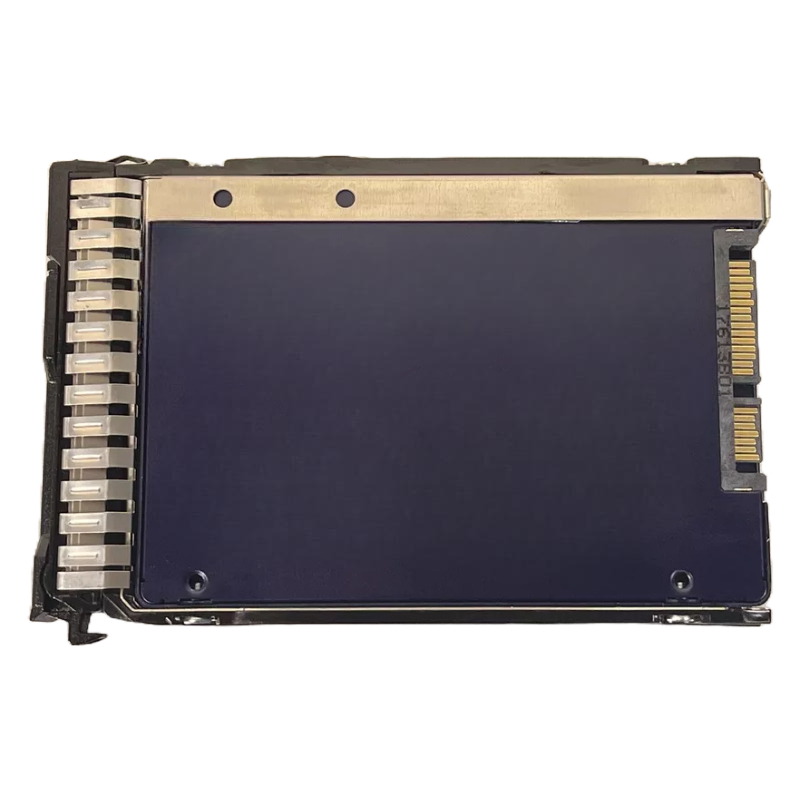
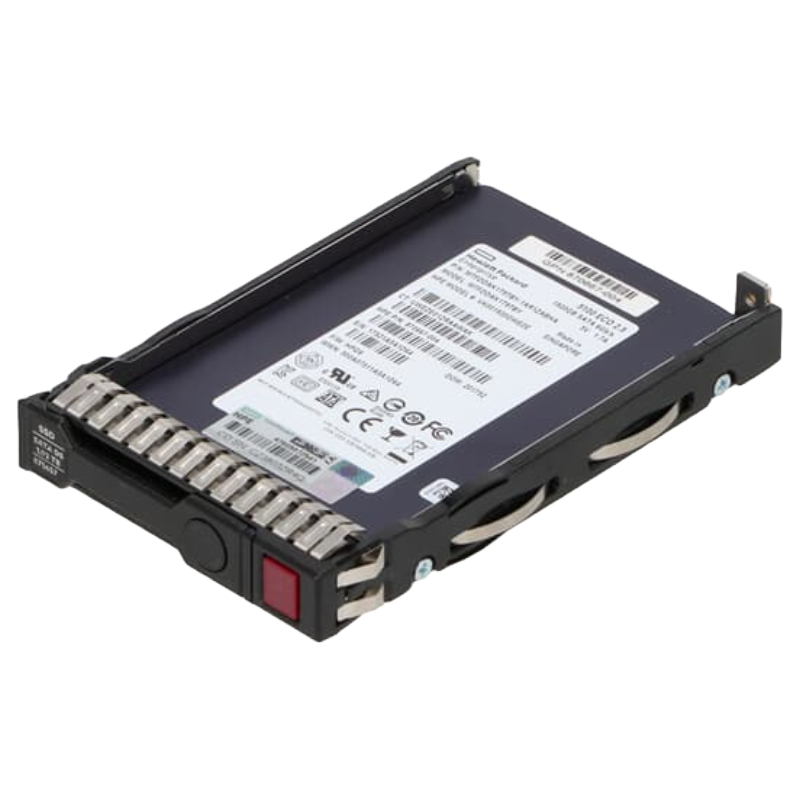
HPE P07934-X21 1.92TB SATA 6GBPS 3.5 Inch Digitally Signed LPC Mixed Use SSD. Factory-Sealed New in Original Box (FSB) with 3 Years Warranty
| SKU/MPN | Warranty | Price | Condition | You save |
|---|---|---|---|---|
| P07934-X21 | 1 Year Warranty | $474.00 | Excellent Refurbished | You save: $165.90 (26%) |
| P07934-X21 | 1 Year Warranty | $2,064.00 | Factory-Sealed New in Original Box (FSB) | You save: $722.40 (26%) |
The HPE P07934-X21 is a high-performance solid-state drive engineered for mixed-use workloads in enterprise environments. With a capacity of 1.92TB, digitally signed firmware, and support for SATA 6Gbps interface, this drive offers superior reliability and security.
This SSD is designed to integrate seamlessly with various HPE server platforms. It's optimized for performance, durability, and compatibility.
The P07934‑X21 HPE 1.92TB 3.5‑inch SATA 6Gbps Mixed Use solid state drive is positioned within the enterprise‑grade storage family designed to meet rigorous demands of modern data center workloads. It belongs to a class of SSDs optimized for mixed use scenarios, balancing read and write operations under sustained performance. This category appeals to system integrators, server administrators, and IT infrastructure planners who require high reliability, firmware validation, and compatibility across HPE server lines.
This category encompasses drives carrying the P07934‑X21 part number and variant, along with potentially similar models within the HPE “digitally signed” SSD series. They share architecture, form factor, interface, and quality assurance measures like cryptographic firmware signing and rigorous endurance testing. The category is narrower than generic SATA SSDs; it is constrained to 3.5‑inch convertible versions, mixed‑use endurance levels, and HPE‑validated firmware ecosystems.
Drives in this category uniformly adopt a SATA 6Gbps interface; they employ multi‑level cell or triple‑level cell NAND, and operate in a 3.5‑inch footprint thanks to an included low profile converter (LPC). Their capacity is centered on the 1.92TB size, which is a mid‑to‑high capacity tier for mixed‑use workloads in enterprise systems. The firmware is cryptographically signed by HPE to ensure authenticity, preventing unauthorized or corrupted firmware from being deployed. These SSDs are engineered to support internal data transfer rates on the order of 600 Mbps sustained throughput under typical conditions.
This category mandates use of a 3.5‑inch adapter or converter, enabling compatibility with large form factor (LFF) drive bays in server platforms. The design ensures a seamless fit into existing drive trays that expect 3.5‑inch units, while retaining small form factor (SFF) internals. Because the interface is SATA at 6Gbps, the performance envelope is aligned with legacy server backplanes and controllers where SAS or NVMe lanes may not be available. Devices in this group maintain signal integrity, robust error correction, and thermal control appropriate for SATA chain ecosystems.
SSDs in this class use advanced NAND architectures—typically multi‑level cell (MLC) or TLC variants optimized for endurance and performance tradeoffs. Their firmware implements wear‑leveling, bad block management, and background scrubbing routines to prolong lifespan under mixed read/write patterns. Because they are built for enterprise usage, they also incorporate dynamic performance throttling to protect against thermal runaway when deployed in dense server enclosures. Endurance ratings for this category often exceed tens of drive writes per day over warranty life spans.
The P07934‑X21 series is fully engineered to interface with a broad swath of HPE server lines. Within the Apollo family, compatibility extends to the 4200 and related Gen9 and Gen10 chassis where 3.5‑inch drive backplanes are prevalent. In the ProLiant DL line, these SSDs are validated for DL20 Gen10, DL20 Entry, DL20 Performance, and further variants up to DL325 in its various configurations. In the ProLiant ML domain, the SSDs are compatible with ML110 Gen10, ML110 Entry, ML350 Gen10 base, performance and solution variants, and sub‑entry tiers. Because these server platforms accept 3.5‑inch modules and often share firmware validation frameworks, the SSDs in this category are treated as “drop‑in” modules in supporting chassis.
A defining characteristic of this category is the digitally signed firmware. This ensures that the drive’s firmware is cryptographically validated, which guards against tampering or unauthorized modifications. System BIOS and controllers that support drive signing can verify the firmware’s signature at initialization, protecting the server from compromised boot or storage paths. This characteristic sets the P07934‑X21 family apart from generic SSD models that may allow unsigned firmware updates. The inclusion of signed firmware is not merely a marketing specification but a security measure demanded in many enterprise and regulated environments.
Drives in this class are ideal for mixed read/write workloads such as virtualization, database caching, file services, and tiered storage layers where both reads and writes occur at moderate to heavy rates. They are less suited for purely write‑intensive workloads such as log aggregation or high‑frequency write caching unless deployed with appropriate overprovisioning or spare capacity. Because of their mix‑use design, they deliver consistent performance across repeated cycles, resisting performance degradation over time. In cloud hosting, hyperconverged infrastructure, and virtualization clusters, these SSDs serve as efficient boot volumes, datastore tiers, or intermediate caching layers.
The performance profile of options in this category is consistent with enterprise SATA 6Gbps limits. Internal sustained throughput is nominally quoted at 600 Mbps under optimal conditions, though real world throughput may vary under mixed I/O conditions or thermal constraints. Latency profiles in such SSDs are tightly managed by firmware, maintaining low latency under moderate queue depths. Because these SSDs are often deployed in server backplanes, their performance under RAID controllers, HBA cards, or native SATA controllers is well understood.
Within the P07934‑X21 group, thermal control is a critical design parameter. Drives incorporate internal thermal sensors and may throttle or adjust performance margins when temperatures exceed thresholds. In dense server racks or blades, the drives’ thermal modeling ensures they remain within safe junction temperature ranges. Reliability is further enhanced by provisioning and spare block pools, enabling the SSD to remap sectors transparently as NAND cells wear. The firmware architecture supports health monitoring and SMART telemetry reporting for proactive drive management.
Within the broader world of HPE SATA SSDs, the P07934‑X21 line is specifically in the mixed use subclass. Other subcategories include read‑intensive SSDs or write‑intensive SSDs, each optimized for their respective workloads. Mixed use models provide balance, whereas read‑intensive ones minimize write amplification and write intensive ones focus on throughput for logs or analytics.
Mixed use drives in this category emphasize endurance and consistency, accepting moderate write workloads without performance degradation. Read‑intensive subcategory SSDs may favor read caching, higher overprovisioning, and less aggressive wear leveling. Conversely, write‑intensive drives accept heavier writes but may sacrifice capacity or cost efficiency. The P07934‑X21 family positions itself in the middle: sufficiently robust for write demands typical of database, but with enough capacity to store large data sets.
When deploying drives from this category, administrators must ensure the following: that the controller or backplane supports SATA 6Gbps, that drive trays accept 3.5‑inch form factors (or include converter kits), and that firmware compatibility is validated. In hybrid configurations combining SATA, SAS, and NVMe tiers, these SSDs often serve as mid‑tier performance layers. They may be paired upstream with caching or compression engines, or downstream from higher throughput NVMe drives.
In server environments using RAID arrays or hardware controllers, drives in the P07934‑X21 category are vetted for compatibility with HPE smart array controllers and third‑party HBAs. They maintain consistent performance in RAID 0, 1, 5, 6, 10 setups under mixed I/O. Their predictable latency and throughput behavior make them suitable for tiered RAID caching strategies and caching enclosures, as well as integration into tier‑aware storage controllers.
From a cost versus risk perspective, this category brings peace of mind. Enterprises investing in large arrays, hyperconverged systems, or clustered storage can standardize on these drives knowing that firmware integrity is part of the guarantee. The 1.92TB capacity offers a sweet spot between cost and usable density, and the 3.5‑inch compatible design simplifies deployment in mixed bay systems.
Many deployments use a tiered architecture where NVMe handles hot data, these P07934‑X21 SSDs handle warm or operational data, and HDDs serve cold storage. In such architectures, the mixed‑use SSDs provide predictable performance under shifting workloads, smoothing transitions and absorbing bursts. Their ability to function under variable write pressures makes them well suited for the mid‑tier layer in caching hierarchies, block storage pools, or metadata caching layers.
Before deployment, it is advisable to verify the server firmware version, SATA controller driver compatibility, and backplane cable integrity. During operation, administrators should monitor device health attributes and avoid overfilling to the brink, allowing slack capacity to support wear leveling and endurance overhead. Firmware updates should be applied via authenticated HPE channels to ensure signature compliance. At end of life or replacement cycles, secure erase or cryptographic erase procedures should follow HPE guidelines, preserving data erasure compliance.
In clustered storage environments or scale‑out arrays, drives from this category support consistent performance across nodes. Their predictable latency, signed firmware, and health telemetry make them ideal for rolling replacements and predictable scaling. As cluster sizes grow, standardizing on a trusted drive category simplifies inventory, support, and maintenance operations.
Because this category remains tightly aligned with HPE server platforms across generations, upgrades to server lines often continue support for 3.5‑inch SATA backplanes. As future HPE models migrate to NVMe, backward compatibility ports and SAN gateways may still rely on SATA tiers, preserving the utility of this class. The signed firmware approach may also carry forward into newer SSD classes, giving this category enduring relevance.


 Contact Us
 Information
 Catalog
 Solid State Drives (SSD)
 Network Switches
 Hard Disk Drives
 HBA & Controllers
 PC & Servers
 PC & Server Memory
 CPU & Processors
 Network Routers
 Power Supplies
 Tape Drives & Libraries
 Network Devices
 Computer & Network Cables