(7% discount is applied at checkout)
Cart is empty
Your go-to destination for cutting-edge server products
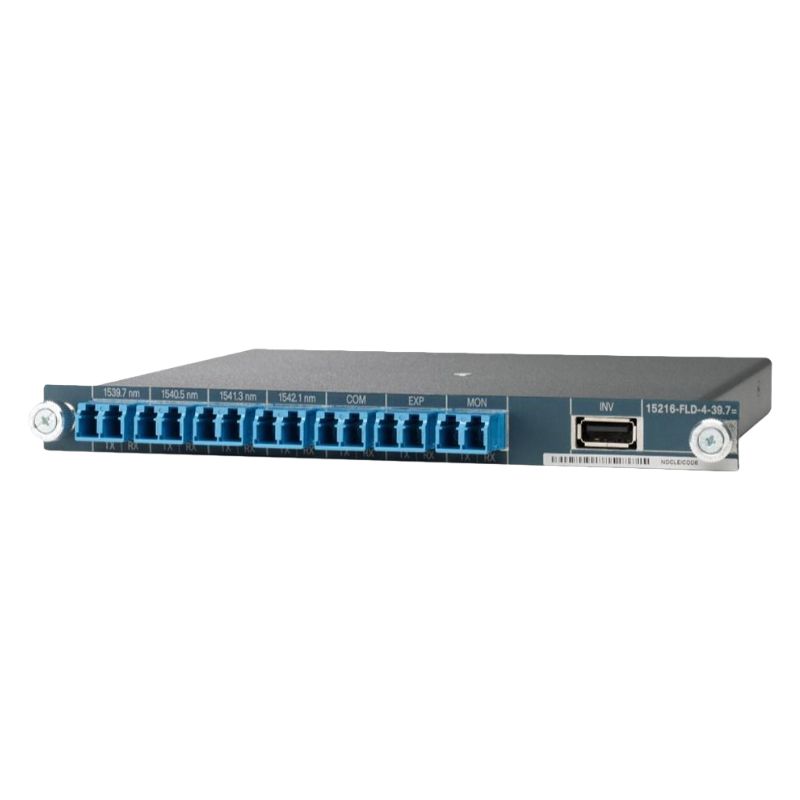


Cisco 15216-FLD-4-42.9 ONS 15216 Data Multiplexer. Excellent Refurbished with 1 year replacement warranty
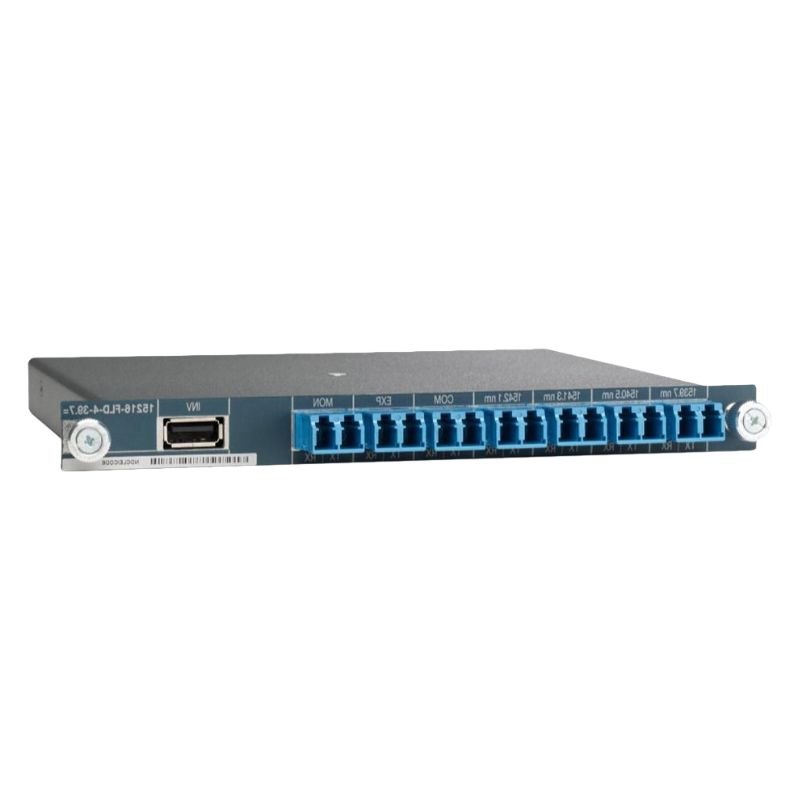
The Cisco 15216-FLD-4-42.9 ONS 15216 4-Channel Optical Add/Drop Multiplexer is a high-performance passive optical networking component designed for dense wavelength division multiplexing (DWDM) systems. This module enables efficient optical signal management, making it ideal for modern telecom and data transmission infrastructures.
The Cisco 15216-FLD-4-42.9 ONS 15216 4 Channel Optical Add/Drop Multiplexer is a specialized optical networking component designed for dense wavelength division multiplexing environments where efficient wavelength management is essential. Within modern telecommunications infrastructures, this device plays a crucial role in enabling flexible optical signal routing without requiring full demultiplexing of all wavelengths. It is engineered to support high-capacity fiber optic systems, ensuring that specific wavelengths can be selectively added or dropped while other traffic continues to pass through unaffected. This capability is fundamental for metro optical networks, carrier-grade backbone systems, and advanced enterprise fiber architectures.
As optical networks continue to evolve toward higher bandwidth density and more dynamic service provisioning, devices like the Cisco 15216 series remain essential building blocks. The 4-channel configuration of this optical add/drop multiplexer is optimized for environments where multiple wavelength paths must be handled simultaneously with minimal signal degradation. Its design supports precise optical filtering and low insertion loss characteristics, allowing service providers to maintain high performance across long distances and complex routing scenarios.
The internal architecture of the Cisco 15216-FLD-4-42.9 is built around advanced optical filtering technology that allows selective wavelength manipulation. The system is designed to work seamlessly within a dense wavelength division multiplexing framework, where multiple optical signals coexist on a single fiber. By integrating add/drop functionality directly into the optical layer, the device eliminates the need for full signal conversion, thereby reducing latency and operational overhead.
A defining characteristic of this multiplexer is its reliance on passive optical components. These components do not require electrical power to function, which significantly enhances reliability and reduces maintenance requirements. The passive nature of the system ensures stable performance even in demanding environmental conditions, making it suitable for carrier-grade deployments where uptime is critical.
Channel isolation is a core design principle in the Cisco 15216 OADM architecture. Each optical channel is carefully filtered to ensure that only designated wavelengths are added or dropped at specific nodes. This selective handling of optical signals helps prevent cross-channel interference, preserving signal integrity across the network. The precision of this filtering mechanism is essential for maintaining high-quality transmission in multi-channel optical environments.
Within dense wavelength division multiplexing systems, the Cisco 15216-FLD-4-42.9 functions as a critical intermediary device that enables flexible traffic management. It sits strategically between optical line terminals and other network elements, allowing operators to insert or extract specific wavelength channels without disrupting the remaining traffic flow. This makes it particularly valuable in metro ring architectures and distributed optical networks.
The device is designed for compatibility with a wide range of optical transport platforms. Its standardized interfaces allow it to be integrated into existing fiber infrastructures with minimal modification. This interoperability ensures that network operators can upgrade or expand their optical capacity without requiring complete system overhauls.
The 4-channel configuration of this optical add/drop multiplexer is engineered to manage multiple wavelengths simultaneously. Each channel operates independently, allowing specific optical signals to be added or dropped while others remain in transit. This architecture supports efficient bandwidth utilization and enables flexible service provisioning in high-capacity networks.
The system employs precise wavelength allocation techniques to ensure that each optical channel is accurately managed. This precision is essential in dense optical environments where even minor deviations in wavelength alignment can result in signal degradation. The Cisco 15216 platform ensures that each channel remains stable and well-defined across varying network conditions.
One of the most important technical attributes of this multiplexer is its low insertion loss design. By minimizing the amount of signal attenuation introduced during the add/drop process, the device helps preserve optical power levels across long transmission distances. This contributes to improved overall network efficiency and reduces the need for excessive signal amplification.
Crosstalk reduction is a critical requirement in multi-channel optical systems. The Cisco 15216-FLD-4-42.9 addresses this challenge through advanced optical filtering mechanisms that isolate each channel effectively. This isolation prevents unwanted signal leakage between channels, ensuring clean and accurate data transmission.
The device is engineered to maintain stable performance across a wide range of environmental conditions. Temperature variations, mechanical vibrations, and external network fluctuations are accounted for in its design. This ensures consistent optical behavior, which is essential for maintaining service-level agreements in carrier networks.
In metropolitan area networks, the Cisco 15216-FLD-4-42.9 is widely used to manage dense traffic flows between central offices and distribution nodes. Its ability to selectively add and drop channels makes it ideal for supporting high-demand urban connectivity services. These networks require flexible optical routing to accommodate rapidly changing bandwidth requirements, and this device provides the necessary adaptability.
Long-haul optical networks benefit significantly from the low-loss and high-stability characteristics of this multiplexer. In such environments, maintaining signal integrity over extended distances is critical. The device helps reduce the need for frequent optical-electrical-optical conversions, thereby improving overall transmission efficiency.
Enterprise environments and data center interconnect systems utilize optical add/drop multiplexers to manage high-capacity data streams between geographically distributed facilities. The Cisco 15216 platform supports these requirements by enabling efficient wavelength-level traffic control without disrupting existing communication channels.
In ring-based optical topologies, the Cisco 15216-FLD-4-42.9 is deployed at strategic nodes to facilitate traffic insertion and extraction. This configuration enhances network resilience by allowing data to be rerouted in the event of a fiber break or node failure. The add/drop capability ensures that services remain uninterrupted even under fault conditions.
Express channels represent wavelengths that pass through the multiplexer without being altered. The Cisco 15216 ensures that these channels maintain continuity with minimal disruption. This feature is essential in maintaining backbone traffic flows while selectively managing localized services.
Localized channel insertion allows network operators to introduce new services at specific points within the network. The multiplexer facilitates this process by enabling precise wavelength injection without requiring full network reconfiguration.
In mesh optical networks, the device contributes to dynamic routing flexibility. Its ability to selectively manage wavelengths allows for complex traffic patterns that adapt to real-time network conditions. This is particularly useful in large-scale service provider environments where traffic distribution is constantly evolving.
The Cisco 15216-FLD-4-42.9 supports scalable optical architectures by enabling incremental capacity expansion. Network operators can introduce additional wavelengths or services without redesigning the entire infrastructure. This scalability is crucial for meeting the growing demands of bandwidth-intensive applications.
Reliability is a fundamental requirement in optical transport systems. The passive design and robust engineering of the device contribute to high operational uptime. By minimizing active electronic components, the system reduces potential points of failure and enhances long-term stability.
Efficient use of optical spectrum is a key advantage of add/drop multiplexing technology. The Cisco 15216 platform allows operators to maximize fiber capacity by dynamically allocating wavelengths based on demand. This leads to improved resource utilization and reduced operational costs.
Future developments in optical networking are expected to further enhance wavelength management capabilities. Devices like the Cisco 15216 platform will continue to evolve in terms of channel density, spectral efficiency, and integration flexibility. These advancements will support the increasing demand for high-speed data transmission.
As telecommunications networks transition toward higher automation and software-defined control, optical add/drop multiplexers will remain essential physical-layer components. Their ability to provide precise wavelength control ensures that they will continue to play a foundational role in next-generation optical infrastructures.
Future optical systems are expected to incorporate greater levels of intelligence and automation. The Cisco 15216-FLD-4-42.9 will likely be integrated into these environments as part of a broader ecosystem of smart optical devices capable of dynamic reconfiguration based on network demand patterns.


 Contact Us
 Information
 Catalog
 Solid State Drives (SSD)
 Network Switches
 Hard Disk Drives
 HBA & Controllers
 PC & Servers
 PC & Server Memory
 CPU & Processors
 Network Routers
 Power Supplies
 Tape Drives & Libraries
 Network Devices
 Computer & Network Cables