(7% discount is applied at checkout)
Cart is empty
Your go-to destination for cutting-edge server products
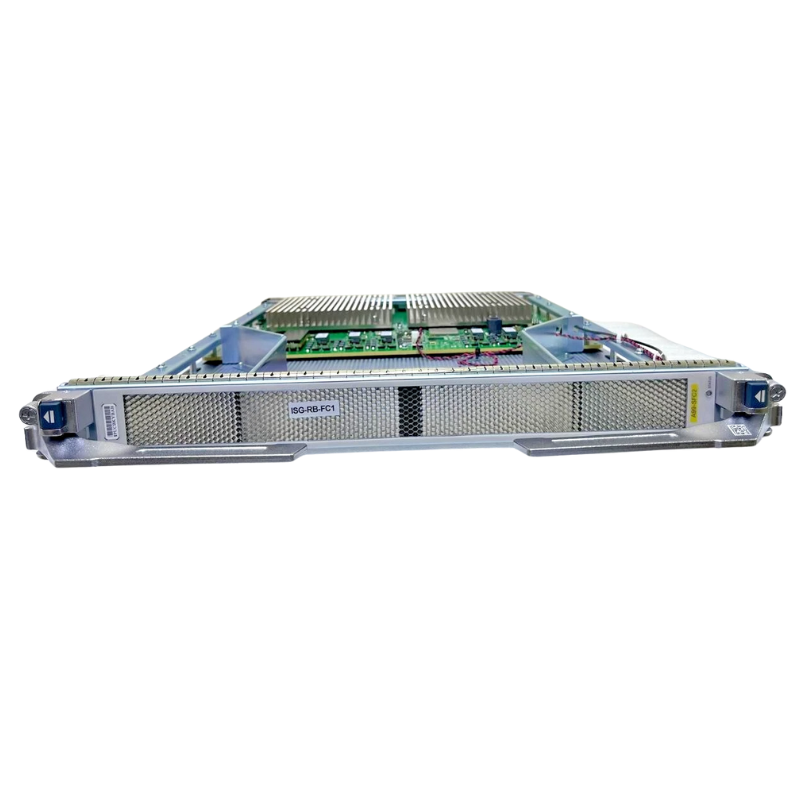


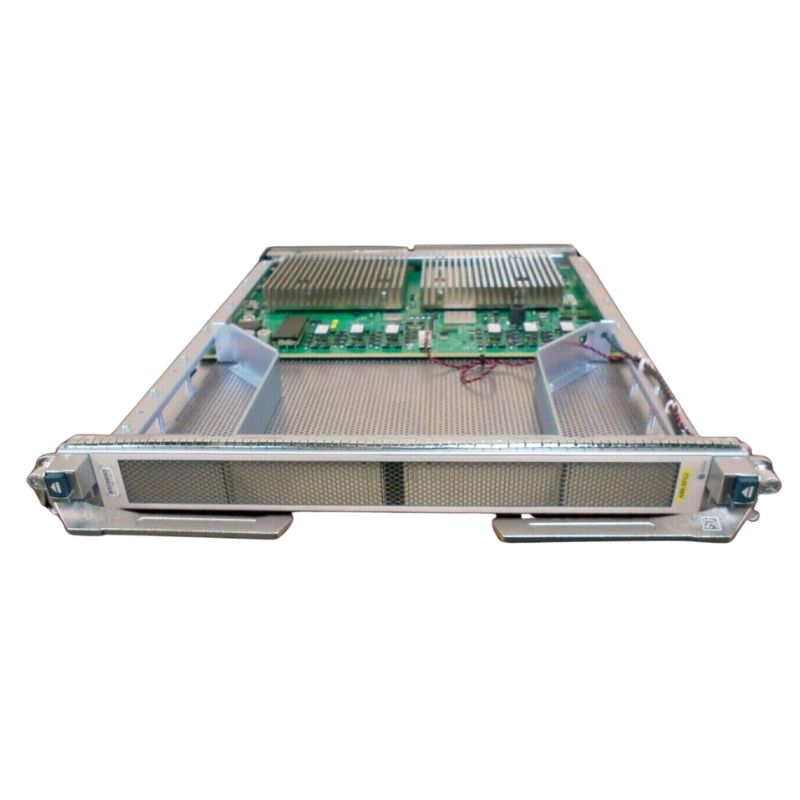
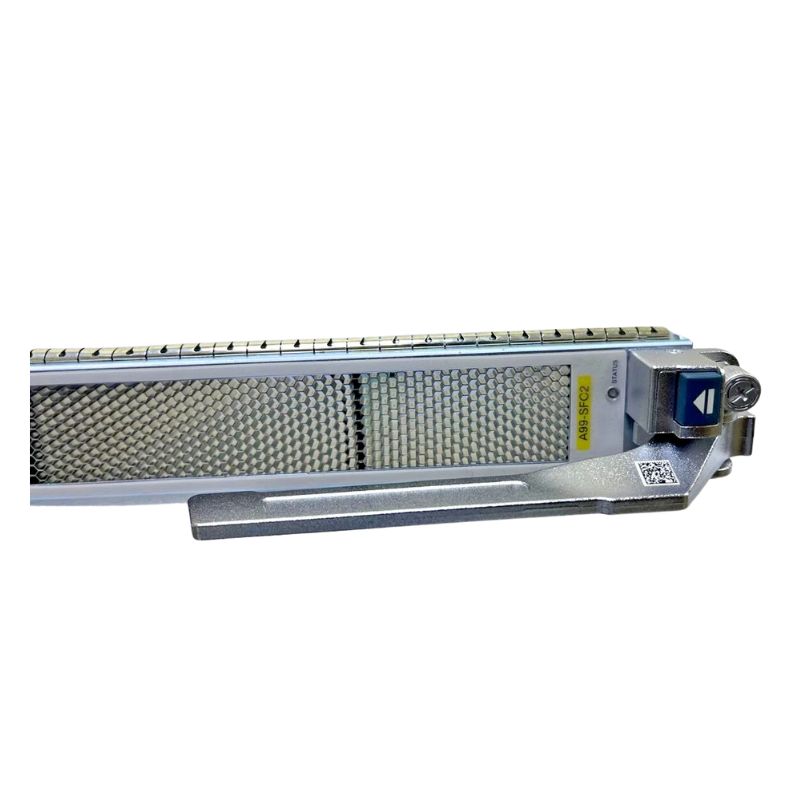
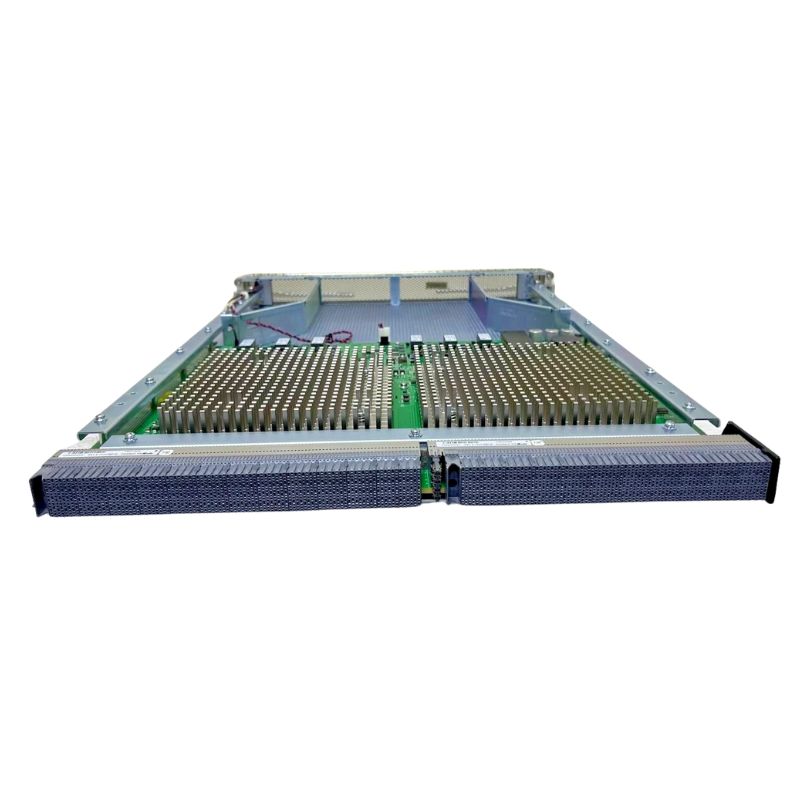
Cisco A99-SFC2 Fabric Module for ASR-9912 ASR-9922 Router Switch. Factory-Sealed New in Original Box (FSB) with 1 year replacement warranty
| SKU/MPN | Warranty | Price | Condition | You save |
|---|---|---|---|---|
| A99-SFC2 | 1 Year Warranty | $470.00 | Excellent Refurbished | You save: $164.50 (26%) |
| A99-SFC2 | 1 Year Warranty | $3,130.00 | Factory-Sealed New in Original Box (FSB) | You save: $1,095.50 (26%) |
Discover the Cisco A99-SFC2 fabric module engineered for high-performance aggregation in ASR-class routers. This resilient switching blade delivers multi-terabit throughput, redundant architectures and carrier-grade reliability for service provider and enterprise backbones.
This fabric module is compatible with a select set of Cisco ASR platforms. Confirm compatibility with your chassis release and software version before purchase.
The Cisco ASR 9912 and ASR 9922 are designed for the network core, where handling colossal traffic volumes with unwavering reliability is non-negotiable. Their distributed architecture separates the forwarding intelligence on the line cards from the high-speed data movement across the chassis. This is where the fabric module becomes indispensable. Think of the chassis as a city: the line cards are the buildings (generating and consuming data), and the fabric modules are the interconnected, ultra-wide super-highways that allow any building to communicate with any other at incredible speeds, without congestion.
A switch fabric is a high-speed backplane interconnect that provides a non-blocking, any-to-any communication path between all system components. The A99-SFC2 is a specific implementation of this concept, engineered for the 12-slot and 22-slot behemoths of the ASR 9000 family. Its primary function is to shuttle data packets (cells) from the ingress line card to the egress line card with minimal latency and maximum efficiency, ensuring that the raw forwarding power of the router's processors is never bottlenecked by internal data transfer.
The deployment of multiple A99-SFC2 modules allows the ASR 9912/9922 to achieve several foundational architectural goals:
Non-Blocking Performance: The aggregate bandwidth of the installed fabric modules exceeds the total possible bandwidth of all line cards, ensuring no internal contention.
Distributed Forwarding: Forwarding decisions are made on the line cards; the fabric merely executes the move, enabling scalable performance.
High Availability and Redundancy: Fabric modules are load-sharing and redundant. The system remains operational even with the loss of one or more modules.
The A99-SFC2 is a generation-defining component with concrete specifications that translate to real-world performance.
This module is a double-height, field-replaceable unit designed to slot into the dedicated fabric slots at the rear of the ASR 9912 and ASR 9922 chassis. Each module contributes a massive amount of switching capacity to the system's pool. Multiple modules work in concert to create the aggregate fabric bandwidth, which can scale to tens of terabits per second, fully supporting high-density 100GbE, 400GbE, and beyond.
The system's total capacity is a direct function of the number of fabric modules installed. For example, in an ASR 9912, a full complement of fabric modules (which varies by generation and configuration) is required to unlock the chassis's maximum throughput. The A99-SFC2 works in a "bandwidth pooling" model, where all active modules collectively share the load of all line card traffic.
The system supports N+1 and N+N redundancy models for fabric modules. In N+1, one module's worth of capacity is held in reserve for failover. In N+N, the capacity is fully load-balanced across pairs, offering the highest resilience and performance. The A99-SFC2 supports stateful switchover (SSO) and in-service software upgrade (ISSU) capabilities, ensuring fabric continuity during maintenance or a module failure.
Successfully implementing and managing a network with A99-SFC2 modules requires specific technical knowledge.
In both the ASR 9912 and ASR 9922, fabric modules occupy specific, numbered slots at the rear of the chassis. A minimum number is required for the system to power on and operate. Administrators must follow Cisco's verified design guidelines for the exact number of modules needed to support a given mix of line cards (e.g., a chassis full of 400G cards requires maximum fabric density).
Cisco IOS XR software provides extensive visibility into the fabric complex. Key operational commands allow engineers to verify the status of each A99-SFC2 module, monitor aggregate and per-module bandwidth utilization, check for correctable/uncorrectable errors on fabric links, and confirm redundancy states. Proactive monitoring here is key to preventing performance degradation.
In the event of a fabric module failure, the system's redundant design automatically redistributes the load to the remaining modules. The failed unit's indicator LEDs will signal the fault. The replacement procedure involves carefully extracting the faulty module and inserting the new A99-SFC2, following strict ESD (electrostatic discharge) protocols and ensuring proper alignment in the guide rails. The system will automatically recognize the new module and integrate it into the fabric pool.
The A99-SFC2 represents a specific point in the evolution of Cisco's core routing fabric technology.
The "SFC2" designation often indicates an enhanced generation of fabric technology compared to an earlier "SFC" module. These enhancements can include higher per-modale bandwidth, improved power efficiency, support for more advanced cell scheduling algorithms, and better integration with next-generation forwarding processors on the line cards. It is critical to verify the exact fabric module required for a given chassis and generation.
The fabric module does not operate in isolation. It works in tandem with the Route Switch Processors (RSPs), which handle system control and management, and the Ethernet Line Cards (e.g., A9K- series cards), which house the network interfaces and forwarding engines. The fabric is the glue that allows these components to function as a single, cohesive routing system. The performance of any line card is ultimately gated by the available fabric bandwidth to it.


 Contact Us
 Information
 Catalog
 Solid State Drives (SSD)
 Network Switches
 Hard Disk Drives
 HBA & Controllers
 PC & Servers
 PC & Server Memory
 CPU & Processors
 Network Routers
 Power Supplies
 Tape Drives & Libraries
 Network Devices
 Computer & Network Cables