(7% discount is applied at checkout)
Cart is empty
Your go-to destination for cutting-edge server products
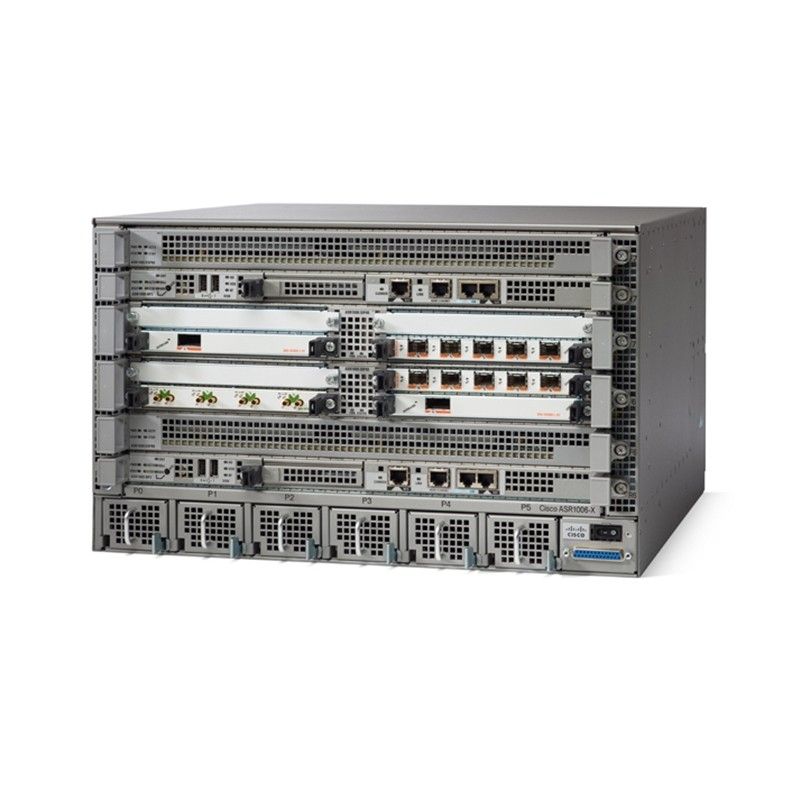


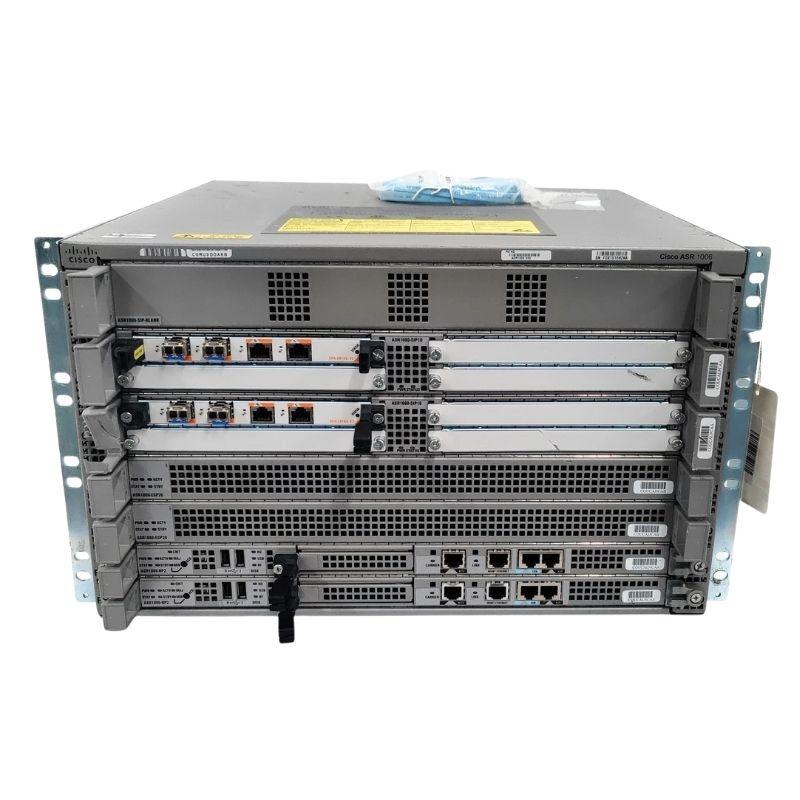
Cisco ASR1006 ASR 1000 Aggregation Services Router Chassis. Factory-Sealed New in Original Box (FSB) with 1 year replacement warranty
| SKU/MPN | Warranty | Price | Condition | You save |
|---|---|---|---|---|
| ASR1006 | 1 Year Warranty | $380.00 | Excellent Refurbished | You save: $133.00 (26%) |
| ASR1006 | 1 Year Warranty | $5,680.00 | Factory-Sealed New Retail in Original Box (FSB) | You save: $1,988.00 (26%) |
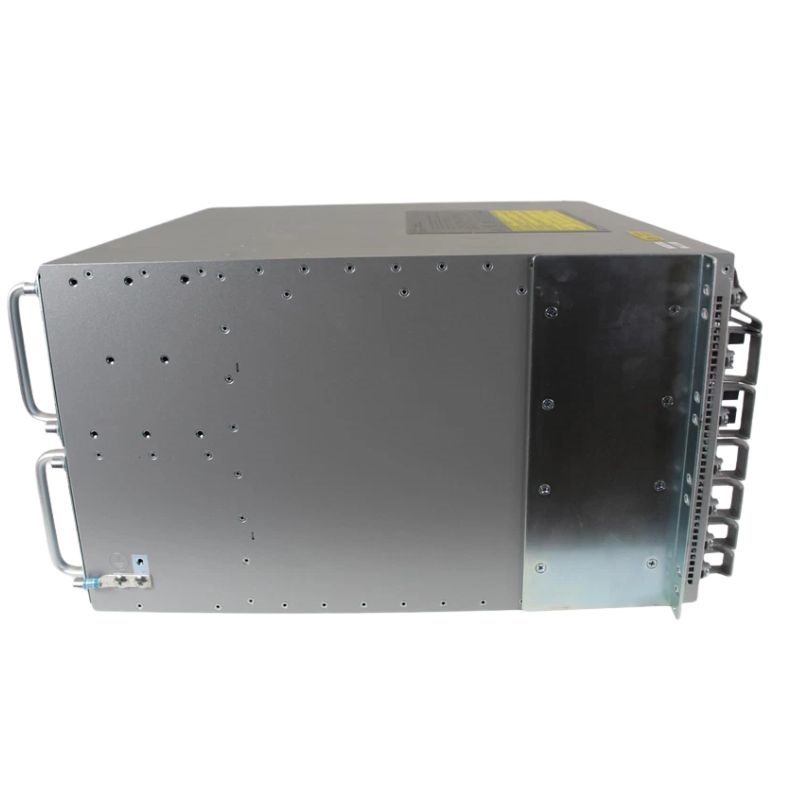
The Cisco ASR1006 Aggregation Service Router Chassis is a modular six-slot platform designed for enterprise-grade scalability, secure connectivity, and high-performance networking.
The Cisco ASR1006 Aggregation Service 6-Slot Router Chassis represents a powerful and scalable solution designed to meet the evolving demands of enterprise networks, service providers, and large-scale data infrastructures. Built with advanced hardware architecture and high-performance routing capabilities, this chassis is engineered to deliver exceptional throughput, reliability, and flexibility. It plays a crucial role in enabling organizations to manage increasing data traffic, support cloud-based applications, and ensure seamless connectivity across distributed environments.
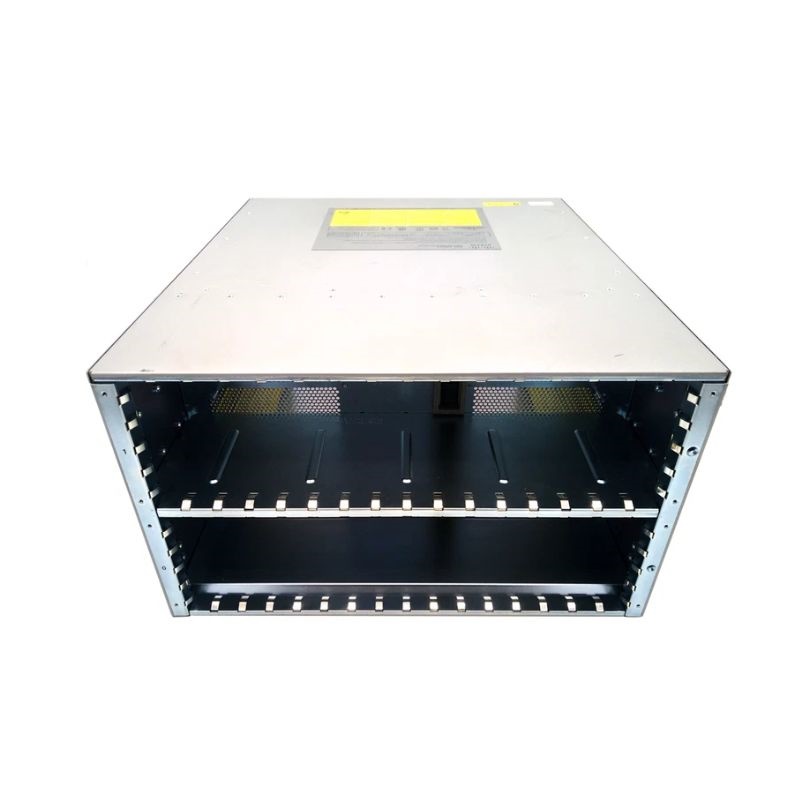
The Cisco ASR1006 router chassis is designed with a modular architecture that supports six slots, allowing for flexible deployment of various line cards, route processors, and service modules. This modularity ensures that organizations can tailor their network infrastructure according to specific requirements while maintaining optimal performance. The system architecture is optimized for high-speed packet processing, enabling efficient data forwarding and minimal latency.
The embedded services processor is a core component of the Cisco ASR1006 chassis, responsible for handling data plane operations such as packet forwarding, quality of service enforcement, and traffic management. With support for high throughput rates, the ESP ensures that the router can handle demanding workloads without compromising performance. It also provides advanced features such as deep packet inspection, encryption, and traffic shaping.
The route processor within the Cisco ASR1006 plays a vital role in control plane operations, including routing protocol management, system monitoring, and network intelligence. It is designed to support large routing tables and complex network topologies, making it suitable for enterprises and service providers that require scalable and reliable routing solutions.
The six-slot configuration of the Cisco ASR1006 chassis provides significant flexibility in terms of expansion and customization. Organizations can deploy a combination of interface modules, service modules, and processing units to meet their specific networking needs. This modular design allows for easy upgrades and maintenance, reducing downtime and ensuring long-term investment protection.
The chassis supports a wide range of interface modules, including Ethernet, fiber, and high-speed connectivity options. This versatility enables seamless integration with existing network infrastructures and supports diverse connectivity requirements. The ability to mix and match interface types ensures that the router can adapt to different deployment scenarios.
The Cisco ASR1006 is designed with hot-swappable components, allowing administrators to replace or upgrade modules without interrupting network operations. This feature is critical for mission-critical environments where downtime can lead to significant disruptions and financial losses.
The modular nature of the Cisco ASR1006 ensures that organizations can future-proof their network infrastructure by adding new modules and capabilities as technology evolves. This reduces the need for complete system replacements and provides a cost-effective path for network growth.
Ensuring continuous network availability is a top priority for modern enterprises, and the Cisco ASR1006 chassis is equipped with robust redundancy features to achieve this goal. The system supports redundant power supplies, cooling systems, and route processors, ensuring that the network remains operational even in the event of hardware failures.
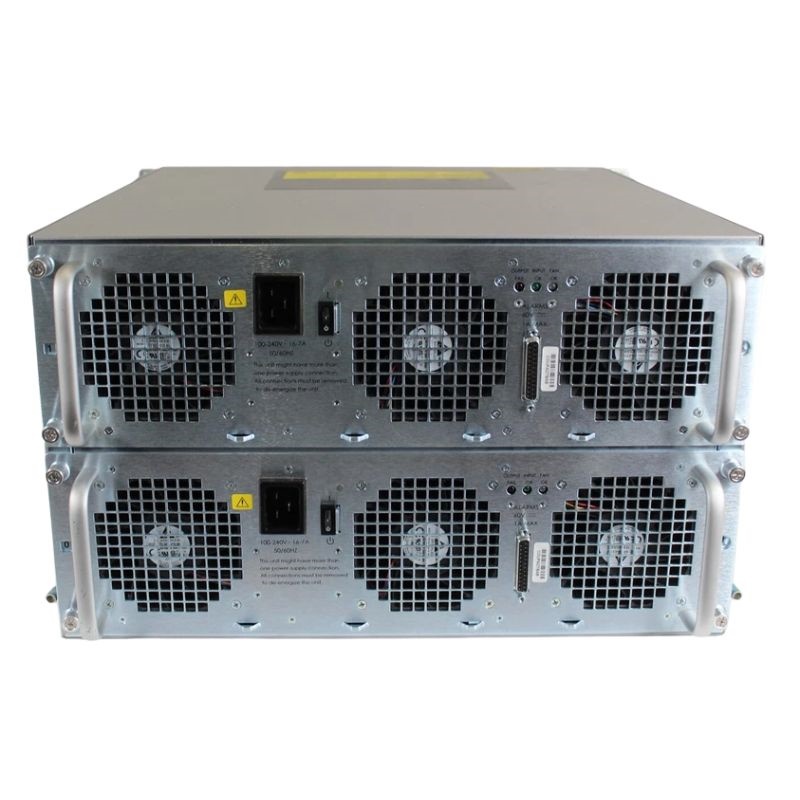
The chassis includes multiple power supply units that operate in a redundant configuration. This design ensures that the router continues to function even if one power supply fails. It also supports load balancing, improving overall efficiency and reliability.
The Cisco ASR1006 is equipped with sophisticated cooling systems that maintain optimal operating temperatures for all components. Efficient thermal management is essential for maintaining performance and extending the lifespan of the hardware.
The router supports stateful failover capabilities, allowing it to maintain active sessions during failover events. This ensures uninterrupted service delivery and enhances the overall resilience of the network infrastructure.
Security is a critical aspect of modern networking, and the Cisco ASR1006 chassis incorporates a wide range of security features to protect data and network resources. These features are designed to address both external threats and internal vulnerabilities, ensuring a secure networking environment.
The router includes built-in firewall capabilities and supports advanced encryption protocols to secure data transmission. This ensures that sensitive information is protected from unauthorized access and interception.
Advanced threat detection mechanisms enable the Cisco ASR1006 to identify and mitigate potential security threats in real time. This includes protection against distributed denial-of-service attacks, malware, and other network-based threats.
The chassis supports network segmentation techniques that isolate different parts of the network, reducing the risk of unauthorized access and improving overall security posture.
The Cisco ASR1006 is designed to support the scalability requirements of large enterprises and service providers. Its high-performance architecture and modular design make it capable of handling increasing data traffic and expanding network demands.
The router is capable of supporting high-bandwidth applications such as video streaming, cloud computing, and large-scale data transfers. This ensures that organizations can deliver seamless user experiences even under heavy network loads.
The system supports dynamic resource allocation, allowing it to optimize performance based on current network conditions. This ensures efficient utilization of resources and improves overall network efficiency.
The modular design enables seamless expansion of the network by adding new modules and capabilities without disrupting existing operations. This makes the Cisco ASR1006 an ideal choice for growing organizations.
In addition to performance and scalability, the Cisco ASR1006 chassis is designed with energy efficiency in mind. It incorporates features that reduce power consumption and minimize environmental impact.
The router uses advanced power management techniques to optimize energy usage based on workload requirements. This helps reduce operational costs and supports sustainability initiatives.
The hardware components are designed to meet environmental standards, ensuring that the router operates efficiently while minimizing its ecological footprint.
The Cisco ASR1006 chassis is supported by advanced software features that enhance network management and operational efficiency. These capabilities enable administrators to monitor, configure, and optimize the network with ease.
The router supports automation tools that simplify network configuration and management. This reduces manual intervention and minimizes the risk of errors.


 Contact Us
 Information
 Catalog
 Solid State Drives (SSD)
 Network Switches
 Hard Disk Drives
 HBA & Controllers
 PC & Servers
 PC & Server Memory
 CPU & Processors
 Network Routers
 Power Supplies
 Tape Drives & Libraries
 Network Devices
 Computer & Network Cables