(7% discount is applied at checkout)
Cart is empty
Your go-to destination for cutting-edge server products
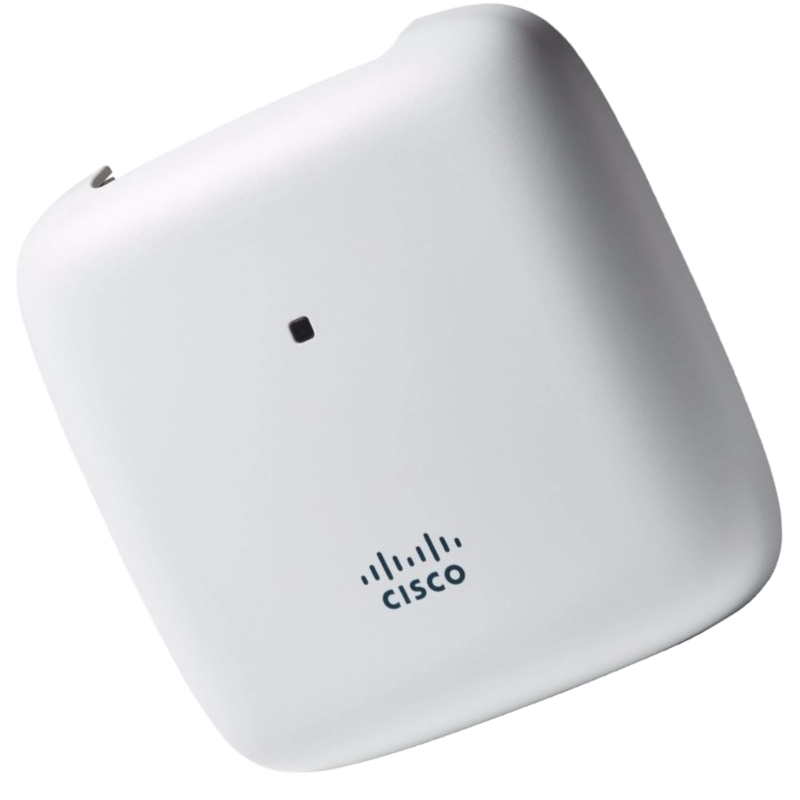


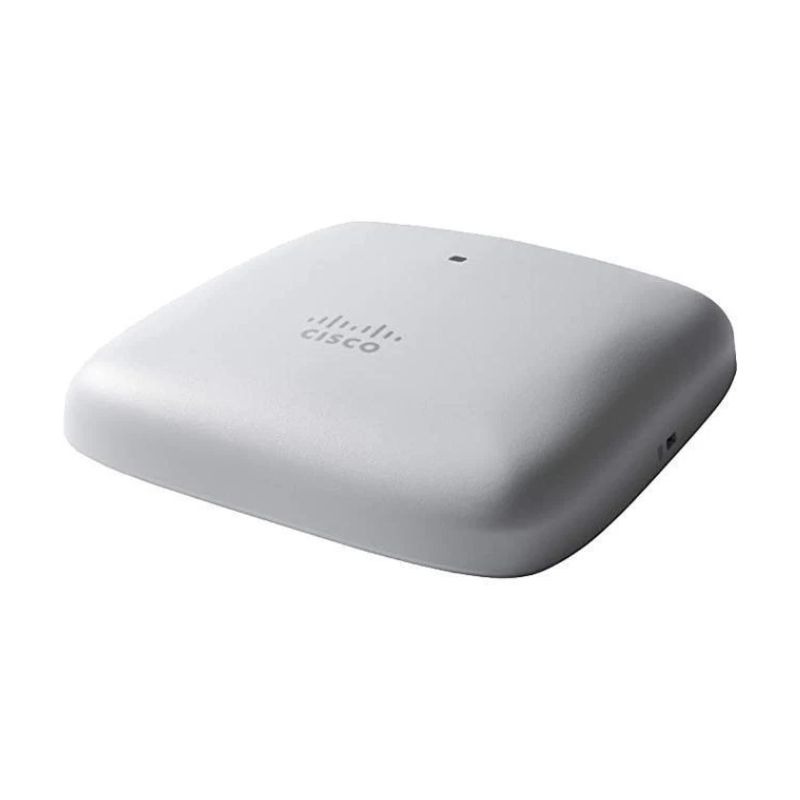
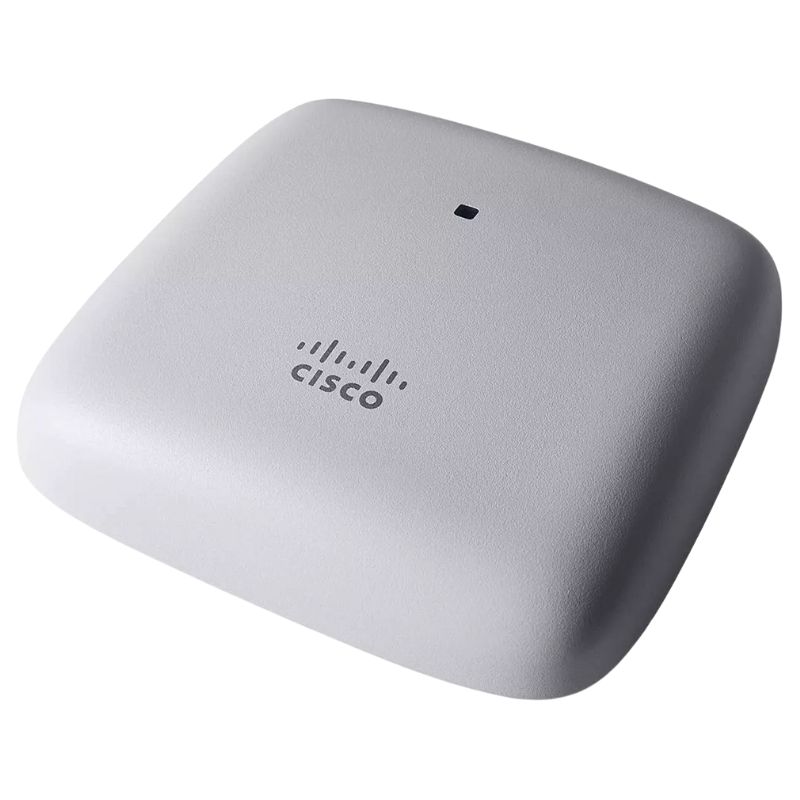
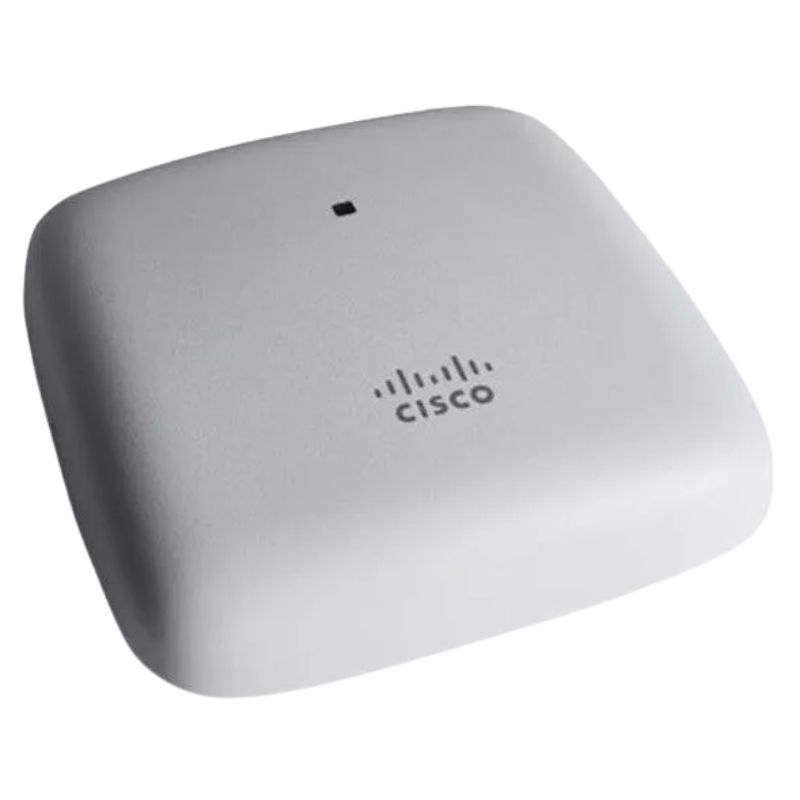
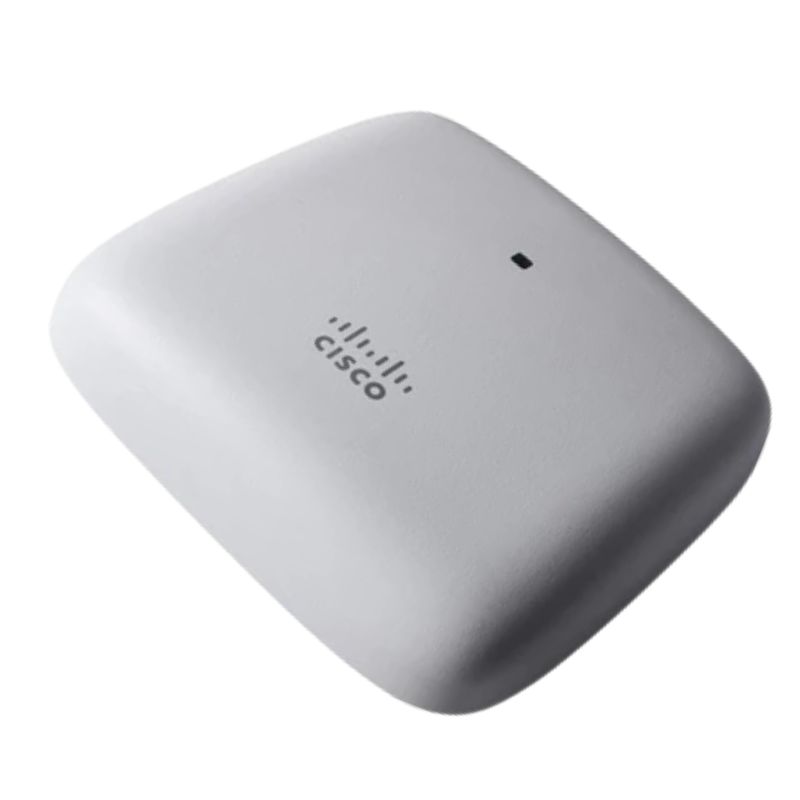
Cisco CBW140AC-B Ceiling Mountable 140AC Wireless Access Point Wi-Fi 5 1 X Network RJ-45 Gigabit Ethernet. Factory-Sealed New in Original Box (FSB) with 1 year replacement warranty
The Cisco CBW140AC-B is a high-performance ceiling-mountable wireless access point designed to deliver fast, reliable, and scalable Wi-Fi 5 connectivity for modern business environments. Built for simplicity and enterprise-grade performance, it supports seamless wireless networking without requiring a dedicated controller.
The Cisco CBW140AC-B Ceiling Mountable 140AC Wireless Access Point Wi-Fi 5 1 X Network RJ-45 Gigabit Ethernet represents a compact yet powerful solution within modern business wireless networking infrastructure. Designed for small to medium-sized enterprise environments, it delivers reliable Wi-Fi 5 (802.11ac) performance with seamless ceiling-mounted deployment. This category of wireless access points is engineered to support high-density connectivity, stable throughput, and efficient network management for offices, retail stores, hospitality environments, and branch deployments where consistent wireless performance is essential.
As organizations continue to rely heavily on wireless connectivity for cloud applications, video conferencing, and mobile workforce productivity, ceiling-mounted access points such as the Cisco CBW140AC-B play a critical role in ensuring uniform signal distribution. The device integrates enterprise-grade features while maintaining simplicity suitable for SMB deployments, reducing configuration complexity and operational overhead.
Ceiling-mounted wireless access points are strategically designed to provide optimal signal propagation in indoor environments. By positioning the device overhead, the radio signals can travel more evenly across open spaces, reducing interference caused by furniture, walls, and equipment. The Cisco CBW140AC-B fits within this category, offering an architecture optimized for broad coverage and stable user experience in high-traffic environments.
This category of Wi-Fi access points is widely deployed across various industries where wireless reliability is a fundamental requirement. Offices benefit from seamless collaboration tools and uninterrupted cloud application access. Retail environments leverage stable connectivity for point-of-sale systems and inventory management tools. Hospitality environments require consistent guest Wi-Fi access, while educational institutions depend on robust connectivity for digital learning platforms.
In office environments, the Cisco CBW140AC-B supports multiple concurrent users accessing bandwidth-intensive applications such as video conferencing platforms, cloud storage systems, and enterprise communication tools. The ceiling-mounted design ensures even distribution of wireless coverage across meeting rooms, workstations, and shared spaces.
Retail businesses benefit from uninterrupted wireless service for payment processing systems, customer Wi-Fi access, and inventory management solutions. The stability provided by this class of access point ensures that customer experience remains consistent even during peak traffic hours.
Hotels and guest houses rely on consistent wireless connectivity to enhance guest satisfaction. Ceiling-mounted access points reduce dead zones in corridors, rooms, and common areas, ensuring reliable coverage throughout the facility.
Wi-Fi 5 technology, also known as IEEE 802.11ac, represents a major advancement in wireless networking efficiency and throughput. It operates primarily in the 5 GHz frequency band, enabling higher data rates and reduced interference compared to older wireless standards. The Cisco CBW140AC-B leverages this technology to deliver consistent performance for modern business workloads.
Devices in this category are optimized for efficient data transmission using advanced modulation techniques and channel bonding capabilities. This allows multiple devices to communicate simultaneously without significant degradation in performance. The result is a smoother user experience in environments where multiple clients are connected at the same time.
The access point is designed to handle concurrent connections efficiently, distributing bandwidth intelligently across connected devices. This is particularly important in environments where employees or customers rely on wireless access simultaneously.
Low latency is essential for applications such as voice over IP, video conferencing, and real-time cloud collaboration. The Wi-Fi 5 architecture in this device reduces packet delay and improves transmission consistency, making it suitable for real-time communication workloads.
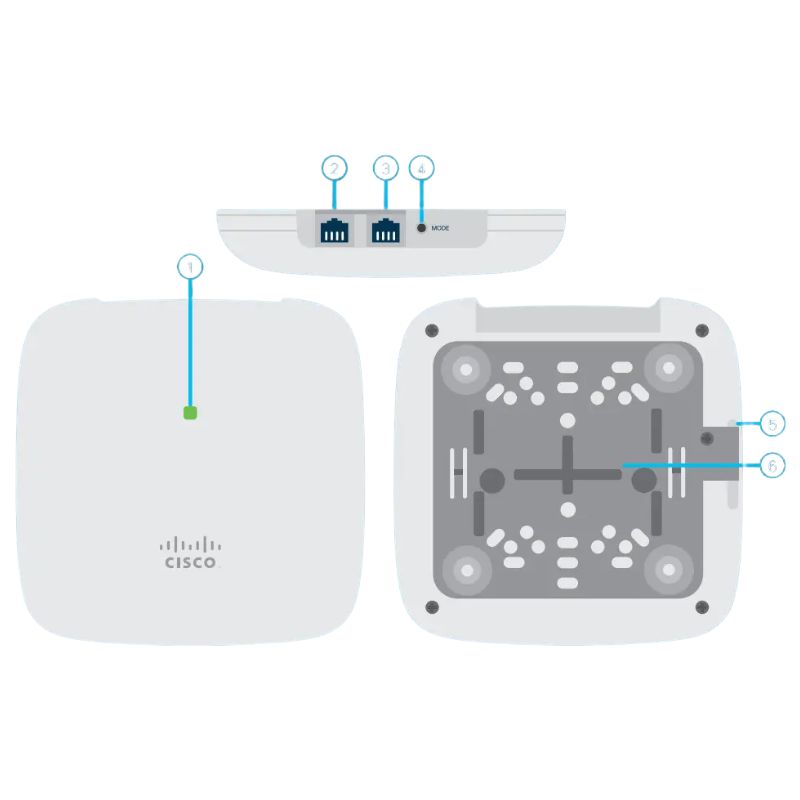
The physical design of the Cisco CBW140AC-B emphasizes discreet installation and optimal signal distribution. Ceiling mounting allows the device to remain unobtrusive while maximizing coverage efficiency. This installation method ensures that wireless signals propagate evenly across horizontal spaces, reducing interference and signal obstruction.
Cisco devices in this category are engineered with durability and long-term deployment in mind. The housing is designed to withstand continuous operation in business environments where uptime is critical. The compact structure allows integration into modern interior designs without disrupting aesthetics.
Efficient thermal management ensures that the device maintains stable performance even under continuous heavy load. Passive cooling mechanisms eliminate the need for noisy fans, making it suitable for quiet environments such as offices and conference rooms.
The Cisco CBW140AC-B includes a 1 x RJ-45 Gigabit Ethernet port, enabling high-speed wired connectivity to the core network infrastructure. This ensures that the wireless backhaul does not become a bottleneck, allowing full utilization of the device’s wireless capabilities.
A stable wired connection is essential for maintaining consistent wireless performance. The Gigabit Ethernet interface ensures that data transfer between the access point and the network switch occurs without congestion, supporting high-volume traffic environments.
Many deployments utilize Power over Ethernet (PoE) to simplify installation by delivering both power and data through a single cable. This reduces infrastructure complexity and allows flexible placement without reliance on nearby electrical outlets.
In enterprise environments, network reliability is critical. The wired connection architecture ensures that even under high wireless load conditions, the access point maintains consistent communication with upstream network devices.
Ceiling-mounted access points are designed to emit wireless signals in an omnidirectional pattern. This ensures balanced coverage across all directions, minimizing weak signal zones and improving user experience throughout the coverage area.
Modern wireless environments often include multiple overlapping networks. The Cisco CBW140AC-B is designed to manage channel selection intelligently, reducing interference and optimizing spectrum usage.
In environments with a high number of connected devices, such as offices or conference venues, the access point maintains stable performance by distributing network resources effectively across clients.
Building materials such as concrete, glass, and metal can affect wireless signal propagation. The ceiling-mounted positioning helps mitigate these challenges by maintaining a higher vantage point for signal distribution.
The Cisco CBW140AC-B is designed to scale alongside business growth. As organizations expand, additional access points can be deployed to extend coverage without requiring major infrastructure redesign.
In larger deployments, multiple units work together to create a seamless wireless network. This ensures consistent roaming between access points without user disruption, supporting mobility within the workspace.
Users moving between different areas of a facility experience uninterrupted connectivity as devices automatically transition between access points. This is essential for environments that rely on mobile workflows.
Network traffic is distributed across multiple access points to prevent congestion. This improves performance consistency and ensures that no single device becomes overloaded.
Security is a critical aspect of enterprise wireless networking. The Cisco CBW140AC-B supports modern encryption standards that protect data transmissions against unauthorized access and interception.
Network administrators can implement authentication policies to control user access. This ensures that only authorized devices and users can connect to the wireless network, enhancing overall security posture.
Guest access can be isolated from internal business networks, ensuring that visitors can access the internet without compromising sensitive organizational data.
Encryption protocols ensure that data transmitted across the wireless network remains secure, protecting both user privacy and business-critical information.
Cisco wireless solutions typically include centralized management features that allow administrators to configure and monitor multiple access points from a unified interface. This simplifies network management and reduces operational complexity.
IT administrators can adjust network settings to match specific deployment requirements, including bandwidth allocation, SSID configuration, and security policies.
The Cisco CBW140AC-B is specifically designed for indoor environments where controlled wireless coverage is required. Its ceiling-mounted architecture ensures efficient signal distribution in structured environments.
Energy-efficient operation reduces long-term operational costs while maintaining consistent performance. This is particularly beneficial for organizations deploying multiple access points across large facilities.
The device is engineered for continuous operation, ensuring reliable performance over extended periods without degradation in service quality.


 Contact Us
 Information
 Catalog
 Solid State Drives (SSD)
 Network Switches
 Hard Disk Drives
 HBA & Controllers
 PC & Servers
 PC & Server Memory
 CPU & Processors
 Network Routers
 Power Supplies
 Tape Drives & Libraries
 Network Devices
 Computer & Network Cables