(7% discount is applied at checkout)
Cart is empty
Your go-to destination for cutting-edge server products


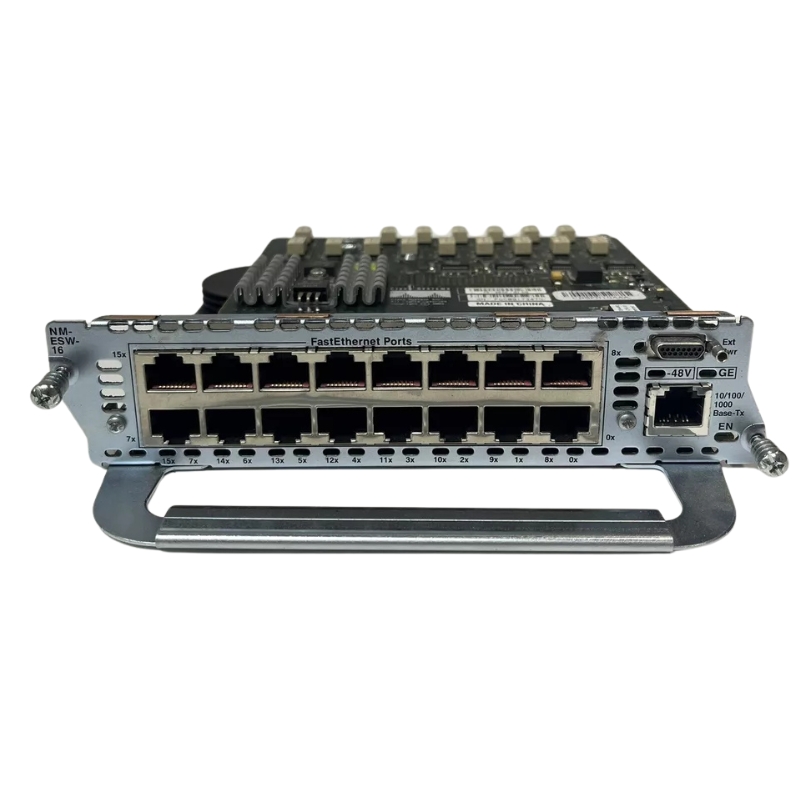
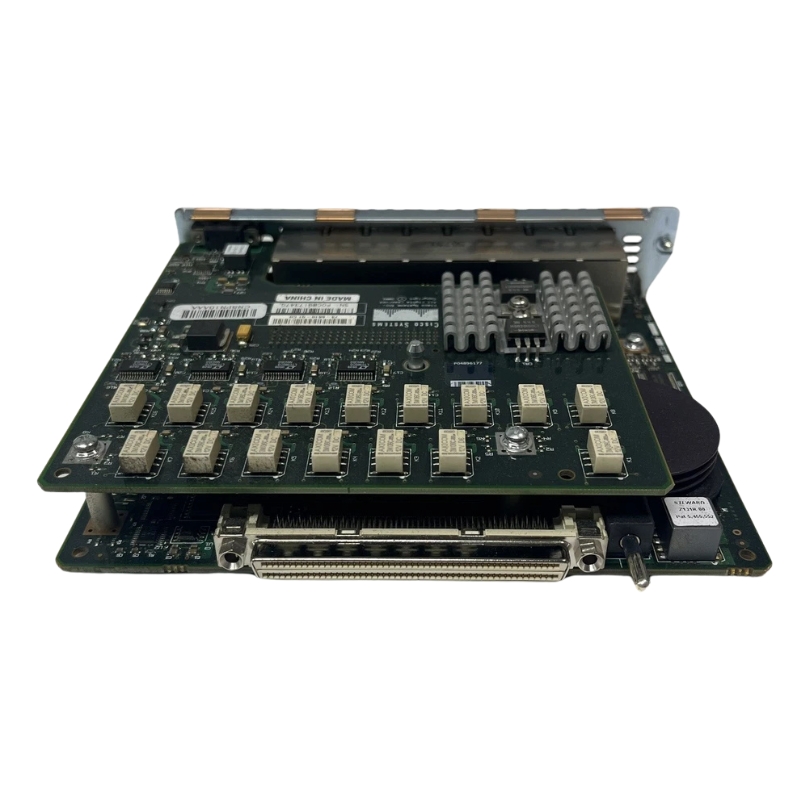
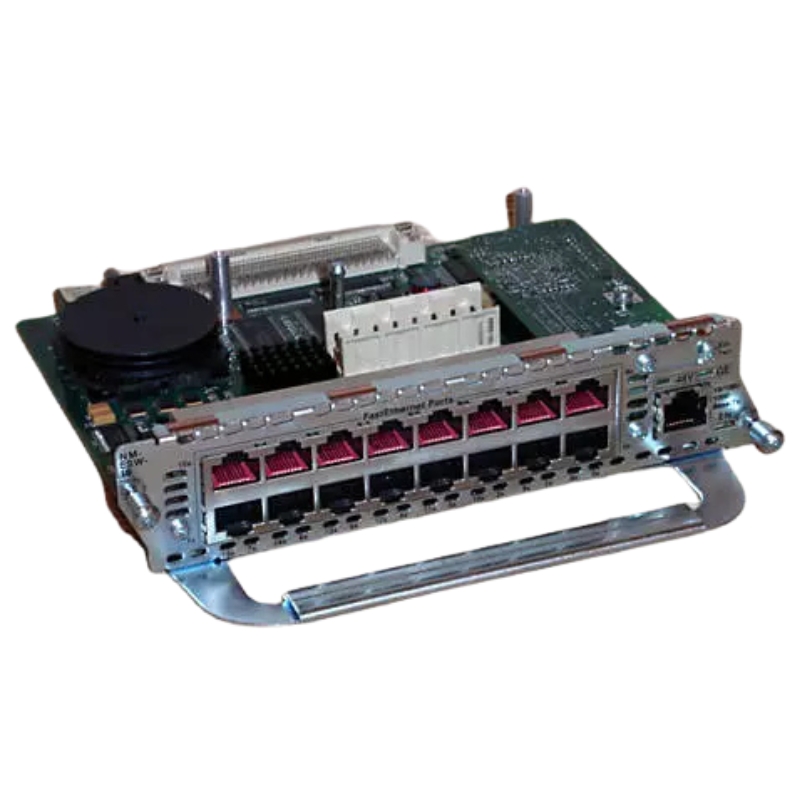
Cisco NM-16ESW 16 Ports 10-100 Ether Network Module Switch. Factory-Sealed New in Original Box (FSB) with 1 year replacement warranty
| SKU/MPN | Warranty | Price | Condition | You save |
|---|---|---|---|---|
| NM-16ESW | 1 Year Warranty | $170.00 | Excellent Refurbished | You save: $59.50 (26%) |
| NM-16ESW | 1 Year Warranty | $260.00 | Factory-Sealed New Retail in Original Box (FSB) | You save: $91.00 (26%) |
The Cisco NM-16ESW Ethernet Network Module is a reliable switching solution engineered to extend the LAN connectivity of compatible Cisco modular routers. Designed for enterprise branch offices and distributed network environments, this module integrates Layer 2 switching capabilities directly into the router chassis, reducing the need for external switches while optimizing network performance and management efficiency.
The Cisco NM-16ESW 16 Ports Ethernet Network Module Switch represents a modular switching category designed to extend routing platforms with integrated Layer 2 Ethernet connectivity. This category focuses on network expansion through internal switch modules that eliminate the need for external access switches in branch, campus, and distributed enterprise environments. By embedding Ethernet switching directly into compatible Cisco routers, this category supports simplified network architectures, reduced hardware footprints, and centralized management.
Network modules within this category are purpose-built for organizations that require flexible port density, reliable Ethernet performance, and seamless integration with existing Cisco IOS features. The NM-16ESW model exemplifies this approach by offering sixteen Fast Ethernet ports that deliver consistent traffic handling, VLAN segmentation, and policy enforcement directly from the router chassis.
The architectural foundation of the Cisco NM-16ESW category is based on modular network expansion. Rather than deploying separate switching appliances, this category allows Ethernet switching hardware to be installed internally within supported Cisco router platforms. This design reduces cabling complexity, lowers power consumption, and simplifies rack layouts while preserving enterprise-grade switching functionality.
The NM-16ESW integrates into the router backplane, enabling direct communication between the switching fabric and routing engine. This internal architecture improves packet forwarding efficiency and minimizes latency between Layer 2 switching and Layer 3 routing operations. By eliminating external interconnects, the category enhances overall network reliability and reduces potential points of failure.
This category is engineered to operate within specific Cisco modular routers, particularly Integrated Services Routers that support network modules. The NM-16ESW aligns with router-based network expansion strategies, allowing administrators to scale port capacity without redesigning the network. Compatibility ensures that the module leverages router CPU resources, memory, and IOS features for unified operation.
By sharing the router’s operating system, this category enables consistent configuration methods, common command-line interfaces, and unified troubleshooting workflows. Network teams benefit from reduced learning curves and streamlined operational practices when managing switching and routing within the same device.
The internal switching fabric of the Cisco NM-16ESW category is optimized for Fast Ethernet workloads commonly found in branch offices, classrooms, and departmental networks. The design prioritizes predictable performance, stable throughput, and efficient handling of concurrent data flows. Each port operates independently, allowing multiple endpoints to communicate simultaneously without performance degradation.
This internal fabric supports store-and-forward switching, error checking, and intelligent frame handling. These characteristics ensure data integrity and reliable delivery across connected devices, reinforcing the suitability of this category for mission-critical access-layer deployments.
A defining attribute of the Cisco NM-16ESW category is its sixteen Ethernet ports, which provide substantial connectivity within a compact form factor. This port density supports direct connections to end-user devices such as workstations, IP phones, printers, and wireless access points. The category addresses environments where space efficiency and integration are prioritized.
Fast Ethernet connectivity ensures compatibility with a wide range of legacy and modern devices. The category balances cost efficiency with dependable performance, making it ideal for organizations that require stable access-layer connectivity without the complexity of high-speed uplinks.
This category is particularly suited for access-layer deployment in branch offices and remote locations. By consolidating switching and routing into a single device, the Cisco NM-16ESW reduces equipment sprawl and simplifies installation. This approach is advantageous for sites with limited IT staff or constrained physical infrastructure.
Educational institutions, retail outlets, and small enterprise offices benefit from this category’s ability to deliver consistent Ethernet access while maintaining centralized policy control through the router’s IOS environment.
The NM-16ESW category supports diverse endpoint connectivity requirements. It accommodates data traffic generated by computers, voice traffic from IP telephony systems, and control traffic from networked peripherals. The switching logic efficiently segregates and forwards frames based on MAC addressing and VLAN configuration.
This capability ensures that connected devices experience reliable network access, even in environments with mixed traffic types and varying bandwidth demands.
The Cisco NM-16ESW category emphasizes robust Layer 2 switching functionality integrated within the router environment. Core features include MAC address learning, frame forwarding, and broadcast control. These capabilities form the foundation of efficient local network communication.
Layer 2 operations are handled directly by the module, reducing the processing burden on the router CPU and ensuring that switching tasks are executed with minimal latency.
VLAN support is a central element of this category, enabling logical segmentation of the network into multiple broadcast domains. Administrators can define VLANs to separate departments, device types, or security zones while using the same physical infrastructure.
VLAN tagging and trunking allow the NM-16ESW to integrate seamlessly with upstream switches and routers. This capability supports scalable network designs and simplifies traffic management across distributed environments.
The category incorporates support for Spanning Tree Protocol variants to prevent network loops and ensure topology stability. By participating in spanning tree calculations, the NM-16ESW maintains consistent connectivity even in redundant network designs.
This feature enhances reliability and supports enterprise network standards, making the category suitable for integration into larger switching environments.
Quality of Service capabilities are integral to the Cisco NM-16ESW category, particularly in environments where voice and data traffic coexist. QoS mechanisms classify, prioritize, and manage traffic to ensure that latency-sensitive applications receive appropriate bandwidth and forwarding priority.
By leveraging Cisco IOS QoS features, the category supports consistent application performance across the access layer.
In converged networks, the NM-16ESW category supports prioritization of voice traffic from IP phones. This ensures clear audio quality and minimizes jitter and packet loss. Data traffic is handled efficiently without compromising voice performance.
This optimization is particularly valuable in branch offices where voice services are delivered over the same infrastructure as data applications.
Security is a core consideration in the Cisco NM-16ESW category. By integrating switching into the router, this category benefits from the router’s security features while adding access-layer controls. This combination enhances the overall security posture of the network.
Port security features restrict unauthorized devices from connecting to the network. Administrators can define rules that limit the number of MAC addresses per port or enforce authentication requirements.
This capability reduces the risk of unauthorized access and protects sensitive network resources.
The category supports traffic monitoring and filtering through IOS-based policies. Suspicious or unwanted traffic can be identified and controlled directly at the access layer, minimizing exposure to threats.
One of the primary advantages of the Cisco NM-16ESW category is unified management. Because the module operates within the router, administrators manage switching and routing through a single interface. This approach simplifies configuration, monitoring, and troubleshooting.
Configuration of the NM-16ESW is performed using familiar Cisco IOS commands. This consistency reduces training requirements and allows network teams to apply standardized configuration templates across devices.
The Cisco NM-16ESW category is designed for continuous operation in enterprise environments. Its internal integration reduces external dependencies, enhancing overall system stability.
The module is built to meet Cisco’s reliability standards, ensuring consistent operation under varying environmental conditions. This resilience supports long-term deployments with minimal maintenance.
When deployed in redundant network designs, the category supports failover mechanisms that maintain connectivity during link or device failures. This capability contributes to high availability across distributed networks.
The NM-16ESW category supports scalable network growth by allowing organizations to add Ethernet ports as needed. Modular expansion avoids the need for complete hardware replacement when requirements evolve.
As organizations grow, additional modules or upgraded routers can be deployed while maintaining consistent configuration practices. This flexibility supports long-term infrastructure planning.
The category aligns with hierarchical network designs and supports integration with modern routing and switching strategies. Its modular nature ensures relevance even as network technologies advance.
The Cisco NM-16ESW category addresses diverse use cases, from small offices to distributed enterprise branches. Its integrated design supports environments where simplicity, reliability, and manageability are critical.
In branch offices, the category enables rapid deployment of Ethernet connectivity without extensive infrastructure. This approach reduces costs and accelerates time to service.
Schools and training facilities benefit from the category’s ability to connect classrooms, labs, and administrative offices through a centralized routing and switching platform.
The Cisco NM-16ESW category occupies a strategic position within the broader Cisco networking portfolio. It bridges the gap between standalone switches and fully integrated routing platforms, offering a balanced solution for access-layer connectivity.
By consolidating functions, this category reduces capital and operational expenditures. Fewer devices mean lower power consumption, reduced maintenance, and simplified support.
The category adheres to Cisco’s design principles and interoperability standards, ensuring seamless integration with other Cisco products and technologies.


 Contact Us
 Information
 Catalog
 Solid State Drives (SSD)
 Network Switches
 Hard Disk Drives
 HBA & Controllers
 PC & Servers
 PC & Server Memory
 CPU & Processors
 Network Routers
 Power Supplies
 Tape Drives & Libraries
 Network Devices
 Computer & Network Cables