(7% discount is applied at checkout)
Cart is empty
Your go-to destination for cutting-edge server products
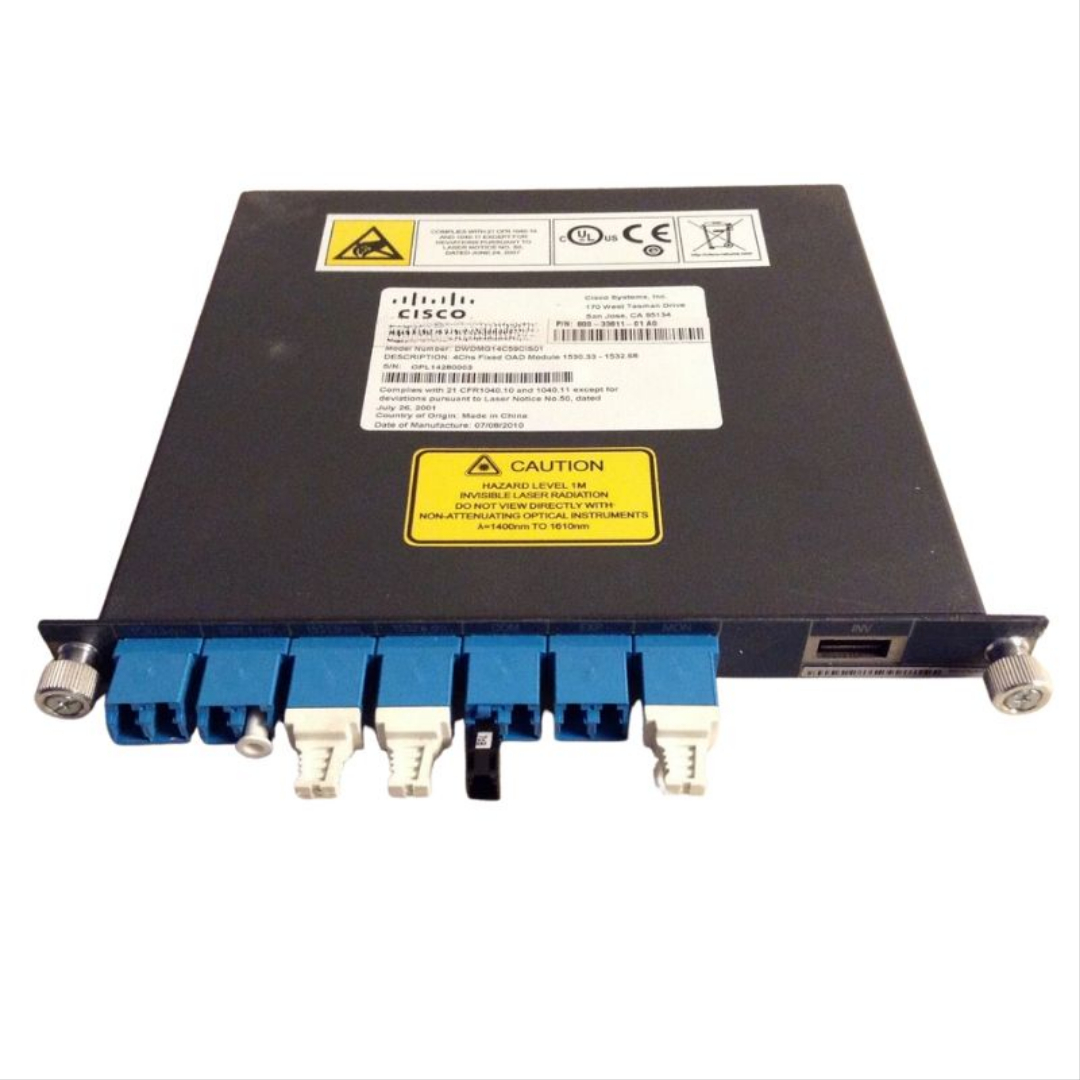


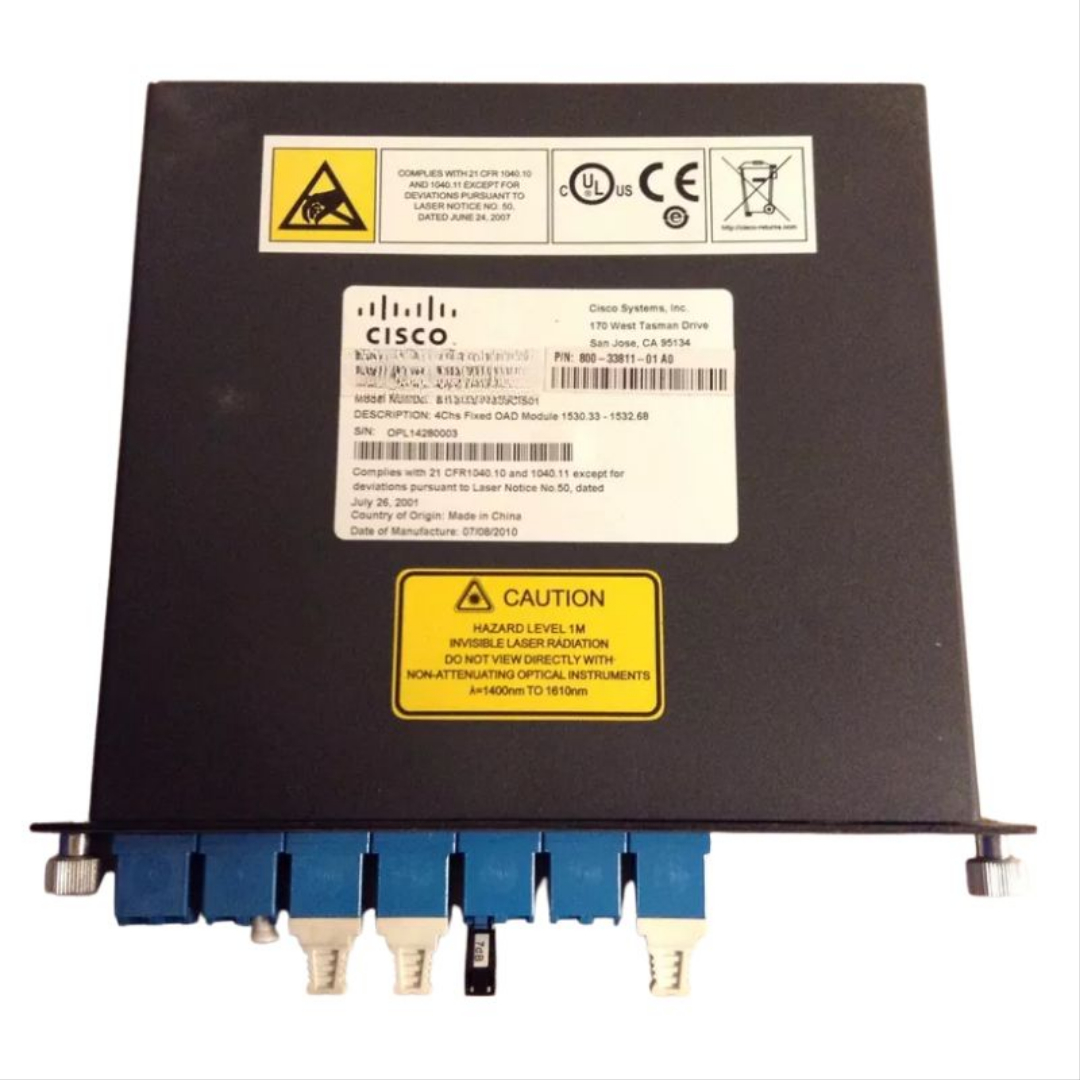
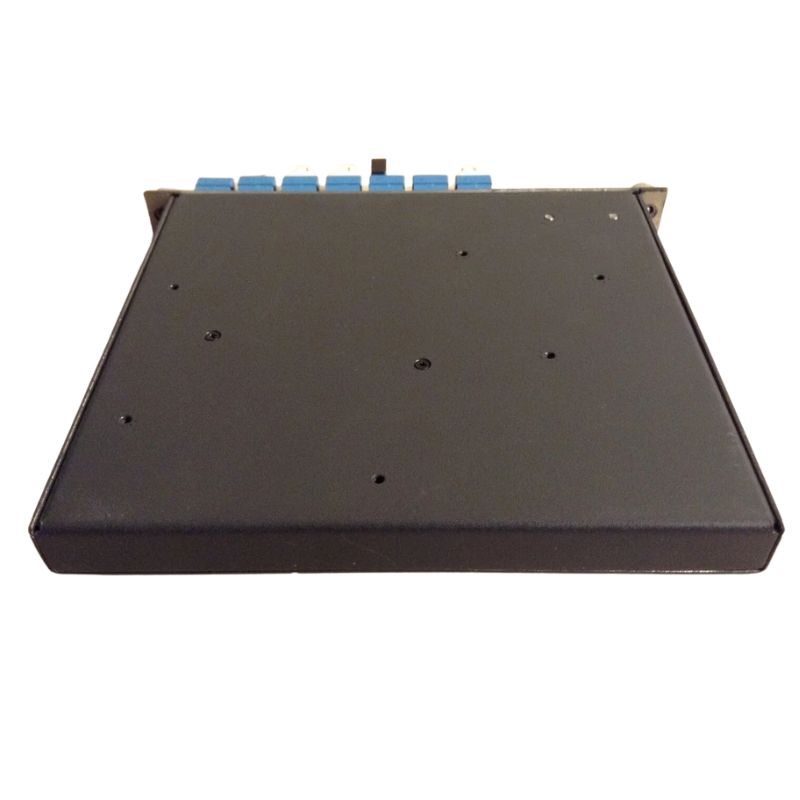
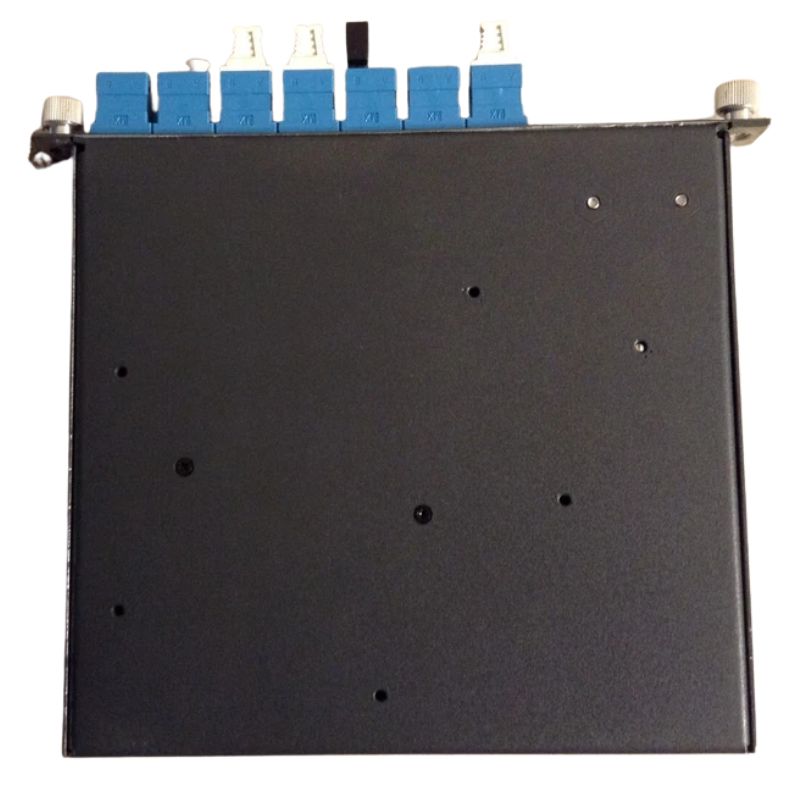
Cisco 15216-FLD-4-46.1 ONS 15216 Data Multiplexer. Excellent Refurbished with 1 year replacement warranty
The Cisco 15216-FLD-4-46.1 Edge 4-Channel Bi-Directional Multiplexer OADM Module is a high-performance passive optical networking component engineered for dense wavelength division multiplexing (DWDM) environments. Designed to optimize fiber optic transmission efficiency, this Optical Add-Drop Multiplexer (OADM) enables precise channel management within the 1546.12 nm to 1548.51 nm wavelength range.
The Cisco 15216-FLD-4-46.1 Edge 4-Channel Bi-Directional Multiplexer Optical Add-Drop Multiplexer (OADM) module operating within the 1546.12 nm to 1548.51 nm wavelength range represents a highly specialized component designed for dense wavelength division multiplexing (DWDM) optical transport systems. It is engineered to support high-capacity optical networking environments where multiple data channels are transmitted simultaneously over a single optical fiber infrastructure. This category of optical module is widely deployed in metropolitan area networks, long-haul backbone systems, and carrier-grade telecom infrastructures where scalability, signal integrity, and spectral efficiency are essential requirements.
This specific module is optimized for edge deployment scenarios where optical signals must be selectively added or dropped without disrupting the remaining channels traveling through the fiber. Its four-channel bi-directional configuration ensures that multiple wavelengths can be processed efficiently in both directions, enabling advanced traffic management across distributed optical networks.
Dense wavelength division multiplexing technology is a cornerstone of modern fiber-optic communication systems. It allows multiple optical carrier signals, each assigned to a specific wavelength, to be transmitted simultaneously through a single strand of fiber. The Cisco 15216-FLD-4-46.1 module plays a critical role within this architecture by enabling selective wavelength handling at network nodes. The DWDM architecture typically consists of transmitters, multiplexers, optical amplifiers, fiber spans, and demultiplexers, with OADM modules functioning as intermediate processing points.
In such systems, wavelengths are tightly packed within a narrow spectral band, requiring precise filtering mechanisms. The 1546.12 nm to 1548.51 nm range corresponds to a specific portion of the C-band spectrum, which is widely used due to its low attenuation characteristics in standard single-mode fiber. This makes the module particularly suitable for long-distance transmission with minimal signal degradation.
Optical add-drop multiplexing is a technique that allows individual wavelengths to be extracted (dropped) from a multi-wavelength signal or inserted (added) into an existing stream without converting the signal to the electrical domain. The Cisco 15216-FLD-4-46.1 module is designed to perform this function with high precision, ensuring that only selected channels within the designated wavelength band are affected while others pass through transparently.
This capability significantly reduces the need for electrical regeneration at intermediate nodes, thereby lowering latency, power consumption, and operational costs. It also enhances network flexibility by allowing dynamic reconfiguration of optical paths.
The four-channel configuration of the Cisco 15216-FLD-4-46.1 module enables the simultaneous processing of multiple wavelengths within the defined spectral window. Each channel is precisely aligned to a specific wavelength grid, ensuring minimal crosstalk and high isolation between adjacent channels. This design is essential for maintaining signal integrity in dense optical environments where spectral spacing is extremely tight.
Bi-directional capability further enhances its operational efficiency by allowing upstream and downstream traffic to coexist on the same physical fiber infrastructure. This reduces fiber usage and maximizes existing network resources, particularly in metro edge deployments where fiber availability may be limited.
The module employs advanced thin-film filter technology and precision optical components to achieve accurate wavelength selection. These filters are engineered to exhibit sharp passband characteristics, enabling them to isolate specific wavelengths with minimal insertion loss. The result is a highly stable and predictable optical path that supports high data rates and low bit error ratios.
Isolation between channels is a critical performance metric in DWDM systems. The Cisco 15216-FLD-4-46.1 ensures that unwanted spectral leakage is minimized, preserving signal clarity even in high-power transmission scenarios. This is particularly important in carrier-grade environments where service-level agreements demand consistent performance.
The C-band spectrum, ranging approximately from 1530 nm to 1565 nm, is the most widely used window in fiber-optic communication due to its optimal balance between attenuation and amplifier compatibility. The Cisco 15216-FLD-4-46.1 module operates within a narrow segment of this band, specifically optimized for dense channel spacing and high spectral efficiency.
By focusing on the 1546.12 nm to 1548.51 nm range, the module supports tightly packed channel allocations, enabling carriers to maximize throughput within limited spectral resources. This is particularly advantageous in modern networks where bandwidth demand continues to increase exponentially.
Maintaining precise wavelength alignment is critical in DWDM systems. Even minor deviations can result in signal overlap or degradation. The Cisco 15216-FLD-4-46.1 module is engineered with high-stability optical components that ensure consistent wavelength performance across varying environmental conditions. Temperature variations, mechanical stress, and long-term operational wear are all mitigated through robust optical design techniques.
One of the primary applications of the Cisco 15216-FLD-4-46.1 module is within metro edge networks, where service providers aggregate and distribute traffic between core backbone systems and access networks. In these environments, the ability to add or drop specific wavelengths without disrupting the entire signal stream is essential for maintaining service continuity and operational efficiency.
The module enables network operators to introduce new services, reroute traffic, or perform maintenance activities without requiring complete system shutdowns. This flexibility is a key advantage in highly competitive telecommunications markets where uptime is critical.
In long-haul networks, where signals travel hundreds or thousands of kilometers, optical amplification and regeneration are required to maintain signal strength. The Cisco 15216-FLD-4-46.1 integrates seamlessly into such systems by allowing selective wavelength management at intermediate nodes. This reduces the need for full signal termination and regeneration, preserving signal integrity and reducing latency.
Beyond carrier networks, this module is also applicable in enterprise-level optical interconnects and data center linking scenarios. As data centers continue to scale and distribute geographically, DWDM technologies are increasingly used to connect facilities with high-speed optical links. The module’s ability to manage multiple wavelengths efficiently makes it suitable for such high-demand environments.
Insertion loss is a key parameter in optical networking, referring to the loss of signal power resulting from the insertion of a component into the optical path. The Cisco 15216-FLD-4-46.1 module is designed to minimize insertion loss through precision alignment of optical components and high-quality manufacturing processes. This ensures that signal degradation is kept within acceptable limits, even in complex network configurations.
Return loss refers to the amount of signal reflected back toward the source due to impedance mismatches or imperfections in the optical path. High return loss values are desirable as they indicate lower reflection levels. The module incorporates advanced anti-reflective design techniques that help maintain stable signal propagation and reduce the risk of interference.
Optical components are highly sensitive to temperature variations. The Cisco 15216-FLD-4-46.1 is engineered to maintain stable performance across a wide operating temperature range. This ensures reliability in both controlled data center environments and more variable outdoor or edge installations.
The module is designed for seamless integration within Cisco’s optical networking ecosystem, including DWDM platforms and optical transport chassis. This ensures that deployment is straightforward and that network operators can leverage existing infrastructure without extensive redesign or reconfiguration.
Modern optical networks require dynamic control and monitoring capabilities. The Cisco 15216-FLD-4-46.1 supports integration with network management systems that allow operators to monitor performance metrics, adjust configurations, and optimize traffic flows in real time. This contributes to improved operational efficiency and reduced downtime.
Reliability is a core requirement in carrier-grade optical equipment. The Cisco 15216-FLD-4-46.1 is built to deliver consistent performance over extended operational lifecycles. Its passive optical design reduces the number of failure points, contributing to high mean time between failures and reduced maintenance requirements.
Maintenance of DWDM systems typically involves monitoring optical power levels, inspecting physical connections, and ensuring proper alignment of optical components. The module’s design simplifies these tasks by providing stable optical characteristics that require minimal recalibration over time.
As network demands evolve, optical systems must be capable of scaling accordingly. The Cisco 15216-FLD-4-46.1 supports incremental network expansion by allowing additional wavelengths and services to be introduced without replacing existing infrastructure. This makes it a cost-effective solution for long-term network planning.
The increasing demand for high-speed internet services, cloud computing, and real-time data transmission has placed significant pressure on optical transport networks. Modules such as the Cisco 15216-FLD-4-46.1 are essential for enabling scalable architectures that can evolve alongside growing bandwidth requirements.
Future optical networks are expected to incorporate even higher channel densities, advanced modulation techniques, and intelligent traffic management systems. The foundational role of OADM modules ensures that existing infrastructure can be adapted to support these advancements without requiring complete system overhauls.
In dense optical environments, maintaining signal integrity is one of the most significant challenges. The Cisco 15216-FLD-4-46.1 addresses this through precise wavelength filtering, low insertion loss, and high isolation characteristics. These design features ensure that even in complex multi-channel environments, signal quality remains high.
By enabling optical-level add-drop functionality, the module reduces the need for electrical conversion at intermediate nodes. This simplifies network architecture and reduces operational complexity, making large-scale optical deployments more manageable and efficient.
Optical bypass and selective wavelength processing contribute to lower energy consumption across the network. By minimizing the need for electronic processing, the module helps reduce operational costs and supports energy-efficient network design strategies.
The Cisco 15216-FLD-4-46.1 module utilizes advanced thin-film filter technology to achieve precise wavelength separation. These filters are constructed using multiple dielectric layers that are carefully engineered to reflect or transmit specific wavelengths. This allows for highly selective optical routing within the defined spectral band.
Crosstalk is a critical concern in DWDM systems where multiple wavelengths coexist in close proximity. The module’s filtering architecture ensures strong spectral isolation between channels, significantly reducing the likelihood of interference and maintaining clean signal transmission paths.
The physical assembly of optical components within the module requires extremely high precision. Even microscopic misalignments can result in performance degradation. The Cisco 15216-FLD-4-46.1 is manufactured using advanced alignment techniques to ensure optimal optical path consistency and long-term reliability.
Telecommunications service providers rely heavily on DWDM systems to deliver high-capacity data services across extensive geographic regions. The Cisco 15216-FLD-4-46.1 module plays a crucial role in enabling flexible wavelength management within these infrastructures, supporting diverse service offerings such as broadband internet, leased lines, and enterprise connectivity solutions.
Traffic engineering in optical networks involves optimizing the flow of data to ensure efficient resource utilization. The module supports this by allowing selective wavelength routing, which enables operators to balance load distribution across the network and avoid congestion.
Resilient network design is essential for maintaining service continuity in the event of failures. The Cisco 15216-FLD-4-46.1 contributes to redundancy strategies by enabling flexible rerouting of optical channels, ensuring that alternative paths can be utilized when required.


 Contact Us
 Information
 Catalog
 Solid State Drives (SSD)
 Network Switches
 Hard Disk Drives
 HBA & Controllers
 PC & Servers
 PC & Server Memory
 CPU & Processors
 Network Routers
 Power Supplies
 Tape Drives & Libraries
 Network Devices
 Computer & Network Cables