(7% discount is applied at checkout)
Cart is empty
Your go-to destination for cutting-edge server products
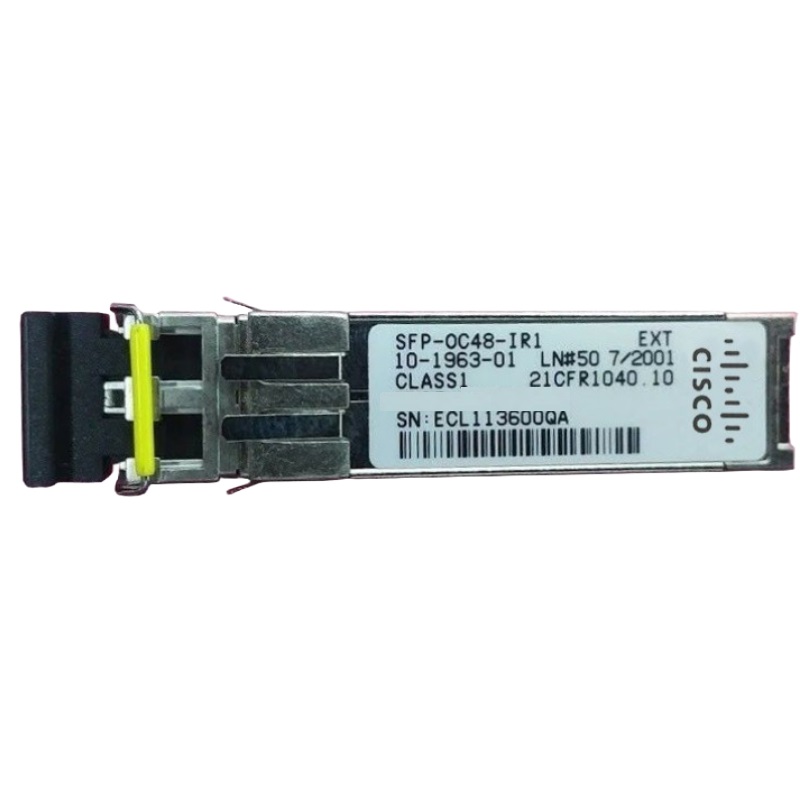


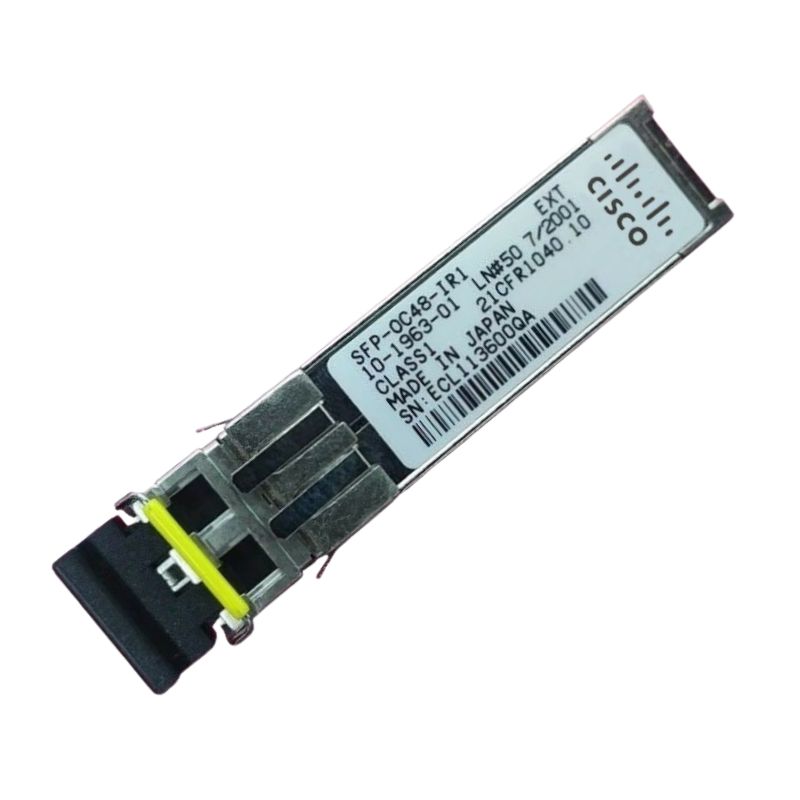
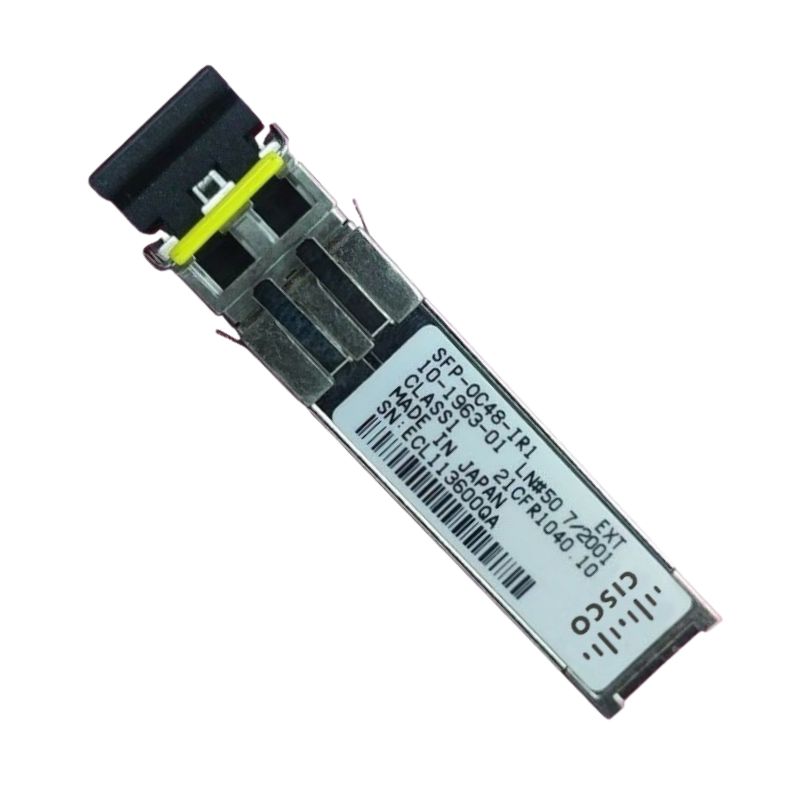
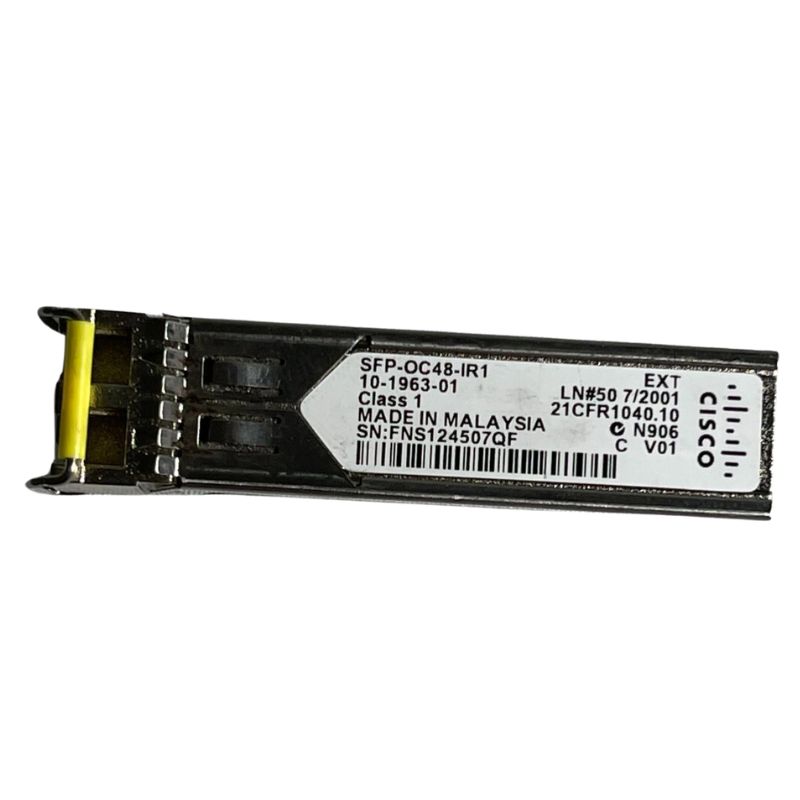
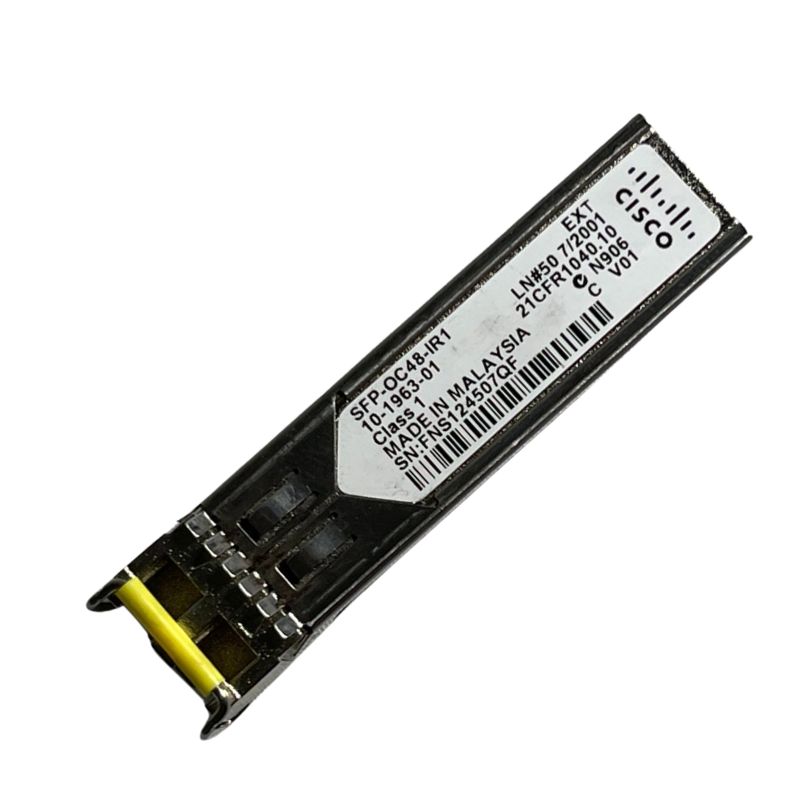
Cisco SFP-OC48-IR1 Single-Mode SFP Transceiver 2.67Gbps OC-48/STM-16 IR1. Excellent Refurbished with 1 year replacement warranty
The SFP-OC48-IR1 Cisco Single-Mode SFP 2.67Gbps OC-48/STM-16 IR1 Transceiver is a high-performance optical networking module engineered for carrier-grade telecommunications, enterprise backbone networks, and long-haul fiber infrastructures. Designed to support SONET OC-48 and SDH STM-16 standards, this transceiver provides reliable, high-speed data transmission at 2.67Gbps over single-mode fiber (SMF), ensuring stable connectivity in mission-critical environments where performance, uptime, and signal integrity are essential.
This optical module is part of Cisco’s robust SFP (Small Form-Factor Pluggable) family, widely used in switching, routing, and transport systems. The IR1 designation typically refers to intermediate reach optical transmission, optimized for medium-distance fiber links while maintaining low latency and minimal signal degradation. It is engineered to support telecom-grade applications, offering scalability and compatibility with dense network architectures.
The SFP-OC48-IR1 module is designed with a combination of optical precision and industrial-grade durability. It supports seamless integration into compatible Cisco networking equipment and ensures consistent performance under demanding network conditions.
The engineering foundation of the SFP-OC48-IR1 Cisco transceiver is built around precision optical components and standardized networking protocols. It ensures consistent throughput and signal integrity across medium-range fiber links. The module typically operates at a data rate of 2.67Gbps, aligning with OC-48 and STM-16 transmission standards widely adopted in global telecom infrastructure.
One of the most critical aspects of the SFP-OC48-IR1 module is its optical budget, which defines the allowable loss between transmitter and receiver. The module is designed to maintain signal integrity over intermediate distances by balancing laser power output and receiver sensitivity. This ensures that attenuation caused by fiber length, connectors, and splices does not degrade performance beyond acceptable thresholds.
OC-48 (Optical Carrier level 48) and STM-16 (Synchronous Transport Module level 16) are high-speed SONET/SDH standards used in optical telecommunications networks. The SFP-OC48-IR1 Cisco transceiver is built specifically to support these standards, making it suitable for backbone infrastructure and carrier-grade transmission systems.
OC-48 operates at approximately 2.488 Gbps in SONET systems, while STM-16 operates at a similar rate in SDH networks. The slight variation in signaling is handled by the transceiver’s internal encoding and optical conversion mechanisms, ensuring interoperability across global telecommunications systems.
The SFP-OC48-IR1 Cisco transceiver is widely deployed in environments requiring reliable high-speed optical communication. Its intermediate reach capability makes it particularly suitable for metropolitan and regional network segments.
In telecom carrier networks, this transceiver is commonly used to connect central offices, regional hubs, and aggregation nodes. It supports high-capacity backbone traffic, including voice, video, and data services, ensuring minimal latency and consistent throughput.
Large enterprises use OC-48 IR1 modules in their backbone networks to connect data centers, campus environments, and disaster recovery sites. The module ensures stable inter-site communication and supports high-volume internal data flows.
Metropolitan networks benefit from the intermediate reach capability of this transceiver, allowing efficient data transmission between geographically distributed network nodes within urban regions.
The module is frequently deployed in service provider edge routers and aggregation switches where traffic from multiple access networks is consolidated and routed toward core infrastructure.
The SFP-OC48-IR1 transceiver is designed to integrate seamlessly with a wide range of Cisco routers, switches, and optical transport platforms. Compatibility ensures plug-and-play installation, reducing deployment time and minimizing configuration complexity. Cisco’s ecosystem ensures that optical modules are validated for performance, reliability, and interoperability, reducing risks associated with third-party hardware integration.
Designing a network that incorporates the SFP-OC48-IR1 transceiver requires careful attention to fiber characteristics, attenuation levels, and environmental conditions. Single-mode fiber is essential for maintaining signal clarity over longer distances.
Engineers must account for fiber attenuation, connector loss, and splice loss when calculating link budgets. Proper planning ensures that signal strength remains within acceptable receiver sensitivity thresholds.
Although IR1 modules are designed for intermediate reach, actual performance may vary based on fiber quality, installation conditions, and network architecture. Proper testing ensures maximum achievable distance without signal degradation.
In critical deployments, redundant fiber paths are often implemented to ensure continuous service availability in case of link failure or degradation.
The SFP-OC48-IR1 Cisco transceiver is engineered for high reliability in demanding environments. Its optical components are designed to withstand temperature variations, electromagnetic interference, and continuous operational loads. These characteristics make it suitable for mission-critical applications where downtime is not acceptable and performance consistency is essential.
Compared to short-reach (SR) and long-reach (LR) optical modules, the SFP-OC48-IR1 occupies a balanced position in terms of distance and performance. While SR modules are limited to short distances within data centers, and LR modules are optimized for extended long-haul transmission, IR1 modules provide an intermediate solution suitable for metro and regional connectivity.
This balance makes the SFP-OC48-IR1 particularly valuable in hybrid network architectures where both performance and distance flexibility are required.
In layered network architectures, this transceiver is typically positioned between access layer aggregation and core transport systems, ensuring smooth data flow across distributed infrastructures.


 Contact Us
 Information
 Catalog
 Solid State Drives (SSD)
 Network Switches
 Hard Disk Drives
 HBA & Controllers
 PC & Servers
 PC & Server Memory
 CPU & Processors
 Network Routers
 Power Supplies
 Tape Drives & Libraries
 Network Devices
 Computer & Network Cables