(7% discount is applied at checkout)
Cart is empty
Your go-to destination for cutting-edge server products
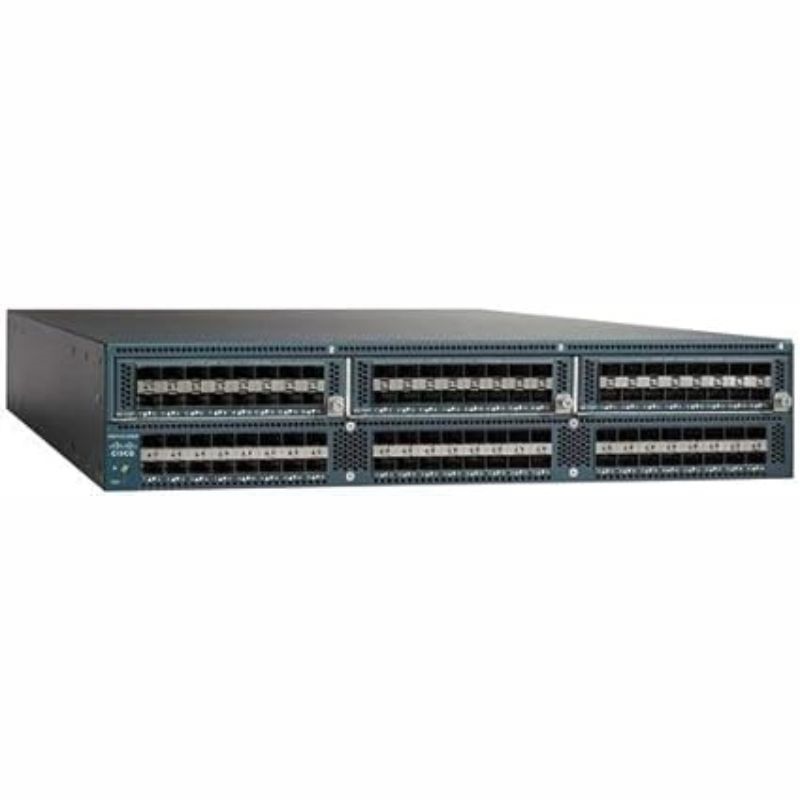


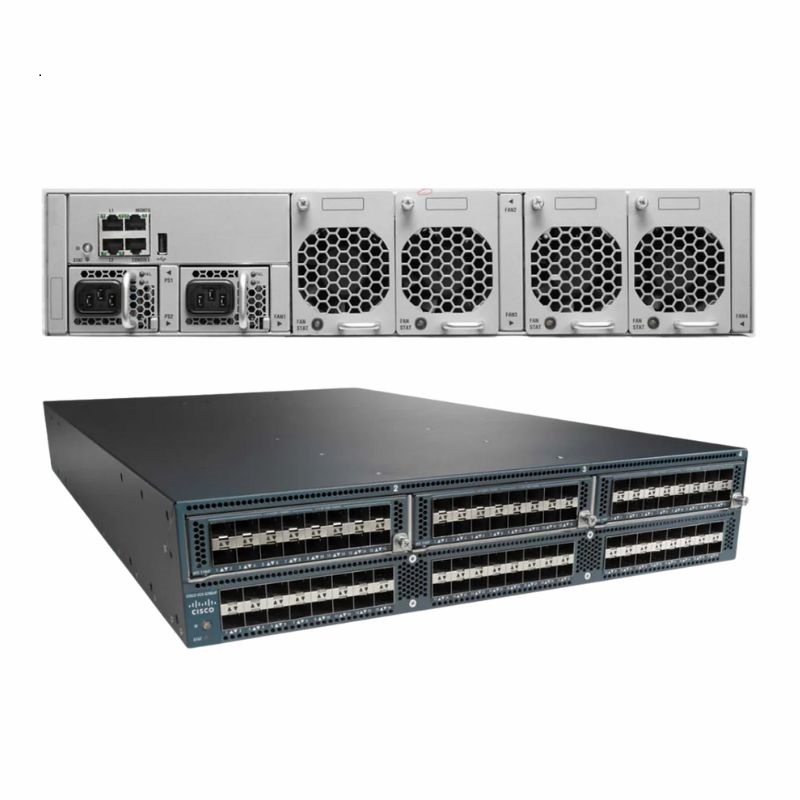
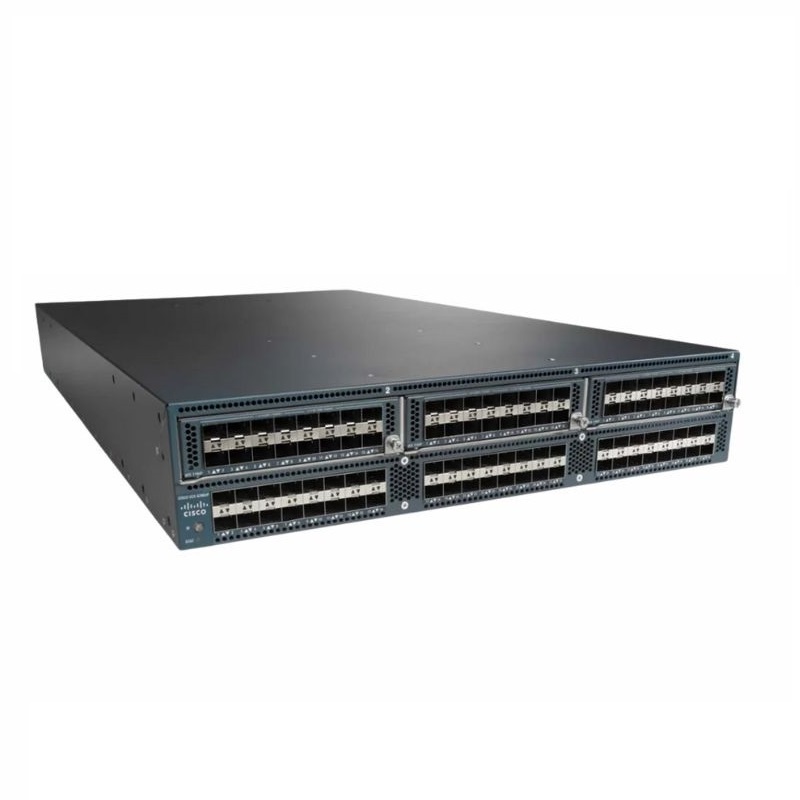
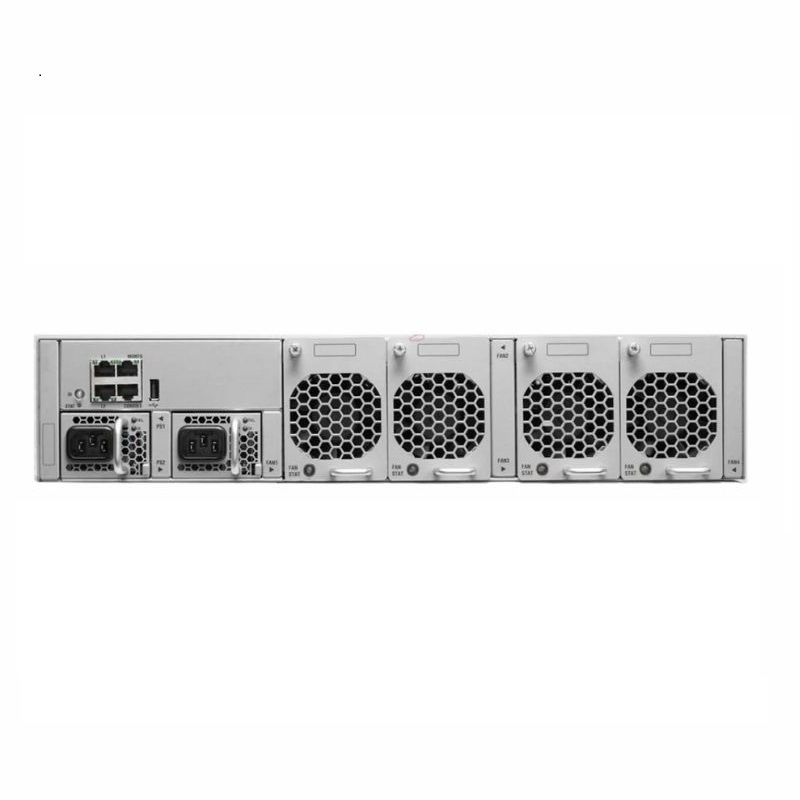
Cisco UCS-F1-6296UP-CH2 Fabric Managed Switch - 96 Ports. New Sealed with 1 Year Replacement Warranty
The Cisco UCS-F1-6296UP-CH2 Fabric Managed Switch is a high-performance, enterprise-grade fabric module designed for advanced data center networking environments. this switch is engineered to deliver scalable connectivity, ultra-low latency switching, and exceptional bandwidth efficiency for modern virtualization and cloud infrastructures.
Built as part of Cisco’s Unified Computing System (UCS) ecosystem, this fabric module is optimized for blade server architectures and high-density rack deployments, offering seamless integration, simplified management, and high-speed interconnectivity.
The Cisco UCS-F1-6296UP-CH2 Fabric Managed Switch is a high-performance, data center-class switching solution designed for unified computing environments, large-scale virtualization infrastructures, and enterprise server deployments that demand ultra-low latency, high bandwidth aggregation, and seamless integration with fabric-based architectures. Built within the Cisco Unified Computing System ecosystem developed this 96-port fabric interconnect switch delivers dense connectivity, scalable architecture, and advanced network intelligence tailored for mission-critical workloads.
As a fabric-managed switch, the UCS-F1-6296UP-CH2 is engineered to operate as a centralized networking and management point within UCS deployments, enabling unified fabric connectivity for both Ethernet and Fibre Channel over Ethernet (FCoE) traffic. This convergence reduces infrastructure complexity while increasing operational efficiency in enterprise and hyperscale environments. Its architecture is particularly suited for organizations implementing blade server chassis, virtualization clusters, and cloud-native application ecosystems requiring deterministic performance and simplified network management.
The unified fabric approach embedded in the UCS-F1-6296UP-CH2 enables the consolidation of multiple network types into a single high-speed infrastructure. This design eliminates the need for separate LAN and SAN switching layers by converging data and storage traffic into a single switching fabric. The result is a significant reduction in cabling complexity, power consumption, and overall hardware footprint, while improving scalability and throughput efficiency.
Within modern data centers, unified fabric switching is essential for supporting virtualization density, distributed storage systems, and high-performance computing workloads. The UCS-F1-6296UP-CH2 contributes to this architecture by acting as a central switching plane that connects compute nodes, storage arrays, and upstream network cores.
The switch is designed specifically for integration with Cisco UCS blade servers and rack-mount compute nodes, forming a cohesive fabric interconnect layer that simplifies provisioning and lifecycle management. Within this ecosystem, network policies, VLAN configurations, QoS settings, and traffic segmentation are centrally managed, ensuring consistency across the entire compute fabric.
As part of Cisco UCS-F1-6296UP-CH2 Fabric Managed Switch deployment, administrators can dynamically assign network profiles to compute nodes, enabling stateless computing and rapid workload mobility across the infrastructure.
The defining characteristic of the UCS-F1-6296UP-CH2 is its 96-port high-density switching architecture, engineered to support large-scale server farms and converged infrastructure deployments. This port density allows a single switching unit to connect a substantial number of compute endpoints, reducing the need for multiple access-layer switches and simplifying rack-level networking design.
High port density is especially beneficial in blade server environments where each chassis may host multiple compute nodes requiring redundant, high-speed uplinks to the fabric interconnect layer. The switch’s architecture is optimized to maintain consistent throughput even under full port utilization scenarios, ensuring predictable performance across all connected devices.
The switch leverages advanced traffic distribution mechanisms to ensure efficient utilization of available bandwidth across all active ports. This includes intelligent load balancing, congestion management, and adaptive routing within the fabric layer. Such capabilities are essential in environments where virtualization clusters generate unpredictable and burst-heavy traffic patterns.
By dynamically managing traffic flows, the UCS-F1-6296UP-CH2 minimizes packet loss and reduces latency spikes, ensuring smooth operation for latency-sensitive applications such as real-time analytics, financial trading systems, and large-scale database operations.
The fabric interconnect model implemented in this switch provides a centralized control plane for managing all connected compute and network resources. This reduces the operational overhead typically associated with traditional multi-layer switching architectures. Administrators can configure policies at the fabric level, which are then automatically propagated to connected endpoints.
This centralized approach enhances operational consistency, reduces configuration drift, and simplifies troubleshooting within complex data center environments. It also enables rapid deployment of new server nodes without requiring manual switch configuration at each access layer.
Designed for high-performance computing environments, the UCS-F1-6296UP-CH2 delivers low-latency packet forwarding across all 96 ports. The switching fabric is optimized for minimal hop count and efficient internal packet processing, which is critical for clustered workloads and distributed computing frameworks.
This low-latency architecture supports high-frequency data exchanges between compute nodes, making it suitable for virtualization platforms, software-defined storage systems, and cloud orchestration layers that require near real-time communication between servers.
In virtualized environments, network switching infrastructure must support high VM density without performance degradation. The UCS-F1-6296UP-CH2 is engineered to handle large numbers of virtual machine instances communicating simultaneously across the fabric. Its switching architecture ensures efficient segmentation and isolation of virtual traffic flows while maintaining high throughput.
This capability is critical in environments running hypervisors and containerized workloads, where network traffic patterns are highly dynamic and require adaptive switching intelligence.
Enterprise data centers often require secure segmentation of network traffic across multiple tenants, departments, or application domains. The fabric managed switch supports logical segmentation through virtual networking constructs, enabling isolated traffic flows within a shared physical infrastructure.
This segmentation enhances security, improves compliance adherence, and allows for flexible resource allocation in multi-tenant cloud environments.
One of the key advantages of the UCS-F1-6296UP-CH2 is its support for converged storage networking using Fibre Channel over Ethernet (FCoE). This allows storage and data traffic to share the same physical infrastructure, reducing hardware duplication and simplifying data center design.
By converging storage and data traffic, organizations can streamline SAN deployment while maintaining high reliability and deterministic performance for storage workloads.
The switch is optimized for high-throughput storage access patterns common in enterprise storage arrays, distributed file systems, and hyper-converged infrastructure platforms. It ensures stable and predictable performance even under heavy I/O workloads generated by database clusters and virtualization storage backends.
The UCS-F1-6296UP-CH2 is built using carrier-class hardware principles, ensuring resilience, redundancy, and continuous uptime in enterprise environments. The internal switching architecture is designed for fault tolerance and high availability, minimizing the risk of service disruption in critical infrastructure deployments.
This robust design is essential for data centers that operate 24/7 workloads, including cloud service providers, financial institutions, and large-scale enterprise IT operations.
Efficient thermal management is a critical aspect of high-density switching systems. The switch incorporates advanced cooling and power optimization mechanisms to maintain stable operating temperatures under full load conditions. This improves hardware longevity and reduces operational costs associated with cooling infrastructure.
The UCS-F1-6296UP-CH2 is designed to scale horizontally within large data center deployments. Multiple fabric switches can be interconnected to form a larger switching domain, enabling seamless expansion as organizational requirements grow.
This scalability ensures that enterprises can begin with a smaller deployment footprint and expand without major architectural redesigns, preserving investment value and reducing long-term infrastructure costs.
The switch is well-suited for integration into private cloud and hybrid cloud infrastructures. It supports the dynamic provisioning requirements of cloud orchestration platforms, enabling rapid deployment of compute resources and automated network configuration.
Operational efficiency is significantly enhanced through centralized provisioning capabilities. The UCS fabric management model allows administrators to define network policies once and apply them across multiple devices and endpoints automatically.
This reduces manual configuration errors, accelerates deployment timelines, and ensures consistent policy enforcement across the infrastructure.
Advanced monitoring capabilities provide real-time visibility into switch performance, port utilization, and traffic patterns. These diagnostics tools enable proactive network management and rapid identification of potential issues before they impact production workloads.
In enterprise environments, the UCS-F1-6296UP-CH2 supports mission-critical applications including ERP systems, CRM platforms, and large-scale database infrastructures. Its high port density and unified fabric capabilities make it ideal for consolidating server and storage networks.
Cloud providers benefit from the switch’s scalability, automation capabilities, and multi-tenant support. It enables efficient resource pooling and rapid provisioning of virtualized compute environments.
HPC environments require extremely low latency and high bandwidth connectivity between compute nodes. The UCS-F1-6296UP-CH2 provides the necessary switching performance to support scientific simulations, AI model training, and big data analytics workloads.
Quality of Service mechanisms embedded within the switch allow prioritization of critical traffic flows. This ensures that latency-sensitive applications receive the necessary bandwidth and low-latency treatment even under heavy network load conditions.
The switch dynamically adjusts to varying traffic loads, distributing network flows efficiently across available resources. This adaptive behavior ensures consistent performance during peak usage periods.


 Contact Us
 Information
 Catalog
 Solid State Drives (SSD)
 Network Switches
 Hard Disk Drives
 HBA & Controllers
 PC & Servers
 PC & Server Memory
 CPU & Processors
 Network Routers
 Power Supplies
 Tape Drives & Libraries
 Network Devices
 Computer & Network Cables