(7% discount is applied at checkout)
Cart is empty
Your go-to destination for cutting-edge server products
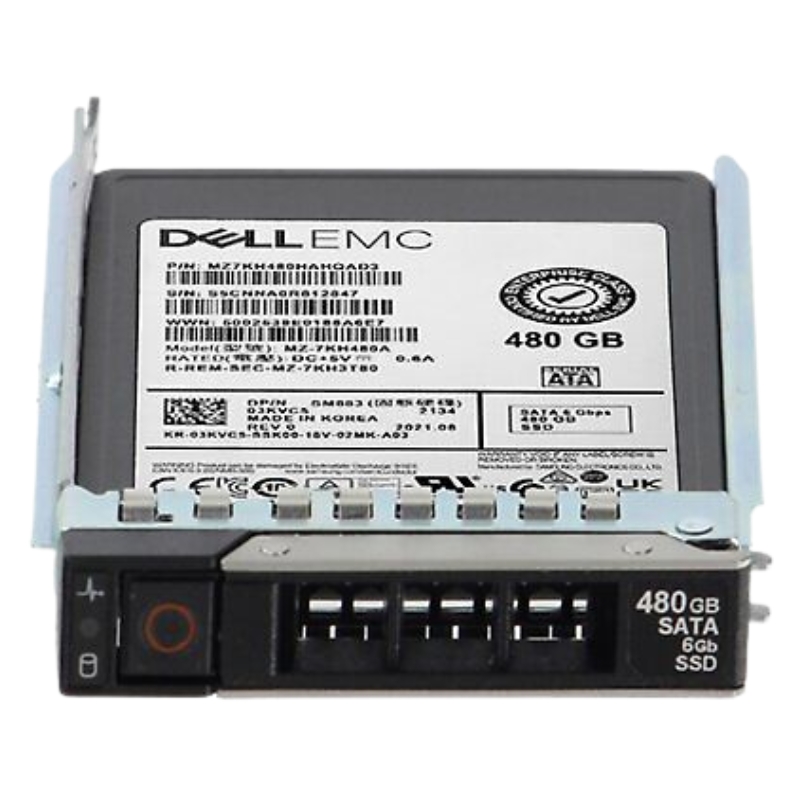


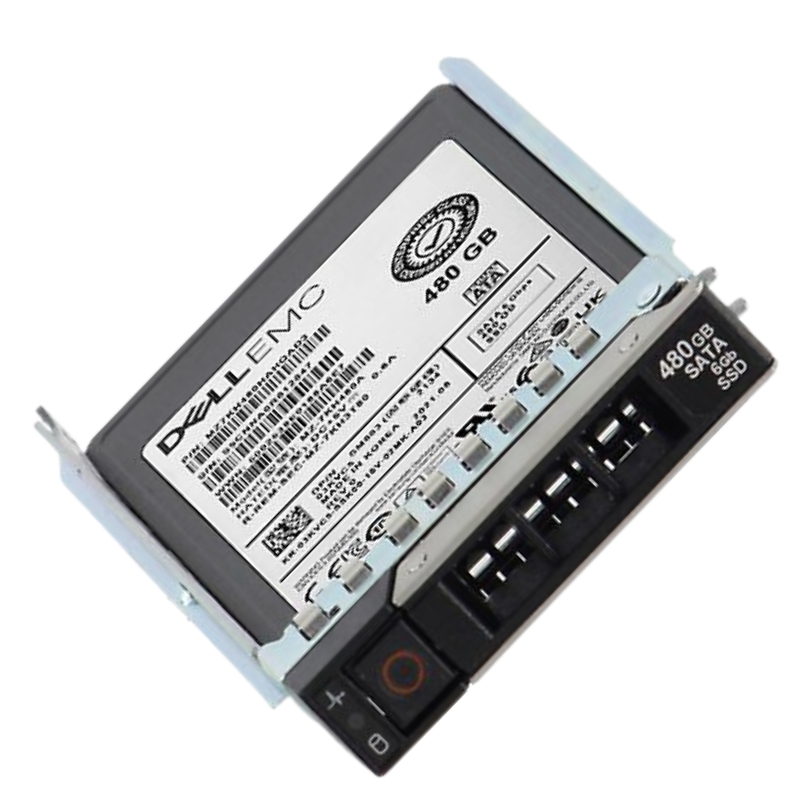
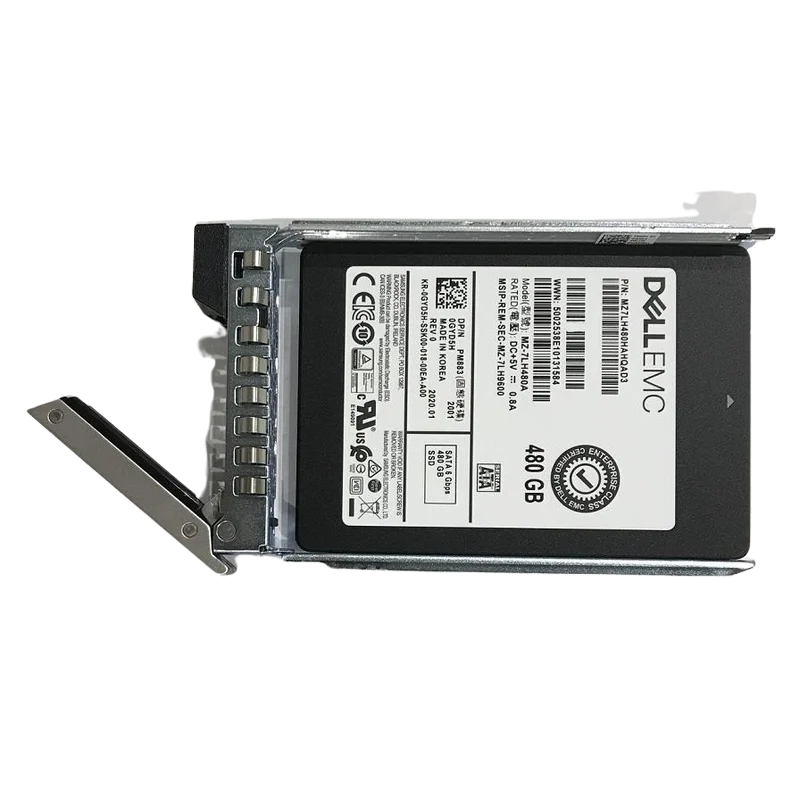
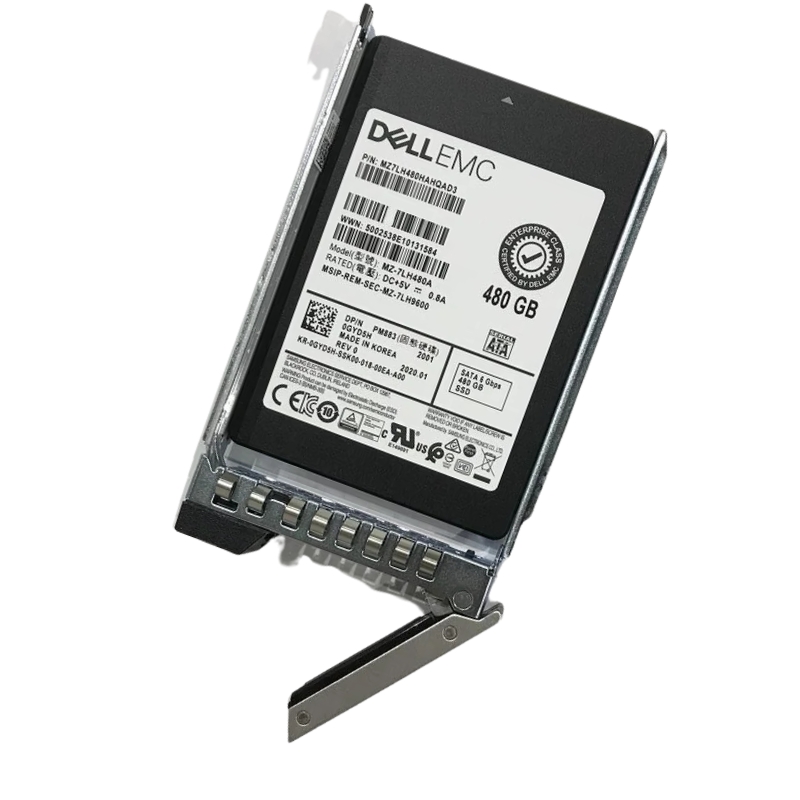
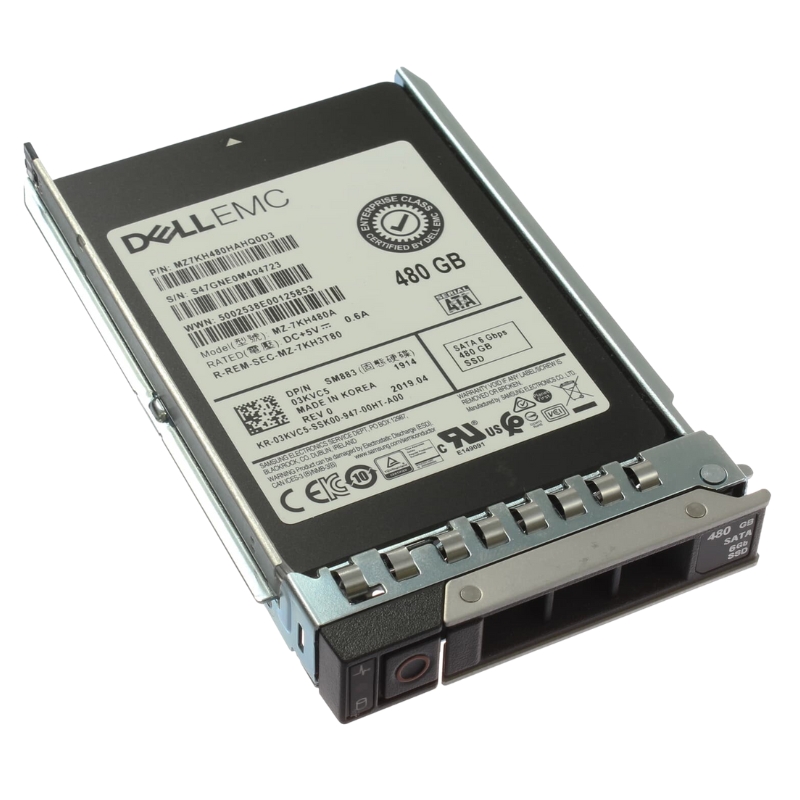
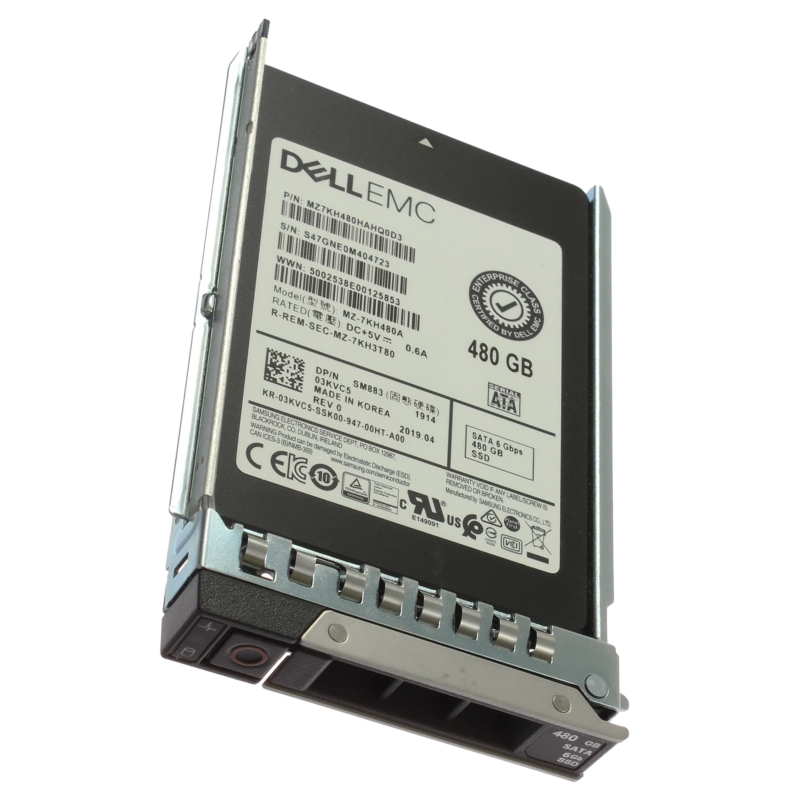
Dell 2VH3F 480GB Mixed Use MLC SATA 6GBPS 2.5 inch Hot Plug SSD. New Sealed in Box (NIB) with 1 year Replacement Warranty
| SKU/MPN | Warranty | Price | Condition | You save |
|---|---|---|---|---|
| 2VH3F | 1 Year Warranty | $655.00 | New Sealed in Box (NIB) | You save: $229.25 (26%) |
| 2VH3F | 1 Year Warranty | $275.00 | Excellent Refurbished | You save: $96.25 (26%) |
Designed to meet the demanding needs of modern data centers, virtualization hosts, and enterprise servers, the Dell 2VH3F 480GB Mixed Use MLC SATA 6Gbps 2.5-inch Hot-Plug SSD combines rugged reliability with predictable performance. Engineered around durable multi-level cell (MLC) flash and a SATA III 6 Gbps interface, this drive balances endurance and cost-efficiency, making it ideal for mixed-use environments where a blend of read and write operations occurs frequently. Enterprise administrators and storage architects choose the 2VH3F for its consistent latency characteristics, advanced error management, and compatibility with Dell server ecosystems and a wide range of storage controllers.
Whether deployed as a boot drive, a tiered-storage component, or a part of a RAID array, the Dell 2VH3F 480GB SSD offers performance that is tailored for mixed workloads. Mixed-use SSDs are optimized to handle both sustained sequential transfers and more random I/O patterns common to database transactions and virtualization. Typical real-world metrics highlight solid sequential read/write speeds and strong random IOPS at low queue depths, which is essential for server boot times, application responsiveness, and multi-tenant virtual machine performance. Built for enterprise-class systems, the 2VH3F sustains consistent throughput under sustained load thanks to firmware-level wear leveling, over-provisioning strategies, and efficient garbage collection algorithms.
Latency consistency is one of the 2VH3F’s strongest features. Enterprise workloads demand predictable response times — particularly when serving I/O-heavy applications such as online transaction processing (OLTP), virtual desktop infrastructure (VDI), and mixed database workloads. The drive’s firmware and NAND configuration prioritize low tail latencies, limiting the variability that can slow down application performance. Measured IOPS for random reads and writes remain competitive across a range of queue depths, and the drive maintains responsiveness under moderate to heavy mixed I/O thanks to MLC endurance characteristics and optimized controller handling.
Endurance is a central consideration for enterprise SSD selection, and the Dell 2VH3F is specified for mixed-use workloads where write amplification and sustained write patterns are more common than in read-centric deployments. The 480GB capacity is provisioned with enterprise-grade over-provisioning to extend the lifespan beyond consumer-class drives. Robust error-correction code (ECC), power-loss protection mechanisms where applicable, and SMART telemetry integration help administrators monitor drive health and preemptively replace units before failures impact operations. MLC NAND in this family balances higher write endurance compared to TLC-based alternatives while offering a favorable price-to-performance ratio for long-term deployments.
Systems built around the Dell 2VH3F benefit from common enterprise features such as SMART monitoring, TRIM support to maintain performance over time, and compatibility with hot-plug bays for rapid replacement and serviceability. In standard server and storage arrays, this drive integrates with RAID controllers and host software to offer redundancy at the system level, enabling fast rebuilds and secure data restoration policies. The drive’s firmware supports features that reduce the likelihood of silent data corruption and increase data retention reliability under normal operating conditions.
Dell-designed SSDs, including the 2VH3F series, are validated against a wide range of Dell PowerEdge servers, storage enclosures, and controller cards. This deep integration ensures that administrators can deploy drives with confidence, leveraging Dell’s storage firmware compatibility matrix and service support. The 2.5-inch 7mm form factor and hot-plug capability make the drive suitable for densified server chassis and storage shelves, enabling flexible rack-level capacity scaling. IT teams benefit from simplified firmware updates and compatibility testing that reduces integration friction during large-scale rollouts.
Hot-plug functionality is crucial for minimizing downtime in enterprise environments. The 2VH3F is engineered to be replaced or inserted into compatible bays without powering down the host, which streamlines maintenance windows and reduces scheduled downtime. This plug-and-play convenience becomes particularly valuable in environments where uptime is critical: cloud hosting providers, managed service operators, and corporate infrastructure teams will appreciate the ability to swap drives rapidly while maintaining RAID rebuild sequences and adhering to strict service-level agreements.
Reliable thermal performance is a must inside dense server racks. The Dell 2VH3F is built to operate across strict enterprise temperature ranges and deliver consistent performance without thermal throttling in properly ventilated racks. The drive’s mechanical and thermal design reduces sensitivity to ambient temperature variation and helps ensure sustained throughput over long periods. For deployments in particularly thermally constrained environments, administrators should consult Dell’s environmental specifications to align airflow and rack placement with the drive’s recommended operating conditions.
Security features in enterprise SSDs are increasingly important as regulatory and compliance demands grow. The Dell 2VH3F supports features that help protect stored data, including secure erase options and integration with host-based encryption frameworks when paired with compatible controllers or software. Physically secure hot-plug bays combined with software control allow administrators to meet data lifecycle policies from provisioning to decommissioning. While some deployments may choose to layer full-disk encryption at the host level, the drive’s firmware supports mechanisms that enable secure asset handling and retirement processes.
Effective end-of-life handling reduces the risk of data leakage when drives are removed from service. The 2VH3F supports secure erase operations that overwrite the drive’s addressable space and trigger firmware routines to ensure data remanence is minimized. Organizations should maintain documented processes for drive sanitization consistent with industry standards and regulatory frameworks to protect sensitive information. When combined with lifecycle tracking, secure erase features help facilities maintain secure asset disposition practices.
For many enterprises the Dell 2VH3F 480GB SSD is a versatile component in mixed-workload storage strategies. It is particularly well suited for server boot volumes, virtual machine storage, small-to-medium database instances, and tiered caching in hybrid storage architectures. Because the drive delivers a blend of endurance and cost-effectiveness, it can act as a primary storage device in read/write balanced scenarios or as a performance layer in front of higher-capacity HDD arrays. Content delivery, middleware caches, and log aggregation nodes are additional examples of workloads that benefit from the drive’s characteristics.
Virtualized servers place varying I/O demands on storage infrastructure. The predictable performance and reasonable endurance of the 2VH3F make it an excellent candidate for VM hosts where multiple virtual machines generate both read-heavy and write-heavy I/O. Administrators can deploy this drive in storage pools that balance cost with performance while preserving the responsiveness required by guest operating systems and applications.
When architects design storage layers with the 2VH3F, they typically incorporate RAID and erasure coding schemes that align with performance and redundancy requirements. RAID configurations that prioritize rebuild speed and data resiliency (such as RAID-6 or modern erasure coding) should be balanced against the drive’s rebuild impact and thermal behavior. In many deployments, using multiple 480GB drives within a pool provides predictable capacity expansion and standardized replacement procedures, streamlining procurement and inventory management.
Enterprises must often align hardware choices with regulatory requirements and environmental policies. The Dell 2VH3F contributes to reduced energy consumption compared with spinning media, which can decrease rack-level power draw and cooling requirements. Energy efficiency, coupled with lifecycle management that extends usable drive life, supports sustainability goals. Organizations should maintain records of procurement, deployment, and disposal in line with data protection and electronic waste regulations to demonstrate compliance.
Deciding on an MLC mixed-use SSD such as the 2VH3F requires understanding the trade-offs between NAND types. MLC offers better write endurance than TLC or QLC NAND at comparable capacities, which translates to longer service life under write-intensive conditions. For organizations with heavy write workloads or where predictable endurance is a priority, MLC mixed-use SSDs often present a compelling value proposition. Conversely, read-heavy archival or large-scale cold storage tiers might favor higher-capacity TLC or QLC options for cost-per-terabyte optimization.
Match the drive to the workload by evaluating expected writes per day, latency sensitivity, and capacity needs. For example, a busy database server with regular transaction commits, frequent indexing operations, and small-block writes benefits from MLC mixed-use media. On the other hand, analytics nodes that stream large sequential datasets might achieve better raw capacity economics with other media types but will trade off endurance and latency. Administrators should pilot new configurations under production-representative loads to validate assumptions before large-scale rollouts.


 Contact Us
 Information
 Catalog
 Solid State Drives (SSD)
 Network Switches
 Hard Disk Drives
 HBA & Controllers
 PC & Servers
 PC & Server Memory
 CPU & Processors
 Network Routers
 Power Supplies
 Tape Drives & Libraries
 Network Devices
 Computer & Network Cables