
(7% discount is applied at checkout)
Cart is empty
Your go-to destination for cutting-edge server products
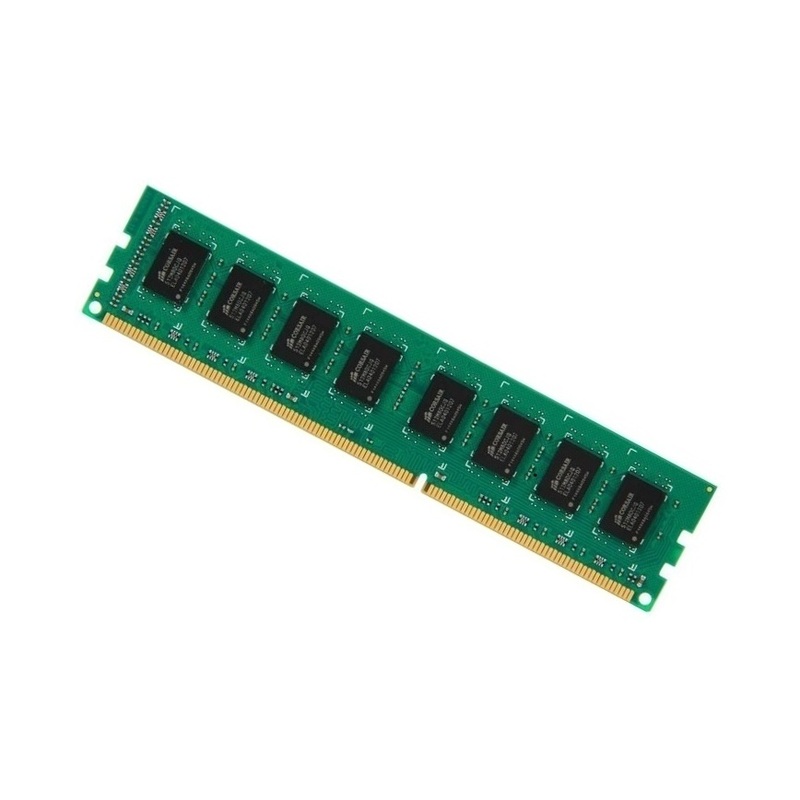
Dell 370-AHFH 32GB DDR4 3200MHz ECC PC4-25600 RAM. New Sealed in Box (NIB)
| SKU/MPN | Warranty | Price | Condition | You save |
|---|---|---|---|---|
| 370-AHFH | 1 Year Warranty | $825.00 | New (System) Pull | You save: $288.75 (26%) |
| 370-AHFH | 1 Year Warranty | $999.00 | New Sealed in Box (NIB) | You save: $349.65 (26%) |
This 32GB DDR4 RDIMM memory module from Dell delivers exceptional performance and reliability, designed for high-demand server environments. With a speed of 3200MHz and ECC support, it ensures smooth, error-free operation. The module features a 288-pin RDIMM form factor, perfect for modern enterprise systems.
The Dell 370-AHFH 32GB 3200MHz PC4-25600 CL22 ECC Registered Dual Rank X4 1.2V DDR4 SDRAM 288-pin RDIMM category covers enterprise-class memory modules engineered explicitly for Dell PowerEdge servers and compatible server platforms. These memory modules represent a balance of density, speed, error correction capability, and platform-validated reliability. Designed to operate in multi-socket, multi-channel server environments where availability, data integrity, and predictable latency matter, this category is the natural choice for IT professionals who deploy virtualization clusters, database servers, analytics nodes, in-memory caches, and mixed-workload compute racks. The product family emphasizes the precise specs: 32 gigabytes per module, DDR4 architecture at 3200 megatransfers per second (commonly written as 3200MT/s), PC4-25600 bandwidth, CL22 timing at the JEDEC-defined voltage of 1.2 volts, ECC registered buffering (RDIMM), dual-rank organization with x4 data width, and a 288-pin physical interface. Together these characteristics form an offering with predictable thermal behavior, robust error detection and correction, and broad firmware and BIOS compatibility across a wide range of PowerEdge generations.
The technical profile of modules in this category is purposeful: 3200MT/s data transfer rate provides a measurable uplift in memory throughput compared with lower-frequency DDR4 modules, improving sustained bandwidth for memory-bound workloads. PC4-25600 denotes theoretical peak throughput of 25.6 gigabytes per second per module channel at double data rate clocking; in concert with modern dual- and quad-channel memory controllers, the aggregate system memory bandwidth increases significantly, directly benefiting database query throughput and large-scale virtualization density. The CL22 timing value describes CAS latency in cycles; when combined with increased frequency, the effective access latency often remains competitive for real-world server workloads. ECC registered operation is essential for server-class reliability: the module’s ECC capability detects and corrects single-bit memory errors while registered (buffered) functionality stabilizes signal integrity on multi-module memory buses in multi-processor systems. Dual-rank topology improves effective row activation density and can increase throughput on some controllers compared with single-rank modules, particularly when memory interleaving and channel utilization are optimized. The x4 data width, typical for many server DIMMs, allows more DRAM devices per rank and supports high-capacity, high-density designs without sacrificing signal integrity or thermal margins.
Modules in the Dell 370-AHFH category are validated against Dell PowerEdge BIOS and firmware revisions to ensure predictable behavior under factory configurations and in-service firmware update scenarios. Compatibility matrices typically list which PowerEdge families and specific BIOS versions support 3200MT/s operation at particular ranks and voltages. For administrators planning upgrades, understanding compatibility constraints is crucial: some older PowerEdge models may downclock modules to a lower effective frequency or require specific population rules per CPU memory channel to meet electrical and timing requirements. In practical terms, when multiple ranks or densities are combined in a single server, the platform will often negotiate the highest reliable common speed and timings across the populated channels. Administrators should consult server-specific documentation to determine which DIMM slots to populate first and how to maintain optimal NUMA locality for multi-socket systems.
In application scenarios, the performance advantage of higher-frequency RDIMMs is most visible when workloads repeatedly access large datasets or maintain large working sets in memory. Analytics engines, columnar in-memory databases, real-time analytics, large-scale caching layers, and memory-intensive scientific workloads all benefit from the increased throughput available at 3200MT/s. Cloud virtualization hypervisors also gain from module density: each 32GB module meaningfully increases the number of virtual machines or containers that can be hosted on a physical node at given per-VM memory allocations, accelerating consolidation and lowering cost per VM. For mixed OLTP/OLAP database servers, system architects benefit from reduced paging events and improved query response times since more of the active dataset remains resident in DRAM. In high availability clusters, memory reliability via ECC helps prevent data corruption scenarios that could otherwise propagate through replication or backups, safeguarding application correctness.
At 1.2 volts, these DDR4 RDIMMs are optimized to balance performance with power efficiency. Module power consumption scales with frequency, voltage, and the number of active DRAM devices; however, modern server cooling and power delivery subsystems are designed to absorb the incremental power draw of high-speed modules. Thermal profiles should still be validated in dense configurations—full-population servers with large numbers of 32GB modules can raise ambient memory bay temperatures, which in turn impacts long-term reliability and may influence thermal throttling thresholds. System administrators are encouraged to maintain recommended airflow pathways, ensure clean heatsinks and filters, and verify server fan policies to preserve memory operating margins. When designing racks for energy efficiency, consider that the higher density per DIMM reduces the total number of modules required for a given capacity target, which can simplify cabling and reduce incremental power draw compared to many smaller-capacity DIMMs, but the per-module power will be higher than lower-frequency or lower-capacity alternatives.
Reliability and data integrity are central to this category. ECC functionality corrects single-bit errors and detects multi-bit errors, preventing transient or persistent faults from causing silent data corruption. Registered buffering reduces electrical loading on the memory controller, enabling stable operation when many modules are installed, and reducing the probability of signal-induced errors. Dual-rank RDIMMs are often favored in enterprise deployments for their balance of capacity and performance, but architects must be mindful that rank density and interleaving choices affect the memory controller’s access patterns.
Enterprise workloads that derive tangible benefits from this memory category include virtualization hosts running high-density VMs, memory-bound database systems, in-memory analytics platforms, application servers serving large active datasets, and compute nodes for scientific simulations that require sustained memory bandwidth. In cloud service provider environments, the combination of 32GB module capacity and 3200MT/s speed supports both customer isolation workloads with substantial in-guest memory and high-throughput shared caching layers. Hyperscale data centers favor modules that offer high density per slot to maximize per-server memory capacity while enabling flexible right-sizing of instance types. Backup and restore operations also run faster when the server has abundant, fast memory available to stage data streams and deduplicate in-memory chunks, reducing disk I/O load and shortening recovery time objectives.
Capacity planning with 32GB RDIMMs should consider both immediate and projected needs. Servers populated with these modules can reach substantial total memory sizes with relatively few slots, allowing organizations to postpone costly motherboard or chassis upgrades. Memory tiering strategies may pair high-speed RDIMMs in hot tiers with persistent memory, NVDIMMs, or lower-cost slower memory tiers for warm or cold data. Architects planning to scale should evaluate the cost per gigabyte, expected growth rate of in-memory datasets, and the server refresh cycle. The ability to mix module capacities on a platform is sometimes allowed but may result in the entire memory subsystem operating at the speed of the slowest populated module; therefore, standardization on a single part number across an estate simplifies maintenance and avoids speed downshifts that degrade performance.


 Contact Us
 Information
 Catalog
 Solid State Drives (SSD)
 Network Switches
 Hard Disk Drives
 HBA & Controllers
 PC & Servers
 PC & Server Memory
 CPU & Processors
 Network Routers
 Power Supplies
 Tape Drives & Libraries
 Network Devices
 Computer & Network Cables