
(7% discount is applied at checkout)
Cart is empty
Your go-to destination for cutting-edge server products
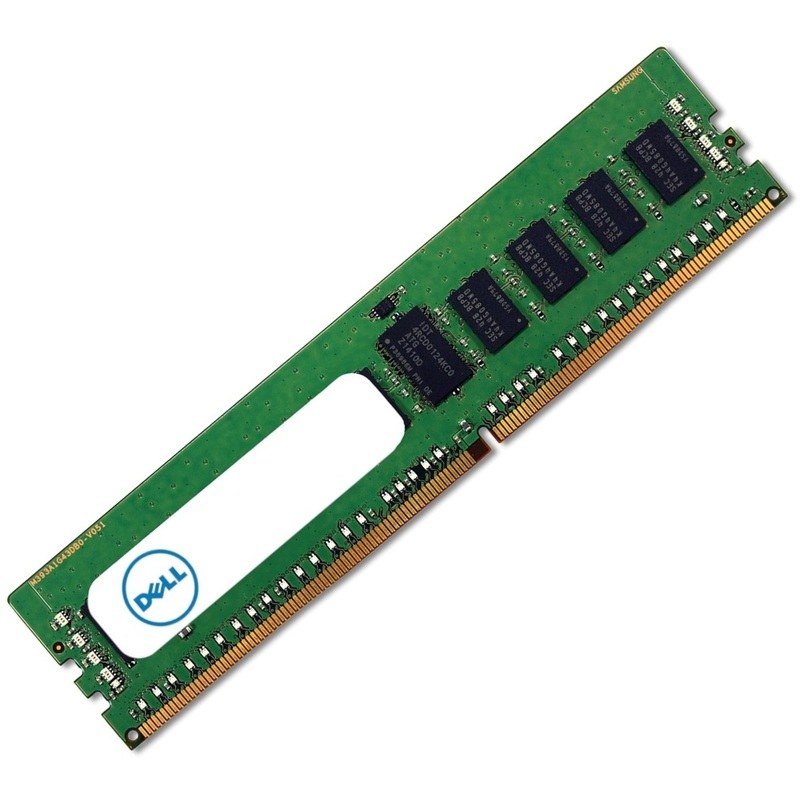
Dell 370-AHJV 256GB 3200Mhz PC4-25600 Cl24 DDR4 SDRAM Ecc Registered Ram. New Sealed in Box (NIB) - Samsung Version
The Dell 370-AHJV DDR4 SDRAM is an exceptional memory module that boasts an impressive capacity of 256GB. This vast storage capability is a game-changer for users who require high-performance computing and extensive data storage. With such a substantial capacity, this memory module allows users to effortlessly handle resource-intensive tasks, such as running complex applications, rendering graphics, and processing large datasets.
The Dell 370-AHJV 256GB 2Rx4 3200MHz PC4-25600 CL22 ECC Registered Dual Rank X4 1.2V DDR4 SDRAM 288-Pin RDIMM Memory for PowerEdge Server represents a high-density, high-performance server memory solution purpose-built for enterprise workloads, virtualization, database acceleration, and mission-critical computing environments. Engineered to meet the stringent quality and compatibility requirements of Dell PowerEdge systems, this memory category emphasizes stability under sustained load, error-correcting reliability, and predictable latency characteristics that data centers and IT professionals rely on. With an industry-standard 288-pin RDIMM form factor, dual-rank organization, and ECC Registered architecture, modules in this category deliver both capacity and resilience, enabling servers to host larger virtual machine counts, handle in-memory database tasks, and accelerate analytics while maintaining data integrity under heavy read/write cycles.
At the heart of the Dell 370-AHJV category is the PC4-25600 specification, commonly referred to as DDR4-3200. This signaling rate provides a balance of bandwidth and timing, designed to improve throughput for multi-threaded server applications. The CL22 CAS latency rating indicates the number of clock cycles required to access a column of data, which, when combined with the 3200MHz clock, yields specific access timing that server architects use to balance latency and throughput. The dual-rank X4 organization means that each physical module presents two ranks to the memory controller and uses a x4 DRAM device width; this tends to offer improved memory subsystem capacity and better compatibility with high-density DIMM population compared to single-rank modules. Because these modules are ECC Registered, they include error-correcting code capabilities to detect and correct single-bit errors and detect multi-bit errors, while the registered (buffered) aspect stabilizes signal integrity for systems populated with many DIMMs. The combination of these architectural choices is intended to reduce the likelihood of memory-induced system crashes and silent data corruption in production environments.
Memory in this category is validated for Dell PowerEdge server families and is typically listed against specific chassis and generation references, including diverse rack, tower, and blade models. Compatibility considerations include processor generation, memory channel topology, and BIOS firmware support. For system administrators and procurement teams, the 370-AHJV designation signals that the modules are engineered to operate within the PowerEdge memory training and channel timing routines, minimizing compatibility issues during deployment. When mixed with OEM-approved configurations, these RDIMM modules support multi-socket configurations and higher total memory capacities per server, which is essential for virtualization hosts, database servers, and in-memory caching appliances where memory density directly influences consolidations ratios and application performance.
Enterprise memory must deliver not only capacity but also unquestionable reliability. ECC (Error Correcting Code) technology included in the Dell 370-AHJV category detects and corrects single-bit errors, significantly lowering the risk of data corruption that can propagate through compute stacks. The registered buffer design further enhances stability by reducing electrical loading on the memory controller, permitting higher DIMM counts and larger total system memory without compromising signal margins. For organizations running critical workloads such as transactional databases, ERP systems, or virtual machine infrastructures with tight SLAs, these error-mitigating features translate into reduced downtime, fewer service interruptions, and a lower incidence of silent data integrity failures. Additionally, modules typically undergo rigorous manufacturing quality control and burn-in testing to ensure that only parts meeting strict tolerances are deployed.
Operating at 1.2 volts, DDR4 modules in this category achieve a lower voltage envelope than previous generations, which reduces power draw across a server fleet and lowers heat generation per DIMM. This reduced voltage is a critical factor when scaling memory capacity across dozens or hundreds of servers in a data center because cumulative power usage and cooling load become significant operational expenditures. Dual-rank modules trade off slightly higher power consumption for increased capacity per DIMM, but the net effect often favors density-rich deployments where fewer DIMM sockets need to be occupied to reach a target capacity. Thermal behavior is also influenced by module PCB design, heat spreaders if present, and server chassis airflow. For mission-critical installations, it is recommended to follow vendor guidelines for airflow and to use server chassis with validated cooling to maintain optimal operating temperatures and prolonged component lifespan.
The Dell 370-AHJV 256GB RDIMM category is particularly well suited to virtualization hosts running numerous virtual machines, where memory capacity maps directly to VM density and performance. Large-scale containerized environments and hyperconverged infrastructure also benefit from high-capacity RDIMMs that permit more in-memory caching and faster application response times. In data analytics and in-memory databases, larger DIMMs reduce the need to spill working sets to slower disk-based storage and speed up query processing. Telecommunications, high-performance computing (HPC) nodes with memory-bound workloads, and content delivery backends likewise gain improved throughput and predictable latency from high-density ECC registered memory. Enterprises that perform heavy virtualization consolidation, memory-intensive simulation, or large-scale caching will find this category an effective tool to increase compute utility per rack while preserving system reliability.
Planning memory capacity in a server environment requires a careful assessment of current workload demands as well as projected growth. The 256GB per DIMM option significantly simplifies capacity strategies by enabling fewer DIMM slots to achieve large totals per server, preserving expansion headroom for future upgrades or additional processors. Dual-rank RDIMM modules are especially useful when prioritizing maximum memory capacity in systems with limited DIMM slots per CPU socket, while still maintaining stable signal integrity. Capacity planning should account for the memory requirements of the operating system, hypervisor overhead, application working sets, and expected spike scenarios. Deploying a well-documented memory population plan that adheres to the server vendor’s channel and slot filling recommendations will ensure balanced memory channels, thereby optimizing bandwidth and minimizing latency penalties.
Latency and bandwidth form a key trade-off in system memory design. Higher frequency modules such as DDR4-3200 increase theoretical bandwidth, enabling faster data movement across memory channels, which benefits bandwidth-hungry workloads. The CL22 latency number describes access delay in clock cycles; when comparing different frequency modules. For many server workloads, bandwidth improvements translate into better throughput and reduced query times, while for certain latency-sensitive transactional workloads, tuning memory configurations and NUMA placement may yield better results than simply increasing raw frequency. System architects should consider workload profiling to decide whether capacity, bandwidth, or lower nanosecond latency is the dominant factor in performance tuning.


 Contact Us
 Information
 Catalog
 Solid State Drives (SSD)
 Network Switches
 Hard Disk Drives
 HBA & Controllers
 PC & Servers
 PC & Server Memory
 CPU & Processors
 Network Routers
 Power Supplies
 Tape Drives & Libraries
 Network Devices
 Computer & Network Cables