(7% discount is applied at checkout)
Cart is empty
Your go-to destination for cutting-edge server products
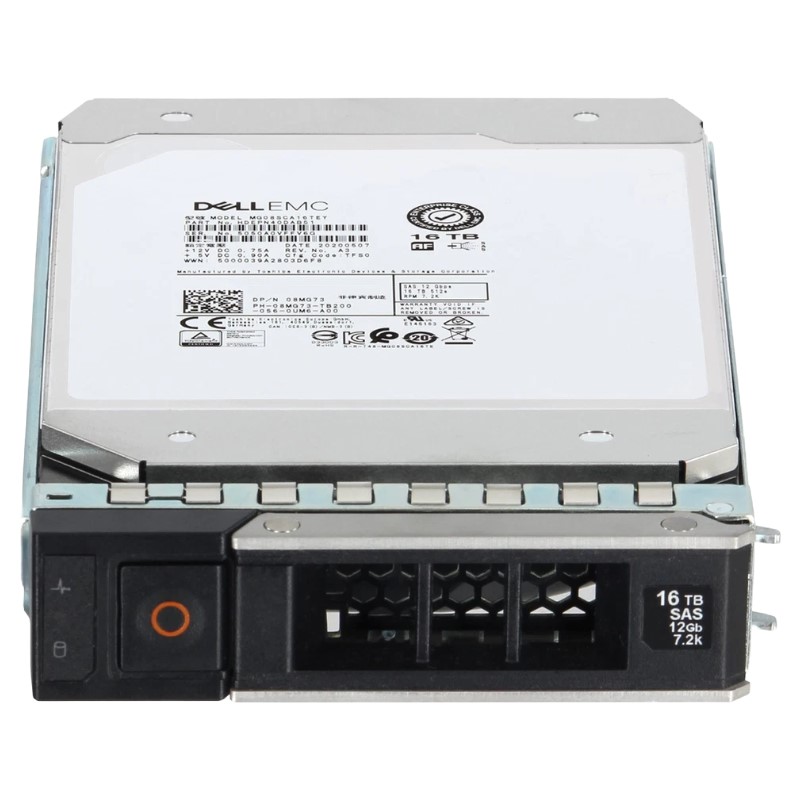


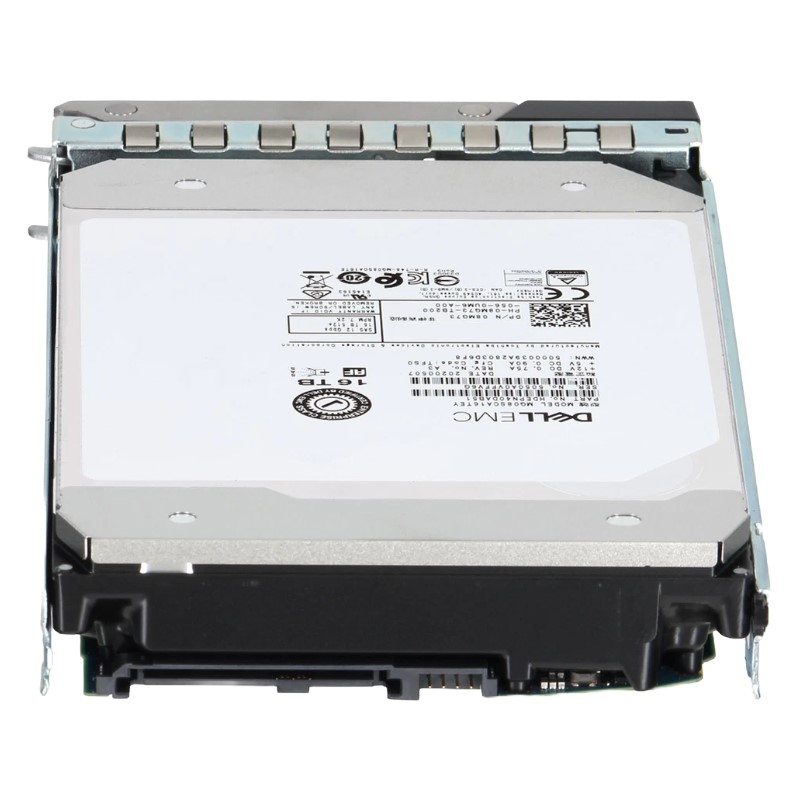
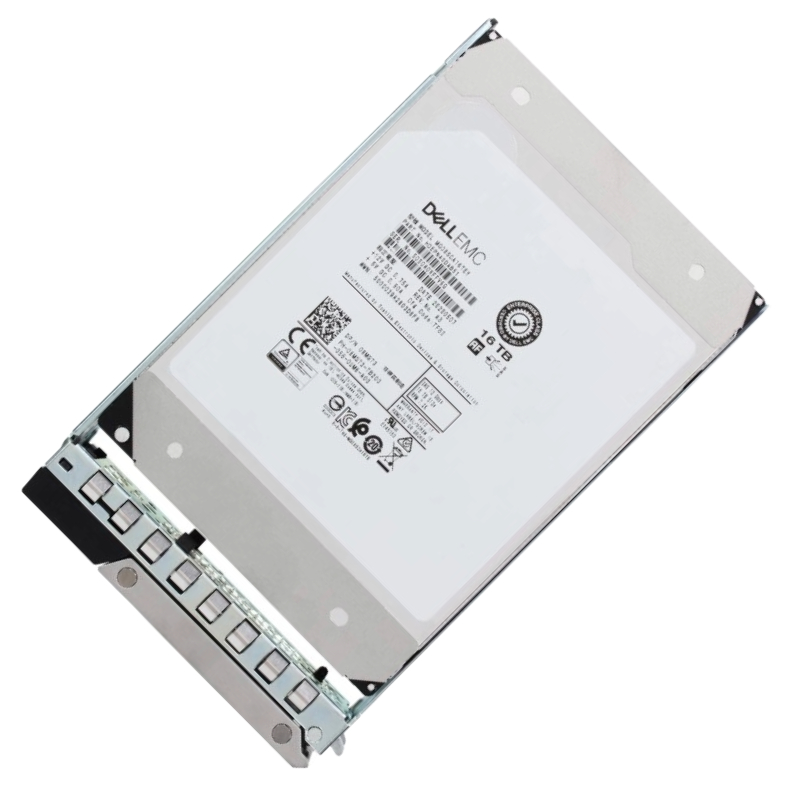
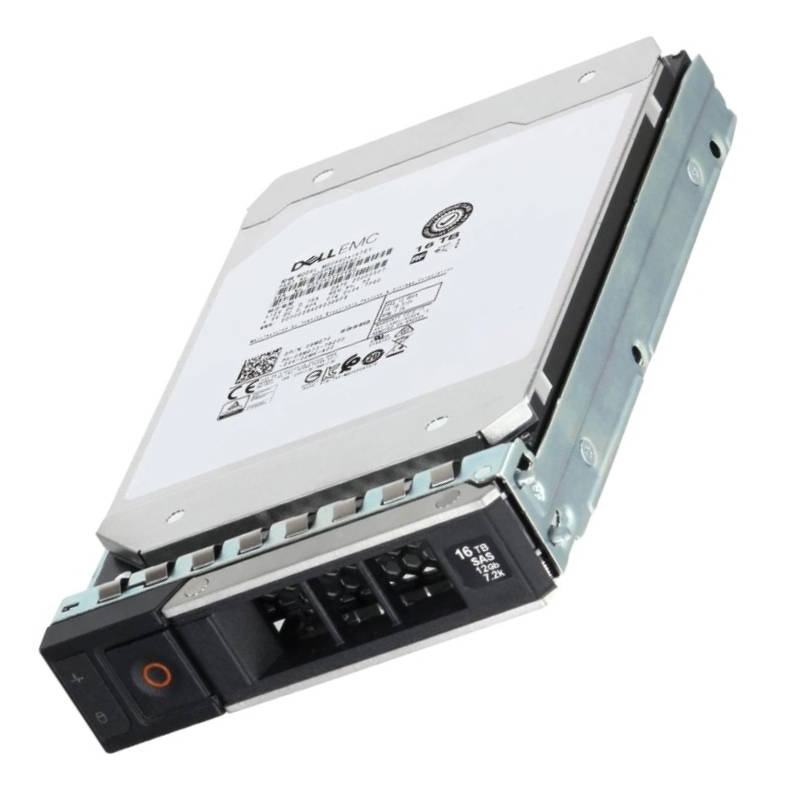
Dell 400-BJKQ 16TB 7.2K RPM SAS 12GBPS Hard Drive. New Sealed in Box (NIB) With 1 Year Warranty
The Dell 400-BJKQ 16TB SAS hard drive is engineered for enterprise-grade storage environments, offering massive capacity, reliable performance, and hot-plug functionality for seamless integration into modern server infrastructures.
The Dell 400-BJKQ 16TB 7.2K RPM SAS 12Gbps hard drive represents a high-capacity enterprise storage solution engineered for demanding data center environments where reliability, scalability, and consistent performance are critical. Built on Serial Attached SCSI (SAS) architecture, this 3.5-inch large form factor hard drive delivers robust throughput and dependable data access for mission-critical workloads, virtualization platforms, cloud infrastructures, and large-scale storage arrays.
Designed to meet the needs of enterprise IT systems, this drive combines a substantial 16TB storage capacity with a rotational speed of 7200 RPM, making it suitable for applications that require both high-density storage and balanced performance. The 12Gbps SAS interface ensures fast data transfer rates and enhanced communication between the drive and server backplanes, reducing latency and improving overall system responsiveness in multi-drive environments.
The SAS 12Gbps interface embedded in the Dell 400-BJKQ hard drive is designed for enterprise workloads that require sustained throughput and reliable data transmission. Unlike consumer-grade SATA interfaces, SAS technology provides dual-port connectivity, allowing redundancy and failover support in storage arrays. This ensures uninterrupted data access even in the event of path failures, which is essential for mission-critical business operations.
The 12Gbps transfer speed significantly enhances data flow between the drive and server systems, making it ideal for applications such as database management, virtualization clusters, and large-scale backup operations. The increased bandwidth also improves scalability when deployed in RAID configurations, allowing organizations to expand storage infrastructure without sacrificing performance efficiency.
One of the most significant advantages of SAS architecture is its dual-port capability, which enables simultaneous connections to multiple controllers. This feature provides redundancy at the hardware level, ensuring continuous availability of data even if one controller path experiences failure. For enterprise environments where downtime is unacceptable, this level of resilience is critical for maintaining operational continuity.
In addition, SAS drives are engineered with advanced error detection and correction mechanisms that enhance data integrity across long operational cycles. This makes the Dell 400-BJKQ a dependable choice for organizations managing sensitive or mission-critical data workloads.
With a storage capacity of 16TB, this Dell enterprise hard drive is built to support modern data growth demands. Businesses today generate vast amounts of structured and unstructured data, requiring storage systems that can scale efficiently without increasing physical footprint. The 16TB capacity allows data centers to maximize storage density while minimizing rack space usage, power consumption, and cooling requirements.
This level of capacity is particularly beneficial for cloud service providers, enterprise backup systems, archival storage environments, and content delivery networks. By consolidating large datasets into fewer physical drives, organizations can reduce infrastructure complexity and improve storage management efficiency.
The high-capacity design of this drive enables organizations to consolidate multiple lower-capacity drives into fewer high-capacity units. This not only reduces hardware overhead but also simplifies RAID configuration management and improves system reliability by minimizing the number of potential failure points within storage arrays.
The 7200 RPM rotational speed of the Dell 400-BJKQ hard drive is optimized to deliver a balance between performance and energy efficiency. While not as fast as high-RPM performance drives, 7.2K RPM drives are widely used in enterprise environments due to their stability, lower heat generation, and reduced power consumption.
This makes the drive particularly suitable for sequential workloads, archival storage, and read-intensive applications where consistent throughput is more important than ultra-low latency random access performance.
Lower rotational speeds contribute to reduced mechanical stress on internal components, which enhances long-term reliability and operational lifespan. In large-scale deployments where hundreds or thousands of drives may operate simultaneously, thermal efficiency becomes a critical factor in maintaining system stability and reducing cooling costs.
The Dell 400-BJKQ is designed to operate continuously in enterprise environments, ensuring stable performance under sustained workloads without compromising durability.
This hard drive is widely applicable in hyperscale data centers and cloud computing infrastructures where high-capacity storage is essential. Its combination of SAS connectivity and large storage capacity makes it ideal for distributed storage systems that require consistent uptime and scalable architecture.
Cloud service providers benefit from the drive’s ability to handle large volumes of data traffic while maintaining reliability across multiple storage nodes. Its integration into RAID arrays further enhances data protection and redundancy.
In virtualized environments, the Dell 400-BJKQ supports multiple virtual machines running simultaneously by providing stable and predictable storage performance. Its enterprise-grade design ensures that virtualization platforms such as hypervisors can efficiently allocate storage resources without bottlenecks.
Server environments that rely on shared storage architectures benefit from the drive’s consistent data throughput and SAS-based redundancy features, making it suitable for enterprise-grade virtualization clusters.
Organizations that require long-term data retention for compliance or disaster recovery purposes can rely on this drive for archival storage. Its high capacity allows efficient storage of backup snapshots, historical data, and compliance records without requiring frequent hardware expansion.
The durability and reliability of SAS-based enterprise drives ensure that stored data remains accessible and intact over extended periods, which is critical for regulatory compliance in industries such as healthcare, banking, and government services.
The Dell 400-BJKQ incorporates advanced error correction technologies that help maintain data integrity during read and write operations. These mechanisms detect and correct potential data inconsistencies, ensuring that stored information remains accurate and reliable throughout the drive’s operational life.
Enterprise storage environments demand high levels of data integrity, particularly when handling sensitive or mission-critical information. This drive is designed to minimize the risk of data corruption, even under heavy workloads or extended usage cycles.
Engineered for continuous operation, this hard drive is built to withstand the demands of 24/7 enterprise workloads. Its components are optimized for durability, reducing the likelihood of mechanical failure over time. This ensures lower total cost of ownership by minimizing maintenance requirements and reducing the frequency of drive replacements.
The Dell 400-BJKQ is fully compatible with RAID configurations, making it a strong candidate for enterprise storage arrays that require redundancy, performance optimization, and fault tolerance. In RAID environments, multiple drives work together to distribute data efficiently while providing protection against hardware failure.
Its SAS interface and consistent performance characteristics make it well-suited for RAID 5, RAID 6, and RAID 10 configurations, where both performance and data redundancy are essential.
As business data requirements grow, organizations can easily scale their storage infrastructure by adding additional Dell 400-BJKQ drives to existing arrays. This scalability ensures that enterprises can adapt to increasing data demands without requiring complete system redesigns.


 Contact Us
 Information
 Catalog
 Solid State Drives (SSD)
 Network Switches
 Hard Disk Drives
 HBA & Controllers
 PC & Servers
 PC & Server Memory
 CPU & Processors
 Network Routers
 Power Supplies
 Tape Drives & Libraries
 Network Devices
 Computer & Network Cables