(7% discount is applied at checkout)
Cart is empty
Your go-to destination for cutting-edge server products
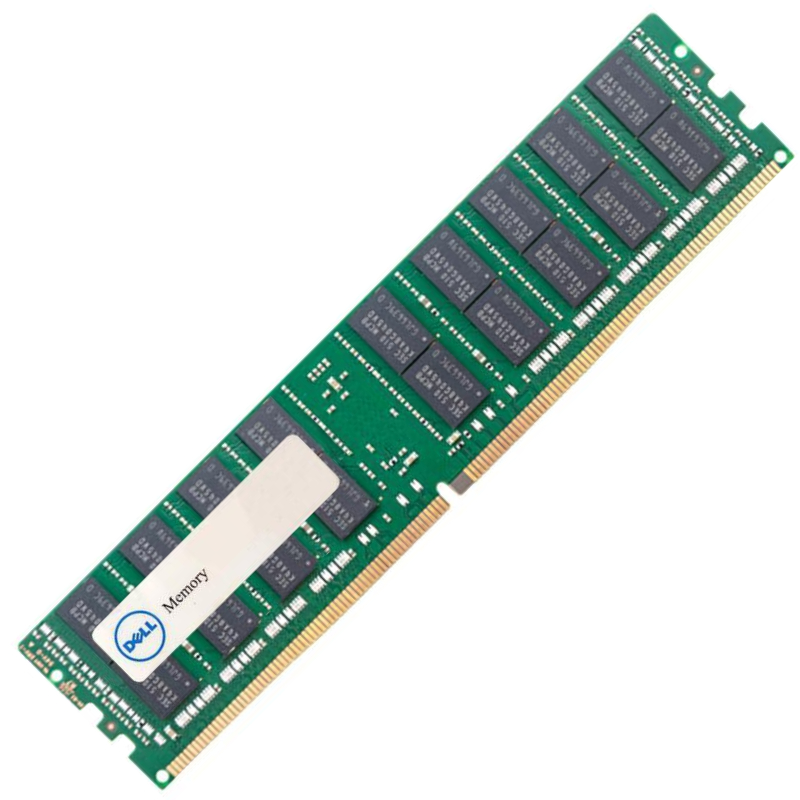


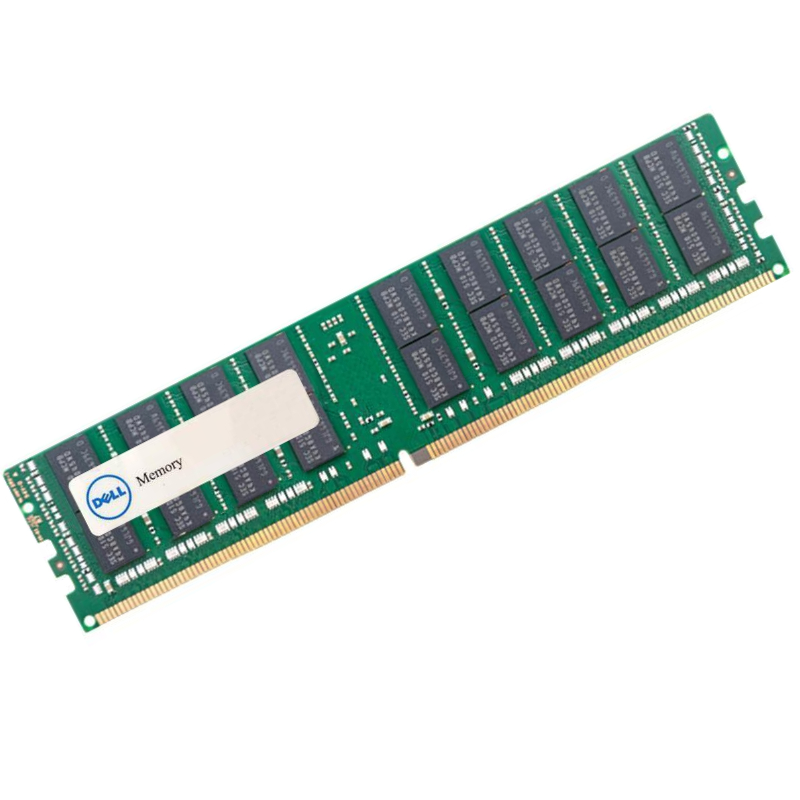
Dell 4JMGM 64GB 2666MHZ PC4-21300 Ecc Registered DDR4 SDRAM 288-Pin RAM. New Sealed in Box (NIB)
| SKU/MPN | Warranty | Price | Condition | You save |
|---|---|---|---|---|
| 4JMGM | 1 Year Warranty | $758.00 | New Sealed in Box (NIB) | You save: $265.30 (26%) |
| 4JMGM | 1 Year Warranty | $628.00 | New (System) Pull | You save: $219.80 (26%) |
High-density server memory engineered for enterprise-grade systems. This Dell 64GB LRDIMM delivers reliable, error-correcting performance with registered buffering and quad-rank architecture, optimized for PowerEdge server families.
Compatible with a broad range of Dell PowerEdge platforms — perfect for upgrades, replacements, or spares:
In the realm of enterprise computing, server memory is not a one-size-fits-all component. The Dell 4JMGM 64GB 2666MHz PC4-21300 ECC Registered DDR4 SDRAM 288-pin RAM module represents a specific class of memory engineered for reliability, performance, and data integrity in demanding multi-user and mission-critical environments. This category encompasses memory designed explicitly for compatibility with Dell's extensive line of PowerEdge servers and high-end workstations, where system stability is paramount. Unlike standard consumer-grade RAM, this module integrates advanced error-correcting code (ECC) and registered buffering technologies to maintain data accuracy and reduce electrical load on the server's memory controller. Operating at a speed of 2666 Megahertz (MHz) with a massive 64 Gigabyte (GB) capacity per module, it is built to handle intensive workloads such as large-scale virtualization, in-memory databases, scientific computing, and high-traffic web hosting. The "4JMGM" part number is Dell's unique identifier, ensuring that the module has been rigorously tested and validated to work seamlessly within Dell's ecosystem, providing peace of mind for IT administrators and system integrators.
To fully appreciate the capabilities of this memory category, a thorough examination of its technical specifications is essential. These parameters define its performance, compatibility, and ideal use cases.
The 64GB capacity per module is a significant figure in the server world. It allows for the consolidation of massive amounts of data within the server's RAM, which is orders of magnitude faster than even the fastest SSDs. For example, a dual-processor server with 16 memory slots can be configured with a terabyte of RAM using these modules, enabling it to host dozens of virtual machines or load an entire multi-terabyte database into memory for instantaneous query processing. This high density is crucial for reducing the physical footprint and power consumption per gigabyte in data centers.
The designation "2666MHz" refers to the module's data transfer rate, which is 2.666 billion transfers per second (often abbreviated as 2666MT/s). The "PC4-21300" name is derived from this speed; the peak transfer rate in megabytes per second is calculated as 2666 MHz * 8 bytes (64-bit data bus) = ~21,300 MB/s, hence PC4-21300. This high bandwidth is vital for ensuring that data can flow quickly between the CPU and RAM, preventing bottlenecks in CPU-intensive applications and supporting a high number of concurrent operations.
While the specific CAS (Column Address Strobe) latency timings for the Dell 4JMGM are defined by its JEDEC profile, understanding latency is key to evaluating performance. Latency measures the delay between a memory controller requesting data and the memory module delivering it. In server environments, a balance between high bandwidth (speed) and low latency is sought. ECC Registered memory typically has slightly higher latency than unbuffered memory due to the registering process, but the trade-off is vastly improved stability and support for much higher memory capacities, which is a necessary compromise for scalable server architectures.
All DDR4 memory modules, including the Dell 4JMGM, utilize a 288-pin Dual In-line Memory Module (DIMM) design. This physical interface is keyed differently from previous-generation DDR3 DIMMs (which have 240 pins) to prevent accidental insertion into an incompatible motherboard. The increased pin count accommodates the higher data rates and additional features of the DDR4 standard. The physical construction of these server-grade modules is often more robust to withstand the constant thermal cycling and vibration found in data center environments.
A major advancement of DDR4 over DDR3 is its reduced operating voltage, typically 1.2 volts compared to 1.5V or 1.35V for DDR3. This 20% reduction in power consumption translates directly into lower operating costs and reduced heat output for large-scale server deployments. Lower heat generation improves system reliability and can reduce the burden on a data center's cooling infrastructure, contributing to a lower Total Cost of Ownership (TCO).
The terms "ECC" and "Registered" are the most critical differentiators between server memory and consumer memory. They are not mere marketing terms but foundational technologies for enterprise-grade reliability.
ECC is a method for detecting and correcting the most common kinds of internal data corruption. In a computing environment, cosmic rays, electrical interference, and other factors can cause a single bit of memory to spontaneously flip from a 1 to a 0 or vice versa. These "soft errors" can cause anything from minor application crashes to catastrophic database corruption and silent data loss.
An ECC memory module includes extra memory bits and a dedicated chip that functions as an error-correcting circuit. For every 64 bits of data, the ECC module stores an additional 8 bits of parity information (creating a 72-bit bus). When data is written to memory, the ECC chip calculates the parity bits based on the data. When the data is read, it recalculates the parity bits and compares them to the stored ones. If a single-bit error is detected, the circuit can instantly correct the error before the data is sent to the CPU. If a multi-bit error (which is far rarer) is detected, the system can be halted gracefully to prevent corrupted data from propagating, and an alert is sent to the system administrator. This proactive correction is invisible to the operating system and applications, ensuring continuous, error-free operation.
Registered memory, often labeled as "RDIMM" (Registered DIMM), incorporates a memory register (or buffer) located between the server's memory controller and the DRAM chips on the module. This register's primary job is to buffer the command and address signals, acting as a relay station.
In a large server system with many high-density memory modules, the electrical load on the memory controller becomes immense. Directly driving dozens of DRAM chips can lead to signal degradation and timing issues, limiting the system's capacity and stability. The register on an RDIMM absorbs this electrical load, presenting a cleaner, single load to the memory controller. This buffering allows the system to support a much greater number of memory modules and higher total capacities than would be possible with unbuffered (UDIMM) memory. The trade-off is a one-clock-cycle delay in the command and address signals, which is the source of the slightly higher latency mentioned earlier. However, for virtually all server workloads, the benefit of massive, stable memory capacity far outweighs the negligible performance penalty.
The Dell 4JMGM part number is not a generic component; it is an OEM (Original Equipment Manufacturer) part specifically designed and qualified for Dell systems. It is tested to work flawlessly with a wide range of Dell PowerEdge servers, including but not limited to the R740, R740xd, R840, T640, and MX740c, as well as high-end Dell Precision workstations. Using genuine or certified-compatible Dell memory ensures that the module will operate at its advertised specifications and will not trigger compatibility warnings in the Dell OpenManage system management console.
While it is often possible to mix memory modules, it is a practice that requires careful consideration. For optimal performance, Dell recommends populating memory in identical sets (same part number, same capacity, same speed, same rank). When modules of different speeds are mixed, the entire memory subsystem will default to the speed of the slowest module installed. Mixing RDIMMs with other types of DIMMs, such as UDIMMs or LRDIMMs, is generally not supported within the same system. Always consult the specific owner's manual and memory configuration guide for your Dell server model before purchasing or installing new memory.
Modern servers use multi-channel memory architectures (e.g., Dual, Triple, or Hexa-channel) to increase memory bandwidth. To take advantage of this, memory modules must be installed in matched pairs or sets across the memory channels of each CPU. The Dell 4JMGM 64GB module will have a specific rank configuration (likely dual rank or quad rank) that influences the optimal population order. Incorrect population can leave memory channels unbalanced or unused, significantly degrading system performance. The system's BIOS/UEFI and documentation will provide detailed population tables to guide the installation process.
The specific combination of high density, ECC protection, and registered architecture makes this memory category ideal for a distinct set of demanding computational tasks.
Server virtualization platforms like VMware vSphere, Microsoft Hyper-V, and Proxmox VE rely on abundant RAM to allocate to multiple virtual machines (VMs) running concurrently on a single physical host. Each VM requires a dedicated portion of memory. The 64GB capacity of the Dell 4JMGM allows a single server to host a very high density of VMs, improving consolidation ratios and maximizing the return on hardware investment. ECC is critical here to protect the state of every VM from memory errors that could lead to guest OS crashes or data corruption.
Platforms such as SAP HANA, Oracle TimesTen, and various Redis configurations operate by storing the entire dataset in the server's main memory. This eliminates disk I/O bottlenecks and allows for query responses in microseconds instead of milliseconds. For large datasets, this requires a massive amount of RAM. A system equipped with multiple 64GB RDIMMs can hold hundreds of gigabytes or even terabytes of data in memory, enabling real-time analytics, high-frequency trading, and rapid transaction processing. The data integrity provided by ECC is non-negotiable for these business-critical applications.
HPC clusters used for tasks like computational fluid dynamics, genetic sequencing, financial modeling, and climate research work with enormous datasets and perform trillions of calculations. These applications are often memory-bound, meaning their performance is limited by the speed and capacity of the system memory. The high bandwidth of 2666MHz DDR4 and the large capacity of 64GB modules allow researchers to tackle more complex problems and achieve results faster. ECC ensures the mathematical integrity of long-running simulations, which could be invalidated by a single undetected memory error.
Placing the Dell 4JMGM RDIMM in context with other memory types clarifies its position in the market.
UDIMMs are the standard memory found in most desktop and laptop computers. They lack both the register and ECC capabilities. They are lower in cost and have slightly lower latency but are limited in capacity and scalability. UDIMMs are unsuitable for servers that require large memory configurations and data integrity.
LRDIMMs take the buffering concept a step further. They use a memory buffer (iMB) that buffers both the command/address lines and the data lines, further reducing the electrical load compared to an RDIMM. This allows for support of the highest possible memory capacities and densities (e.g., 128GB and 256GB modules). LRDIMMs are typically more expensive than RDIMMs and may have marginally higher latency. The Dell 4JMGM RDIMM offers an excellent balance of density, performance, and cost for the majority of enterprise applications.
While third-party memory manufacturers offer modules that are often physically and electrically compatible with Dell servers at a lower cost, there are trade-offs. Third-party modules may not undergo the same rigorous validation process, which can lead to intermittent compatibility issues. Using non-Dell memory may also impact the serviceability of your system; some Dell support policies may be voided if a hardware fault is traced to a non-genuine part. The Dell 4JMGM provides guaranteed compatibility and full supportability, which is a critical consideration for production environments.


 Contact Us
 Information
 Catalog
 Solid State Drives (SSD)
 Network Switches
 Hard Disk Drives
 HBA & Controllers
 PC & Servers
 PC & Server Memory
 CPU & Processors
 Network Routers
 Power Supplies
 Tape Drives & Libraries
 Network Devices
 Computer & Network Cables