
(7% discount is applied at checkout)
Cart is empty
Your go-to destination for cutting-edge server products
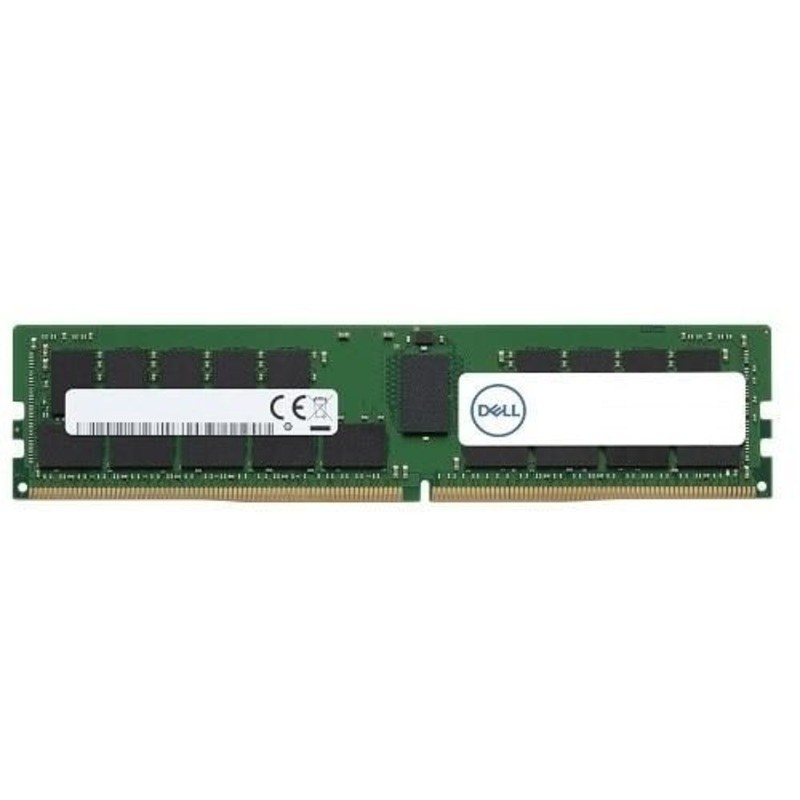
Dell 4M70C 32GB PC4-19200 Memory Ecc 2400mhz Registered DDR4 SDRAM 288-pin. New (System) Pull with 1 year replacement warranty
| SKU/MPN | Warranty | Price | Condition | You save |
|---|---|---|---|---|
| 4M70C | 1 Year Warranty | $289.00 | New (System) Pull | You save: $101.15 (26%) |
| 4M70C | 1 Year Warranty | $247.00 | New (System) Pull | You save: $86.45 (26%) |
Upgrade your server or workstation with the Dell 4M70C 32GB DDR4 SDRAM memory module. This high-performance, error-correcting (ECC) registered DIMM is built for reliability, sustained throughput and heavy multitasking in enterprise environments.
This memory module is compatible with a wide range of Dell server and precision workstation models. Confirm BIOS and system configuration before installing multiple modules.
Server memory represents a critical component in modern computing infrastructure, designed specifically for the demanding environments of data centers, enterprise servers, and high-availability systems. Unlike standard desktop memory, server memory incorporates advanced technologies to ensure data integrity, system stability, and continuous operation under heavy workloads. The Dell 4M70C 32GB 2400MHz PC4-19200 memory module exemplifies these specialized characteristics, engineered to meet the rigorous requirements of Dell PowerEdge servers and similar enterprise-grade systems.
Server memory modules are fundamentally different from their desktop counterparts in several crucial aspects. While desktop memory prioritizes speed and cost-efficiency for consumer applications, server memory emphasizes reliability, error correction, and continuous operation. Servers typically run mission-critical applications where downtime or data corruption can have severe financial and operational consequences. The Dell 4M70C addresses these needs through its ECC (Error Correcting Code) technology, registered design, and rigorous compatibility testing with specific server platforms.
In server environments, memory acts as the primary workspace for active applications, databases, virtual machines, and cached data. Insufficient or incompatible memory can create significant bottlenecks, limiting the server's ability to process simultaneous requests and maintain responsive performance. The 32GB capacity of the Dell 4M70C module provides substantial memory resources for demanding workloads, while its 2400MHz speed ensures efficient data transfer between the memory and processor.
The Dell 4M70C 32GB 2400MHz PC4-19200 CAS-17 ECC Registered memory module features a comprehensive set of technical specifications that define its performance characteristics and compatibility profile. Understanding these specifications is essential for selecting the appropriate memory for your server infrastructure and ensuring optimal system performance.
The 32GB capacity represents the total amount of data the module can store and access simultaneously. This substantial capacity makes the module suitable for memory-intensive applications including:
Virtualization platforms like VMware vSphere, Microsoft Hyper-V, and Citrix Hypervisor require significant memory resources to host multiple virtual machines simultaneously. Each virtual machine consumes a portion of the physical memory, making higher-capacity modules like the 32GB Dell 4M70C essential for dense virtualization deployments.
Database management systems such as Microsoft SQL Server, Oracle Database, and MySQL perform optimally when frequently accessed data can reside in memory rather than requiring disk access. The 32GB capacity allows larger portions of databases to be cached in memory, dramatically improving query performance and transaction throughput.
In-memory computing platforms like SAP HANA and various big data analytics solutions process enormous datasets entirely within system memory. These applications benefit directly from higher-capacity modules, as they can work with larger datasets without swapping to slower storage media.
The 2400MHz speed rating, also designated as PC4-19200, indicates the module's data transfer capability. This specification has several important implications for system performance:
The "2400MHz" refers to the module's clock speed, while "PC4-19200" indicates the peak transfer rate in megabytes per second (MB/s). To calculate this transfer rate: 2400 million transfers per second × 8 bytes per transfer (64-bit data bus) = 19,200 MB/s. This theoretical maximum represents the module's potential bandwidth under ideal conditions.
While higher memory speeds generally improve performance, the actual benefit depends on the specific workload. Memory-intensive applications like scientific computing, data analytics, and high-performance computing clusters typically show more significant performance gains from faster memory compared to storage-bound or compute-bound workloads.
CAS Latency (CL) represents the number of clock cycles between when a memory controller requests data and when that data becomes available. The Dell 4M70C's CAS Latency of 17 indicates a balance between performance and stability typical of server-grade memory.
Memory modules typically exhibit a trade-off between speed (bandwidth) and latency (response time). Higher-speed modules often have higher CAS Latency values, while lower-speed modules may feature lower latency. The 2400MHz speed with CL17 represents an optimized balance for server workloads where both bandwidth and responsive access patterns are important.
Error Correcting Code (ECC) technology represents one of the most critical differentiators between server-grade and consumer-grade memory. The Dell 4M70C incorporates ECC capabilities to detect and correct memory errors in real-time, providing essential protection against data corruption and system crashes.
ECC memory includes additional memory chips beyond those required for data storage. These extra chips store special error-correcting codes that correspond to the data stored in the primary memory cells. When data is read from memory, the memory controller recalculates the ECC codes and compares them to the stored codes. If a single-bit error is detected, the memory controller can automatically correct it without interrupting system operation.
Single-bit errors, where one bit spontaneously flips from 0 to 1 or vice versa, are the most common type of memory error. These errors can be caused by various factors including cosmic radiation, electrical interference, or manufacturing imperfections. The Dell 4M70C's ECC implementation can automatically detect and correct single-bit errors, preventing them from affecting application performance or causing data corruption.
While ECC memory can correct single-bit errors, it typically can only detect—not correct—multi-bit errors. When the memory controller detects an uncorrectable multi-bit error, it signals the system to take appropriate action, which may include logging the error, terminating the affected process, or in severe cases, initiating a system shutdown to prevent data corruption.
The additional cost of ECC memory is justified by the significant financial and operational impacts of memory errors in server environments. For business-critical applications, database systems, and financial transaction processing, the cost of even occasional data corruption or system downtime far exceeds the premium for ECC-protected memory like the Dell 4M70C.
The Dell 4M70C utilizes a registered memory design, also referred to as buffered memory, which incorporates special register chips between the memory controller and the DRAM modules. This architecture provides important benefits for server systems with large memory capacities and complex memory configurations.
In unbuffered memory configurations, the memory controller communicates directly with each DRAM chip on the module. While this approach offers minimal latency, it creates significant electrical load on the memory controller, limiting the number of modules that can be reliably supported. Registered memory addresses this limitation by using register chips to buffer the command, address, and control signals, reducing the electrical load on the memory controller.
Each memory module presents an electrical load to the memory controller in the form of capacitance. As more modules are added to a system, this cumulative capacitance can degrade signal integrity and timing margins. The registered design of the Dell 4M70C mitigates this issue by presenting a consistent, manageable load to the memory controller regardless of how many modules are installed in the system.
By buffering and re-driving the control signals, the register chips on registered memory modules help maintain signal integrity across large memory arrays. This signal regeneration ensures that timing margins remain within specification even in systems with fully populated memory configurations, enhancing system stability and reliability.
The Dell 4M70C utilizes a dual rank architecture, which refers to the organization of memory chips on the module and how they are accessed by the memory controller. Understanding rank configuration is essential for optimizing memory performance and compatibility in server systems.
A memory rank represents a set of DRAM chips that work together to provide the full data width of the memory bus (typically 64 bits for standard memory, or 72 bits for ECC memory). In a dual rank module like the Dell 4M70C, the module contains two independent sets of DRAM chips that share the same memory interface but can be accessed separately.
Each rank on a dual rank module operates independently, meaning that while one rank is busy processing a memory access, the memory controller can initiate an access to the other rank. This interleaving capability can improve memory efficiency by hiding some of the latency associated with memory access operations.
The dual rank architecture of the Dell 4M70C offers several performance advantages in server environments:
Modern memory controllers can pipeline operations across multiple ranks, issuing commands to one rank while another rank is processing previous commands. This capability allows the memory controller to maintain higher utilization of the memory bus, effectively increasing overall memory bandwidth.
Memory controllers can implement bank interleaving across ranks, distributing memory accesses to different banks on different ranks to minimize conflicts and maximize parallelism. This approach can significantly improve memory performance for certain access patterns common in server workloads.
Compared to single rank modules, dual rank modules like the Dell 4M70C typically offer better performance in most server applications due to the increased opportunity for parallelism and interleaving. However, there are some considerations regarding population rules and compatibility that should be addressed when configuring server memory.
The performance impact of memory varies significantly across different application types and workloads:
Database applications typically benefit from both memory capacity and bandwidth. The 32GB capacity of the Dell 4M70C allows substantial database caching, while the 2400MHz speed ensures responsive data access for query processing and transaction handling.
Virtualization platforms place unique demands on memory subsystems, requiring both capacity for multiple virtual machines and bandwidth for memory-intensive operations like virtual machine migration and memory ballooning. The Dell 4M70C addresses both requirements effectively.
High-performance computing applications often exhibit predictable, streaming memory access patterns that can efficiently utilize the available memory bandwidth. For these workloads, the Dell 4M70C's combination of speed and dual rank architecture provides excellent performance characteristics.
Server memory modules like the Dell 4M70C incorporate numerous features designed to enhance system reliability, maximize availability, and simplify serviceability in enterprise environments.
The Dell 4M70C is engineered to operate reliably across a wider temperature range compared to consumer memory modules. This extended temperature tolerance ensures stable operation in data center environments where cooling systems may experience variations or where servers are deployed in challenging environmental conditions.
Server platforms equipped with Dell 4M70C memory modules can leverage advanced error logging capabilities to track memory errors over time. This historical error data helps system administrators identify potential memory issues before they lead to system failures, enabling proactive maintenance and component replacement.
By monitoring error rates and patterns, server management systems can sometimes predict memory module failures before they occur. This predictive capability allows for planned maintenance during off-hours rather than emergency response to system crashes during production periods.
Depending on the specific server platform and configuration, the Dell 4M70C memory may support hot-plug operations in certain scenarios. This capability enables memory expansion or replacement without shutting down the server, maximizing system availability for critical applications.


 Contact Us
 Information
 Catalog
 Solid State Drives (SSD)
 Network Switches
 Hard Disk Drives
 HBA & Controllers
 PC & Servers
 PC & Server Memory
 CPU & Processors
 Network Routers
 Power Supplies
 Tape Drives & Libraries
 Network Devices
 Computer & Network Cables