(7% discount is applied at checkout)
Cart is empty
Your go-to destination for cutting-edge server products


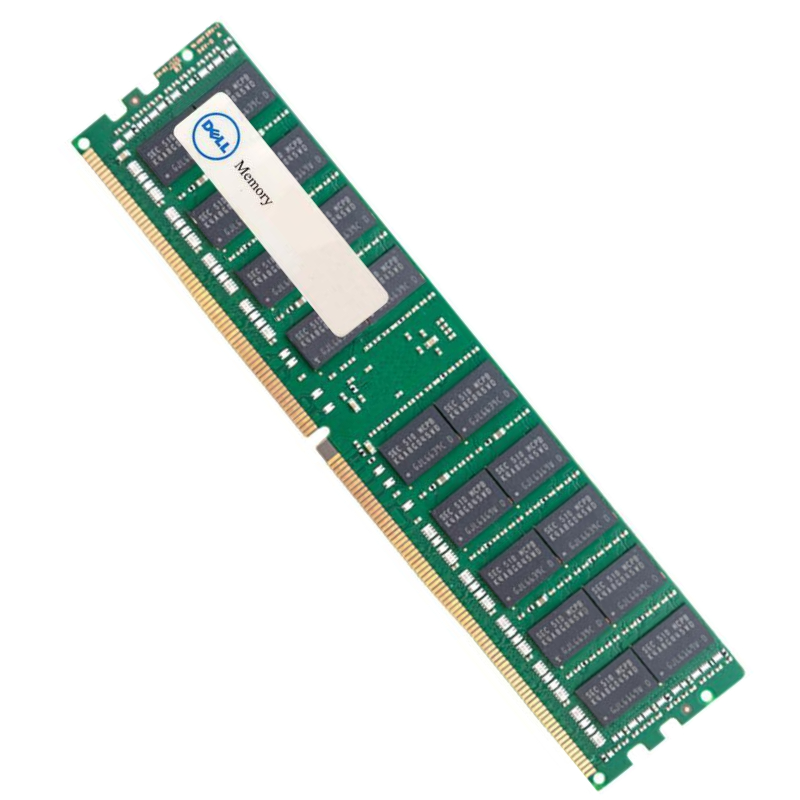
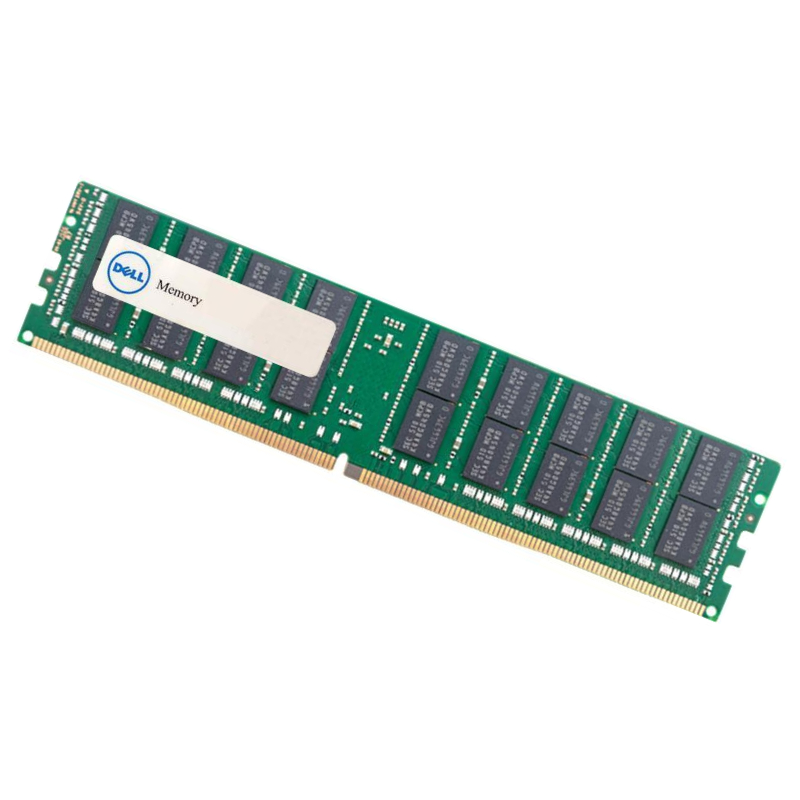
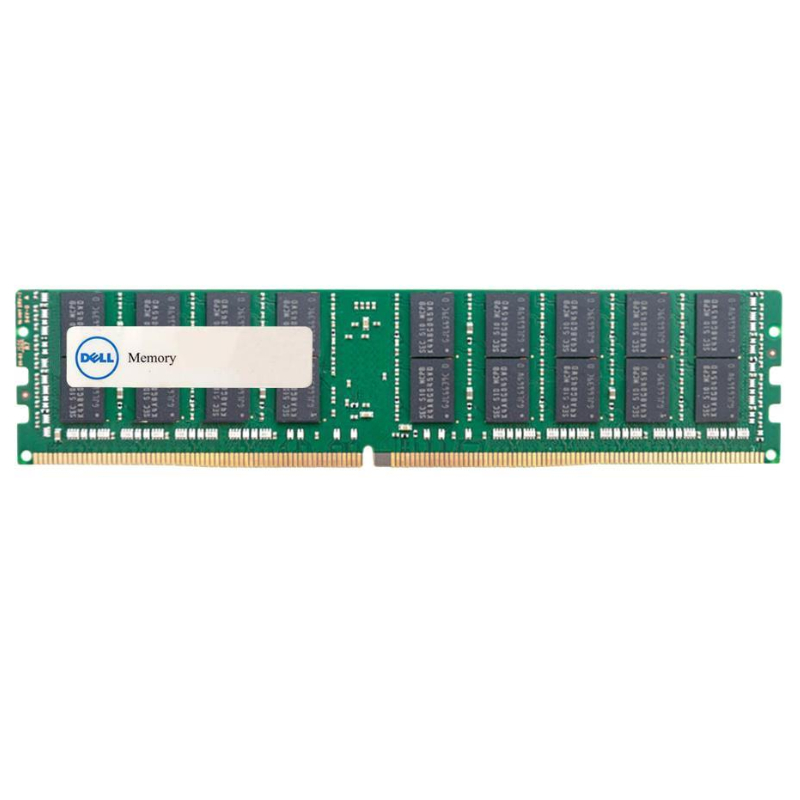
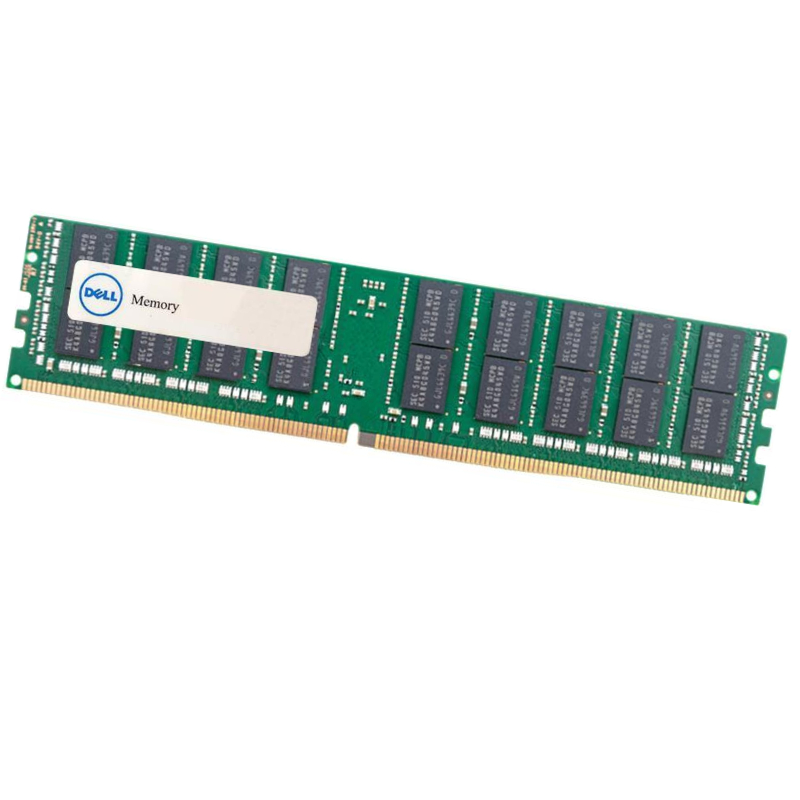
Dell 4JMGM 64GB 2666MHZ PC4-21300 Ecc Registered DDR4 SDRAM 288-Pin RAM. New (System) Pull with 1 year replacement warranty - Samsung Version
| SKU/MPN | Warranty | Price | Condition | You save |
|---|---|---|---|---|
| 4JMGM | 1 Year Warranty | $758.00 | New Sealed in Box (NIB) | You save: $265.30 (26%) |
| 4JMGM | 1 Year Warranty | $628.00 | New (System) Pull | You save: $219.80 (26%) |
The Dell 4JMGM 64GB 2666MHz PC4-21300 CL19 ECC Registered Quad Rank x4 1.2V Load-Reduced DDR4 SDRAM 288-Pin LRDIMM is a high-performance server memory module built to enhance system reliability, speed, and multitasking capabilities.
This high-efficiency memory module is compatible with multiple Dell PowerEdge servers, ensuring wide deployment flexibility:
The Dell 4JMGM 64GB 2666MHz PC4-21300 ECC Registered DDR4 memory module represents enterprise-grade performance and reliability. This specific memory type operates at 2666 megatransfers per second (MT/s), with a data transfer rate of 21,300 MB/s, which is reflected in the PC4-21300 designation. The "PC4" prefix indicates DDR4 technology, while "21300" denotes the peak transfer rate in megabytes per second. With a 64GB capacity per module, this memory is designed for memory-intensive applications and workloads that demand substantial RAM resources.
Operating at a standard DDR4 voltage of 1.2V, this memory module offers significant power efficiency improvements compared to previous generation DDR3 memory, which typically operated at 1.5V or 1.35V. The reduced voltage not only lowers power consumption but also decreases heat generation, contributing to better system stability and reduced cooling requirements in data center environments where multiple modules are deployed.
The module features a 288-pin configuration, which is standard for DDR4 technology. The physical layout includes a single notch position that differs from DDR3 modules, preventing accidental insertion into incompatible motherboards. The pin arrangement is optimized for higher data transfer rates and improved signal integrity, which is crucial for maintaining stability at 2666MHz operating frequency.
Designed in the standard Dual In-Line Memory Module (DIMM) form factor, this memory measures approximately 133.35mm in length and conforms to JEDEC standards for height and component placement. This ensures compatibility with Dell server chassis and cooling solutions, maintaining proper airflow and thermal management within enterprise systems.
ECC (Error Correcting Code) memory includes additional bits and specialized circuitry that can detect and correct single-bit memory errors in real-time. This capability is critical for servers and workstations where data integrity is paramount. The ECC functionality works by storing extra bits that create a checksum for verifying data accuracy. When data is read from memory, the ECC circuitry recalculates the checksum and compares it to the stored value. If a single-bit error is detected, it is automatically corrected without interrupting system operation.
While ECC memory primarily corrects single-bit errors, it can also detect multi-bit errors, though it cannot correct them. When a multi-bit error is detected, the system can be configured to halt operations to prevent corrupted data from propagating through the system. This proactive error management makes ECC memory essential for financial systems, databases, scientific computing, and other applications where data accuracy cannot be compromised.
Registered memory, also known as buffered memory, incorporates a register (or buffer) between the memory controller and the DRAM chips. This register temporarily holds data and commands before they reach the memory chips, reducing the electrical load on the memory controller. The Dell 4JMGM utilizes this technology to enable higher memory capacities and more stable operation when populating multiple DIMM slots, which is common in server configurations.
This 64GB module typically employs a dual-rank or quad-rank design, which affects how the memory controller accesses the DRAM chips. Registered memory allows for more ranks per channel while maintaining signal integrity, enabling servers to support massive total memory capacities—often reaching multiple terabytes in modern server platforms. The registered design also contributes to better timing consistency across all installed modules.
The Dell 4JMGM operates with specific timing parameters, typically including CAS Latency (CL), which for 2666MHz DDR4 memory generally falls in the CL19 range. CAS Latency represents the number of clock cycles between when a read command is issued and when the data becomes available. While higher frequency memory often has slightly higher latencies, the overall bandwidth increase typically results in better performance for most server workloads, especially those that benefit from higher transfer rates rather than lower latency.
At 2666MT/s, the module delivers 21,300 MB/s of theoretical peak bandwidth. This is calculated by multiplying the transfer rate (2666 million transfers per second) by the data width (64 bits/8 bits per byte). In practical terms, this bandwidth enables faster data processing for virtualization, database operations, and high-performance computing applications where memory speed can be a significant bottleneck.
In virtualized infrastructure using VMware vSphere, Microsoft Hyper-V, or other hypervisors, the Dell 4JMGM 64GB modules enable higher virtual machine density and better performance. Large memory capacities are essential for memory overcommitment features and for hosting memory-intensive virtual machines. The ECC protection ensures the stability of the hypervisor and guest operating systems, while the 2666MHz speed improves virtual machine mobility operations and reduces memory contention during peak loads.
Database management systems like Microsoft SQL Server, Oracle Database, and MySQL benefit significantly from large, fast memory. The 64GB capacity allows substantial portions of databases to be cached in memory, dramatically reducing disk I/O and improving query performance. The ECC functionality is particularly important for database systems where data corruption could have severe consequences. The registered architecture provides the stability needed for transaction-intensive workloads.
In scientific computing, research institutions, and academic environments, the Dell 4JMGM supports complex simulations, data analysis, and computational modeling. Applications in fields such as computational chemistry, fluid dynamics, and genetic sequencing require massive memory resources and benefit from both the capacity and speed of these modules. The error correction capabilities ensure the integrity of computational results over extended calculation periods.
Unbuffered ECC memory, typically used in workstations and entry-level servers, lacks the register found in registered memory. While unbuffered memory generally has slightly lower latency, it cannot support the same memory capacities and may be less stable in fully populated systems. Registered memory like the Dell 4JMGM is essential for servers requiring large memory configurations exceeding 128GB per processor.
Load Reduced DIMMs (LRDIMMs) represent another memory technology that uses a memory buffer (iSO) to further reduce electrical load on the memory controller compared to registered DIMMs. While LRDIMMs can support even higher capacities and more ranks, they typically come with a slight latency penalty and higher cost. The Dell 4JMGM registered DIMM provides an optimal balance of capacity, performance, and cost for most enterprise applications.


 Contact Us
 Information
 Catalog
 Solid State Drives (SSD)
 Network Switches
 Hard Disk Drives
 HBA & Controllers
 PC & Servers
 PC & Server Memory
 CPU & Processors
 Network Routers
 Power Supplies
 Tape Drives & Libraries
 Network Devices
 Computer & Network Cables