(7% discount is applied at checkout)
Cart is empty
Your go-to destination for cutting-edge server products
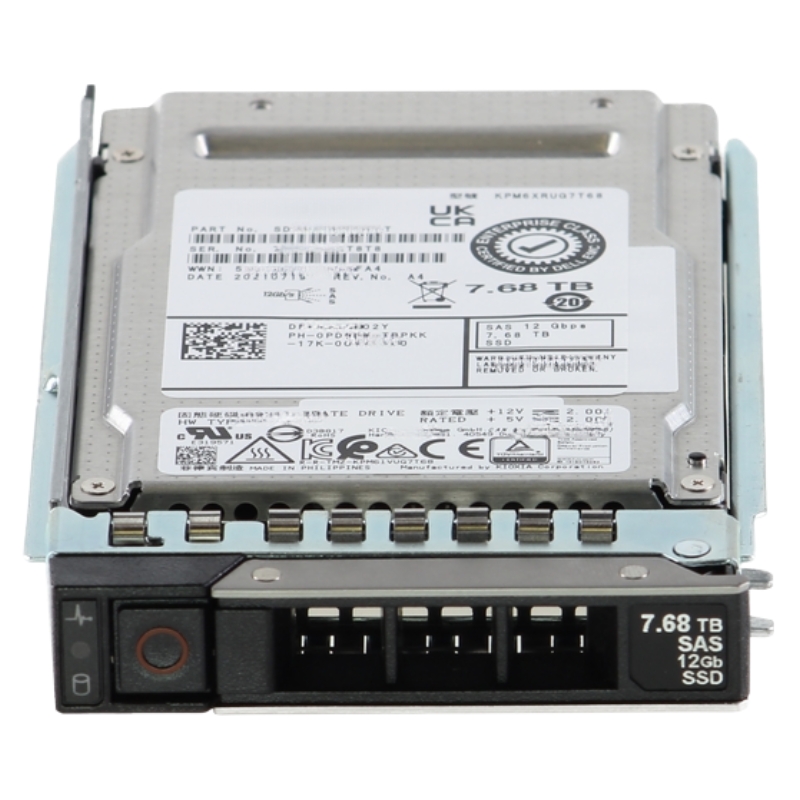


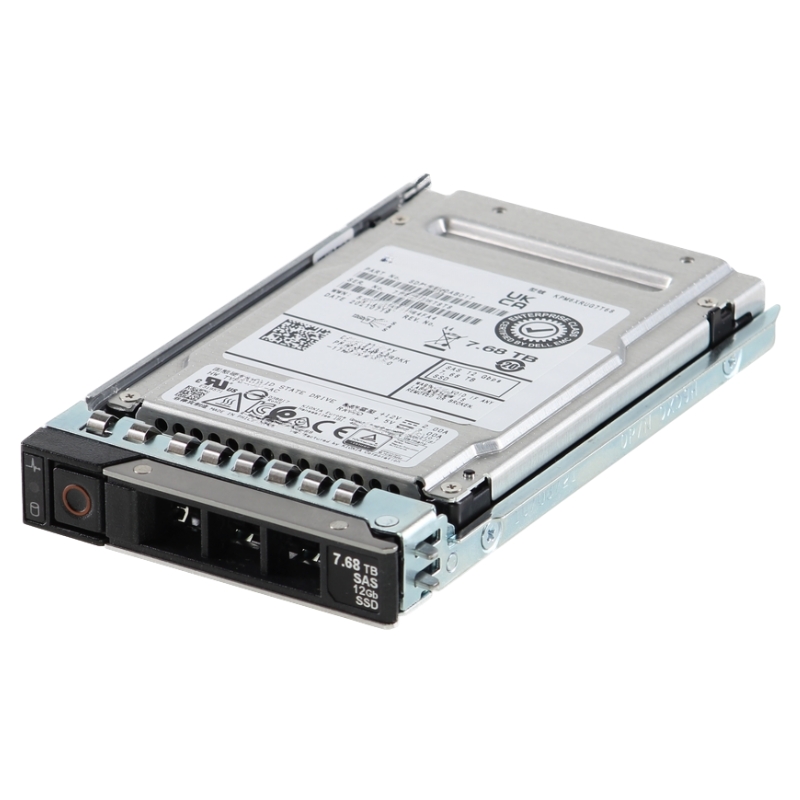
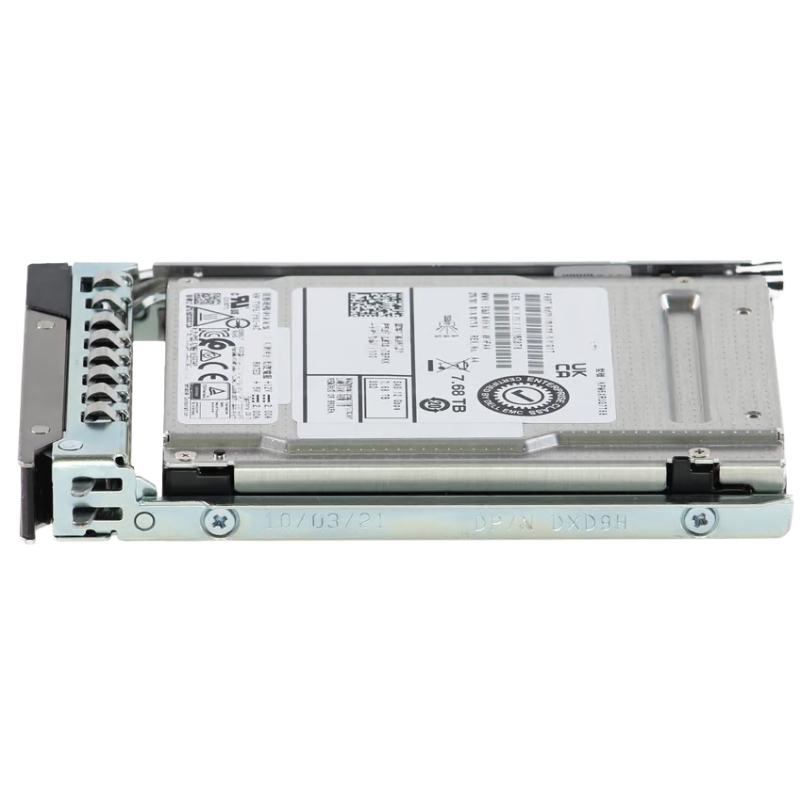
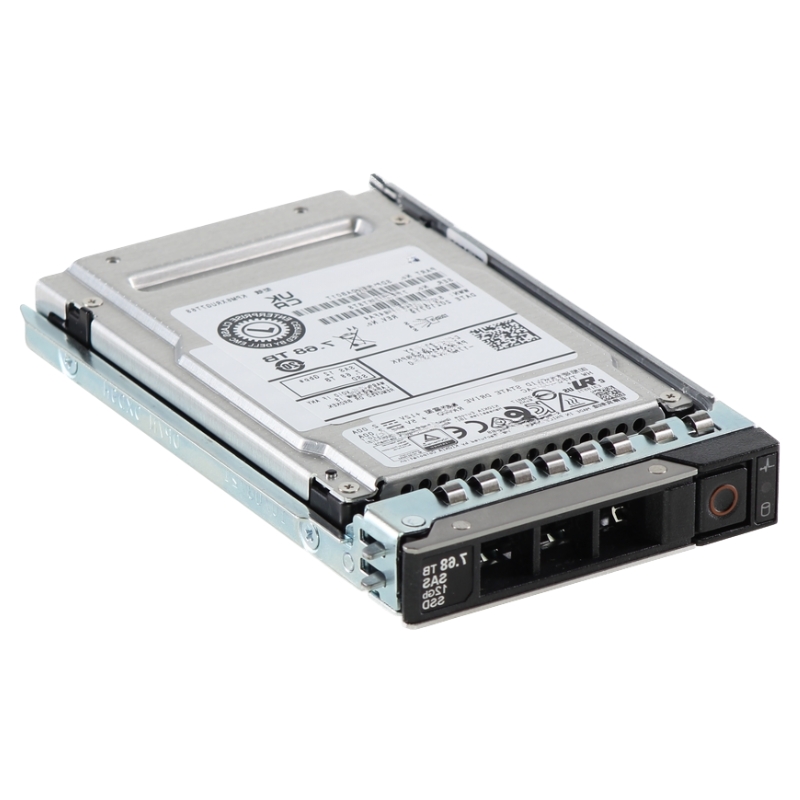
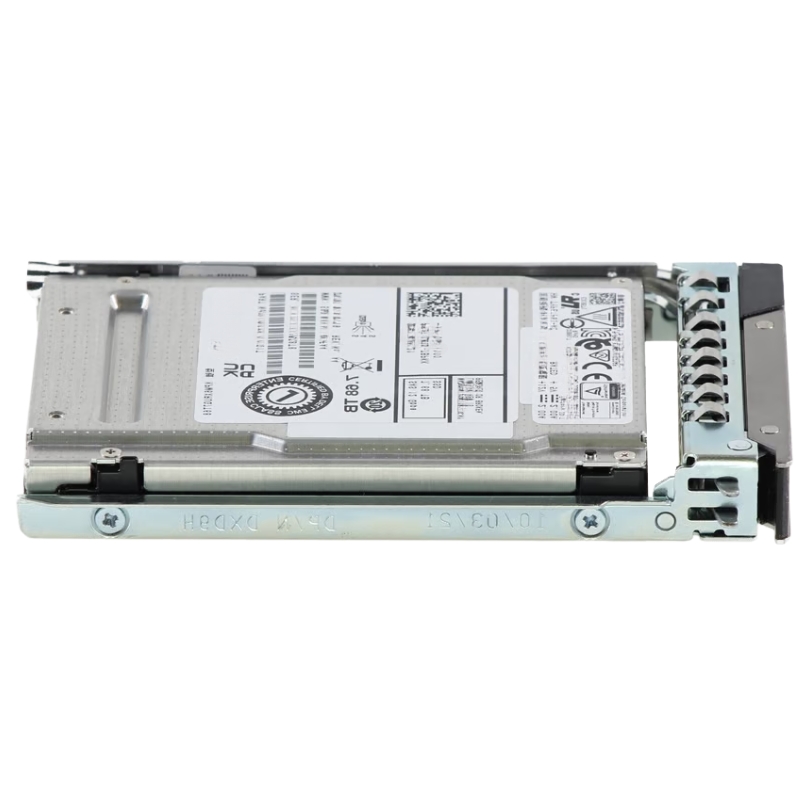
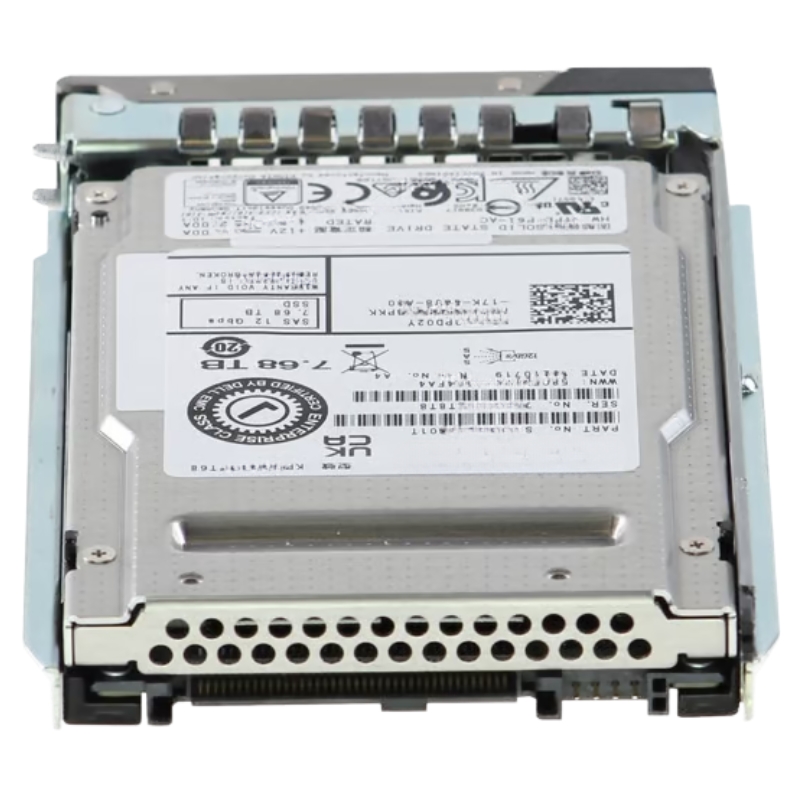
Dell 1Y2XJ 7.68TB SAS-12GBPS Solid State Drive TLC Hot-plug With Tray for Server. New Sealed in Box (NIB) with 1 year Warranty Warranty
| SKU/MPN | Warranty | Price | Condition | You save |
|---|---|---|---|---|
| 1Y2XJ | 1 Year Warranty | $3,699.00 | New Sealed in Box (NIB) | You save: $1,294.65 (26%) |
| 1Y2XJ | 1 Year Warranty | Contact us for a price | Excellent Refurbished |
The Dell 1Y2XJ 7.68TB SAS 12Gbps Read-Focused Solid State Drive is crafted for high-speed data access and long-term reliability. It integrates a 3.5-inch hybrid mounting bracket tailored for Dell PowerEdge 14G, 15G, and 16G server generations.
Designed for enterprise storage arrays, cloud platforms, and mixed-workload server environments, the Dell 1Y2XJ 7.68TB SAS 12Gbps Read Intensive 1DWPD TLC Hot Plug Solid State Drive represents a class of SAS SSDs optimized for read-heavy applications where predictable latency, consistent throughput, and operational resilience are mandatory. This category of drives combines the reliability and manageability of SAS connectivity with modern TLC NAND to deliver a cost-effective balance between capacity and endurance for workloads such as web caching, content delivery, virtualization read caches, and large-scale data retrieval.
As a read-intensive 1 drive write per day (1DWPD) class SSD, this product family targets organizations that require high-capacity flash storage without the write endurance demands of heavy mixed-write or write-intensive workloads. These drives are positioned between consumer or client-class SATA SSDs and higher-end enterprise NVMe drives: they offer superior reliability and manageability compared with client drives while remaining more capacity- and cost-efficient than the highest-endurance enterprise flash designed for heavy write amplification.
Capacity matters when consolidating large read-dominant datasets onto flash to accelerate access times. The 1Y2XJ 7.68TB model provides substantial usable space in a single 2.5-inch or enterprise form factor (depending on carrier/tray options) which reduces the number of physical drives required for the same dataset, simplifies storage tiering, and minimizes rack space consumption. Storage architects often use high-capacity read-optimized drives like this one to reduce overall system complexity and lower total cost of ownership through fewer hot-swap modules, simplified cooling considerations, and reduced metadata overhead in large-scale arrays.
The 1Y2XJ SAS 12Gbps interface remains a preferred choice in many existing enterprise infrastructures for its mature ecosystem, end-to-end error detection/correction capabilities, and multipath support. These drives leverage the full-duplex bandwidth and enterprise-class features of SAS to deliver consistent sequential and random read performance with low, deterministic latency. Because they are read-intensive, the firmware and controller are tuned to prioritize predictable read I/O and to manage internal garbage collection in ways that minimize impact on read latency under steady-state conditions.
Read-optimized solid state drives deliver high sustained read throughput and excellent random read IOPS, which translates into faster query responses, accelerated boot times for virtual machines, and more responsive databases when the working set is cached on flash. Enterprise administrators will find that deploying the 1Y2XJ 7.68TB read-intensive model as a primary read tier or as a cache layer significantly reduces application tail latency for high-concurrency workloads.
Latency consistency is frequently the primary metric for enterprise workload acceptability. These SAS SSDs are engineered to provide tight latency distributions across a range of queue depths and mixed I/O ratios, improving quality of service (QoS) for applications sensitive to response jitter. For latency-sensitive deployments, administrators should pair these drives with appropriate controller settings and multipath paths to ensure that the full performance potential of the SAS link and device is realized.
Using triple-level cell (TLC) NAND is a pragmatic design choice that balances cost per gigabyte and endurance. The 1Y2XJ 1DWPD rating indicates the drive is designed to sustain one full drive write per day over its specified warranty period, making it suitable for predominantly read workloads with moderate write bursts. TLC together with robust controller-level wear leveling and error management extends usable life while keeping upfront cost lower than higher-endurance MLC or SLC-based enterprise drives.
Effective wear leveling, dynamic over-provisioning, thermal throttling, and background data scrubbing are commonly implemented in this category to prolong lifespan and ensure data integrity. Enterprise-class SMART reporting, predictive failure analytics, and configurable reservation features enable storage administrators to integrate these drives into their monitoring and maintenance workflows, thereby reducing unexpected downtime and simplifying capacity planning.
Hot-plug support is a cornerstone of modern data center operations. Drives in this category are engineered for safe insertion and removal while systems remain online, enabling in-service upgrades, replacements, and maintenance without taking hosts offline. This reduces planned downtime windows and supports high-availability architectures where rapid remediation of failed components is critical.
To maximize operational convenience, these drives are commonly delivered with carrier trays compatible with Dell PowerEdge chassis and many OEM enclosures. Service teams appreciate clear labeling, tool-less drive handles, and drive health LEDs that accelerate on-site diagnosis and replacement in clustered or blade server environments.
Read-optimized SAS SSDs such as the Dell 1Y2XJ 7.68TB model shine in environments where read density is high and capacity per spindle matters. Typical deployments include virtual desktop infrastructure (VDI) read caches, large-scale content delivery, metadata stores, data warehousing query acceleration, and object storage front-ends that offload read traffic from mechanical tiers.
In VDI environments where boot storms and login storms create heavy read I/O patterns, high-capacity read-intensive SSDs reduce boot times and improve end-user experience by absorbing the working set and delivering consistent read performance at scale. Their capacity allows larger pools of images and snapshots to be stored on flash for immediate access.
Web servers, CDN edge nodes, and media streaming infrastructures benefit from colocating large amounts of frequently accessed content on read-optimized flash to minimize retrieval time and reduce network backhaul. The high sequential read throughput of SAS SSDs provides smooth delivery of large media files while preserving predictable access times for smaller objects.
Seamless integration with existing enterprise management stacks is a primary expectation for drives in this family. They are compatible with common RAID controllers, HBA cards, and storage array backplanes that support SAS 12Gbps. Management features such as enterprise firmware flash utilities, vendor monitoring agents, and standard SMART attributes enable administrators to incorporate these devices into their standard monitoring, alerting, and lifecycle management processes.
Keeping firmware up to date is essential for security, stability, and performance tuning. Vendors publish firmware revisions that address interoperability, reliability, and occasionally performance improvements. Administrators should plan staged rollouts of firmware in test pools before mass deployment and should adhere to vendor-recommended rollback procedures in case of unexpected behavior.
Enterprise SSDs in this class incorporate security features that support data protection policies and regulatory compliance. Drive-level encryption, secure erase capabilities, and support for host-managed encryption standards allow organizations to meet data sovereignty and security mandates while simplifying decommissioning of storage media.
Hardware-based encryption reduces CPU overhead for cryptographic operations and ensures that data at rest is protected even if drives are physically removed from infrastructure. Secure erase functions, when compliant with recognized standards, provide a fast method of returning drives to a sanitized state for redeployment or disposal.
For industries with strict retention and destruction policies, documented secure erase and chain-of-custody procedures combined with vendor-issued certificates of erasure help satisfy auditors and regulators. Storage architects should validate that the drive’s security features and vendor support align with internal compliance requirements.
High-density flash in enterprise racks concentrates heat. Drives in this family are designed with thermal sensors and throttling mechanisms to balance performance and reliability. Data center operators should plan for adequate airflow, correct cabled routing, and proper rack placement to avoid thermal hotspots that could induce throttling and reduced performance.
Solid state drives consume less power than spinning media at idle and under load, which contributes to lower energy costs and smaller cooling requirements for comparable usable capacity. Nevertheless, high-capacity SSDs can draw meaningful power under sustained activity, so planners should consider peak power budgets when populating dense enclosures.
These drives are often supplied in enterprise 2.5-inch form factors with sleds or caddies compatible with Dell servers and many third-party enclosures. Ensuring correct rail alignment, tray seating, and firmware visibility in controller firmware is a necessary step during provisioning to avoid hot-swap detection issues and to guarantee reliable operation.
When comparing the 7.68TB read-intensive SAS SSDs against NVMe drives or lower-cost SATA alternatives, the key trade-offs are interface maturity, cost-per-gigabyte, latency, and system compatibility. NVMe typically delivers lower latency and higher parallelism, but SAS drives preserve multipath stability and broad HBA support. SATA offers lower cost per gigabyte but lacks the enterprise features and throughput of SAS.
Choose read-intensive SAS SSDs when your environment requires broad controller compatibility, predictable multipath behavior, enterprise-level manageability, and high-capacity flash at a favorable price point. If ultra-low latency or the highest IOPS per drive are mandatory, NVMe might be preferable, while SATA can be chosen where cost is the foremost constraint and enterprise features are less critical.


 Contact Us
 Information
 Catalog
 Solid State Drives (SSD)
 Network Switches
 Hard Disk Drives
 HBA & Controllers
 PC & Servers
 PC & Server Memory
 CPU & Processors
 Network Routers
 Power Supplies
 Tape Drives & Libraries
 Network Devices
 Computer & Network Cables