(7% discount is applied at checkout)
Cart is empty
Your go-to destination for cutting-edge server products
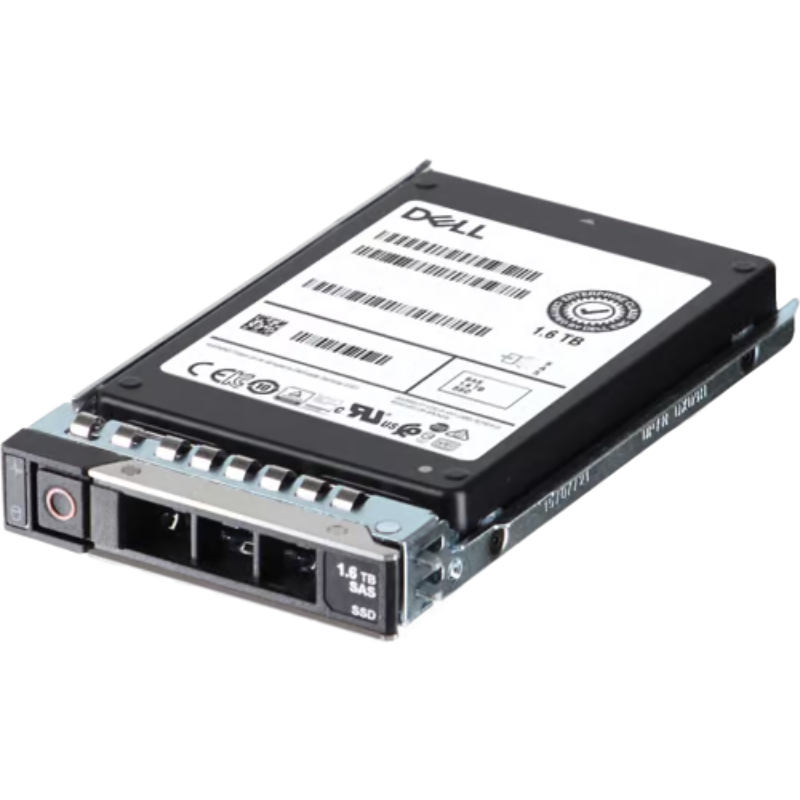


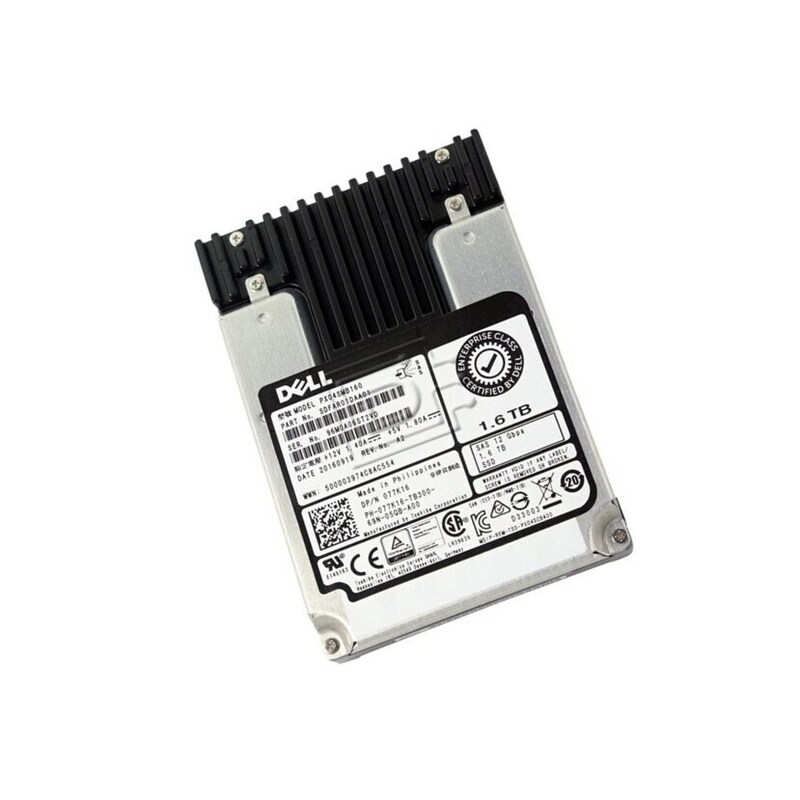
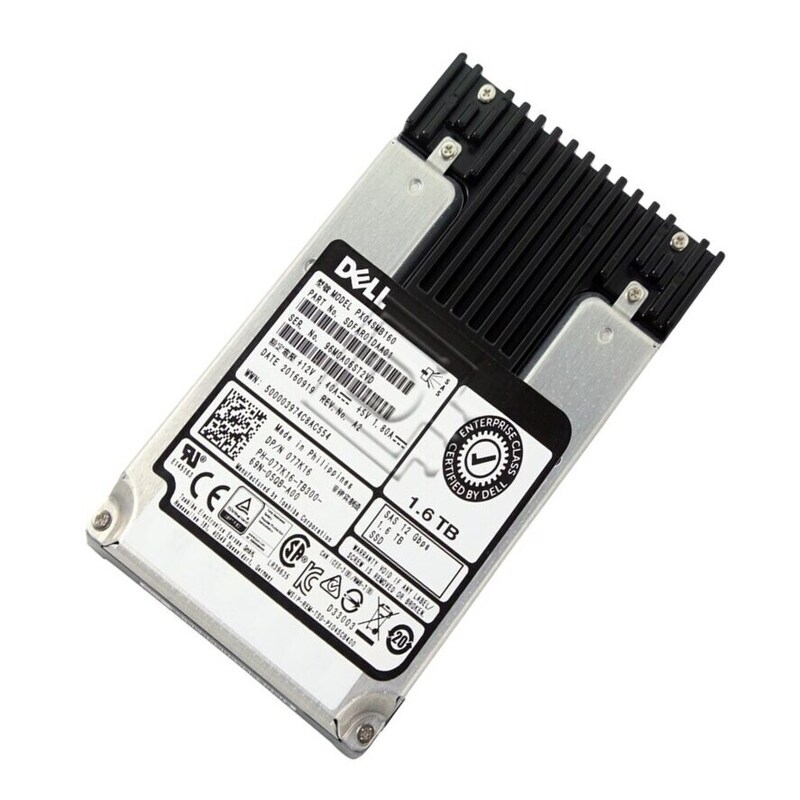
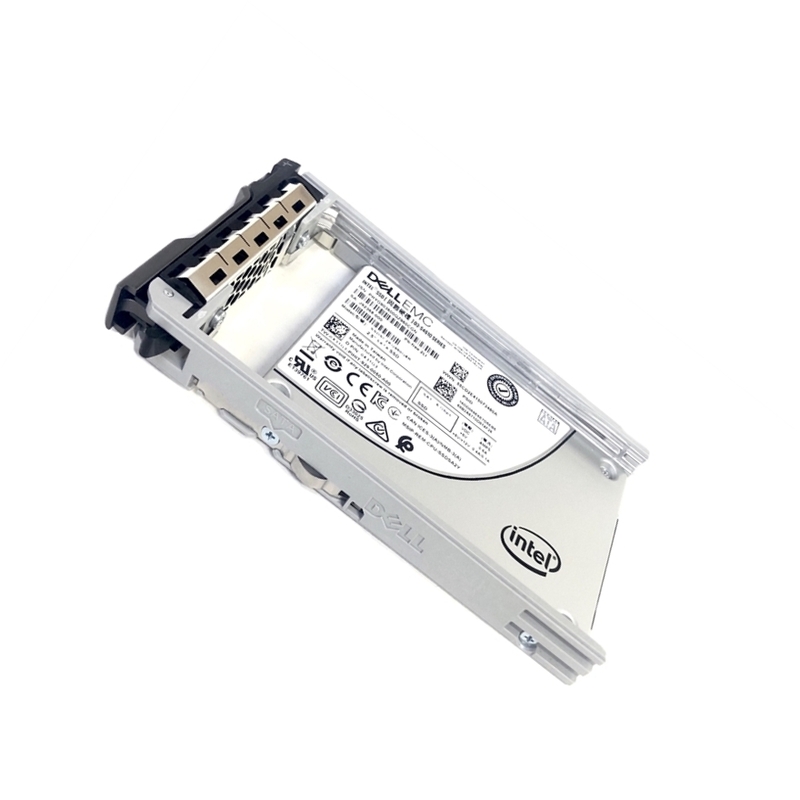
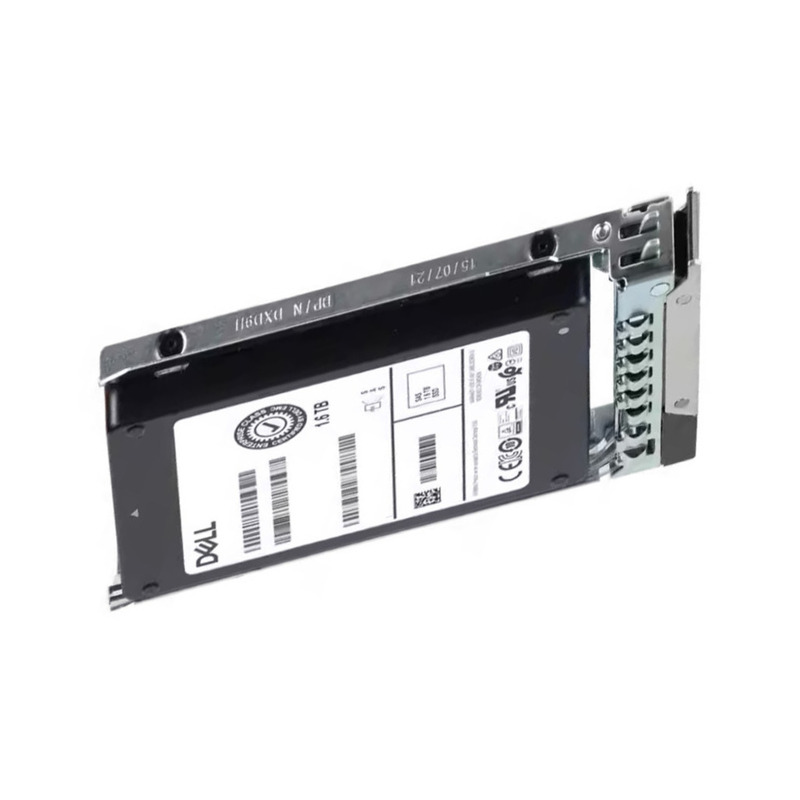
Dell 77K16 1.6TB Solid State Drive SAS 12GBPS Hot Plug Mixed Use MLC. New Sealed 1 year replacement warranty
| SKU/MPN | Warranty | Price | Condition | You save |
|---|---|---|---|---|
| 77K16 | 1 Year Warranty | $1,463.00 | New Sealed in Box (NIB) | You save: $512.05 (26%) |
| 77K16 | 1 Year Warranty | $408.00 | Excellent Refurbished | You save: $142.80 (26%) |
Discover the high-performance Dell 77K16 solid-state drive designed for enterprise-grade servers and data-intensive environments. This 2.5-inch SAS SSD offers reliable mixed-use capabilities with blazing-fast transfer speeds and hot-swap compatibility.
The Dell 77K16 1.6TB SAS 12Gbps MLC Mixed Use Hot Plug SSD represents a class of enterprise-grade solid state drives engineered for demanding server, storage array, and data center workloads. Built with multi-level cell (MLC) NAND and a SAS 12Gbps interface, this drive targets organizations that require a balance of high performance, strong endurance, and dependable hot-plug serviceability. Use the information below to evaluate compatibility, performance expectations, deployment patterns, and total cost of ownership (TCO) for the Dell 77K16 across modern IT environments.
The category centers on a 1.6TB capacity point — large enough for performance-tier storage and cache use cases while remaining cost-efficient compared to very high-capacity archival media. The physical form factor and the drive's hot-plug capability make it suitable for blade servers, rack-mounted servers (e.g., Dell PowerEdge), and enterprise storage enclosures where easy removal and replacement are essential.
The SAS 12Gbps interface provides a high-bandwidth, enterprise-class connection designed to deliver predictable latency and high throughput in multi-drive arrays. Compared to SATA, SAS adds features such as dual-port capability (in many cases), advanced error handling, and better scalability in dense storage backplanes. SAS 12Gbps is well-suited for mixed read/write workloads typical of databases, virtualization platforms, and mixed-use VDI deployments.
MLC NAND balances cost and endurance — offering higher write endurance than TLC (three-level cell) while remaining less expensive than SLC. For mixed-use drives like the 77K16, MLC provides a solid compromise for workloads that have both reads and writes, such as virtual machine hosts, transactional databases, and caching layers.
"Mixed-use" indicates that the drive is optimized for a balanced IO profile rather than exclusively read-intensive or write-intensive tasks. Expect robust random read performance and solid write endurance specifications appropriate for OLTP databases, application servers, and virtualized environments where both reads and writes occur frequently.
Enterprise SAS SSDs in this class typically deliver high sustained IOPS and low predictable latency under mixed workloads. For planning purposes, architects usually model these drives for:
High random read IOPS (useful for read-heavy database queries and VM boot storms).
Strong random write IOPS and write bandwidth to support transactional applications.
Consistent sub-millisecond latencies under normal operating conditions, with predictable tail latencies when properly provisioned and when write-back cache or controller-level features are used.
When benchmarking the Dell 77K16 class drives, simulate realistic block sizes (4K–16K), queue depths, and mixed read/write ratios that mirror your production workloads. Avoid relying solely on synthetic sequential throughput tests — those mask real-world mixed-use behavior. Use a combination of fio, vdbench, or vendor-provided benchmarking tools to capture steady-state performance and worst-case latencies.
The SAS 12Gbps link provides plenty of headroom for aggregate throughput across multiple concurrent IOs. For single-drive sequential throughput measurements you can expect high MB/s results, but the real value is the drive’s ability to sustain throughput during concurrent small-block IOs, which drives modern database and virtualization workloads.
Endurance is a primary consideration for mixed-use drives. Dell-branded enterprise MLC SSDs commonly publish endurance in terms such as TBW (terabytes written) or DWPD (drive writes per day). When planning, align endurance guarantees with expected daily write volumes: over-provisioning, RAID level choice, and write reduction technologies (compression, dedupe, caching) will extend effective lifespan dramatically.
Enterprise models typically include features to ensure data integrity during unexpected power loss, such as capacitors for in-flight data protection and firmware designed for graceful recovery. These features reduce the chance of corruption for queued writes and metadata — critical in mission-critical applications and clustered file systems.
Drive health monitoring through SMART attributes and vendor telemetry is essential for proactive maintenance. The Dell 77K16 category supports common SMART thresholds for reallocated sectors, media wear-out indicators, and thermal statistics. Integrate these telemetry feeds into your monitoring stack (Nagios, Zabbix, Prometheus, or vendor tools) to automate replacement planning and reduce unplanned downtime.
These SAS SSDs are designed to work with enterprise-grade RAID controllers and HBA (Host Bus Adapter) cards. Check your Dell PowerEdge server or storage chassis compatibility matrix to confirm firmware/BIOS pairing and hot-plug compatibility. Many organizations pair this drive with hardware RAID configurations, hybrid arrays, or flash pools in hyper-converged infrastructure (HCI).
Common deployment scenarios include:
Primary storage tier: For high-performance application data requiring low latency.
Cache tier: In hybrid arrays to accelerate reads/writes for frequently accessed data.
VM datastore: For virtual machine images and swap where IOPS are critical.
Database logs: For write-optimized log streaming when paired with appropriate redundancy.
Virtualized environments and desktop virtualization (VDI) benefit from the fast random IO and low latency profile of MLC SAS SSDs. The drives reduce boot storm impacts, speedup provisioning, and improve user experience by lowering login times and application launch latency.
OLTP databases and systems that write and read frequently (e.g., CRM, ERP) are strong candidates. Mixed-use drives deliver predictable performance for both writes and reads, minimizing tail latency that can affect transaction response time and throughput.
File servers, content delivery nodes, and small-block file services will see lower latency and higher transactional throughput compared to spinning media. Combine the 77K16 with tiering strategies to balance capacity and performance.
Integrate drive telemetry into existing monitoring for:
Tracking media wear percentages and TBW counters.
Detecting SMART warnings and pre-failure signals.
Forecasting replacements and automating spare allocation.
Configure over-provisioning to reserve spare blocks for wear leveling and garbage collection. Many enterprise SSDs allow additional over-provisioning beyond factory settings — consider this as an inexpensive way to boost endurance and steady-state performance for write-heavy workloads.
Choose RAID levels that align with performance and fault-tolerance goals. RAID-10 often provides the best performance with redundancy but at higher cost-per-usable-GB. RAID-6 provides stronger fault tolerance for larger arrays but may impact write performance. Consider using a battery-backed or NV cache-enabled controller to mitigate write penalty on parity-based RAID.
Maintain recommended ambient temperatures and ensure front-to-back airflow paths are unobstructed. Enterprise SSDs perform best when thermal throttling is avoided; continuous high-temperature operation shortens expected lifespan through accelerated wear.
Firmware and driver considerations
Firmware releases often contain bug fixes and performance enhancements. Maintain a controlled firmware update policy: test updates in QA first, validate with production-like workloads, and schedule updates in maintenance windows. Keep HBA and RAID controller drivers in sync with the drive firmware to avoid interoperability issues.


 Contact Us
 Information
 Catalog
 Solid State Drives (SSD)
 Network Switches
 Hard Disk Drives
 HBA & Controllers
 PC & Servers
 PC & Server Memory
 CPU & Processors
 Network Routers
 Power Supplies
 Tape Drives & Libraries
 Network Devices
 Computer & Network Cables