(7% discount is applied at checkout)
Cart is empty
Your go-to destination for cutting-edge server products
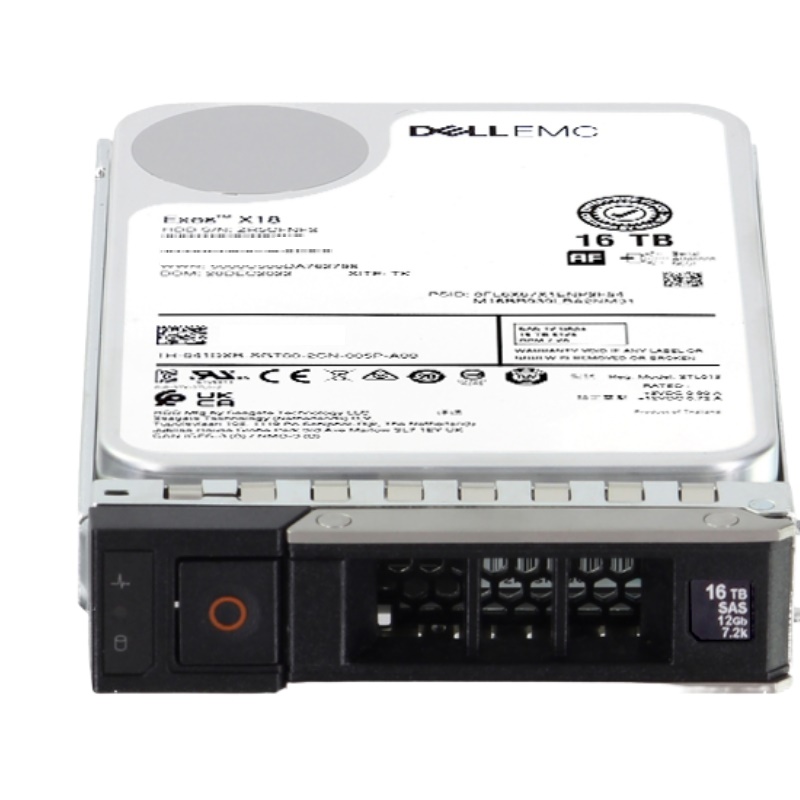


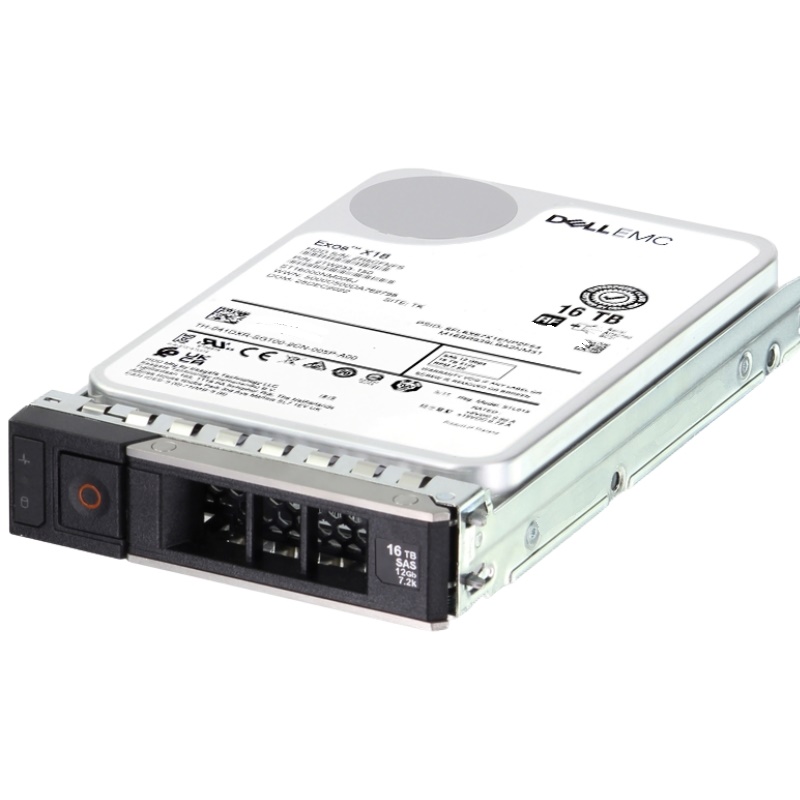
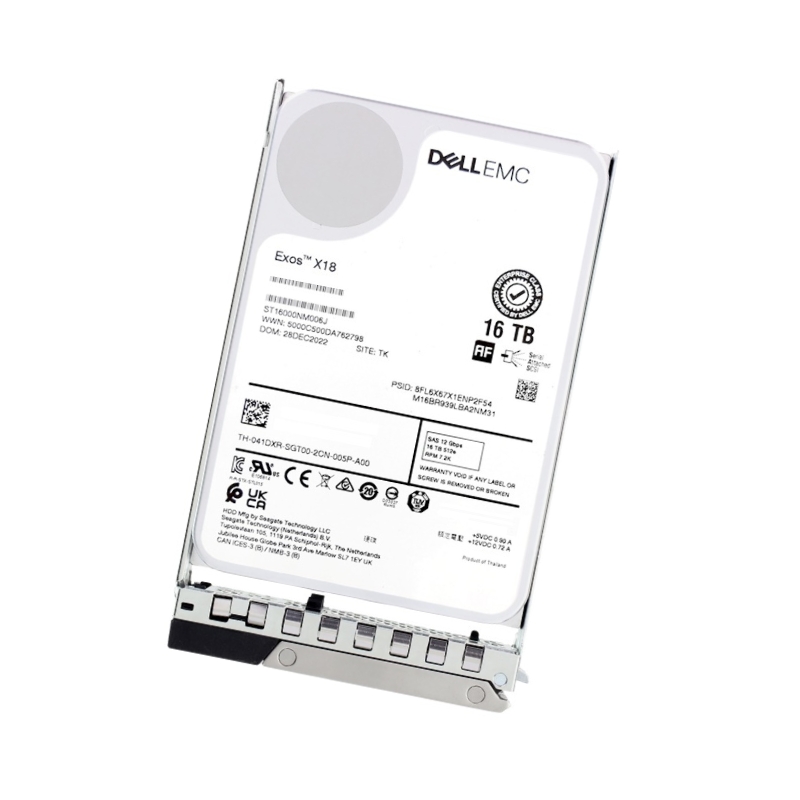
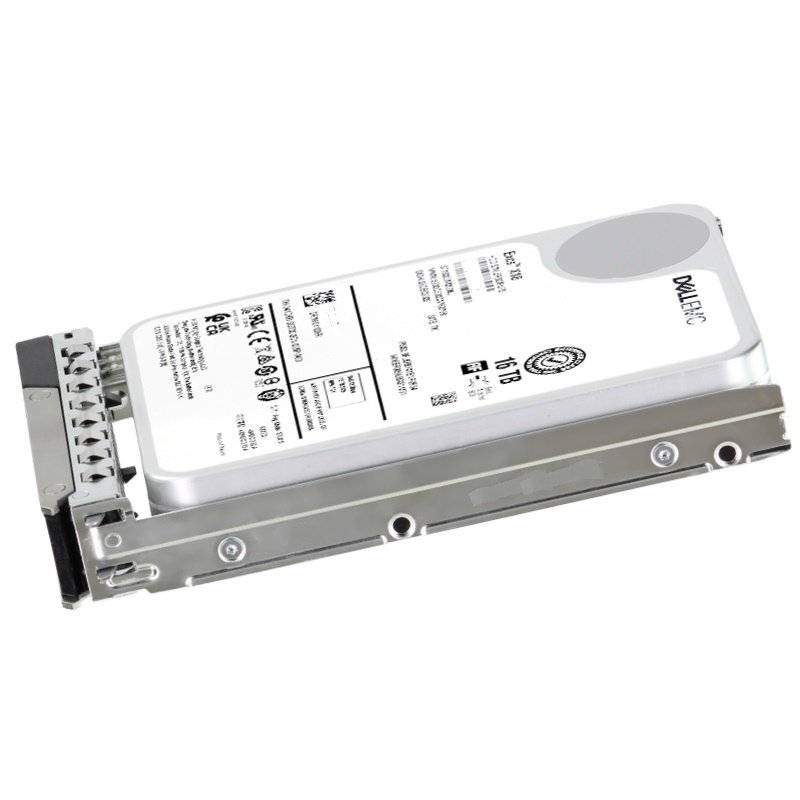
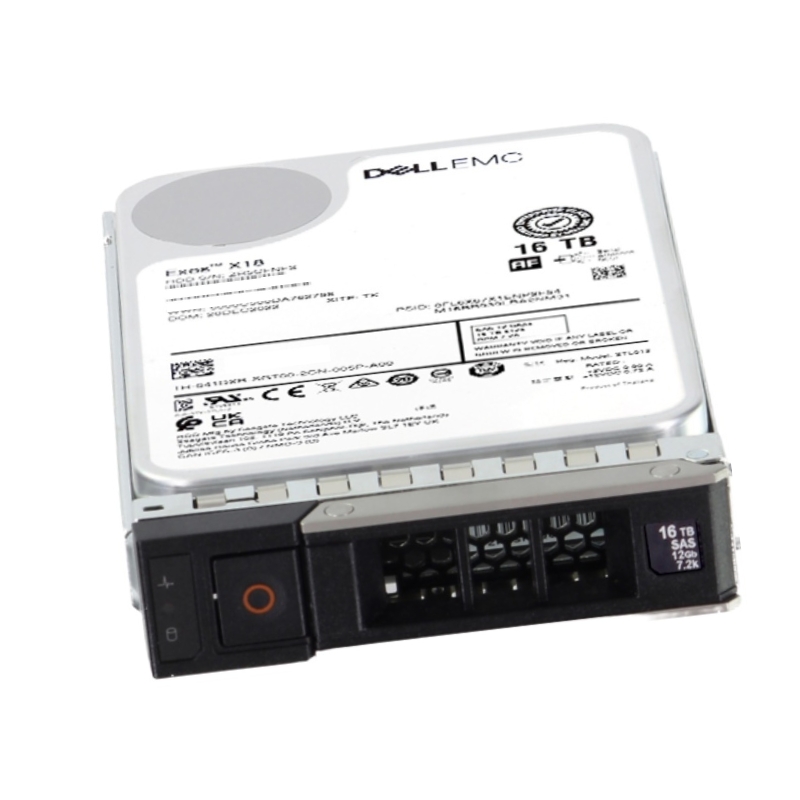
Dell HMYGJ 16TB 7.2K RPM ISE SAS 12GBPS. New Sealed in Box (NIB) With 1 Year Warranty
The HMYGJ 16TB SAS Hard Disk Drive is a high-capacity enterprise storage solution designed for data centers, servers, and mission-critical workloads. Built for reliability and speed, this 3.5-inch hot-pluggable HDD delivers stable performance for large-scale storage environments.
The enterprise storage category represented by the HMYGJ Dell 16TB 7200RPM SAS 12Gbps 512e Hot-Pluggable 3.5-inch Hard Drive is designed for high-demand computing environments where reliability, sustained throughput, and long-term durability are essential. This class of storage solutions is widely implemented in data centers, virtualization clusters, enterprise servers, and large-scale backup infrastructures where continuous data availability and predictable performance are mandatory requirements rather than optional enhancements.
Within this category, SAS-based hard drives occupy a premium segment compared to standard SATA alternatives. The 12Gbps SAS interface enables significantly improved full-duplex communication, allowing simultaneous read and write operations at higher efficiency levels. Combined with enterprise firmware optimization, these drives are tailored to operate under sustained workloads, making them suitable for mission-critical applications such as database hosting, virtualization environments, and high-availability cloud systems.
The 12Gbps SAS interface is a defining feature of this storage category. It allows for high-speed serial communication between the drive and server backplane, ensuring reduced latency and improved data transfer consistency under heavy workloads. Unlike consumer-grade interfaces, SAS architecture supports dual-port connectivity, which increases redundancy and provides failover capability in enterprise environments.
This dual-path architecture ensures that if one controller path becomes unavailable, data operations can continue through an alternate route without interruption. This characteristic is essential for enterprise systems that require continuous uptime and cannot tolerate downtime caused by single-point failures.
The 7200RPM spindle speed in this category represents a balanced optimization between performance, heat output, and energy efficiency. While higher RPM drives may offer faster access times, they also introduce increased wear and thermal load. The 7200RPM configuration ensures that the HMYGJ Dell 16TB SAS drive maintains a stable operating temperature profile while still delivering consistent throughput suitable for large sequential workloads.
This rotational speed is particularly beneficial for storage environments involving large file transfers, archival storage systems, and backup repositories where sustained read and write operations are more common than random access patterns.
The 512e (512-byte emulation) format is integrated into this drive category to ensure compatibility with legacy systems while still leveraging modern high-capacity storage advancements. This hybrid sector format allows newer high-density platters to interface seamlessly with operating systems and storage controllers that are optimized for traditional 512-byte logical block addressing.
In enterprise environments where infrastructure upgrades occur incrementally, 512e compatibility ensures that storage expansion does not require immediate overhaul of existing systems, making deployment more cost-efficient and operationally flexible.
Hot-pluggable functionality is a critical feature of enterprise-grade SAS drives in this category. It allows the drive to be inserted or removed from a running system without requiring shutdown or system interruption. This capability significantly enhances maintenance efficiency in data centers, where uptime is a key operational metric.
In large-scale storage arrays, hot-swapping enables administrators to replace failed drives or expand storage capacity dynamically. This ensures that system availability remains uninterrupted even during hardware maintenance or upgrades.
The 3.5-inch form factor is widely used in enterprise storage systems due to its ability to accommodate larger platters, which directly translates into higher storage capacities such as 16TB in this category. The increased physical surface area allows for improved data density and better heat dissipation compared to smaller form factors.
This form factor is commonly integrated into rack-mounted servers, storage enclosures, and high-density JBOD systems where space optimization and storage scalability are essential considerations.
The HMYGJ Dell 16TB SAS HDD category is frequently deployed in RAID configurations, including RAID 5, RAID 6, and RAID 10 setups. These configurations provide redundancy, fault tolerance, and performance optimization depending on the use case. In enterprise storage clusters, multiple drives operate in parallel, distributing data across arrays to ensure both speed and data protection.
The consistent performance characteristics of SAS drives make them ideal for RAID environments, where predictable latency and sustained throughput are essential for maintaining array integrity and performance stability.
In modern data centers, the demand for high-capacity, high-reliability storage continues to increase. The Dell 16TB SAS drive category is designed to meet this demand by offering scalable storage solutions that can be integrated into multi-petabyte storage systems. These drives are commonly deployed in tiered storage architectures where frequently accessed data is stored on faster mediums while archival data resides on high-capacity SAS drives.
Virtualization environments such as VMware, Hyper-V, and KVM rely heavily on stable storage backends. The consistent performance and enterprise-grade durability of SAS drives make them suitable for hosting virtual machine disk images, container storage, and shared virtualized workloads. The 12Gbps bandwidth ensures that multiple virtual machines can access storage simultaneously without significant performance degradation.
Large-scale backup systems require storage solutions that can handle continuous data writing over extended periods. The 16TB capacity per drive significantly reduces the number of physical drives required to achieve large storage pools, thereby simplifying infrastructure complexity. In archival environments, these drives provide long-term reliability for storing historical data, compliance records, and business-critical backups.
Enterprise SAS drives in this category are equipped with firmware specifically engineered for sustained workloads. Unlike consumer drives that prioritize short bursts of performance, these drives are designed to maintain consistent throughput under continuous operation. This is particularly important in environments where drives operate 24/7 under heavy I/O pressure.
Advanced error correction algorithms are embedded within the drive architecture to ensure data integrity during read and write operations. These mechanisms detect and correct potential data corruption issues before they impact system stability. In enterprise environments where data loss is unacceptable, such reliability features are essential for maintaining operational continuity.
Thermal stability is a critical factor in high-density storage environments. The 7200RPM configuration, combined with optimized airflow design in enterprise enclosures, ensures that heat generation remains within acceptable thresholds. Efficient power consumption characteristics further contribute to reduced operational costs in large-scale deployments.
The HMYGJ Dell 16TB SAS drive category supports horizontal scaling strategies where additional drives are added to increase total storage capacity without disrupting existing infrastructure. This approach is widely used in distributed storage systems and cloud environments where scalability is a continuous requirement.
These drives are compatible with a wide range of enterprise SAS controllers and RAID adapters. This ensures seamless integration into existing server ecosystems without requiring specialized hardware modifications. Compatibility with industry-standard storage controllers also simplifies system upgrades and expansion planning.
With 16TB per drive, organizations can achieve higher storage density per rack unit, reducing physical footprint requirements in data centers. This high-density configuration allows enterprises to maximize storage capacity while minimizing space, cooling, and power consumption costs.
One of the key advantages of SAS-based enterprise drives is their ability to maintain consistent throughput under continuous workloads. This ensures that performance does not degrade significantly even during peak usage periods. Such stability is essential for applications involving real-time analytics, transaction processing, and large-scale data streaming.
The architecture of this storage category is optimized to handle both random and sequential access patterns efficiently. While sequential performance is critical for large data transfers, random access efficiency is equally important for database-driven applications and virtualization workloads. The balanced design ensures versatility across multiple enterprise use cases.
Low and predictable latency is a key requirement in enterprise storage systems. The SAS interface, combined with optimized firmware algorithms, ensures that latency remains consistent even under heavy I/O load. This predictability allows system administrators to design performance-sensitive applications with confidence.
Although enterprise SAS drives represent a higher initial investment compared to consumer-grade alternatives, their long-term operational efficiency significantly reduces total cost of ownership. Their durability, performance consistency, and reduced failure rates contribute to lower maintenance and replacement costs over time.
Enterprise storage planning often relies on predictable hardware lifecycle management. Drives in this category are designed with extended operational lifespans, allowing organizations to plan replacement cycles efficiently and minimize unexpected downtime.
Data continuity is a fundamental requirement in mission-critical systems. The reliability features integrated into the Dell 16TB SAS HDD category ensure that data remains accessible and protected even in the event of hardware stress or partial system failure. This makes them a cornerstone of resilient enterprise storage architecture.


 Contact Us
 Information
 Catalog
 Solid State Drives (SSD)
 Network Switches
 Hard Disk Drives
 HBA & Controllers
 PC & Servers
 PC & Server Memory
 CPU & Processors
 Network Routers
 Power Supplies
 Tape Drives & Libraries
 Network Devices
 Computer & Network Cables